The Hawk That Started It All
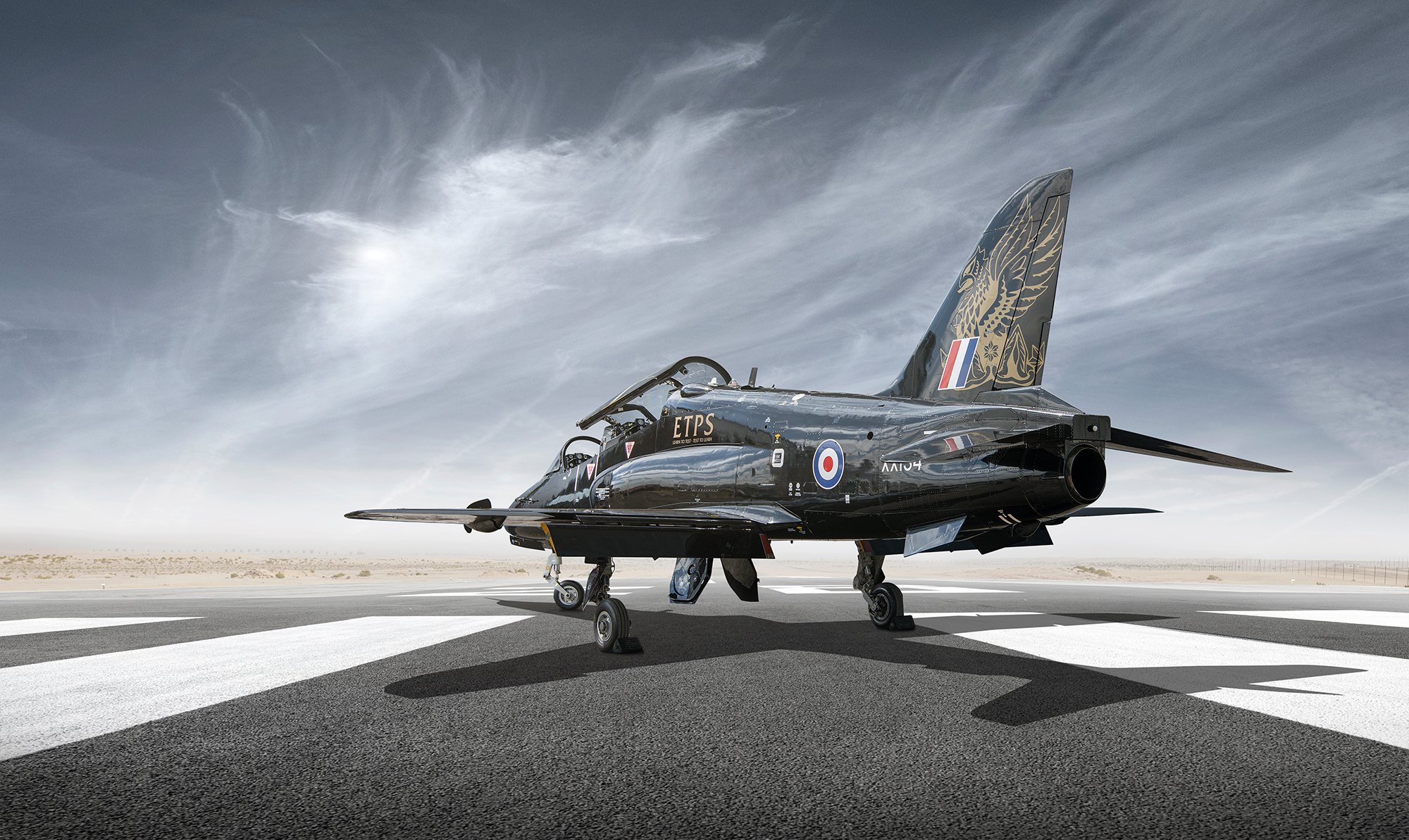
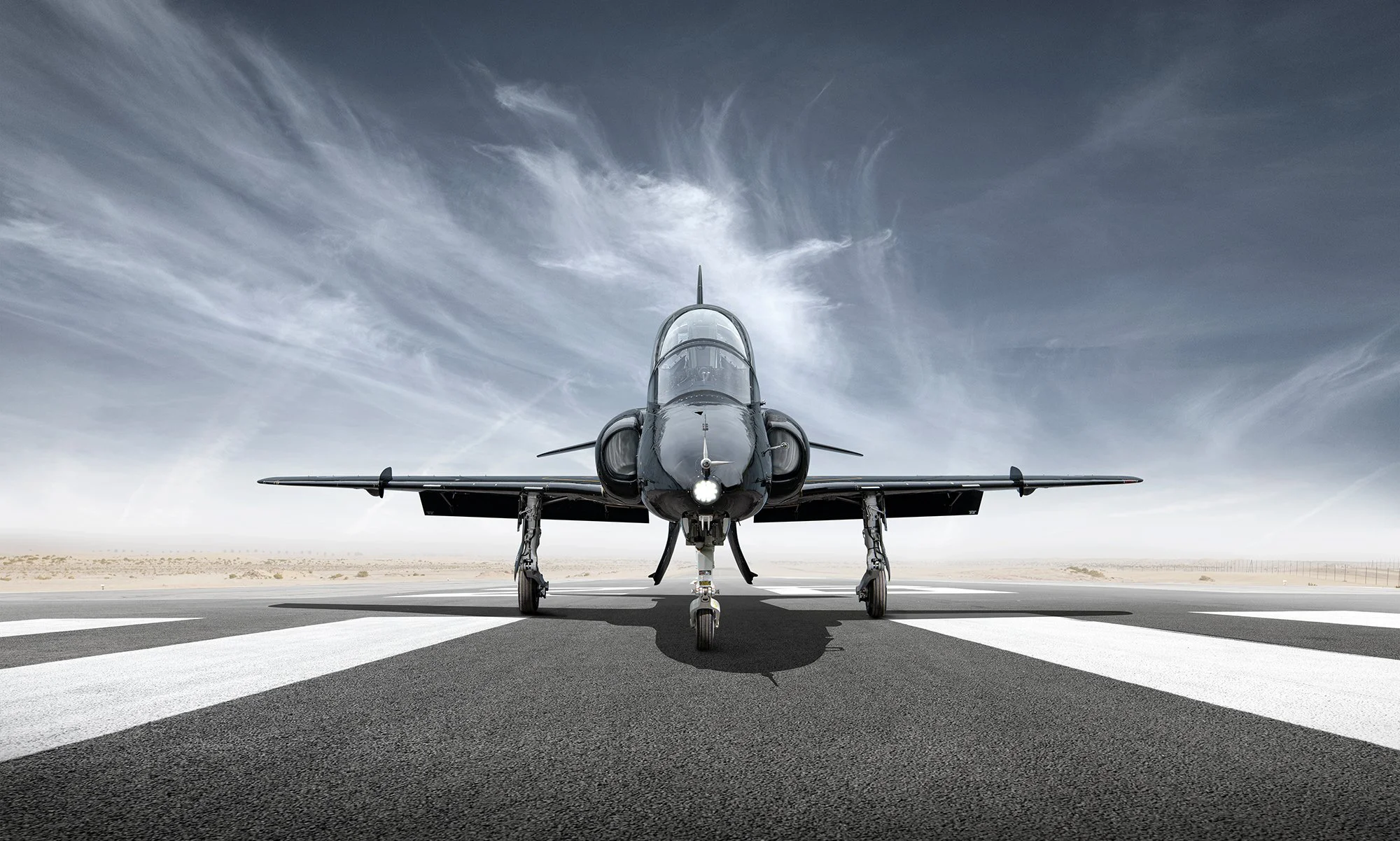
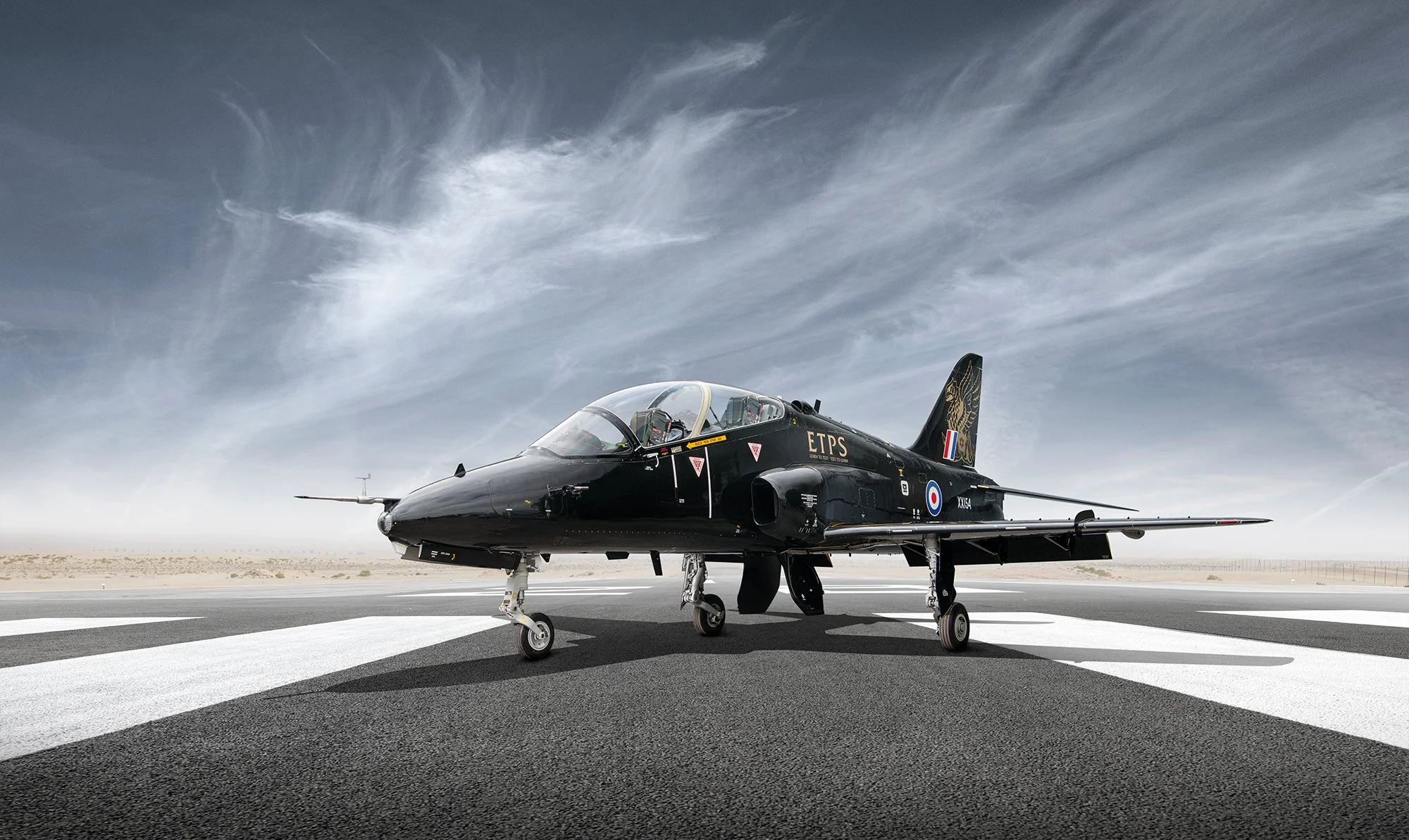
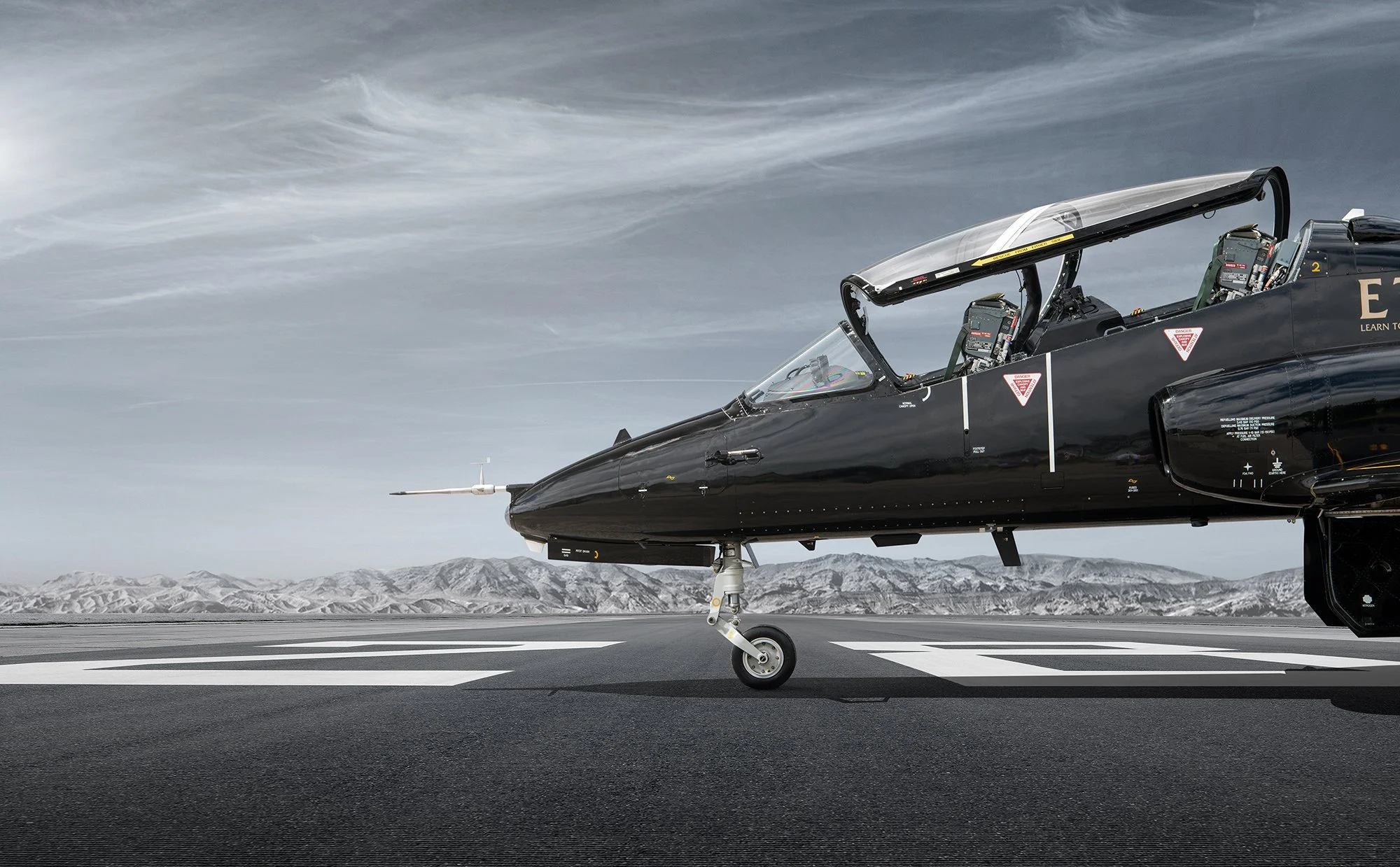
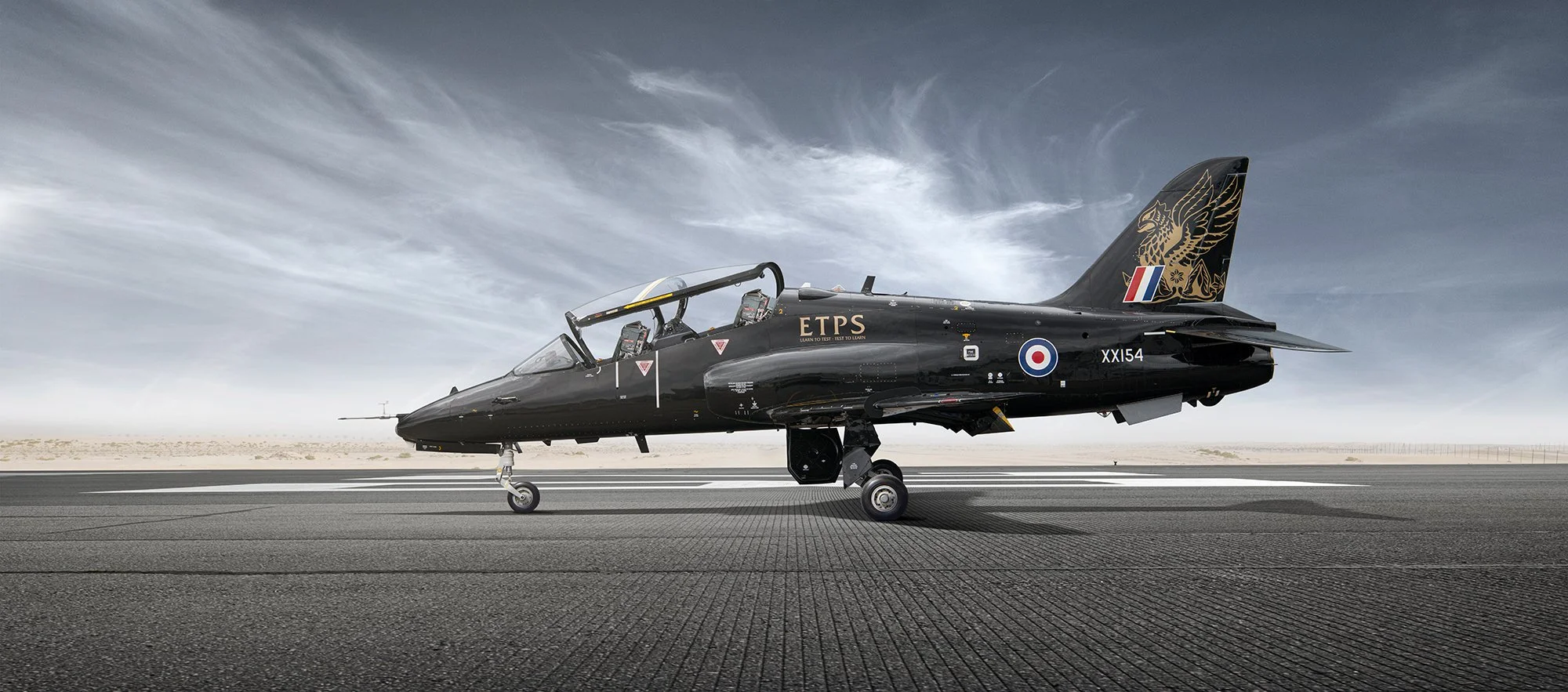
There are some aircraft that are interesting because of what they look like, some because of what they achieved, and then there are aircraft that occupy a completely different place in aviation history. They become part of the story themselves. For me, photographing Hawk T.1 pre-production aircraft XX154 was very much one of those occasions. As an aviation photographer, I have been fortunate enough to photograph a remarkably broad range of aircraft over the years, from modern fast jets and historic warbirds through to helicopters, air ambulances and corporate aircraft, but there is something particularly special about being asked to photograph an aircraft that sits so close to the beginning of an important story. XX154 is not simply another Hawk. It is the aircraft from which an extraordinary aviation success story began.
A Career in Aviation Photography
My work as an aviation photographer has developed over many years and, perhaps more importantly, has taken me into almost every corner of the aviation world. Although much of my commercial photography is associated with cars, trucks and other forms of transport, aviation has become an increasingly important part of what I do, and I have always found the combination of aircraft, environment and light particularly rewarding.
My aviation photography covers both fixed wing and rotary aircraft, with assignments ranging from carefully controlled commercial shoots through to documenting aircraft and crews operating in the real world. I have worked with organisations including BBC Productions, photographing aircraft for television productions, as well as private aviation companies such as TAG Aviation, where the requirements and expectations are understandably very different from those of an editorial shoot.
Perhaps one of the most meaningful areas of my aviation work has been photographing Air Ambulance operations. After becoming CAA approved and qualifying as a HEMS Technical Crew Member, I have been able to work much more closely with crews and aircraft during operational flying, giving me an understanding of aviation that goes considerably beyond simply standing beside an aircraft with a camera.
That experience has changed the way I approach aviation photography.
An aircraft can be photographed beautifully while sitting on a ramp, but understanding what it does, how it operates and the people who depend upon it adds another dimension to the imagery. It is something I try to bring into every aviation photography commission, regardless of whether I am photographing a working helicopter, a corporate jet, a historic aircraft or a fast jet with decades of history behind it, and then there are aircraft such as XX154.
Where The Hawk Story Began
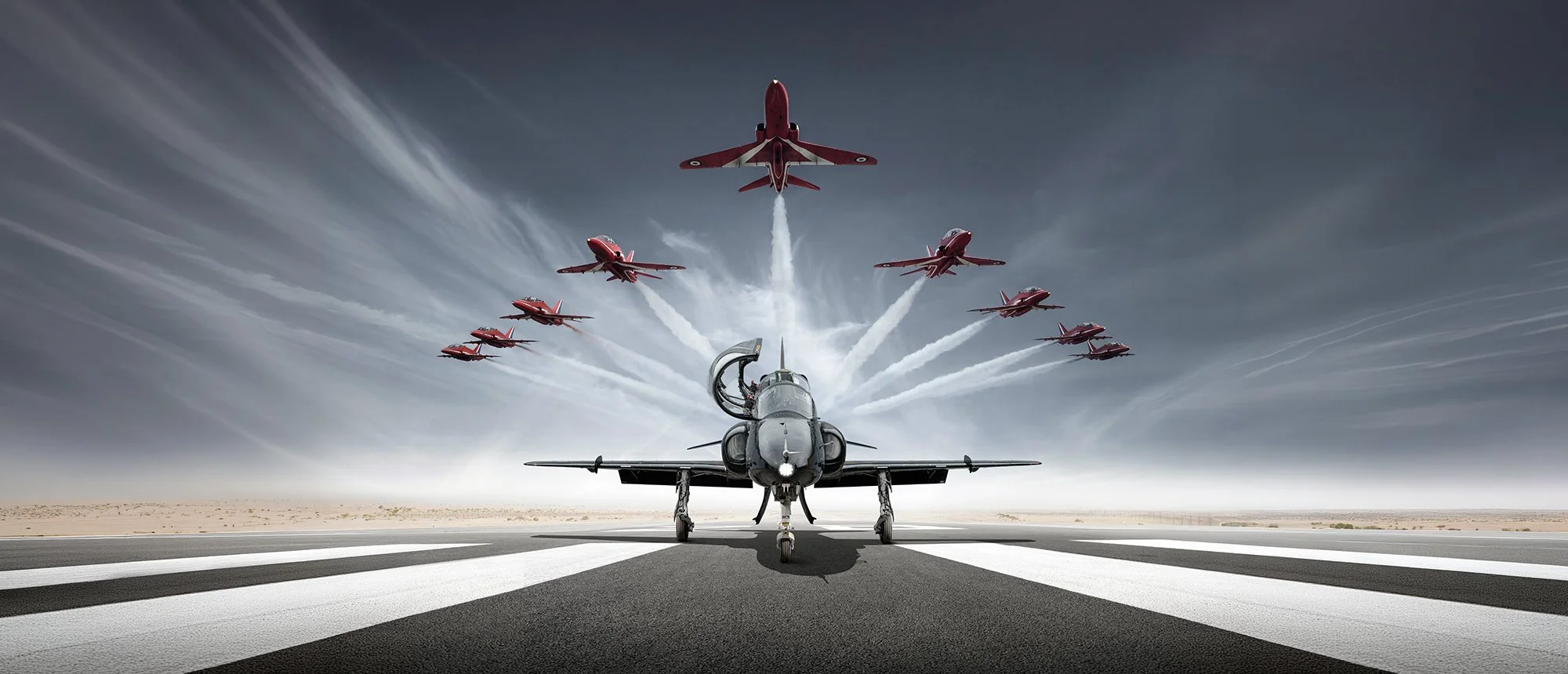
Today, the Hawk name is familiar to aviation enthusiasts around the world. The aircraft has become synonymous with advanced jet training and, perhaps most famously in the UK, with the Royal Air Force Red Arrows. More than 900 Hawks have been produced for operators around the world, and the aircraft has evolved considerably since the design first took to the sky. But every successful aircraft has to start somewhere. For the Hawk, that beginning can be traced directly to XX154.
Built as the first Hawk pre-production aircraft, XX154 made its maiden flight from Dunsfold in Surrey on 21 August 1974. At the controls was Duncan Simpson, Chief Test Pilot of Hawker Siddeley Aviation at Kingston, and the aircraft climbed to 20,000 feet during a flight lasting 53 minutes.
It is difficult to imagine, looking at the aircraft today, just how significant that first flight would eventually become.
At the time, the Hawk was a new British jet trainer designed to replace an ageing generation of training aircraft and provide the RAF with a modern platform on which future fast-jet pilots could learn their trade. What followed was far more successful than perhaps anybody could have predicted.
The Hawk would go on to become one of Britain's most successful military aircraft exports, serving with air forces across the world and developing into a family of aircraft that could fulfil considerably more demanding roles than its original training brief might suggest, but before all of that, there was XX154, the aircraft that carried the Hawk into the sky for the first time.

Photographing A Piece of History
This is where aviation photography becomes particularly interesting for me, because photographing an aircraft such as XX154 isn't simply about making a technically good photograph. There is an obligation, in a way, to capture something of its character.
When I photograph a contemporary aircraft for a commercial client, the objective is often very clearly defined. There may be a particular brand message to communicate, a marketing campaign to support or a series of images that need to work across a website, brochure or advertising campaign. The lighting, composition and environment are all carefully considered to create imagery that serves a purpose. With a historically important aircraft, the approach is slightly different.
You want the photographs to show the aircraft accurately, but you also want them to make people stop and look.
That is one of the things I enjoy most about aviation photography. Aircraft are extraordinarily sculptural objects, and fast jets in particular have an almost impossible combination of engineering and visual drama. The sweeping leading edges, intakes, canopy and tail surfaces all interact with light in completely different ways, and even a familiar aircraft can look entirely different depending upon how it is photographed, XX154 was no exception.
There is something wonderfully purposeful about the original Hawk design. It isn't an aircraft that needs embellishment. The shape was created around a very clear engineering requirement, yet somehow the result is remarkably elegant. The proportions are compact and balanced, with the swept wings and relatively small fuselage giving it an appearance that still looks purposeful more than fifty years after its first flight.
Standing in front of the first Hawk and knowing what eventually came from this single aircraft adds another layer to the experience.
This was the starting point for a design that would become an integral part of British military aviation.

From Trainer to International Success
The story that followed XX154 is remarkable. The Hawk T.1 eventually entered Royal Air Force service in late 1976, providing a new generation of pilots with their advanced jet training before they progressed onto operational fast jets. The design was sufficiently capable and adaptable to attract international customers, with the first export Hawk 50 flying in May 1976. That export aircraft represented an important development because the Hawk was no longer simply a British trainer. It had been designed from the outset with the potential to fulfil a wider role, and the Hawk 50 incorporated greater weapons capacity alongside its training capabilities. From there, the design continued to evolve. Different operators required different capabilities, and successive Hawk variants incorporated improvements ranging from more powerful engines and increased range to redesigned wings and undercarriage, sophisticated avionics, radar and forward-looking infrared systems. Later aircraft were increasingly tailored to the requirements of individual air forces, with cockpit systems and functionality designed to mirror the aircraft that pilots would eventually fly operationally.
It is one of the reasons the Hawk has enjoyed such longevity. It has never been simply one aircraft frozen in time. The basic design has proved adaptable enough to evolve alongside aviation technology and the changing requirements of military operators. Yet underneath all those developments is the same fundamental concept that first took flight in 1974, and that brings us back to XX154.
More Than an Aircraft
One of the things I have increasingly come to appreciate through my aviation photography is that aircraft are rarely just machines.
They represent people, engineering, ambition and history.
A helicopter sitting on an Air Ambulance base represents crews preparing to respond to somebody else's worst day. A business jet represents the people and organisations that rely upon it. A historic warbird represents the pilots and ground crews who once operated it. A television aircraft can become part of the visual language of an entire production, and an aircraft like XX154 represents the beginning of something much bigger.
It represents the work of the engineers and designers who created the Hawk, the test pilots who took the risk of flying something new, the production teams who eventually turned a prototype into a successful production aircraft and the generations of military pilots who subsequently trained in Hawks around the world.
That is what makes photographing historically significant aircraft so rewarding. You are not simply photographing an aeroplane, you are photographing a piece of aviation history.
The Importance of Light
For me, light remains at the heart of all of my photography, whether I am photographing a car, a truck, a product or an aircraft.
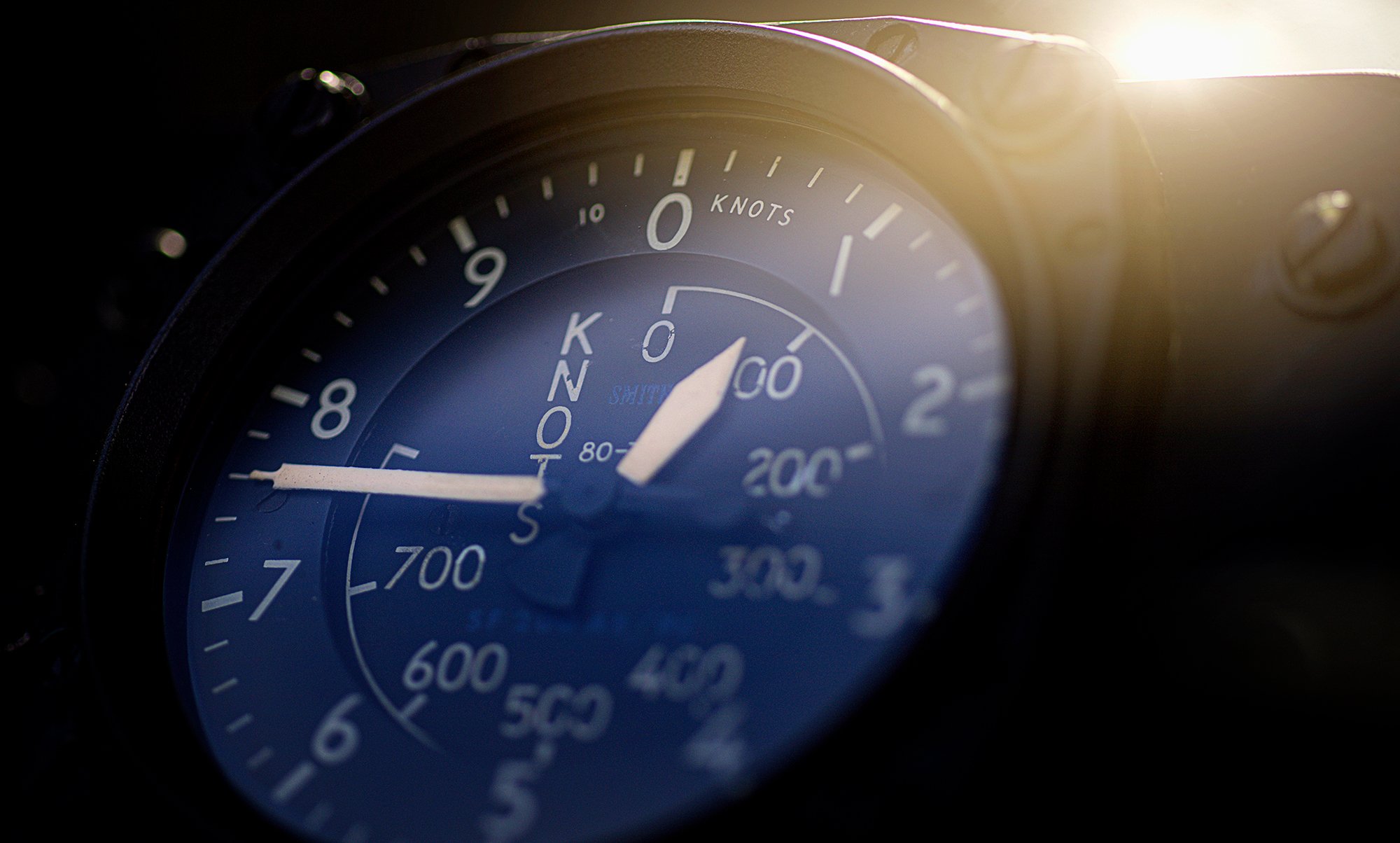
I have always been fascinated by the way-controlled lighting can transform an object and reveal details that might otherwise disappear. With aircraft, that becomes particularly important because their surfaces are often large, complex and highly reflective, while their shapes have been dictated by aerodynamic requirements rather than photographic considerations.
My job as an aviation photographer is therefore partly about understanding the aircraft and partly about understanding how light interacts with it.
Sometimes that means using the available environment and natural light to place an aircraft within its surroundings. At other times, it means creating a more controlled visual interpretation, concentrating on details, textures and shapes.
The objective isn't necessarily to make an aircraft look dramatic simply for the sake of drama. It is about finding the visual language that suits the subject.
With XX154, the history is already there, the photography simply needs to reveal it.


The Hawk's Legacy
More than five decades after XX154 first left the runway at Dunsfold, the legacy of the Hawk is difficult to overstate.
The aircraft became one of the defining British jet trainers of the modern era and has been operated by numerous air forces around the world. It has also become an unmistakable part of British aviation culture through its long association with the Red Arrows, whose distinctive red Hawks have introduced generations of people to the precision and spectacle of military aviation. And yet, when you stand in front of XX154, you are looking at something much closer to the beginning, before the international sales, before the countless pilots, before the Red Arrows became synonymous with the Hawk. before the later variants and increasingly sophisticated avionics, there was simply a new British aircraft, built with a clear purpose, sitting at the beginning of what would become an extraordinary story.
That makes XX154 a very special aircraft to photograph.
For an aviation photographer, opportunities to work with aircraft that have played such a fundamental role in aviation history are rare, and I feel particularly fortunate to have been able to create imagery of the first Hawk pre-production aircraft.
Every aircraft has a story, but some aircraft are part of the story of aviation itself. XX154 is one of those aircraft, and being able to stand beside it with my camera, looking at the same lines that first took to the sky from Dunsfold in August 1974, is a reminder of exactly why I enjoy aviation photography so much.
Because sometimes the most interesting thing about photographing an aircraft isn't where it has been. It is understanding where it all began.