Peugeot - The Concept
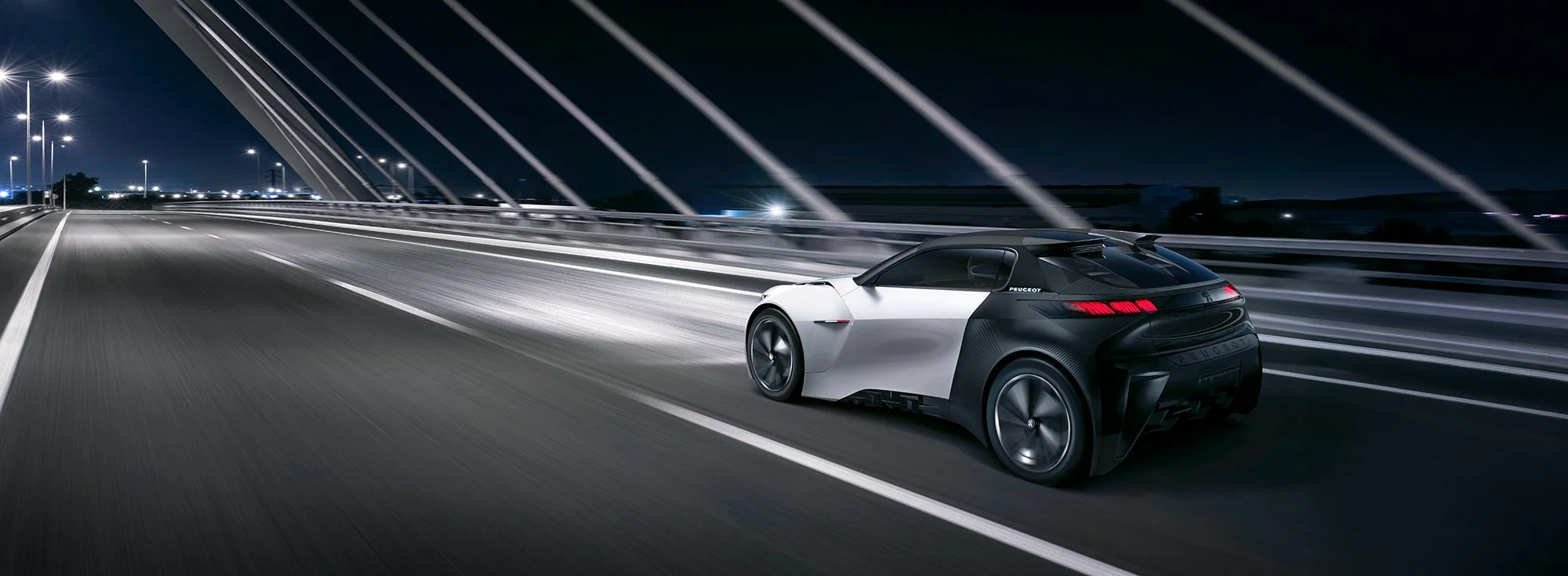
Peugeot Fractal Concept Car Photography, Creating Emotion Through Design
There are some car photography projects that stay with you long after the shoot is complete. My work photographing the Peugeot Fractal Concept Car at the Peugeot Design Centre in Paris was certainly one of those projects. The first time that I saw the vehicle was in Peugeots studio that they have within their Paris Design Centre. It was 2 months ahead of the actual shoot week, but I needed to take a flight across from England so that I could see first-hand what I would be shooting for a week. The reason being that all concept cars are under strict security before their launch and that means no images on emails or even graphics and drawings, you need to travel and gain entry into their secure area at the design centre.
Seeing it in studio it was clear that this was not simply another concept car built to showcase future technology. The Fractal represented something much more ambitious, it was a statement of intent from Peugeot about emotion, design, sound, innovation and the future direction of the brand itself.
As a commercial car photographer, projects like this are exactly why I love what I do. Working with global automotive brands is never simply about producing attractive imagery. It is about understanding the identity of the brand, understanding the visual language that already exists around it, and then creating photography that strengthens and expands that identity across every platform where the imagery will be seen.
For Peugeot, consistency is absolutely critical. The imagery produced for a worldwide concept car launch is distributed globally across press releases, automotive media, advertising, digital campaigns, editorial features and social channels. Every photograph has to feel aligned with the wider brand presence and blend seamlessly into the existing visual ecosystem already associated with the company online. That level of consistency only comes through trust, preparation and a deep understanding of how automotive photography supports modern branding.
I have always enjoyed working with Peugeot because their design team has a very strong creative vision. Everything is centred around emotion and visual impact. That immediately aligned with my own photographic style and approach to commercial automotive photography. From the earliest conversations surrounding the Fractal project it became very clear that this was going to be a highly creative collaboration with a team that genuinely values visual storytelling.
The project itself was produced at the Peugeot Design Centre in Paris, working alongside the highly experienced team at Cream Production. Having a production company of that calibre involved makes an enormous difference on projects of this scale. Large international automotive campaigns involve many moving parts, from logistics and lighting requirements through to timing, vehicle preparation, approvals and delivery schedules. When all of those elements are managed professionally it allows the creative team to focus completely on producing the strongest imagery possible.
Groundbreaking Sound Design
The most notable feature of the Fractal is how sound design informs its entire physical and psychological experience.
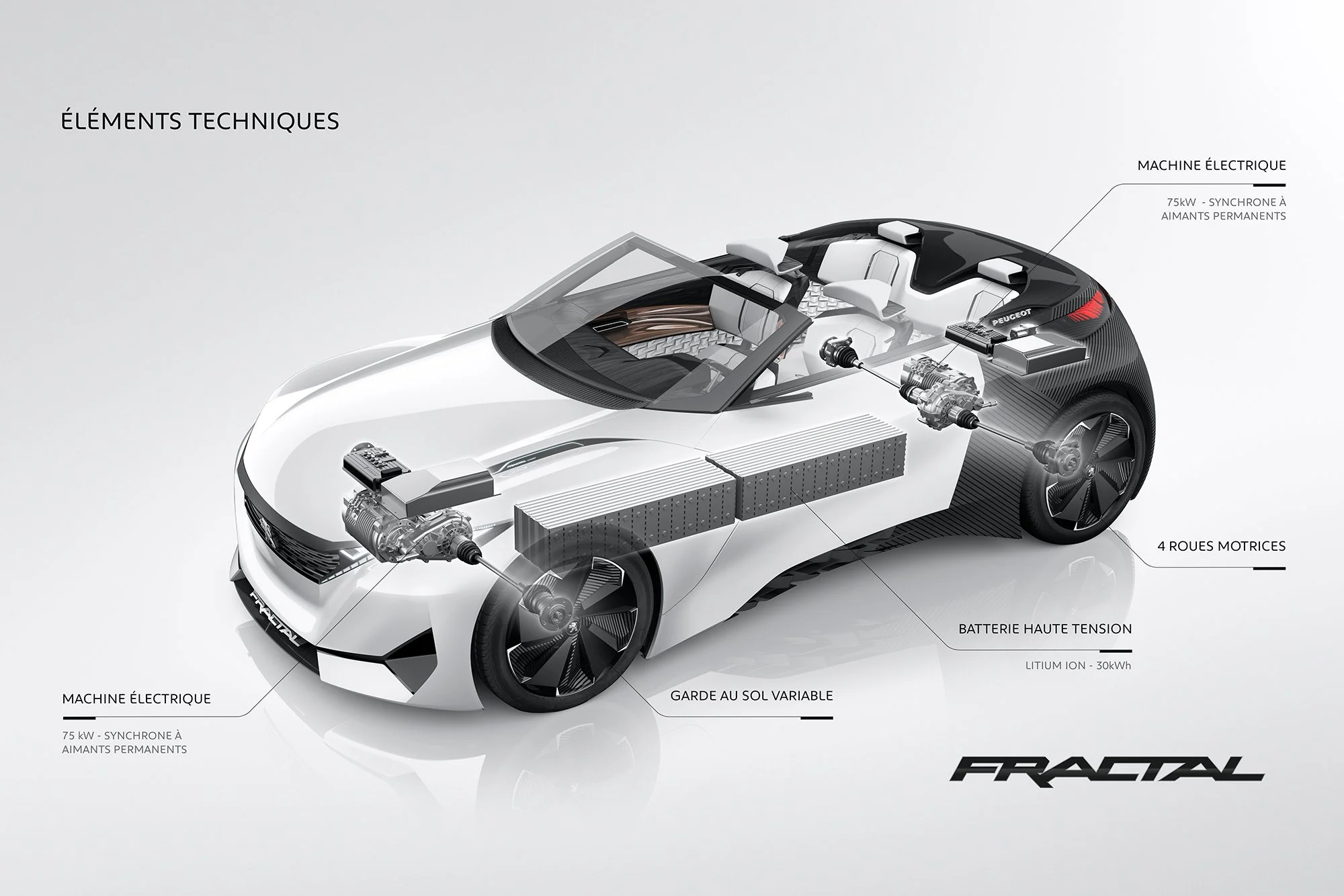
Peugeot partnered with audio specialists Focal to build a sound system that creates a spatial audio illusion, directing sound in ways that benefit the driver.
Exterior Sound: Because EVs are notoriously quiet at low speeds, the concept generates its own signature external sound to alert pedestrians.
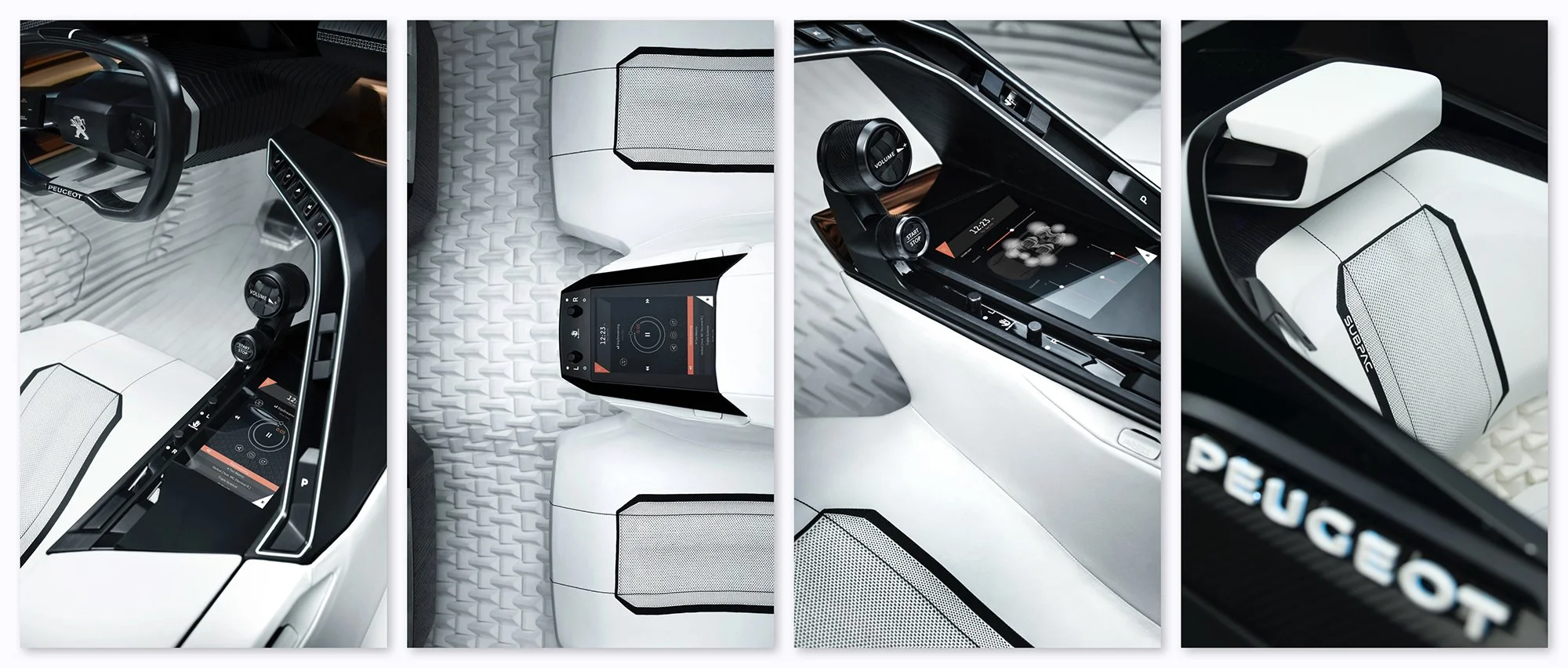
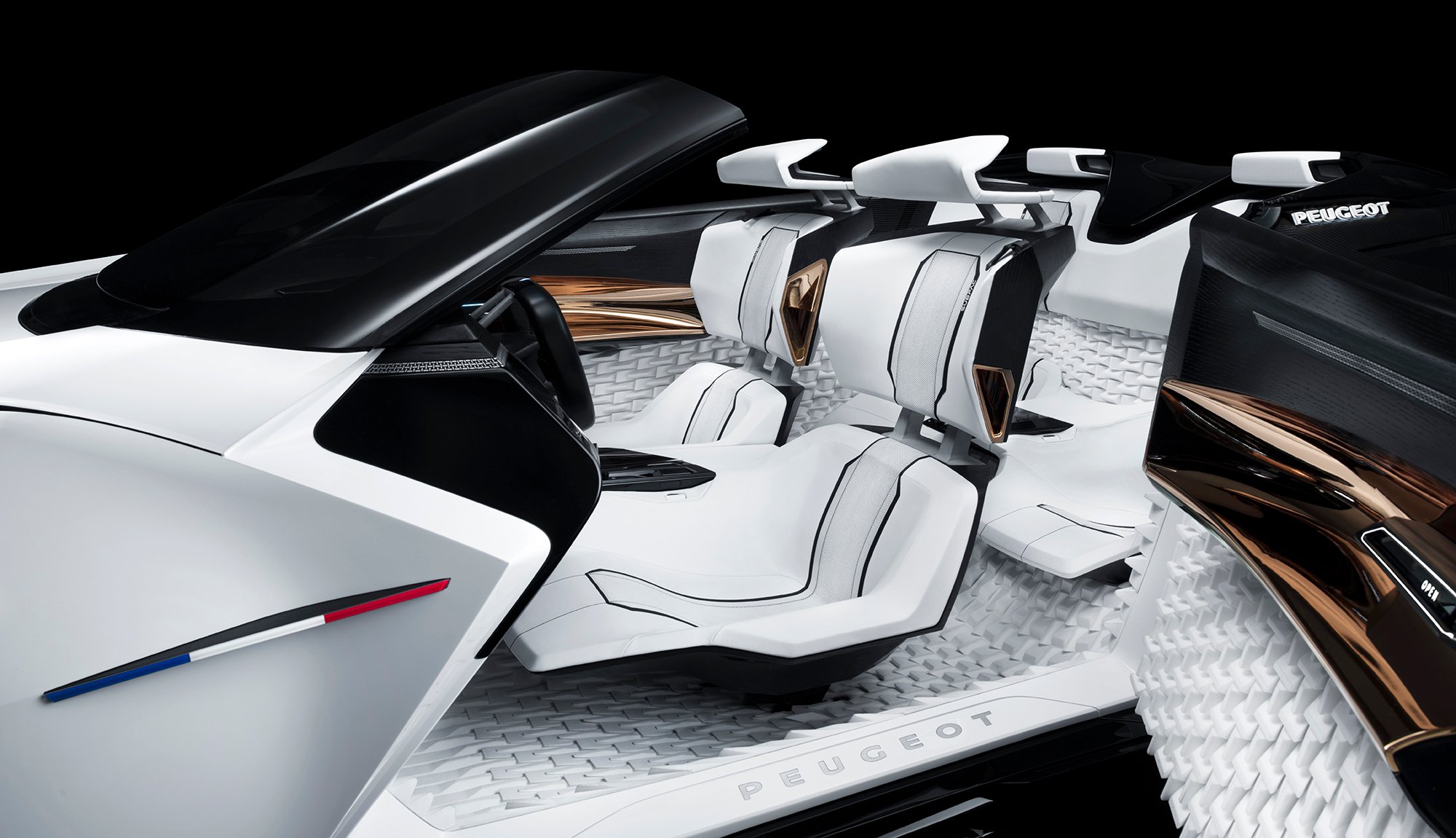
Tactile Bass: The seats feature tactile bass systems that send low-frequency vibrations through the body, fully immersing the driver in the audio.
Interior & Technology
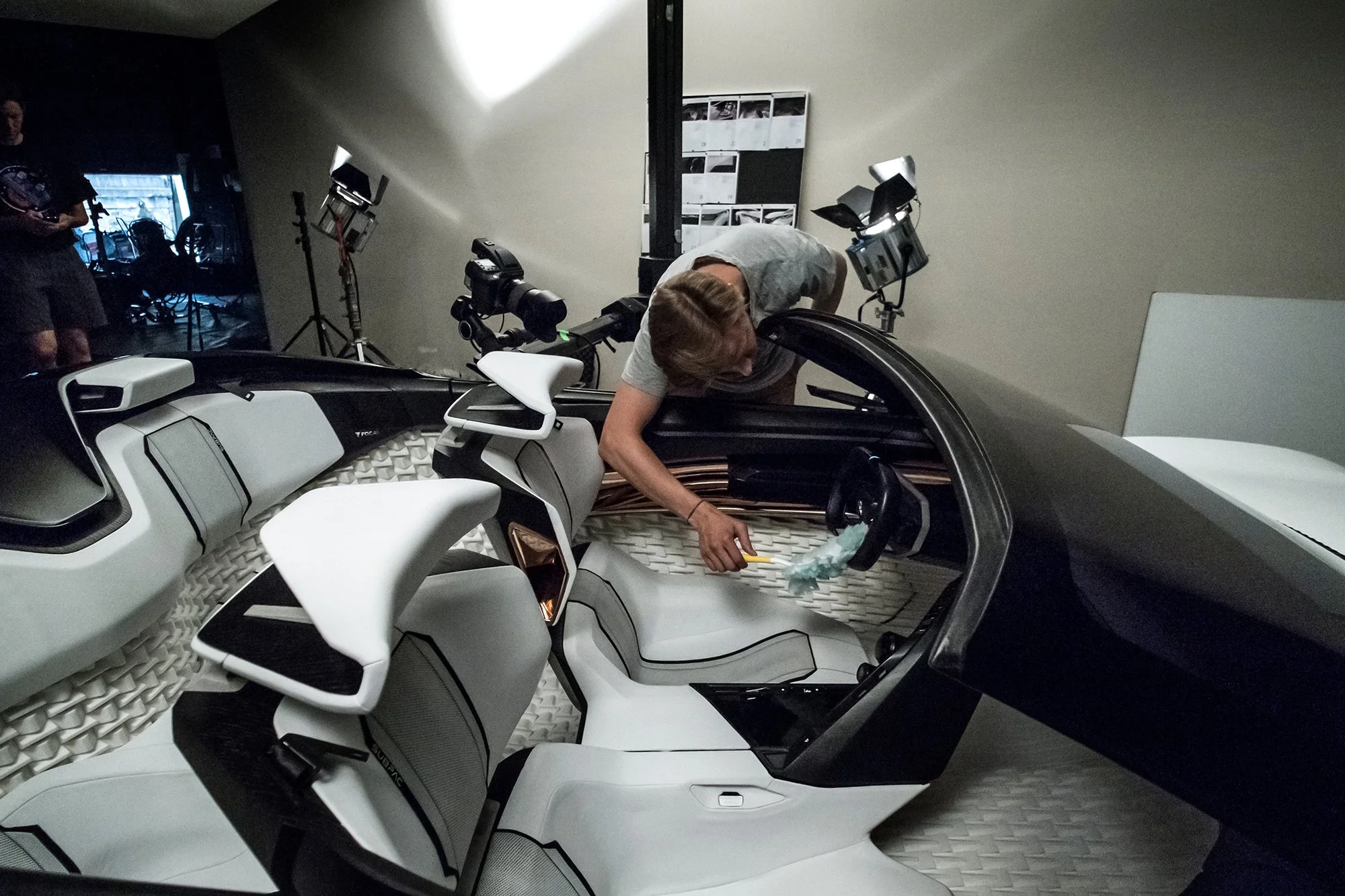
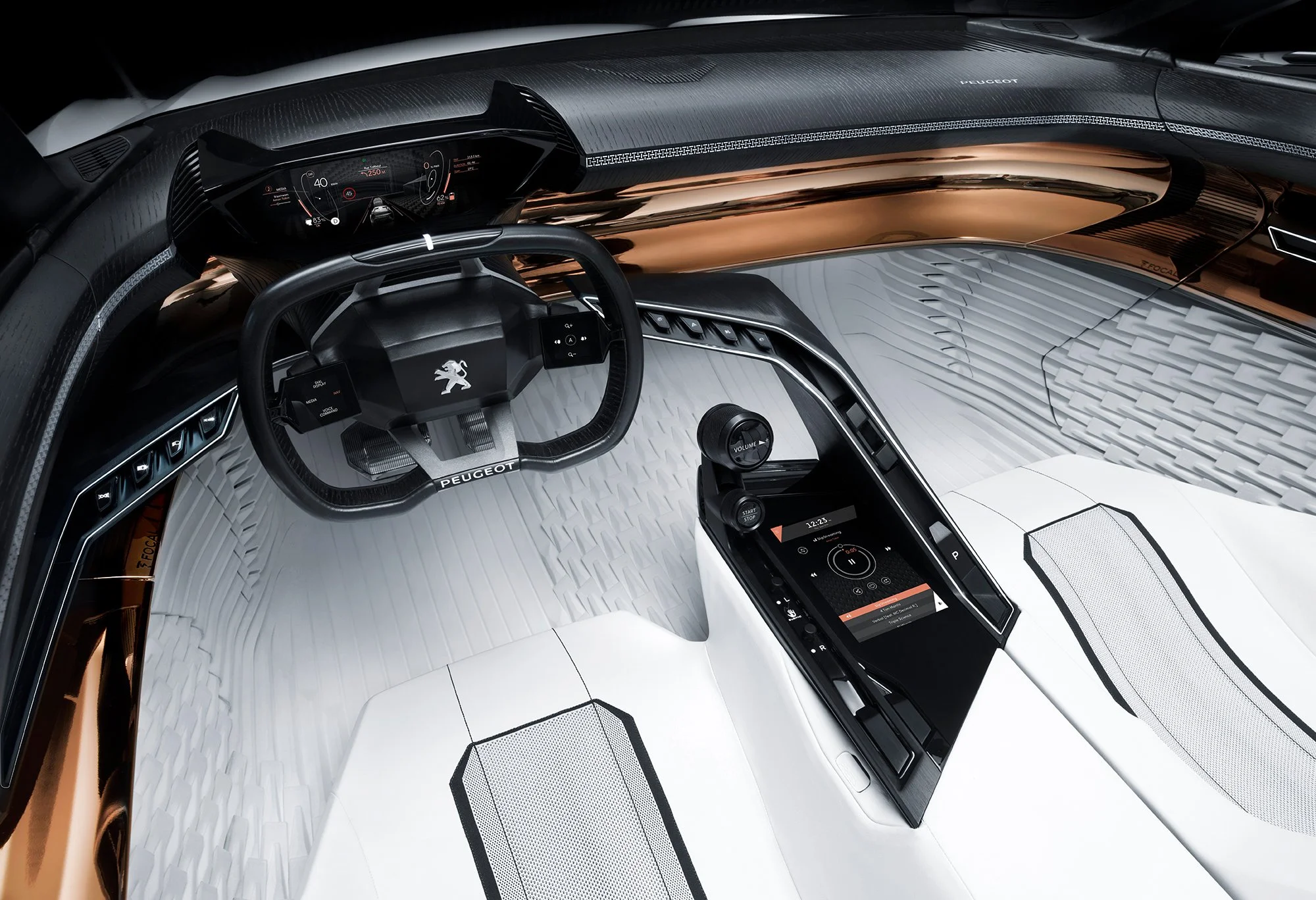
Over 80% of the interior is created using 3D-printed components, many of which were designed mathematically to mimic the acoustic chambers of recording studios.
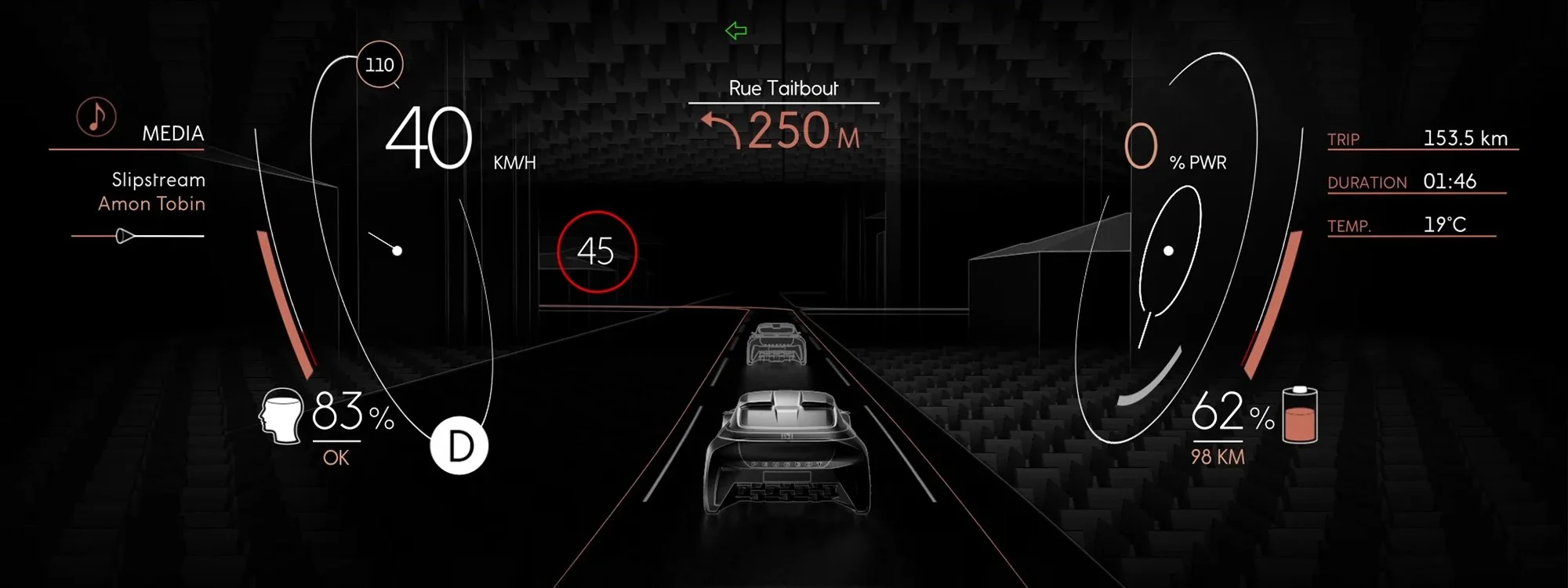
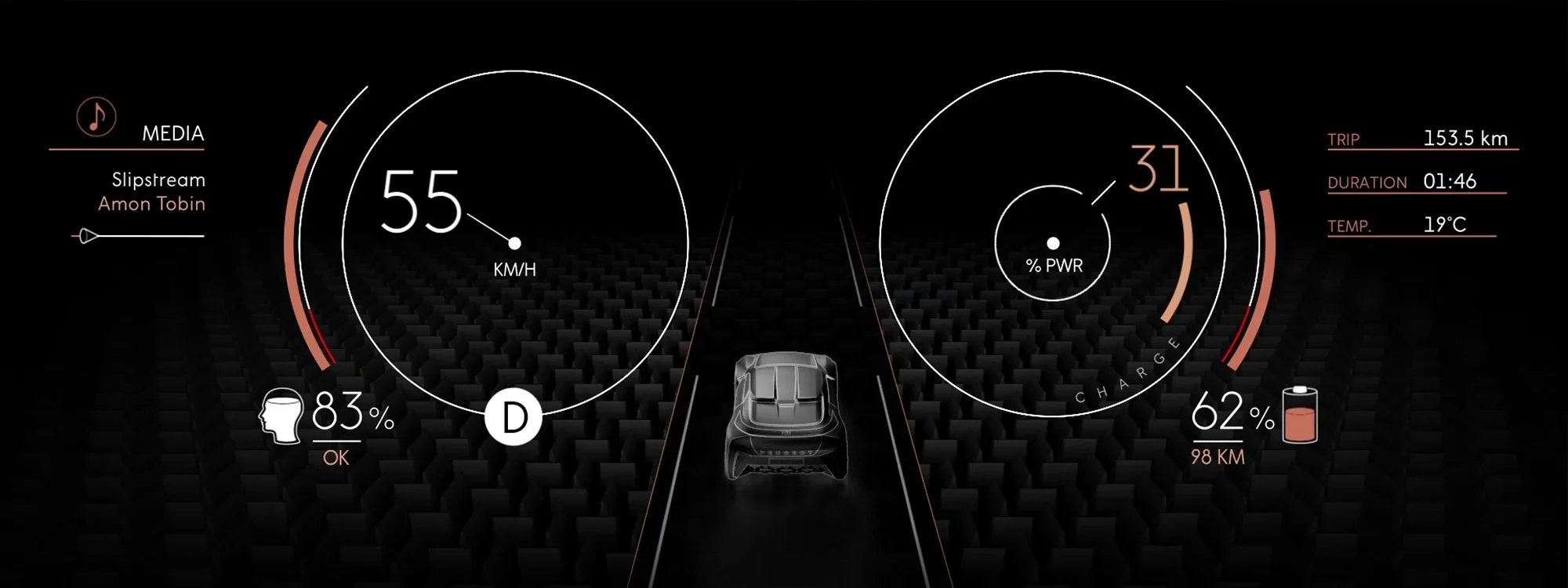
i-Cockpit: The dashboard features a customisable 12.3-inch digital instrument cluster and a 7.7-inch head-up display.
Steering Wheel: The compact steering wheel incorporates integrated touchpads that control the car's infotainment and navigation functions
Shoot Preparation
One of the biggest misconceptions people often have about commercial car photography is that the work begins when the camera comes out. In reality, most of the important work happens long before the first frame is ever captured. For a worldwide automotive campaign there is a huge amount of preparation involved. Every detail has to be carefully considered well in advance because once the vehicle is on set and the studio team is assembled, time becomes incredibly valuable. Good preparation allows the entire production to flow efficiently and creatively during the actual shoot days.
With the Peugeot Fractal project, the preparation stage was extensive. The vehicle itself was a one-off concept car with a highly sculptural design language and a very distinctive visual personality. My job was not simply to document the car; it was to create photography that enhanced the emotion already designed into it by the Peugeot design team.
That process starts with understanding the clients extensive shooting brief before any lighting equipment requirements are planned. I then spend time analysing the surfaces, reflections, body lines and proportions of the car itself. Concept vehicles are often incredibly complex to photograph because they are designed to push boundaries. They feature unusual materials, aggressive sculpting, intricate textures and experimental surfaces that can react unpredictably under studio lighting. The Fractal was especially interesting because it combined sharp futuristic styling with incredibly detailed surface textures and layered materials. Every angle revealed new design elements. As a photographer you have to understand how to control light in a way that reveals those details without overwhelming the overall form of the vehicle.
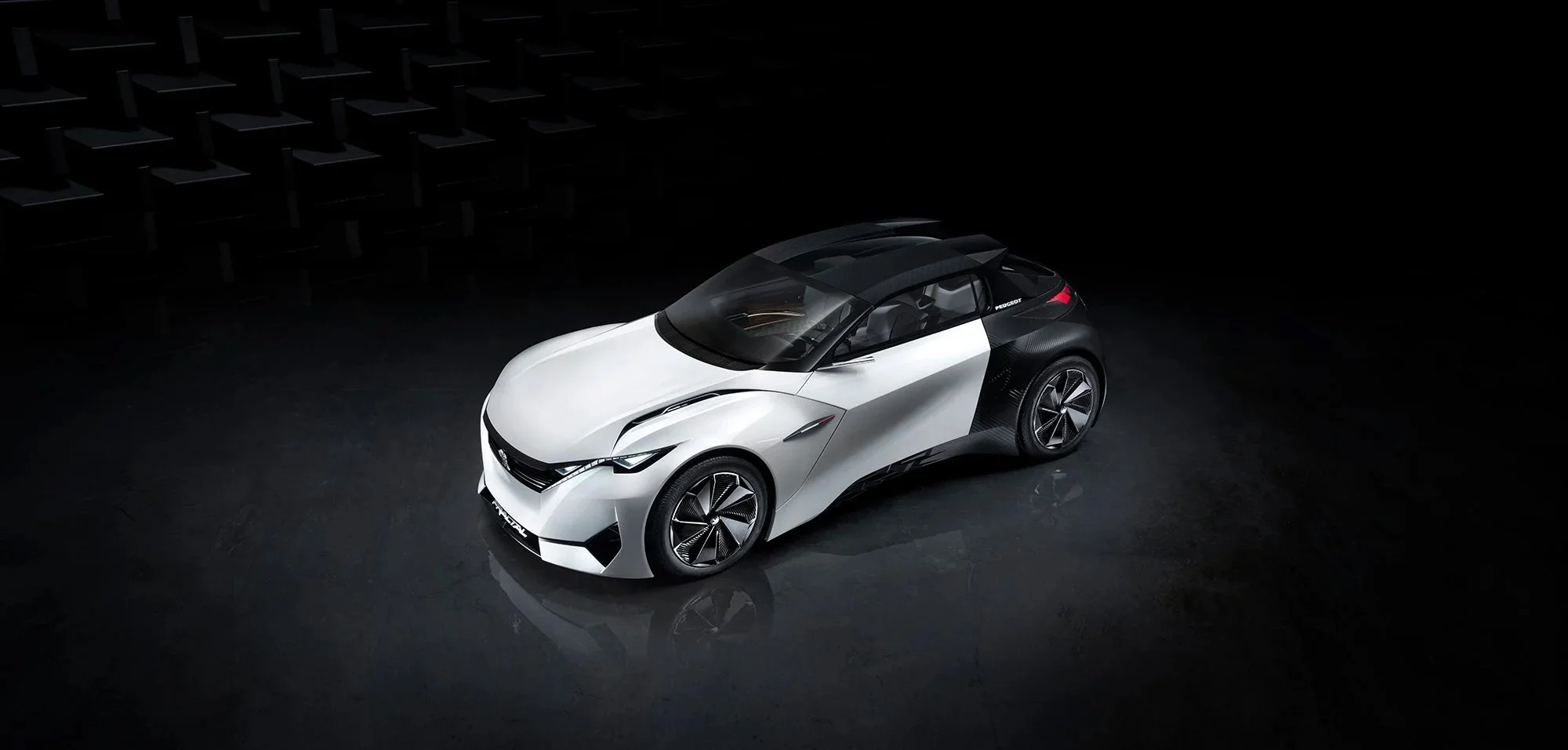
Another major aspect of preparation involved visual consistency. Peugeot already has a highly established visual identity across its automotive campaigns. When imagery is distributed globally it needs to sit naturally alongside other brand content across websites, press materials and advertising campaigns. Achieving that consistency requires careful planning around lighting style, tonal balance, composition and visual mood. This is where trust between client and photographer becomes extremely important. Global automotive brands need confidence that the photographer understands not only how to shoot cars beautifully, but also how to create imagery that strengthens the overall brand presence. Over time that trust allows for a far more collaborative and creative process.
The preparation stage also involved close collaboration with the production team in Paris. Cream Production handled the logistics with tremendous professionalism and creativity. Large automotive shoots involve numerous departments working together simultaneously, from design and vehicle preparation through to art direction, technical support and postproduction planning. Having an organised and experienced production team creates the environment where creativity can truly flourish. From my perspective, preparation is what gives you freedom during the shoot itself. Once the technical considerations are resolved and the visual direction is fully understood, you can concentrate entirely on shaping the emotion and atmosphere within the photography.
Peugeot Fractal, A Vision of Future Automotive Design
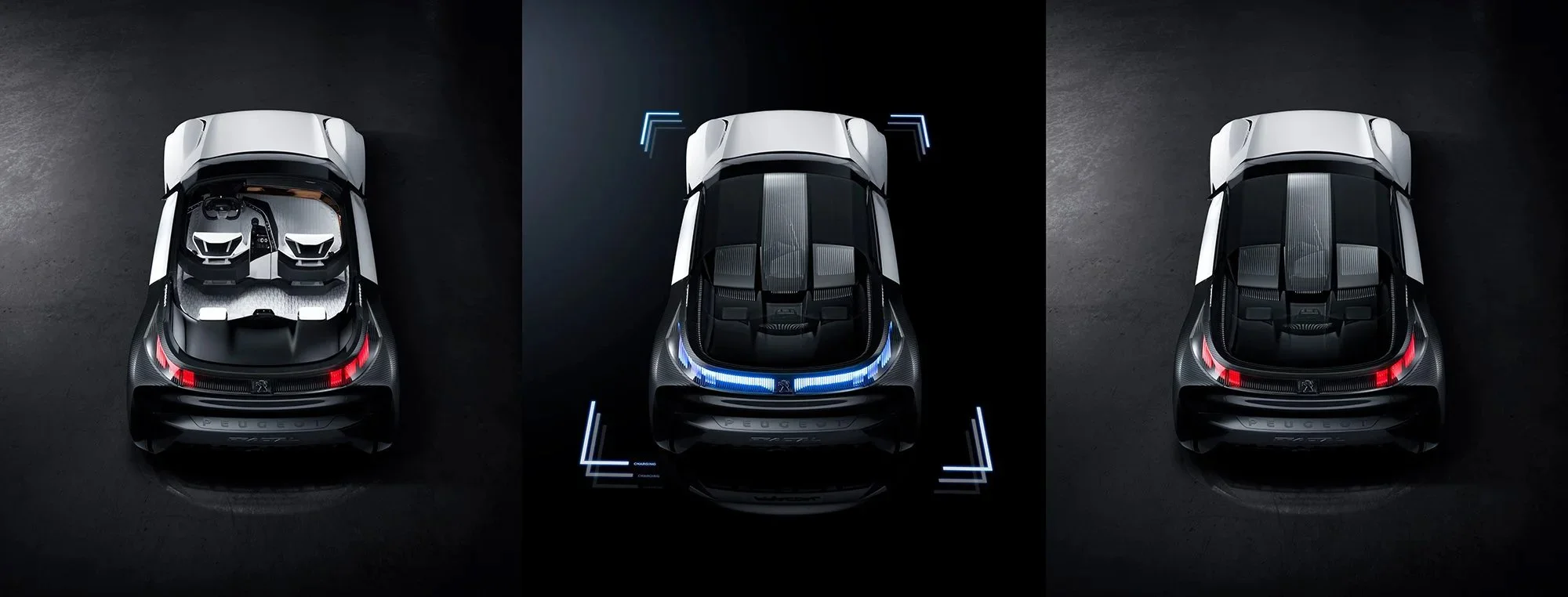
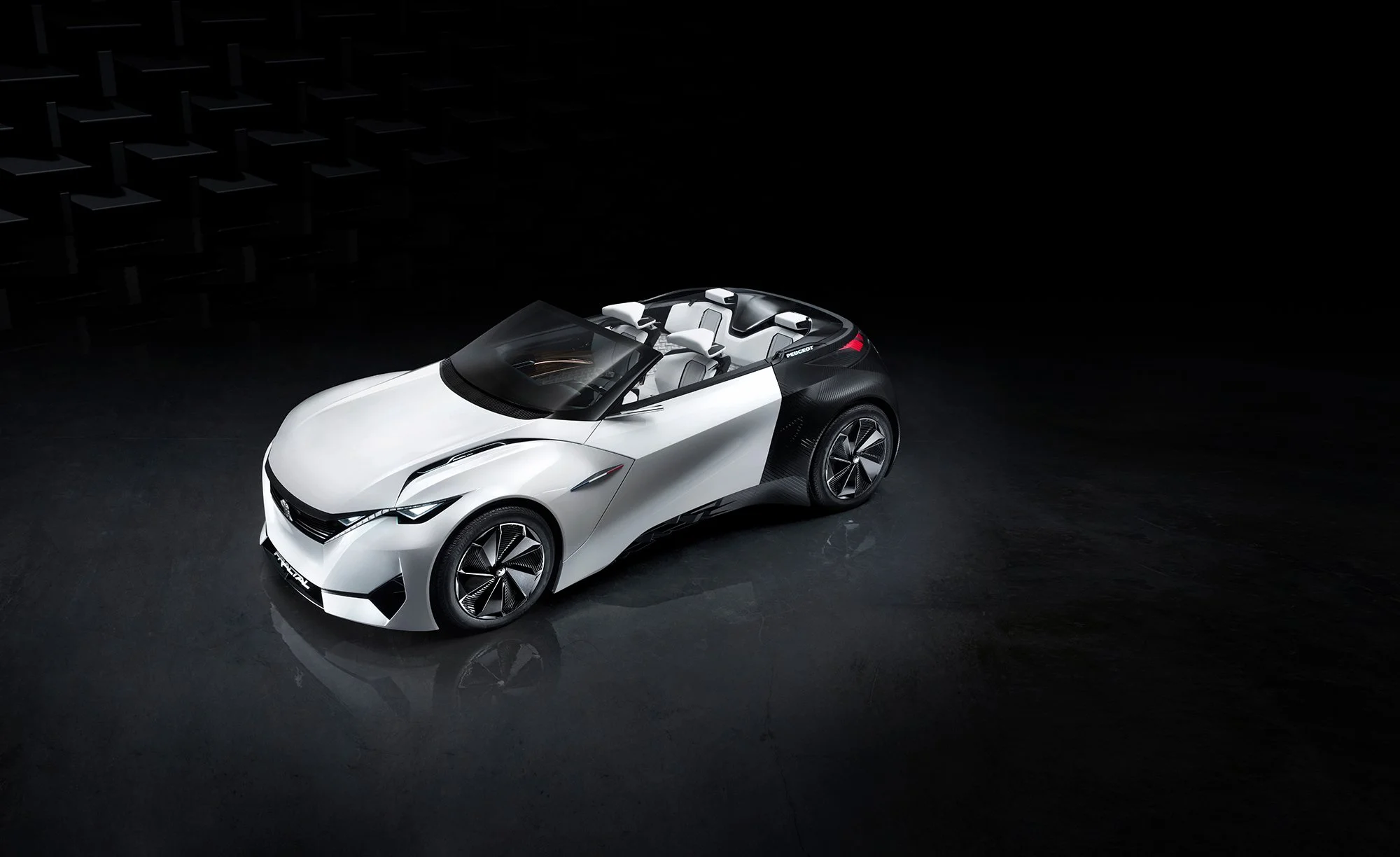
The Peugeot Fractal was one of the most visually striking concept cars I have photographed. It was designed not simply as a car, but as a complete sensory experience. Peugeot approached the project with a very clear ambition to explore how sound, texture, technology and emotion could work together within future automotive design.
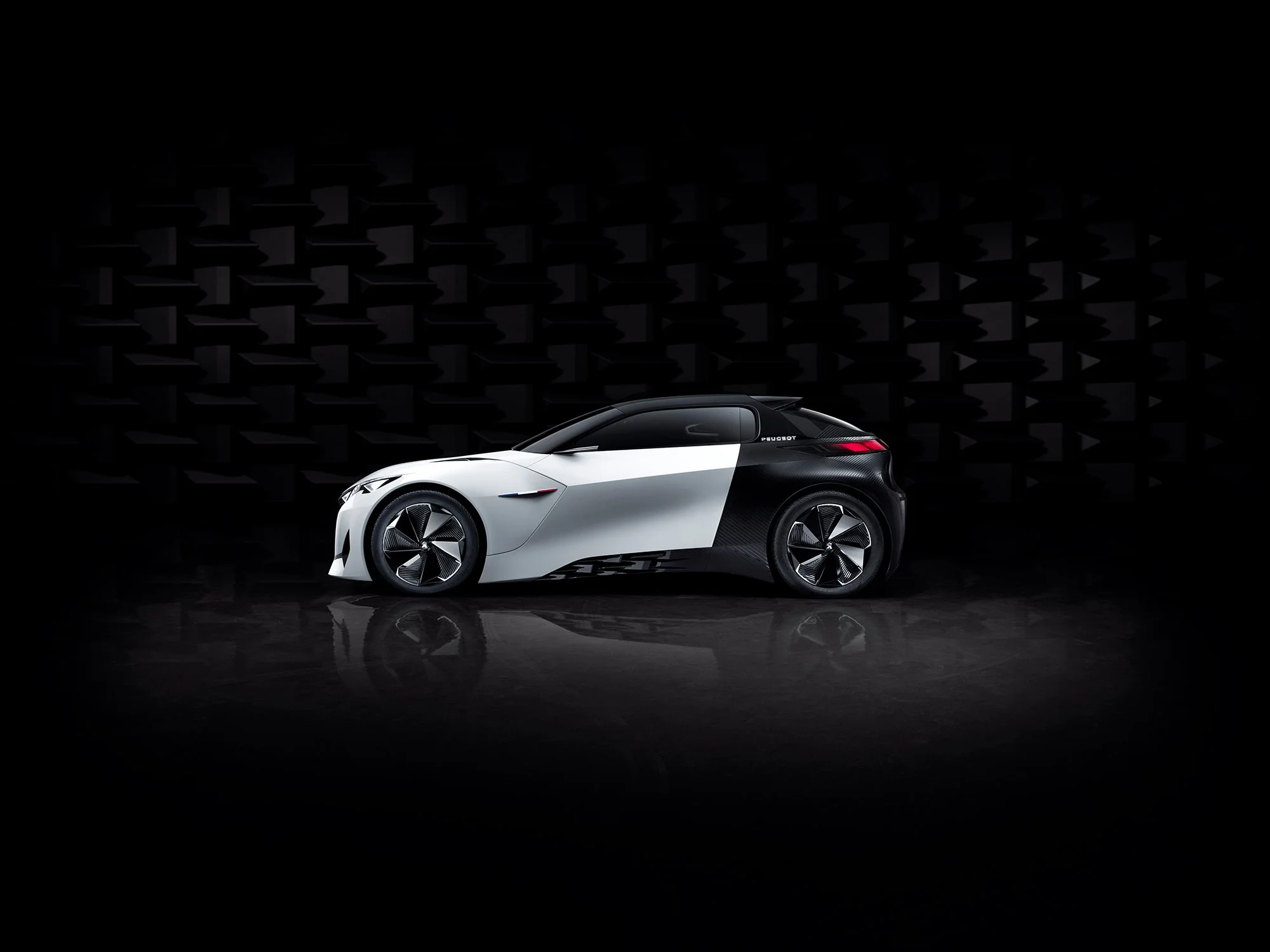
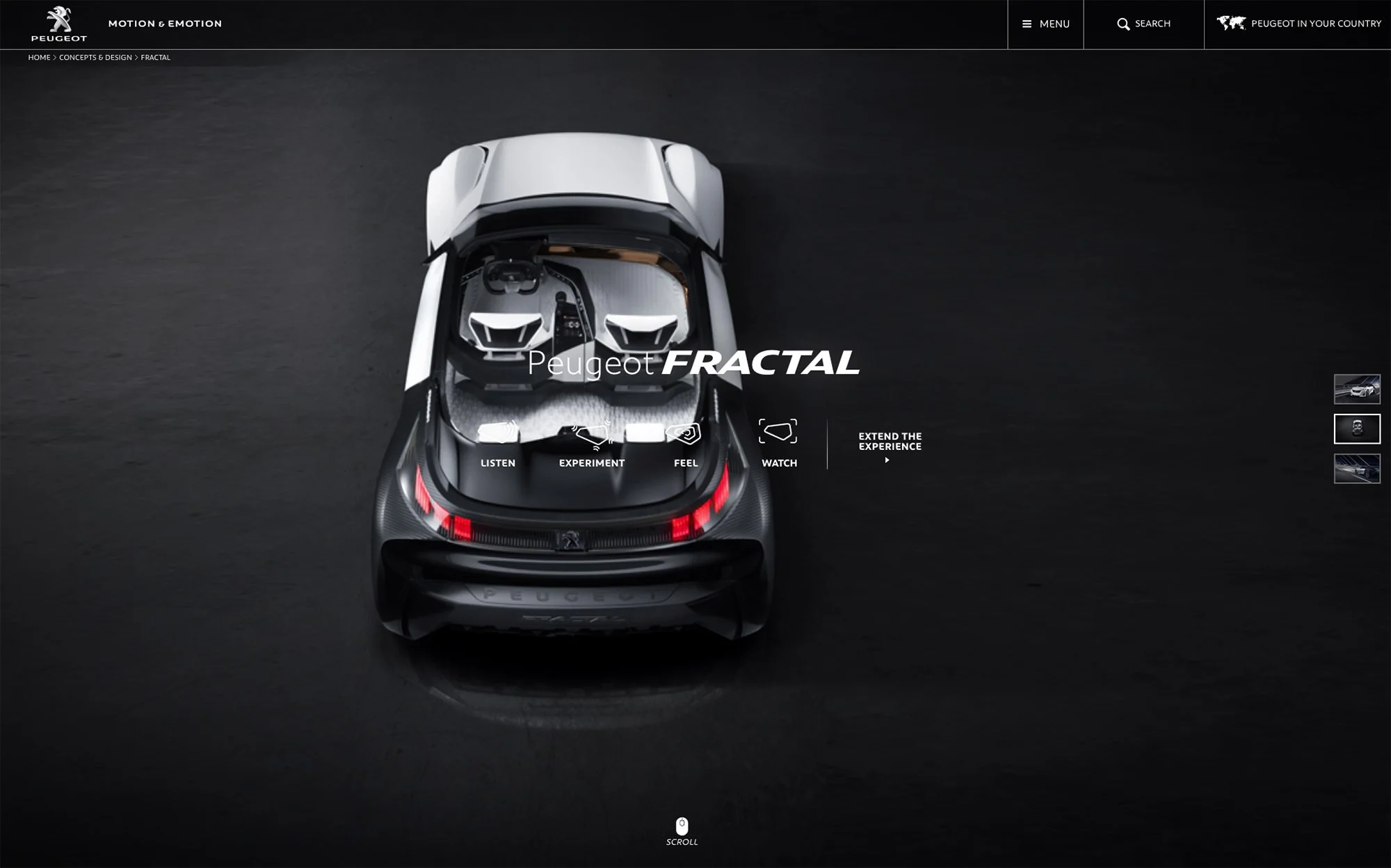
Visually, the Fractal immediately commands attention. Its low stance, sharp surfaces and dramatic proportions create a very aggressive yet refined presence. The design feels futuristic without becoming detached from reality, which is often a difficult balance to achieve with concept vehicles. One of the aspects I found most interesting about the Fractal was the level of detail throughout the vehicle. Every surface appeared carefully considered. The textures, lighting elements and sculpted forms all contributed to a sense of movement and energy even when the car was stationary.
Photographing a concept car like this requires a very different mindset compared to shooting production vehicles. With production cars the focus is often on accessibility and broad commercial appeal. With concept cars the objective shifts towards highlighting innovation, experimentation and emotional impact. The Fractal featured incredibly complex detailing throughout both the exterior and interior. The cockpit design in particular felt almost architectural in nature, with geometric forms and layered textures creating a highly immersive environment. From a photographic perspective this created huge opportunities to explore shape, shadow and light in a more artistic and cinematic way.
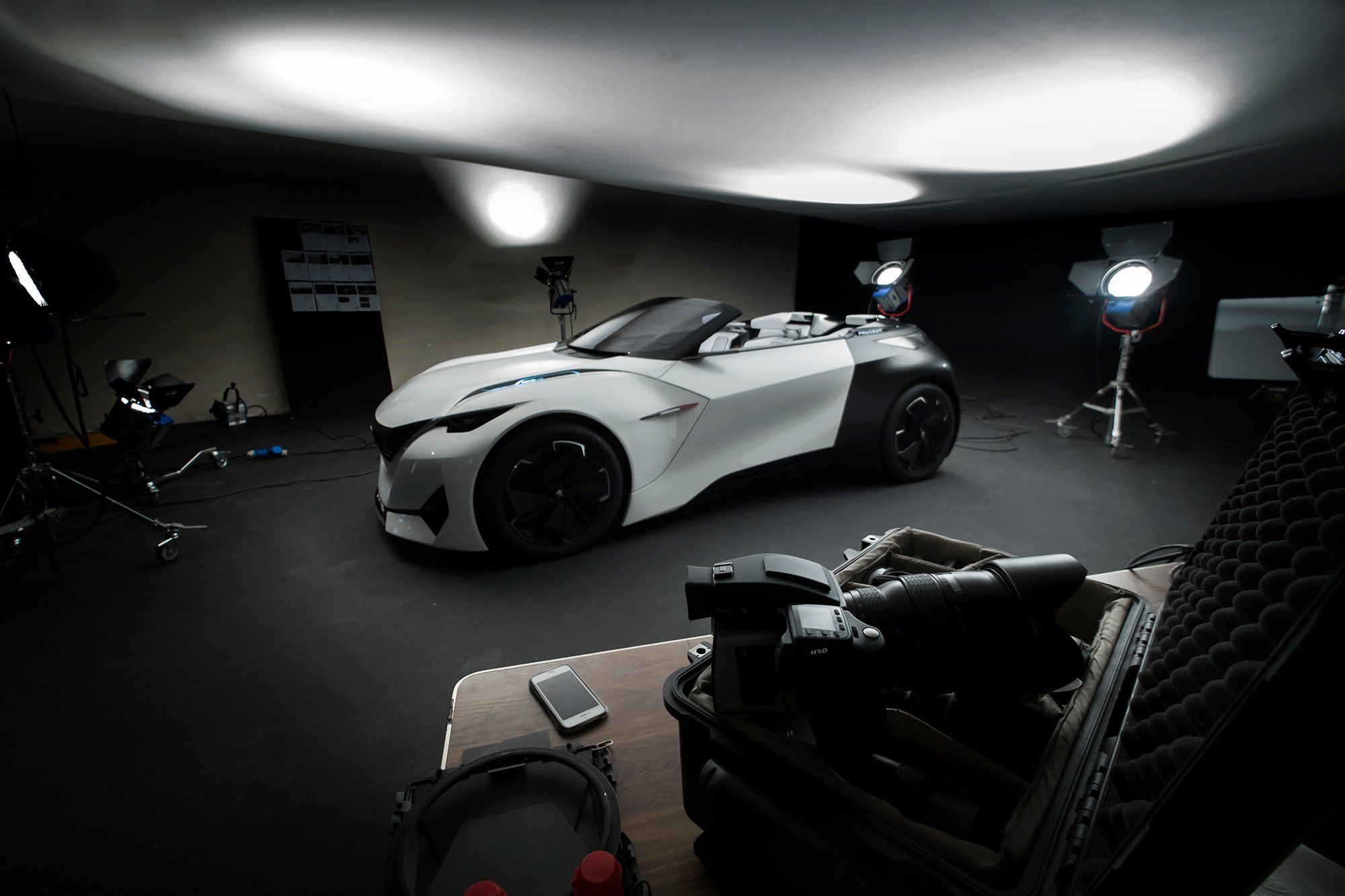
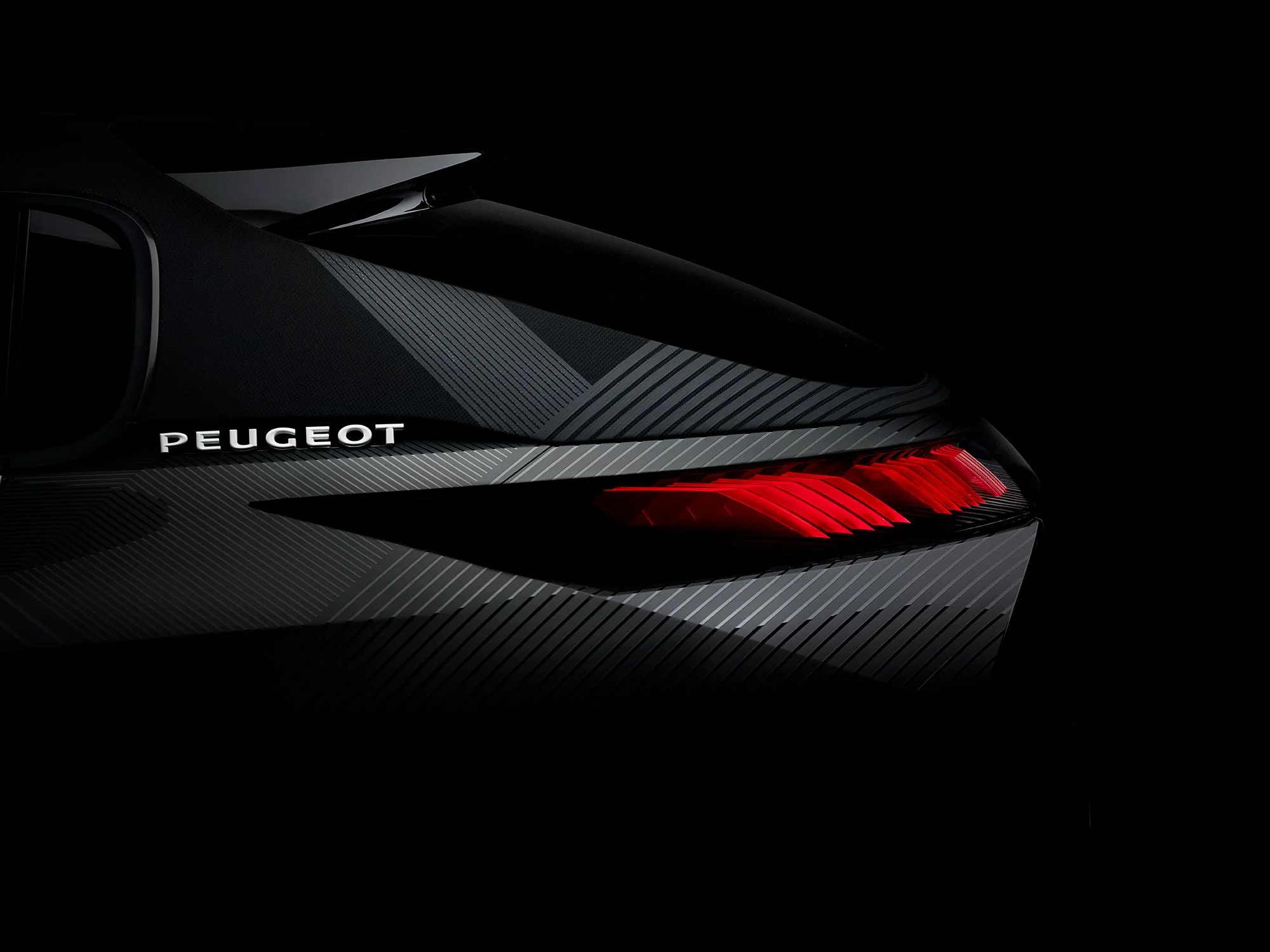
Lighting plays an enormous role in automotive photography, especially when working with concept vehicles. The way reflections travel across a surface can dramatically alter how the design is perceived. My role was to sculpt the light carefully so that the strongest aspects of the design language were emphasised without losing subtlety or elegance. With the Fractal I wanted the imagery to feel powerful and refined at the same time. Peugeot places huge importance on emotion within its branding and design philosophy, so the photography needed to reflect that emotional connection rather than simply present technical documentation of the car.
One of the challenges with photographing highly reflective concept vehicles is maintaining control over every surface. Unlike many other forms of photography, automotive photography often involves shaping reflections just as much as shaping direct light. Every reflection tells part of the story. Every highlight guides the viewer’s eye through the image.The Fractal’s angular design and intricate surface detailing meant that precision was essential throughout the shoot. Small adjustments in lighting position or camera angle could dramatically change the visual balance of the image. This is where experience in commercial car photography becomes invaluable because understanding how automotive surfaces behave under studio lighting takes years of practice.
What I particularly enjoyed about the Fractal project was that it allowed for genuine creativity. Peugeot gave me the freedom to explore the emotional qualities of the car while still maintaining the visual consistency required for a worldwide campaign launch. That combination of trust and creative collaboration is always where the strongest automotive photography is created.
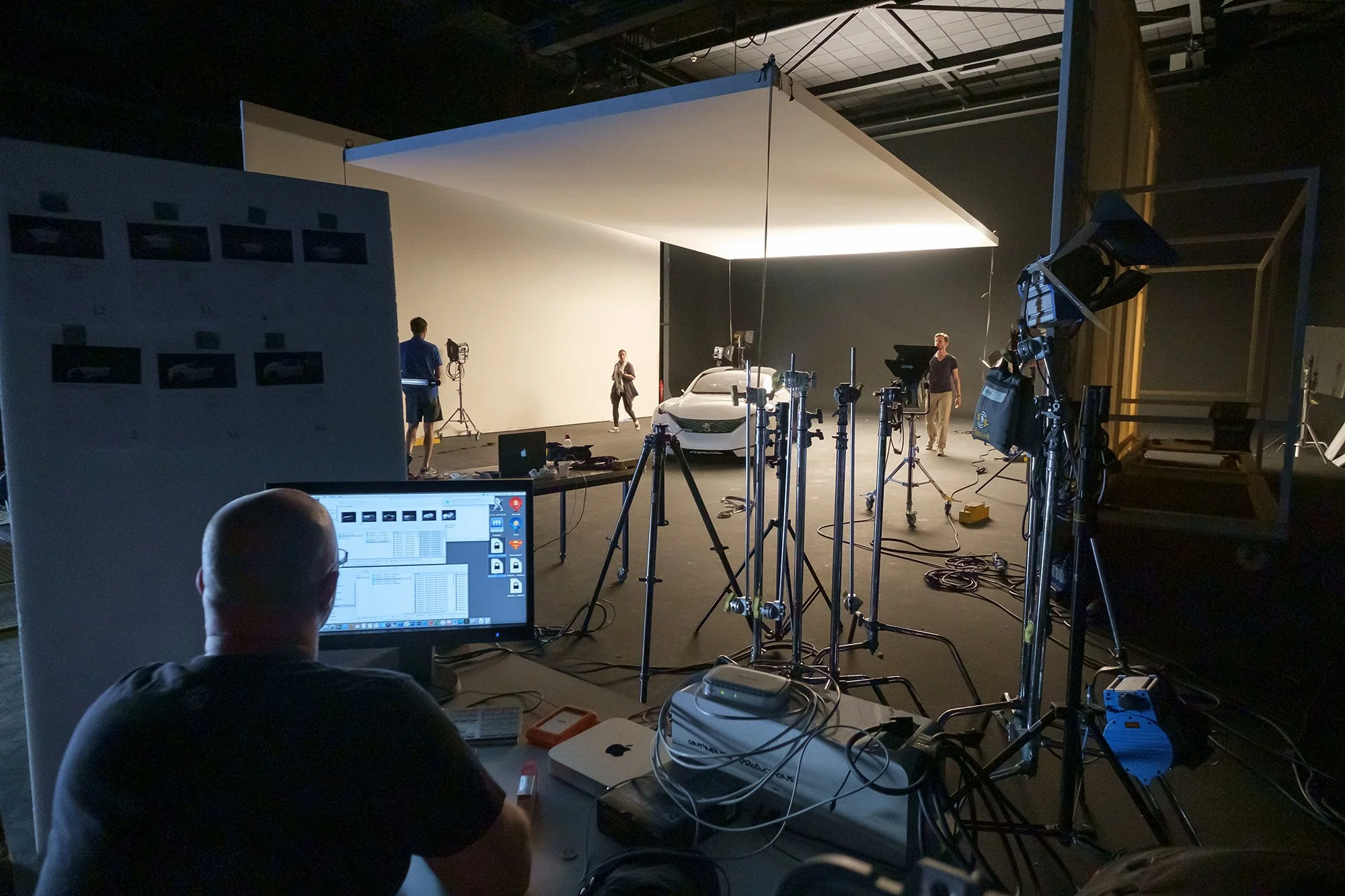
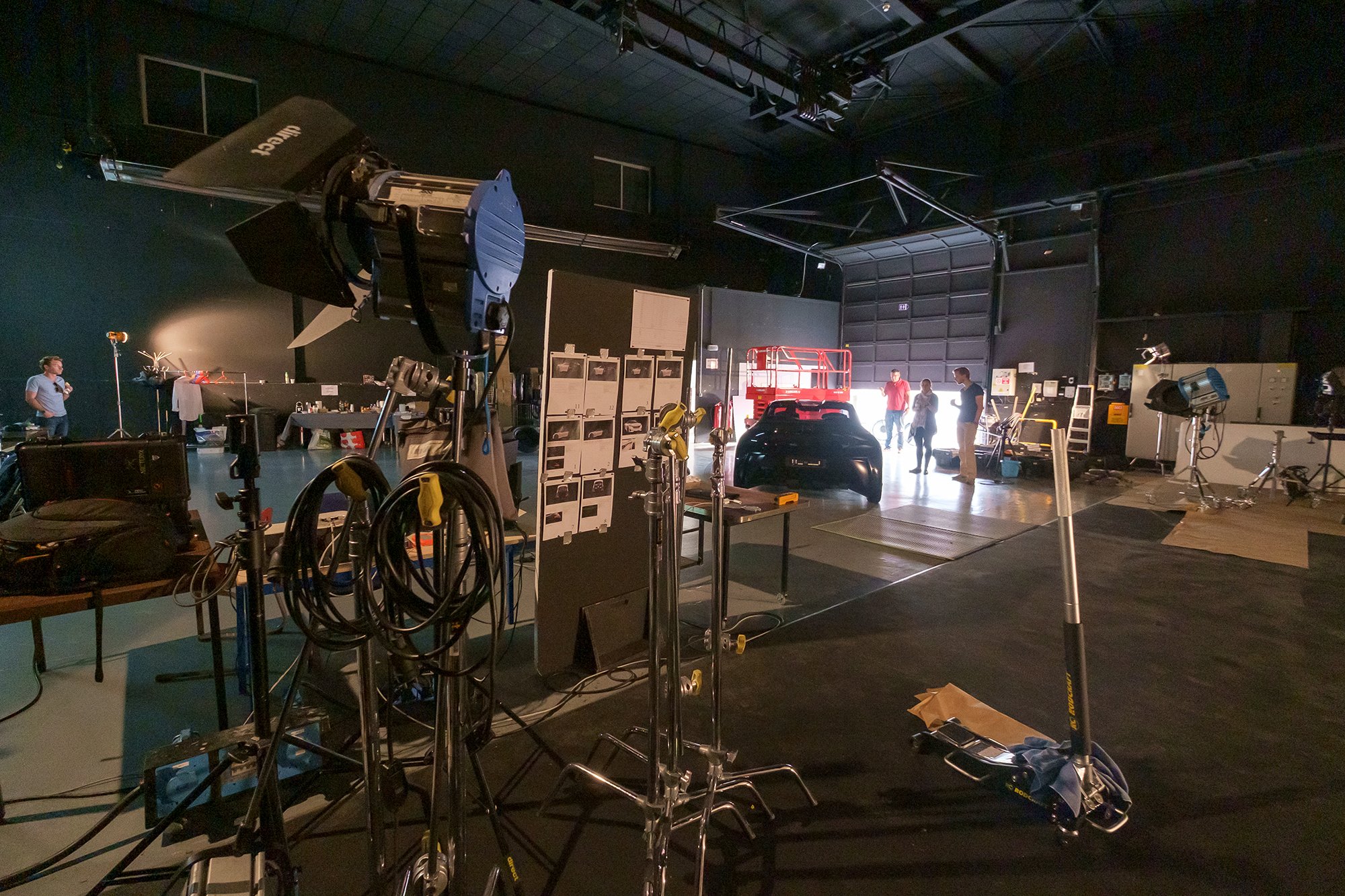
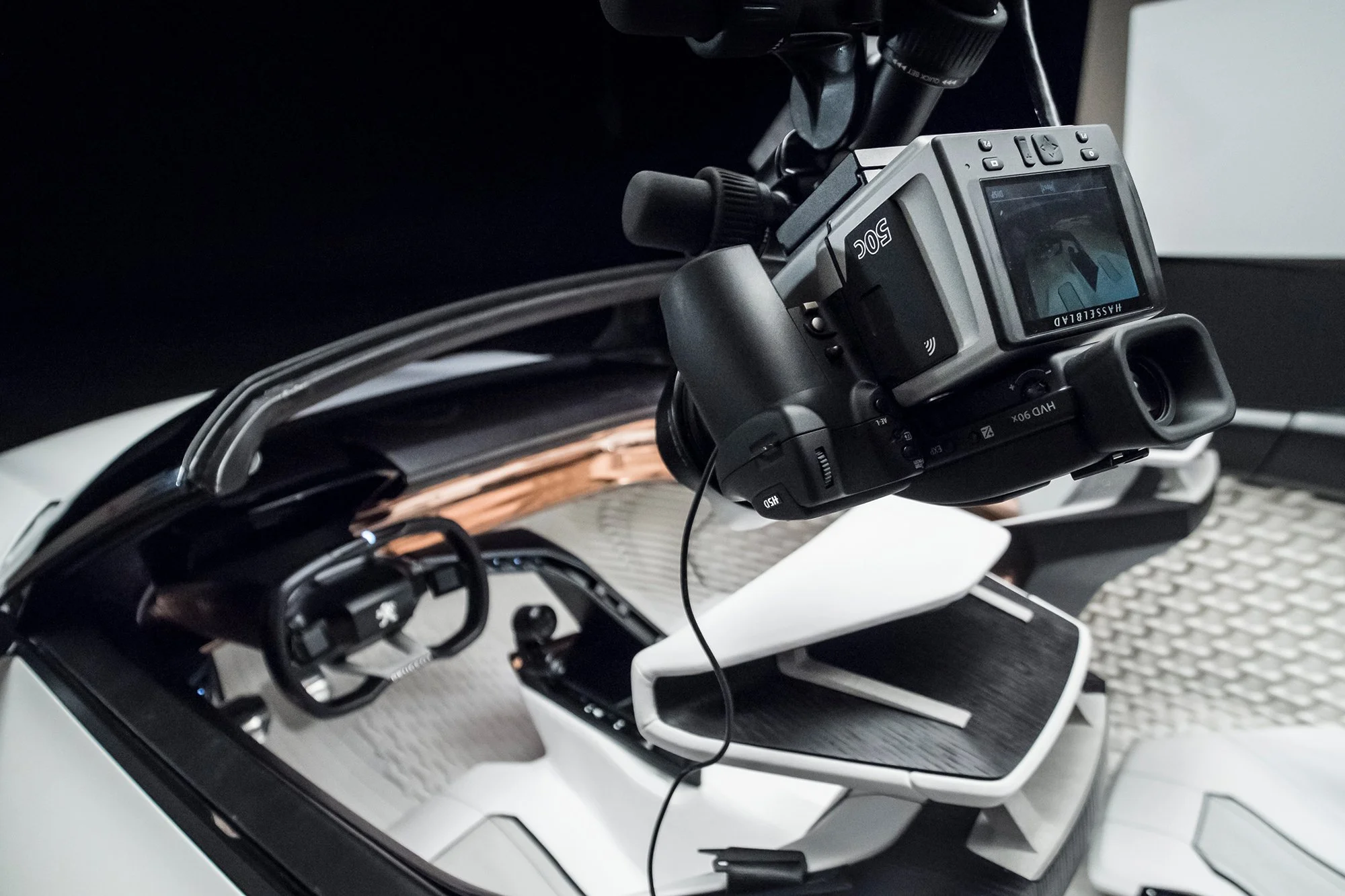
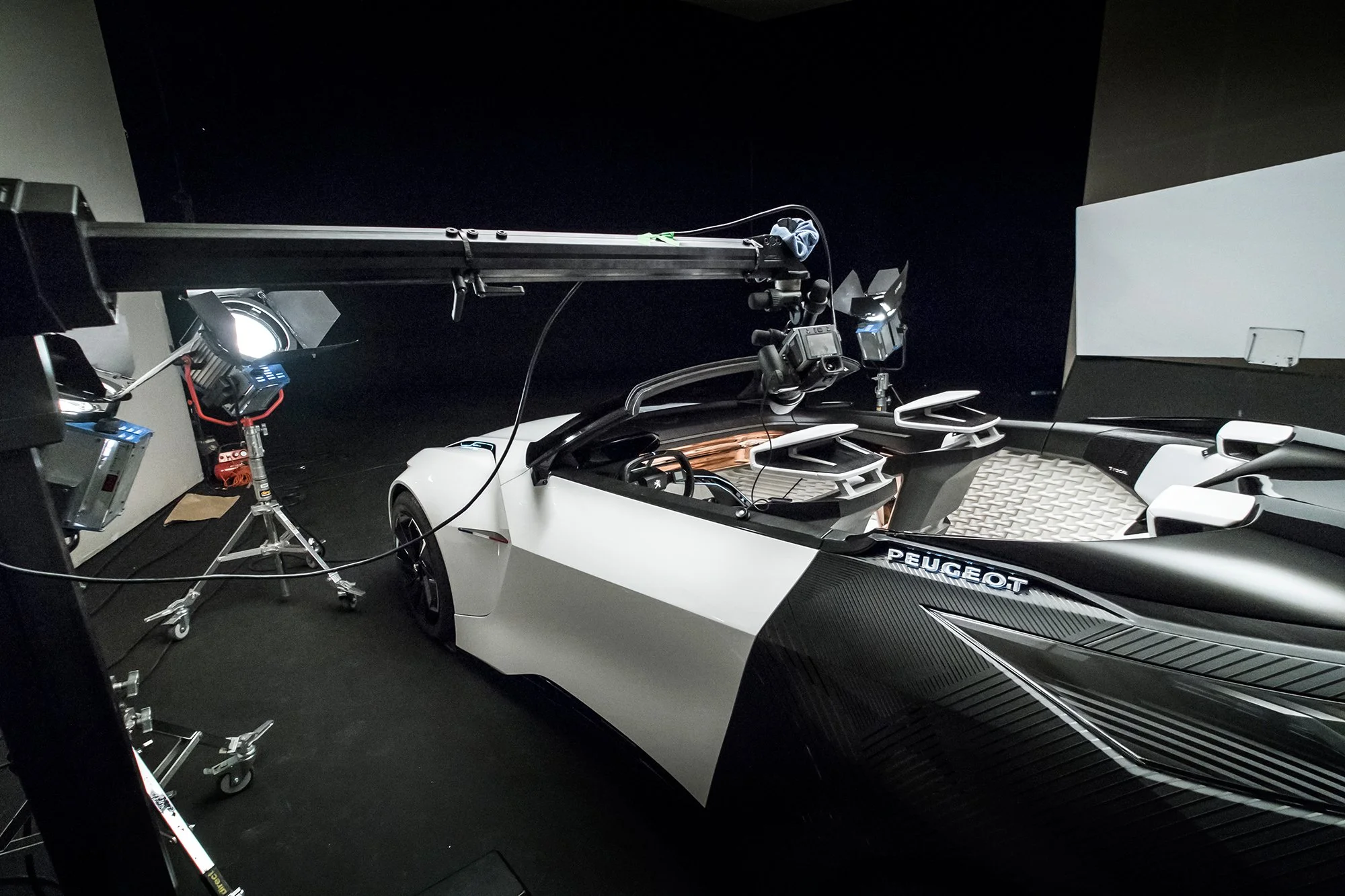
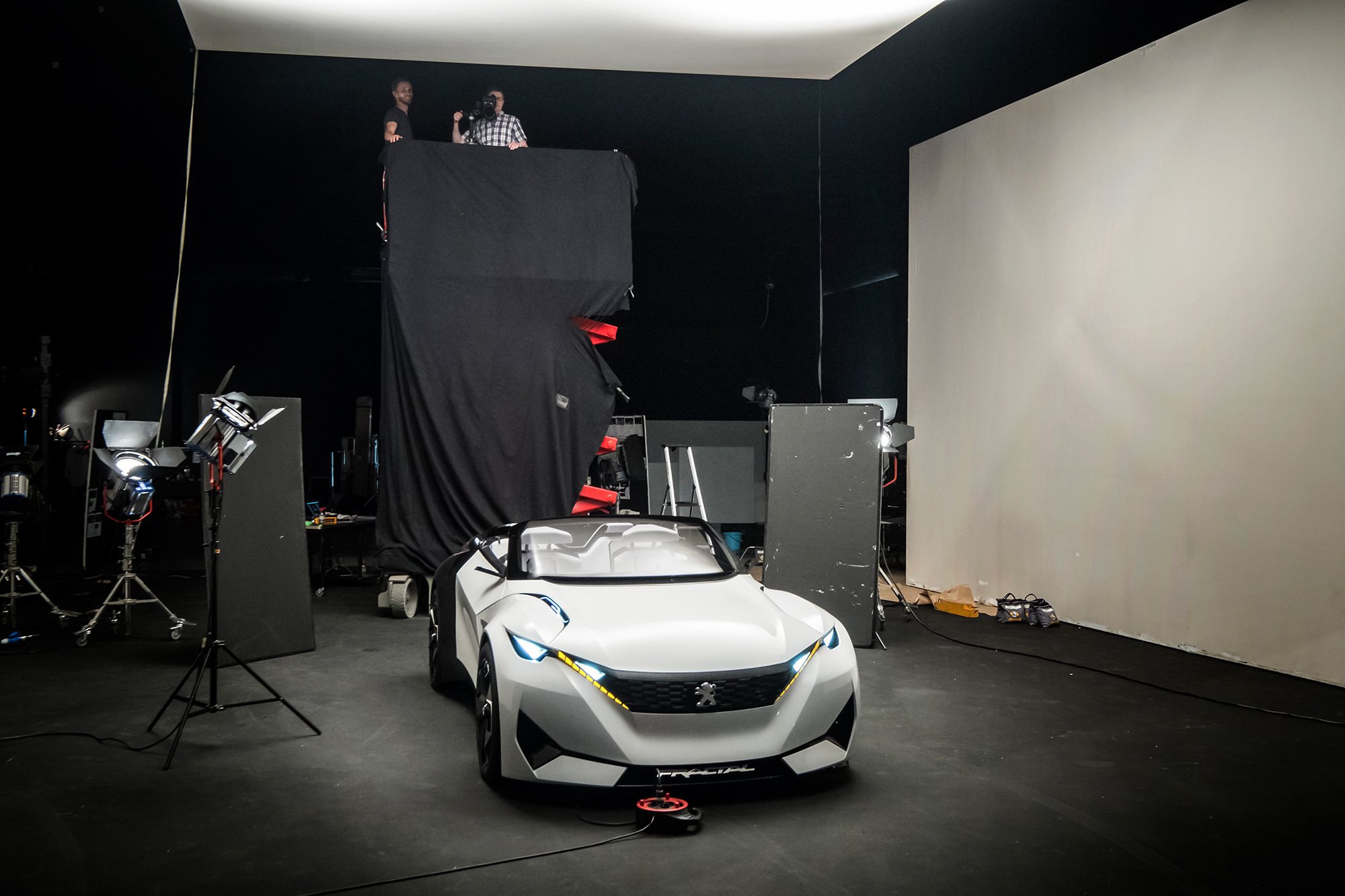
Behind The Scenes
Behind every polished automotive campaign image is an enormous amount of technical precision, teamwork and problem solving happening behind the scenes.
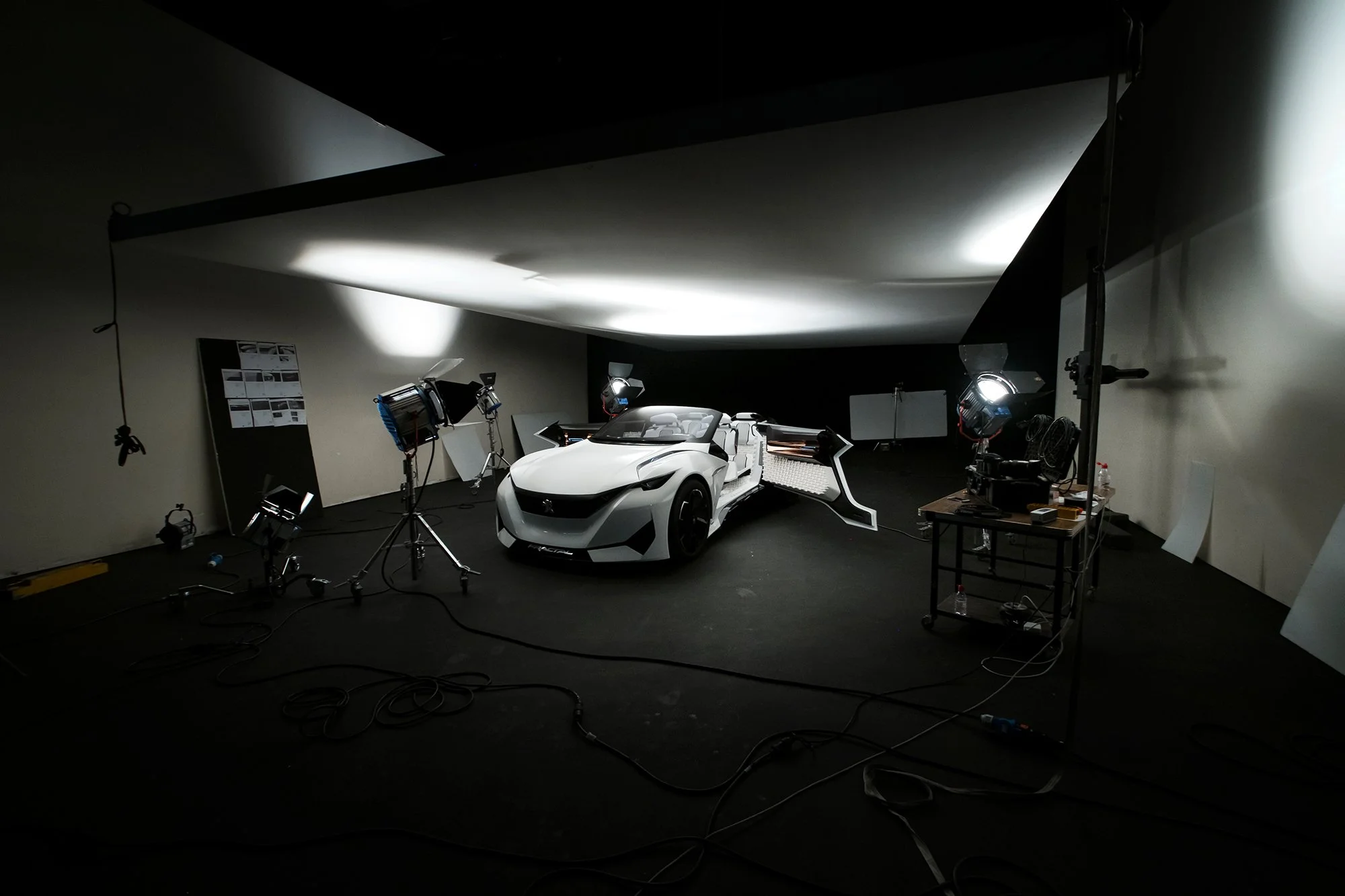
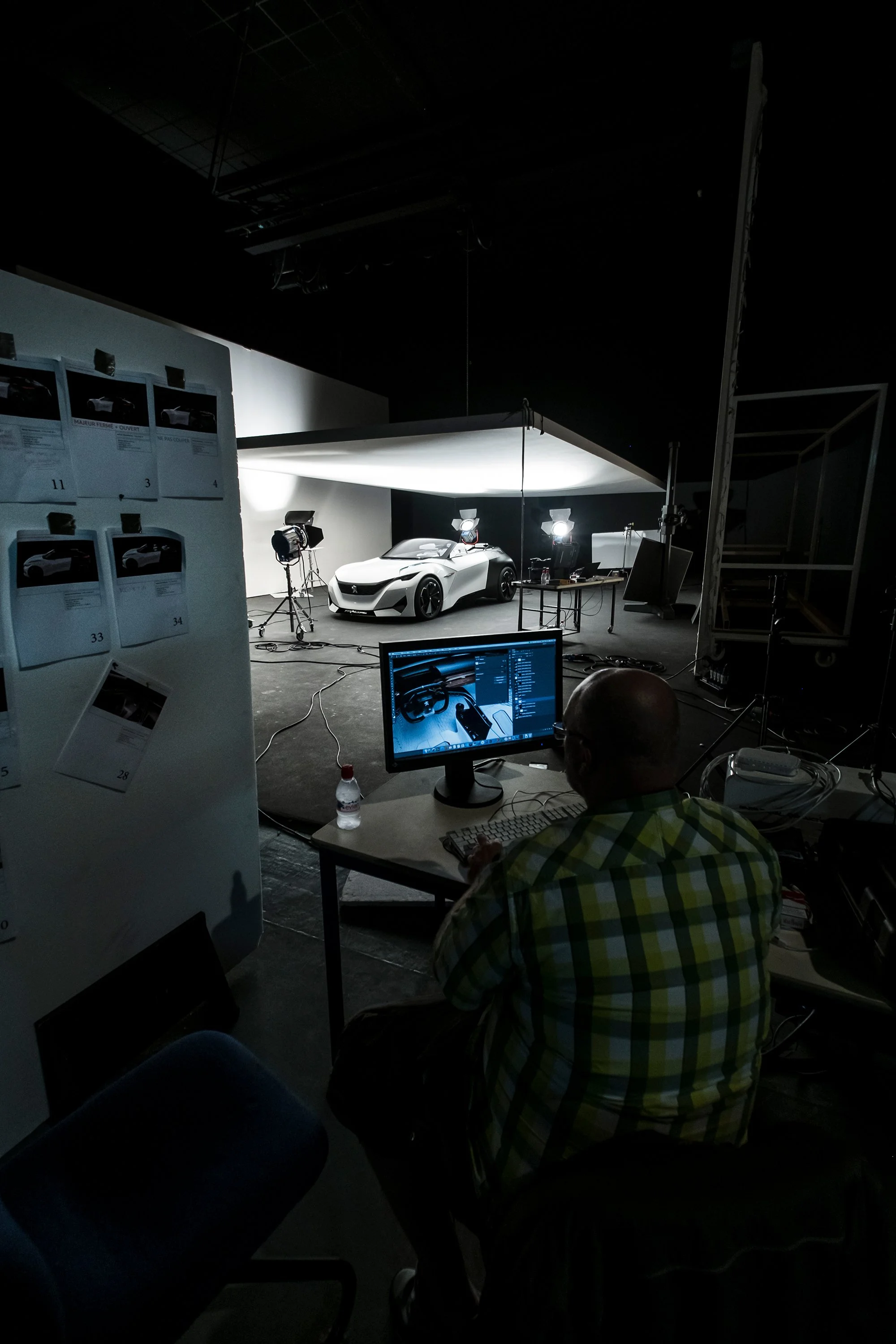
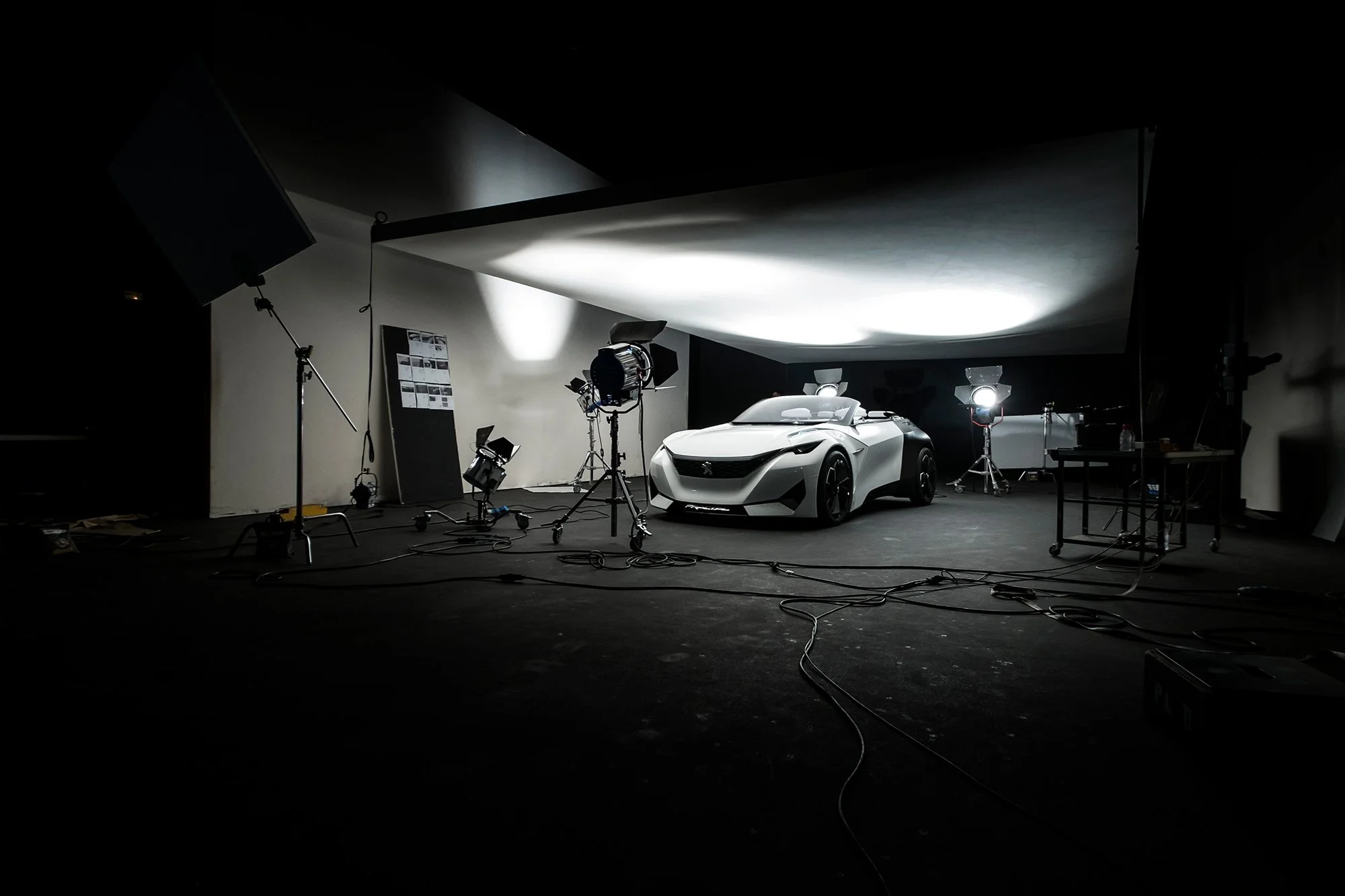
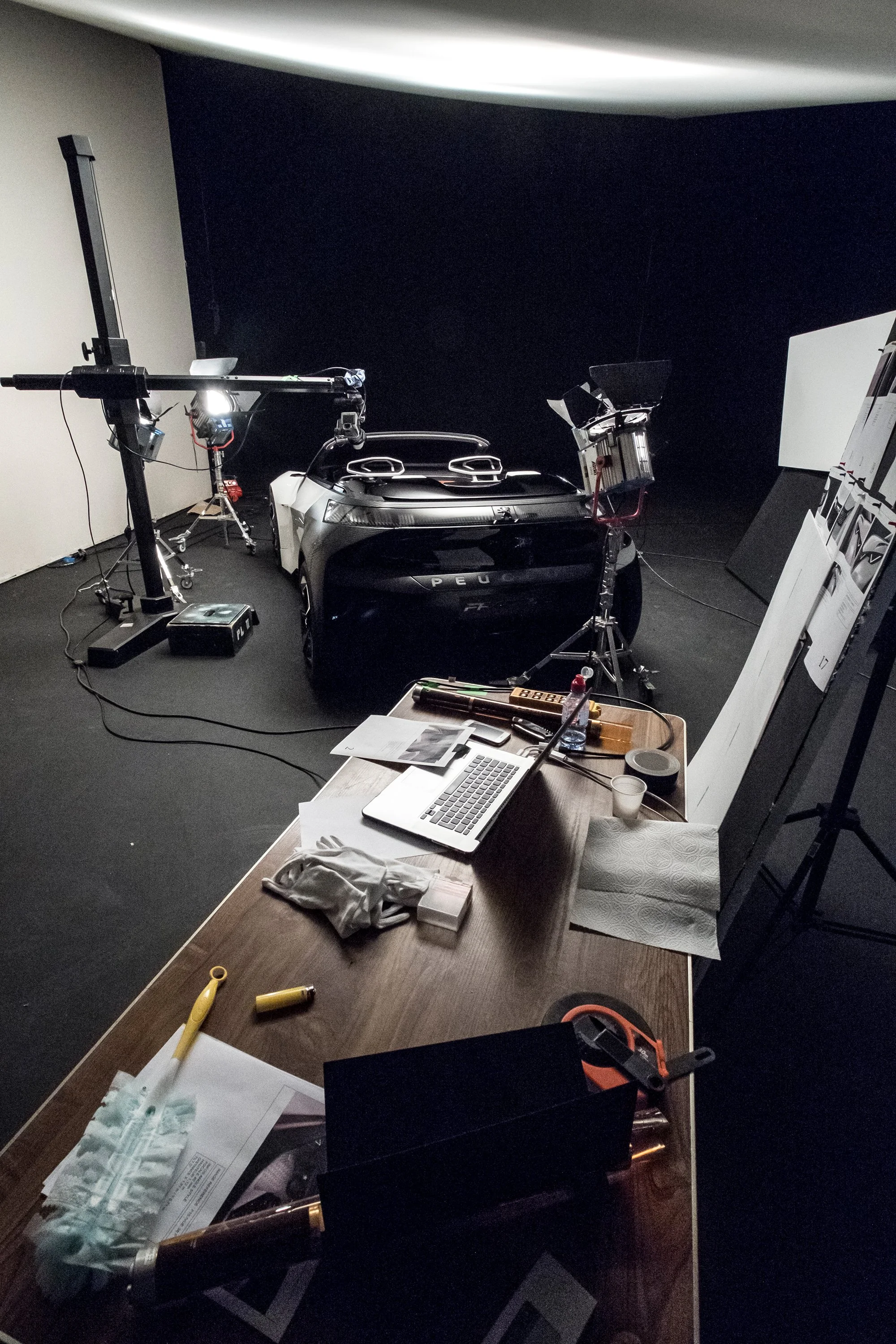
Studio automotive photography at this level is highly controlled. Every reflection, every highlight and every detail within the frame is carefully considered. Unlike location photography where you work with changing environmental conditions, studio photography allows you to build light piece by piece until the final image achieves exactly the desired mood and visual impact.
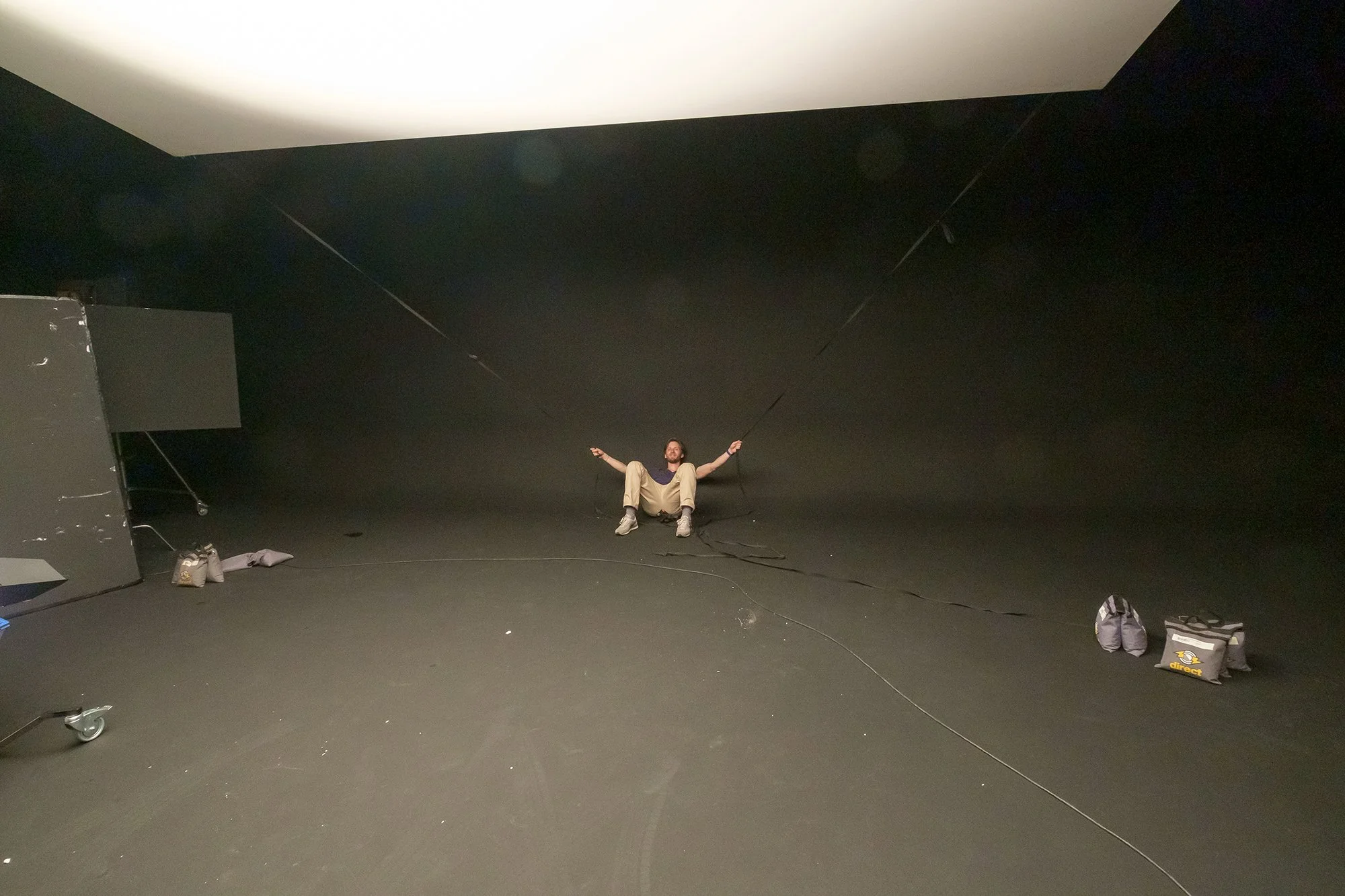
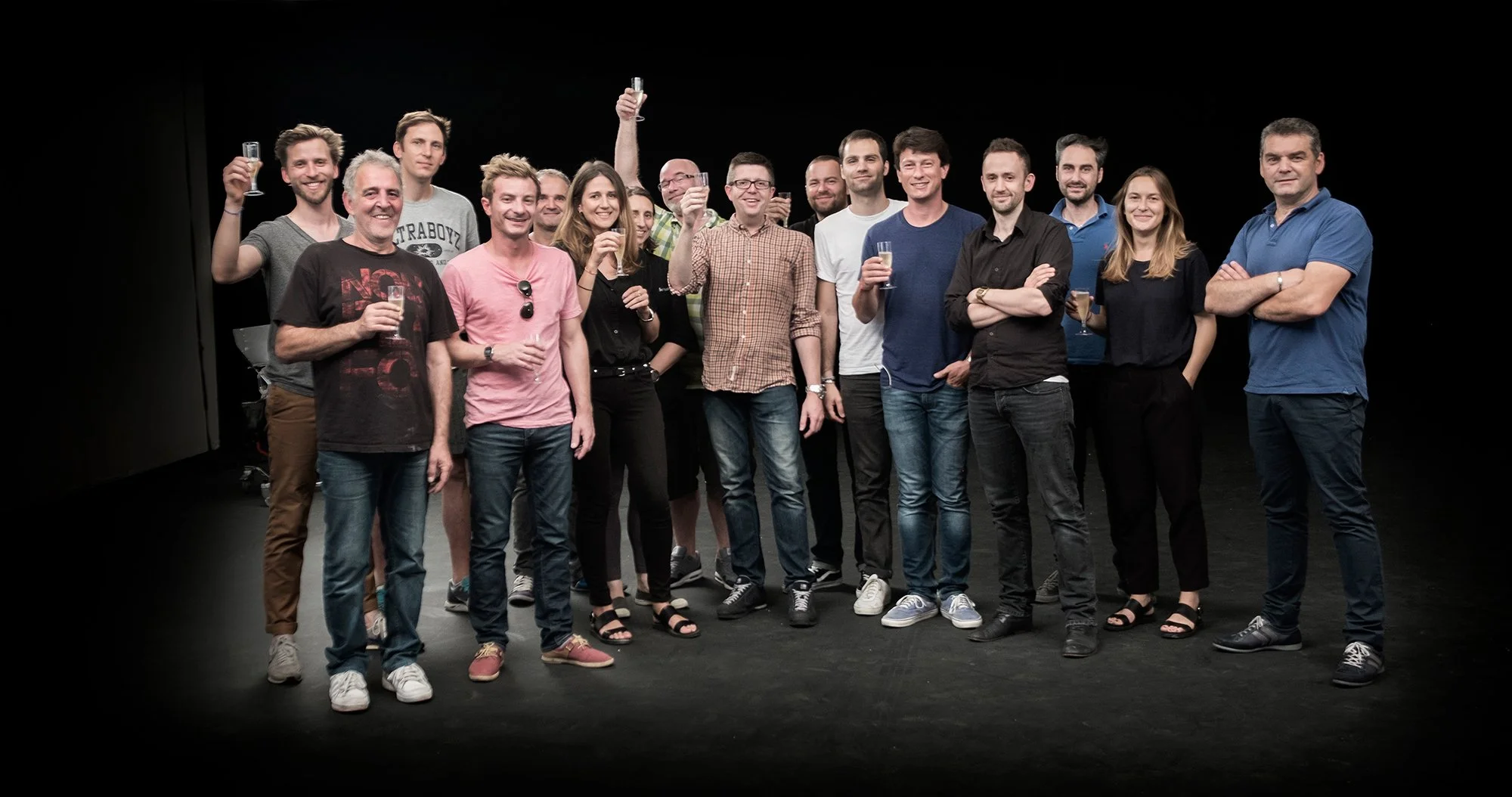
The Peugeot Design Centre in Paris provided an exceptional environment to work in. Shoots like this are often highly intensive, with long production days and constant refinements being made throughout the process. The atmosphere within the studio becomes incredibly collaborative because everybody involved is focused on achieving the strongest possible result for the client. A large part of automotive studio photography involves patience and precision. Lighting a concept car can sometimes take hours before a single final frame is captured. Every curve and surface reacts differently to light, particularly on vehicles with experimental materials and aggressive sculptural forms like the Fractal.
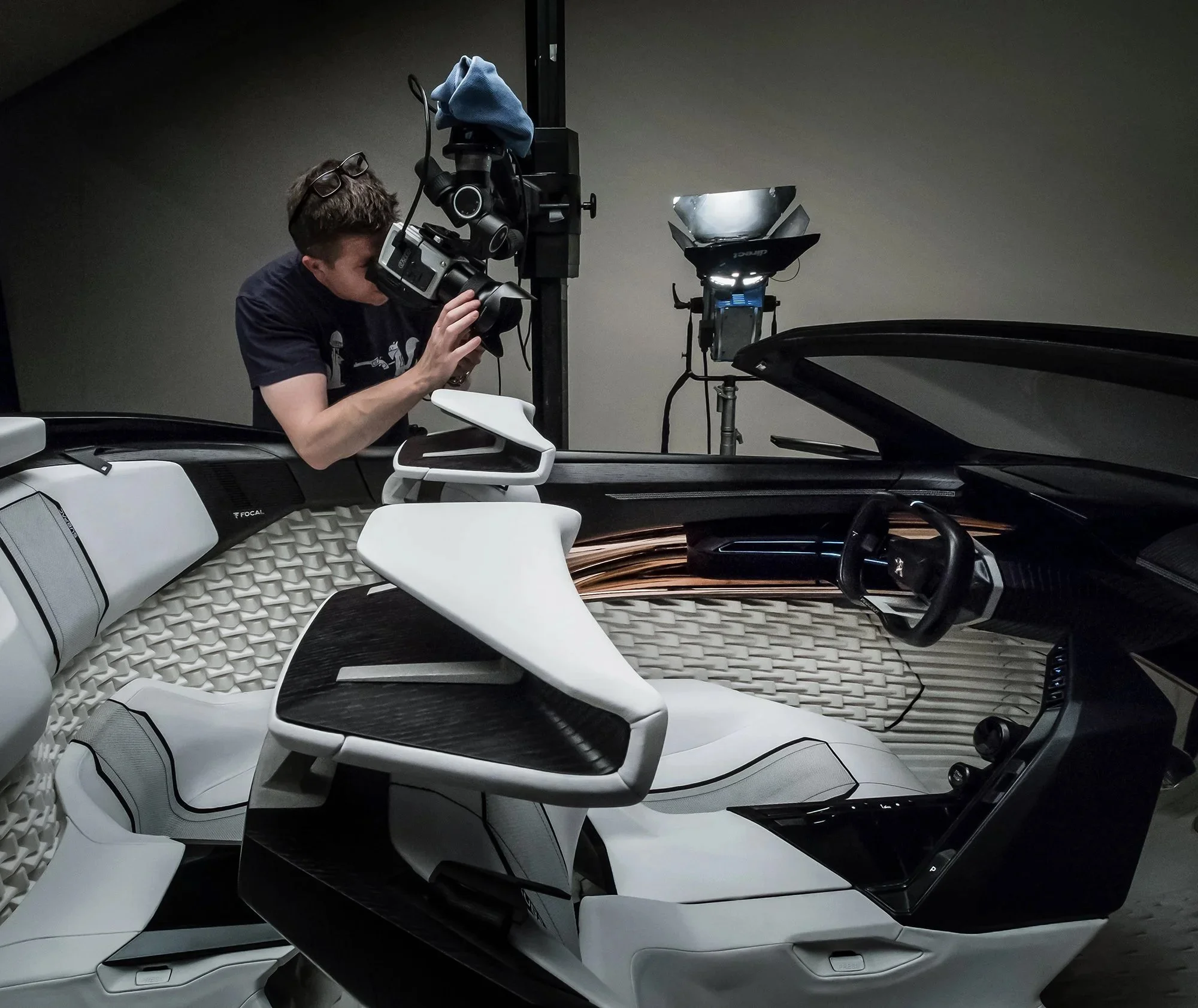
During the shoot we continually refined the lighting setup to enhance the shape and energy of the vehicle. Sometimes the smallest adjustment can completely transform how a body line flows through the frame. Automotive photography is often about subtlety and control rather than dramatic changes. Another important aspect behind the scenes is maintaining momentum and creative focus across the entire production. Large commercial shoots can easily become overly technical if the creative direction is not constantly protected. My role as photographer is not only to manage the technical execution, but also to keep the emotional quality of the imagery at the centre of the process.
The collaboration with the Peugeot design team was extremely valuable throughout the shoot. They understand the vehicle better than anyone and their input helped ensure that the photography highlighted the key design features and emotional characteristics that defined the Fractal concept. What I always enjoy about projects like this is the shared sense of purpose across the entire team. Everyone involved understands that the imagery being created will become part of the public identity of the vehicle itself. These photographs are often the very first way the world experiences a new concept car, so the responsibility is significant.
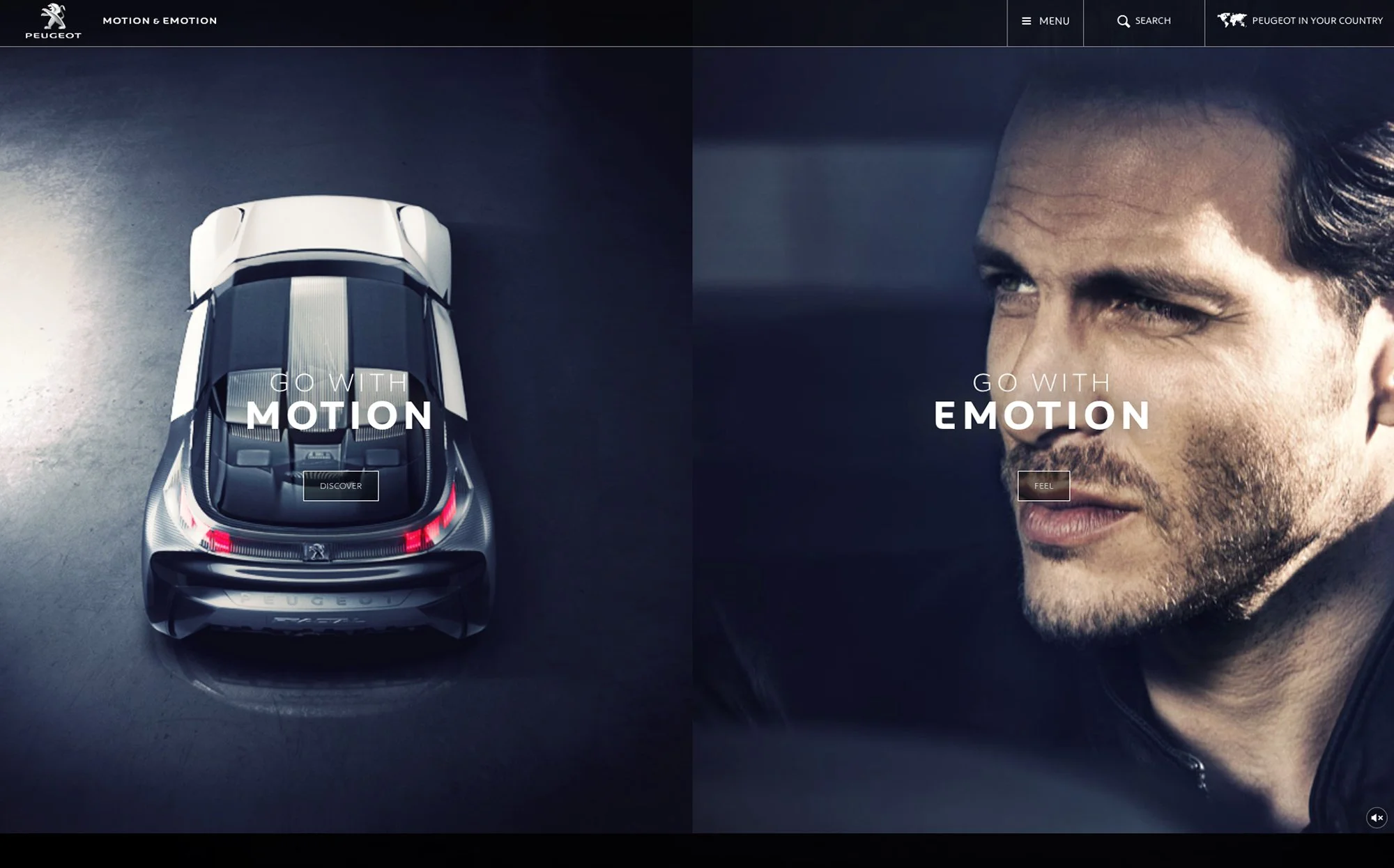
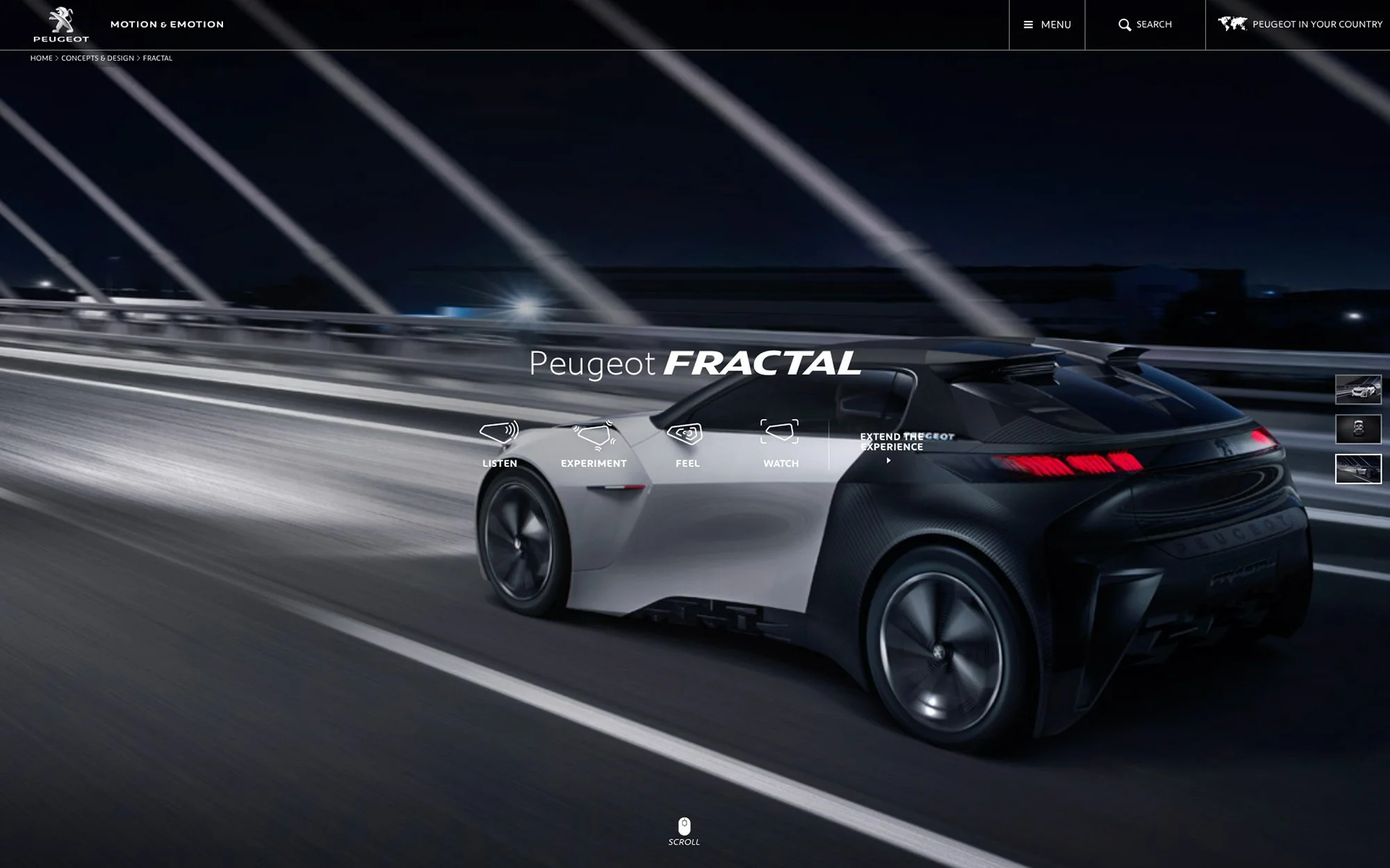
In today’s automotive industry the role of photography has become more important than ever. A single image may appear across global media platforms within minutes of release. It has to capture attention instantly, communicate the design philosophy clearly and reinforce the identity of the brand consistently across every market. That is why trust between client and photographer matters so much. Brands like Peugeot need confidence that the imagery being produced will not only look visually striking, but also support the wider commercial and branding objectives of the campaign. Consistency, quality and emotional connection all become equally important.
For me personally, the Peugeot Fractal project was an opportunity to combine technical precision with creative storytelling. It represented exactly the kind of automotive photography work that I am passionate about, creating imagery that goes beyond simply showing a vehicle and instead builds atmosphere, emotion and visual identity around it. Working with global automotive brands continues to be one of the most rewarding aspects of my career as a commercial car photographer. Every project brings new creative challenges, new collaborations and new opportunities to push visual storytelling further.
The Peugeot Fractal remains one of the standout concept car projects I have had the privilege to photograph, and it perfectly demonstrates how powerful automotive photography can become when strong design, creative trust and technical excellence all come together.