BIPP Feature Article
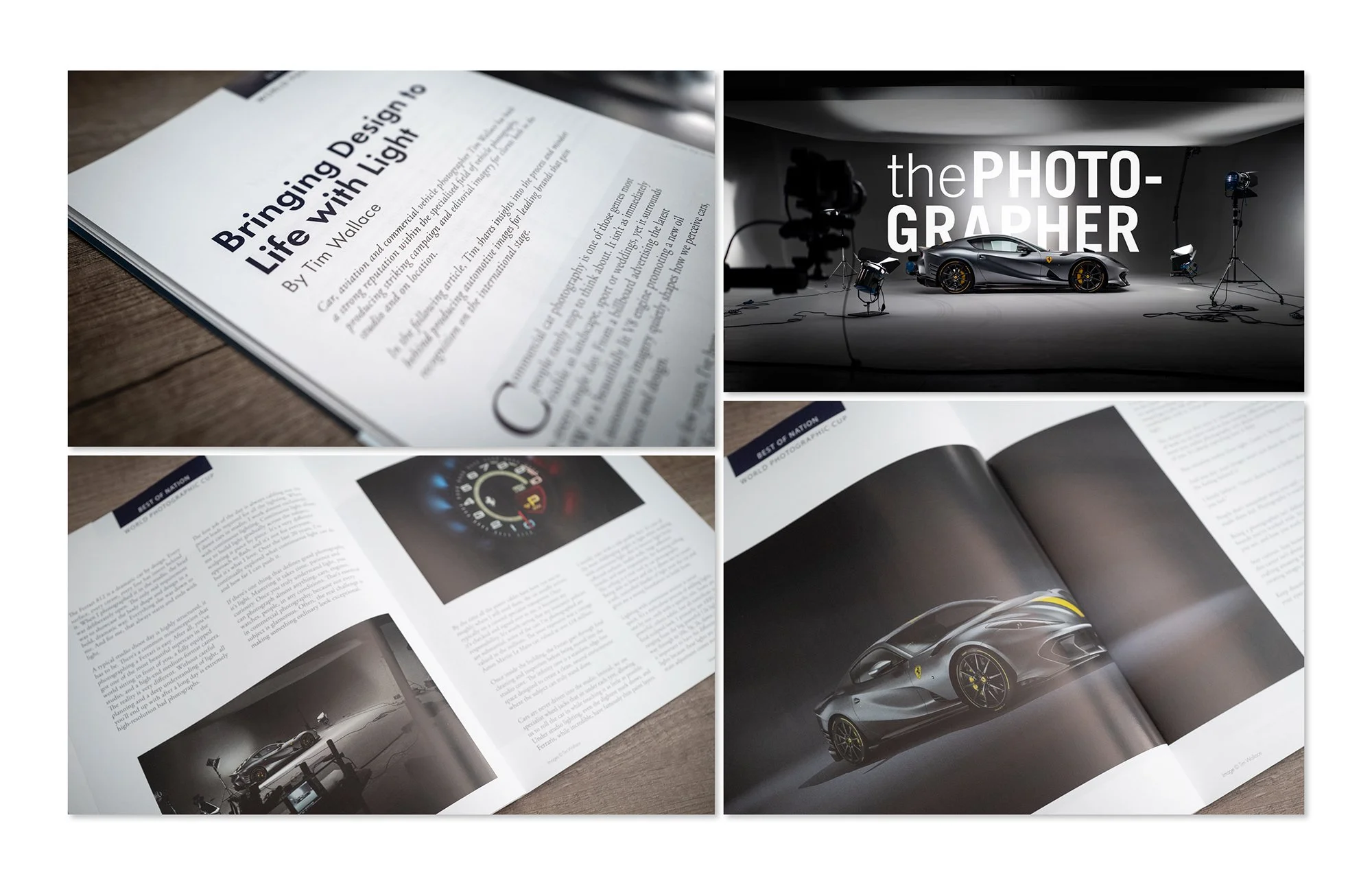
British Institute of Professional Photography - Magazine 2026 Issue One.
A few months ago I was approached by the British Institute of Professional Photography to write an article for their quarterly magazine ‘the PHOTOGRAPHER’.
The magazine was published this week with that 8 page article entitled ‘Bringing Design to Life with Light’ where I talk openly about what a typical day in studio looks like for me when I am shooting automotive photography for clients. How a studio shoot typically begins, what is involved and how we work to create the very best photography possible from that studio time.
I also talk about how over the past few years, I've been proud to represent Team United Kingdom at the World Photographic Cup, an international competition that brings together the best photographic work from countries across the globe. Each year, photographers compete across a wide range of categories, and the standard is consistently world-class.
For the 2026 World Photographic Cup, I was fortunate to receive Best of Nation for Team UK for my studio image of a Ferrari 812 Competizione and also have it shortlisted in the finals under the Commercial Photography category.
the PHOTOGRAPHER - Magazine 2026 Issue One
Click to open and read
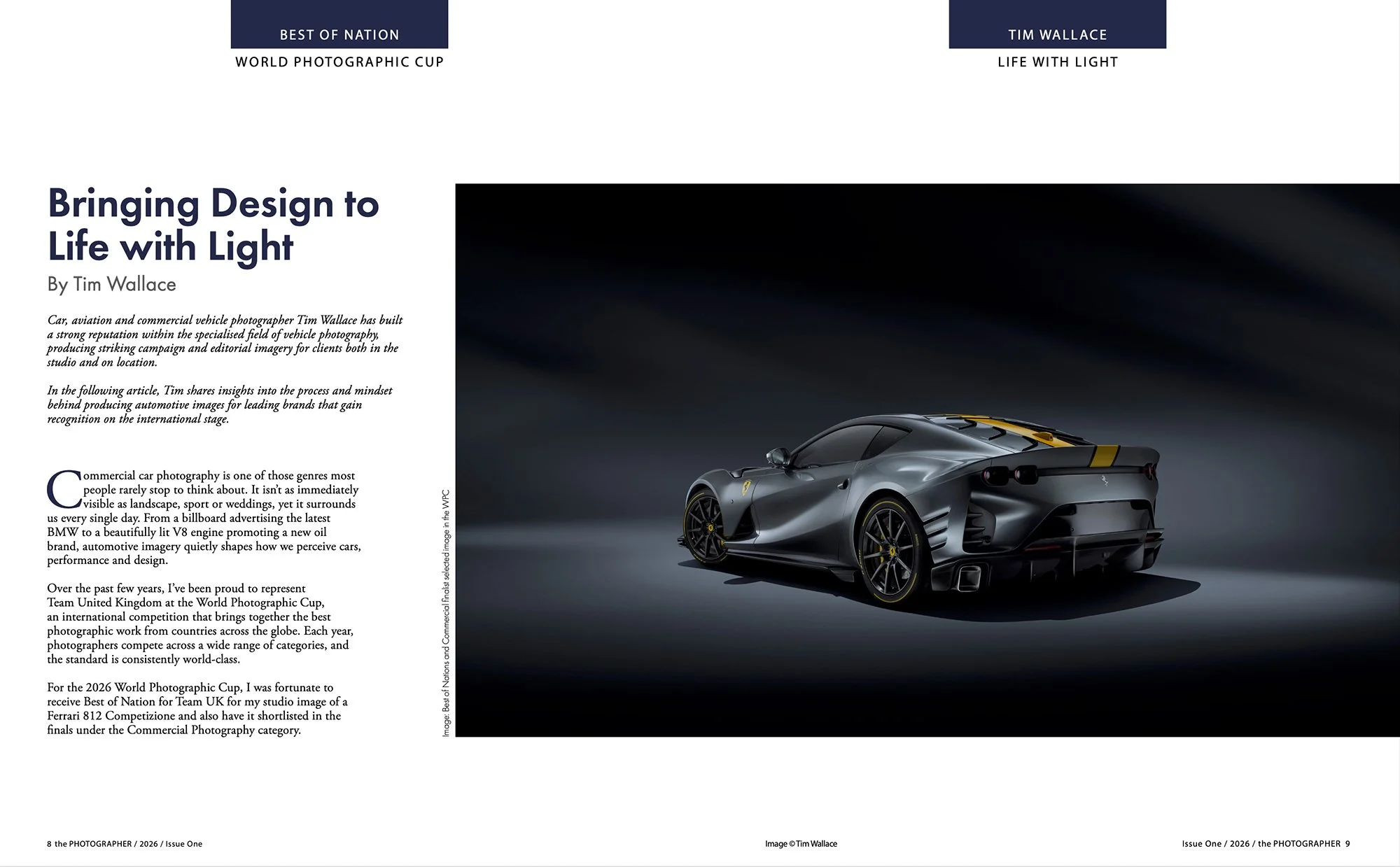
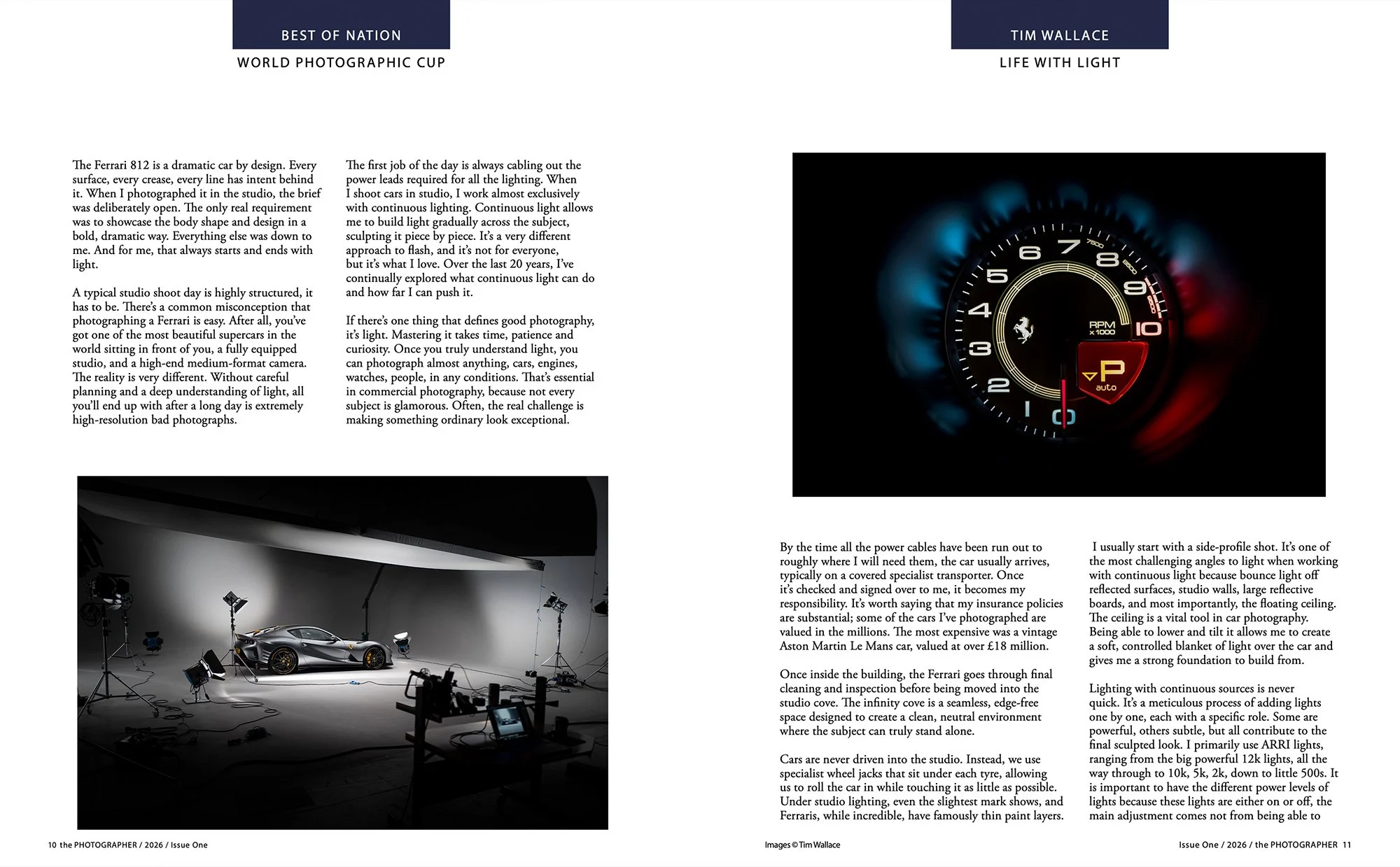
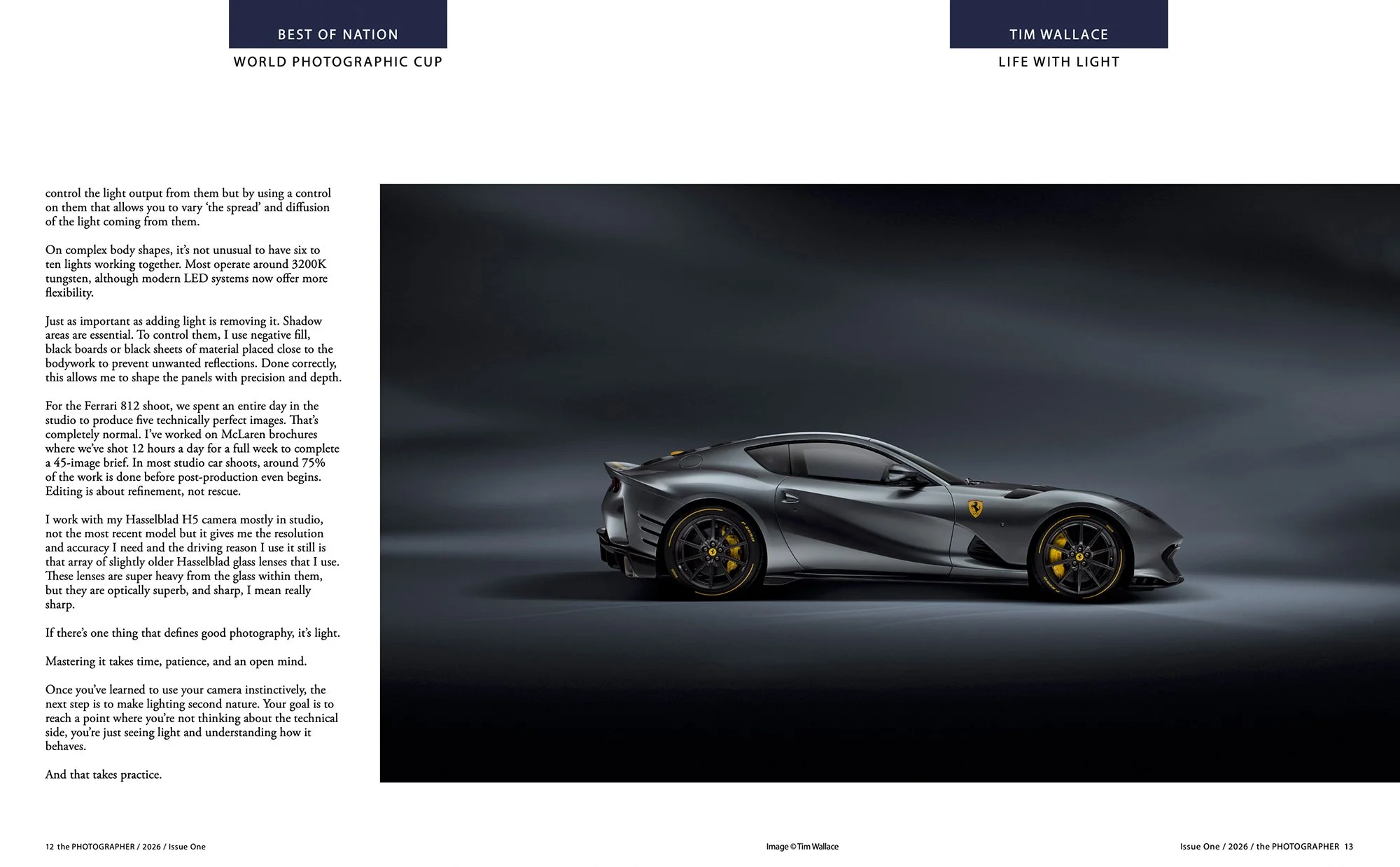
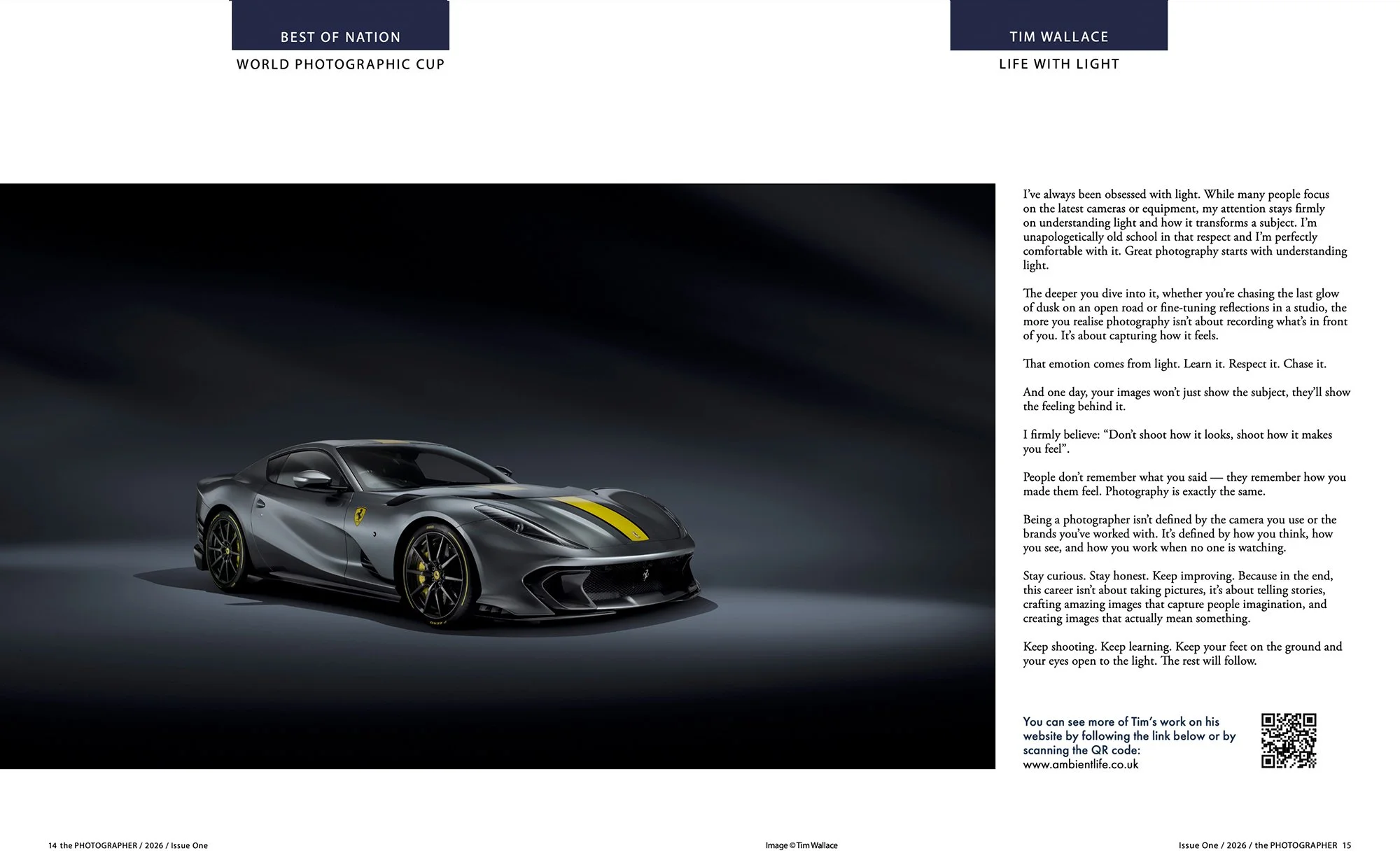
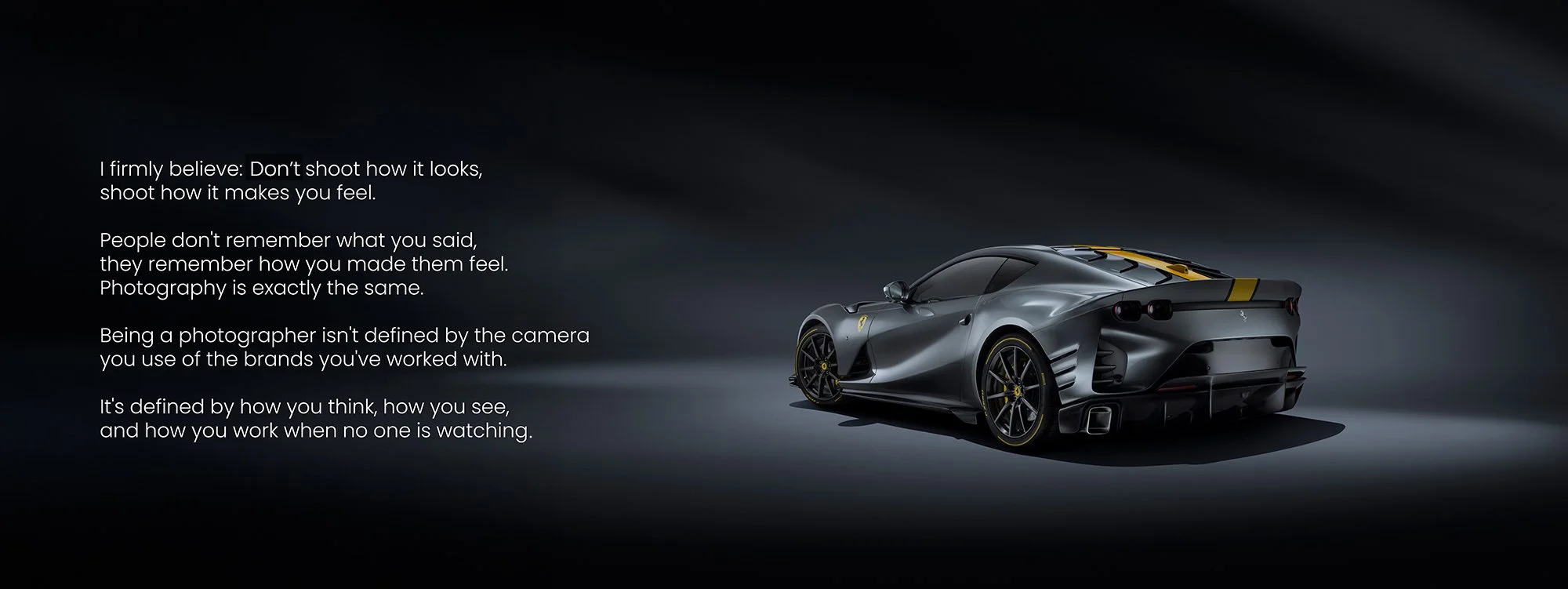
Article Extract - “A typical studio shoot day is highly structured, it has to be. There's a common misconception that photographing a Ferrari is easy. After all, you've got one of the most beautiful supercars in the world sitting in front of you, a fully equipped studio, and a high-end medium-format camera. The reality is very different. Without careful planning and a deep understanding of light, all you'll end up with after a long day is extremely high-resolution bad photographs.
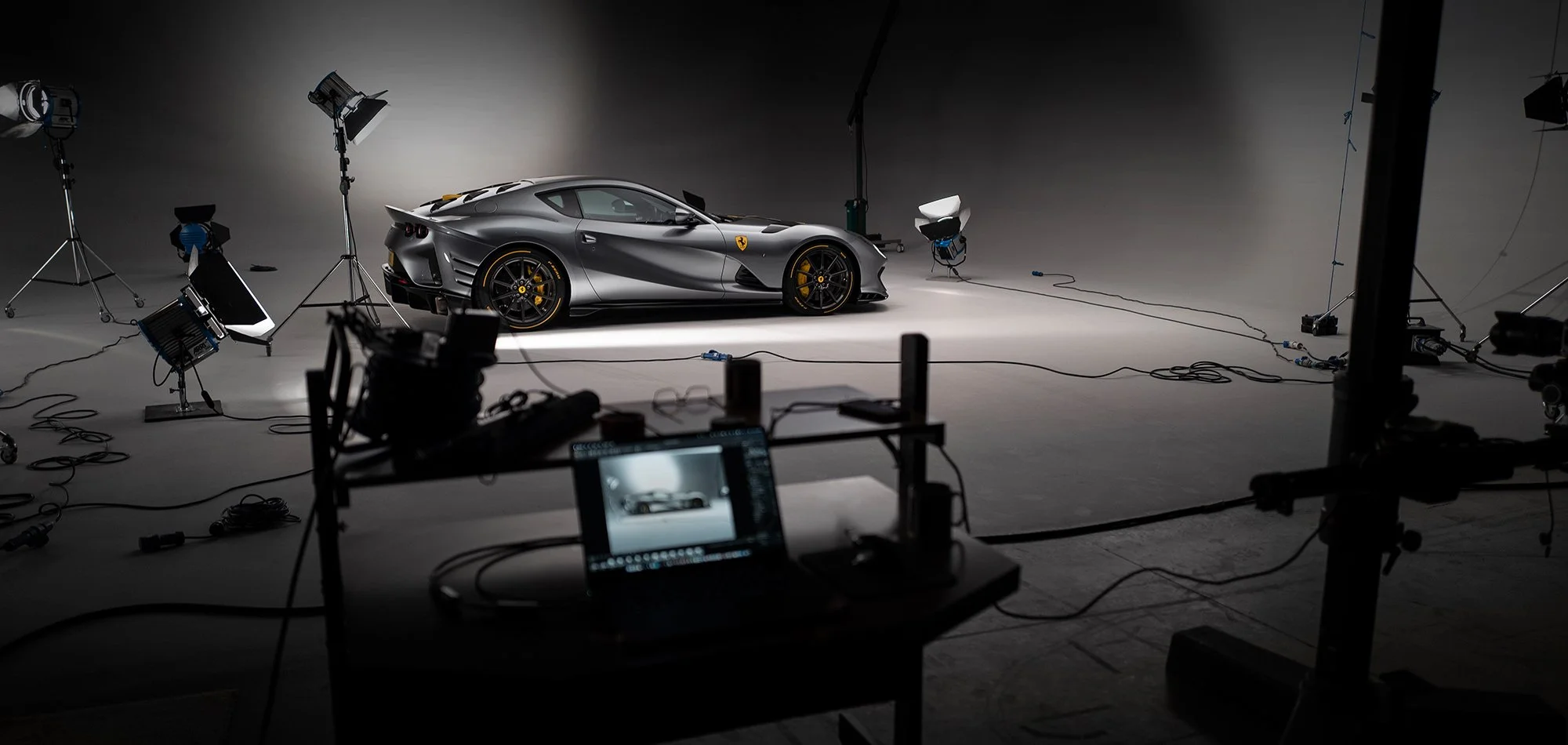
The first job of the day is always cabling out the power leads required for all the lighting. When I shoot cars in studio, I work almost exclusively with continuous lighting. Continuous light allows me to build light gradually across the subject, sculpting it piece by piece. It's a very different approach to flash, and it's not for everyone, but it's what I love.
Over the last 20 years, I've continually explored what continuous light can do and how far I can push it. I even photograph some of my lighting setups so that I have a record of how I lit a certain subject in a certain way to achieve the result I wanted, a library of Behind the Scenes if you like.”
“By the time all the power cables have been run out to roughly where I will need them, the car usually arrives, typically on a covered specialist transporter. Once it's checked and signed over to me, it becomes my responsibility. It's worth saying that my insurance policies are substantial; some of the cars I've photographed are valued in the millions.
The most expensive was a vintage Aston Martin Le Mans car, valued at over £18 million.
Once inside the building, the Ferrari goes through final cleaning and inspection before being moved into the studio cove. The infinity cove is a seamless, edge-free space designed to create a clean, neutral environment where the subject can truly stand alone. Cars are never driven into the studio. Instead, we use specialist wheel jacks that sit under each tyre, allowing us to roll the car in while touching it as little as possible. Under studio lighting, even the slightest mark shows, and Ferraris, while incredible, have famously thin paint layers.
I usually start with a side-profile shot. It's one of the most challenging angles to light when working with continuous light because bounce light off reflected surfaces, studio walls, large reflective boards, and most importantly, the floating ceiling. The ceiling is a vital tool in car photography. Being able to lower and tilt it allows me to create a soft, controlled blanket of light over the car and gives me a strong foundation to build from.
Lighting with continuous sources is never quick. It's a meticulous process of adding lights one by one, each with a specific role. Some are powerful, others subtle, but all contribute to the final sculpted look. I primarily use ARRI lights, ranging from the big powerful 12k lights, all the way through to 10k, 5k, 2k, down to little 500s. It is important to have the different power levels of lights because these lights are either on or off, the main adjustment comes not from being able to control the light output from them but by using a control on them that allows you to vary 'the spread' and diffusion of the light coming from them. On complex body shapes, it's not unusual to have six to ten lights working together. Most operate around 3200K tungsten, although modern LED systems now offer more flexibility.
Just as important as adding light is removing it. Shadow areas are essential. To control them, I use negative fill, black boards or black sheets of material placed close to the bodywork to prevent unwanted reflections. Done correctly, this allows me to shape the panels with precision and depth.”
Tim Wallace