The Legend: DBR1
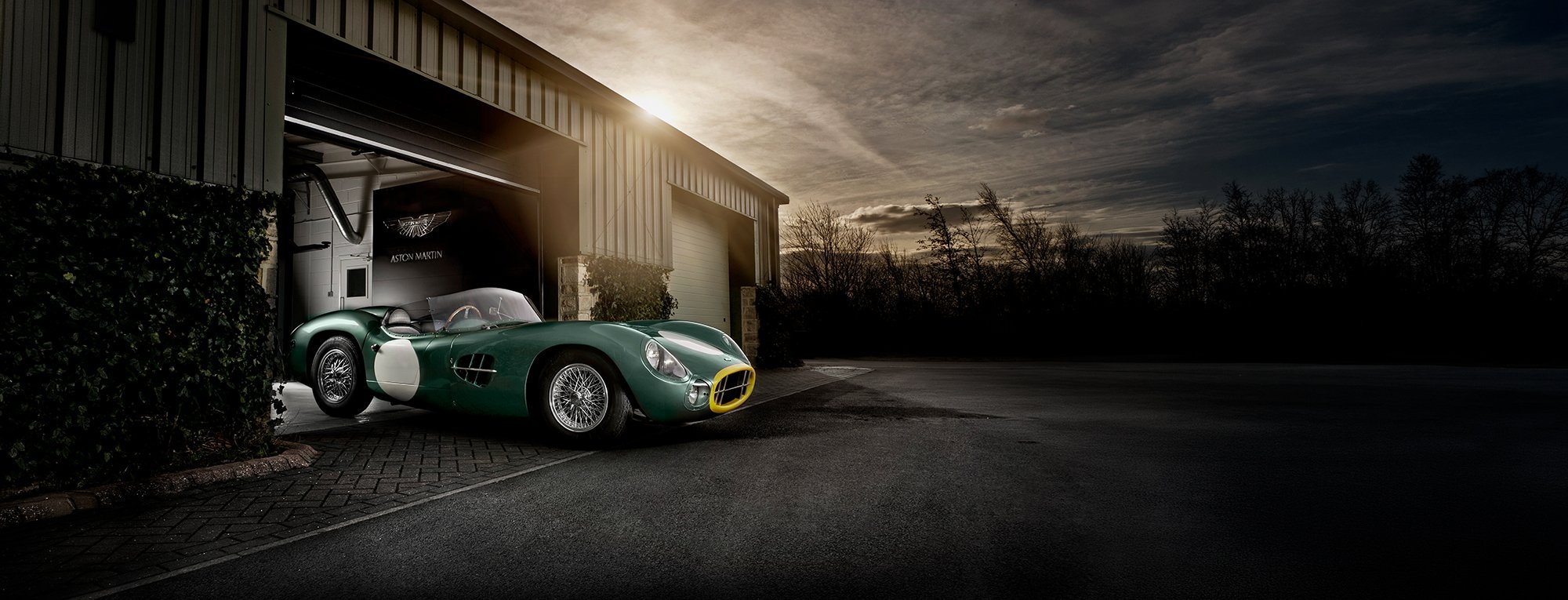
Photographing the Legendary Aston Martin DBR1 – Automotive Photography by Tim Wallace
Capturing historically important cars requires a unique blend of technical precision, design awareness and respect for automotive heritage.
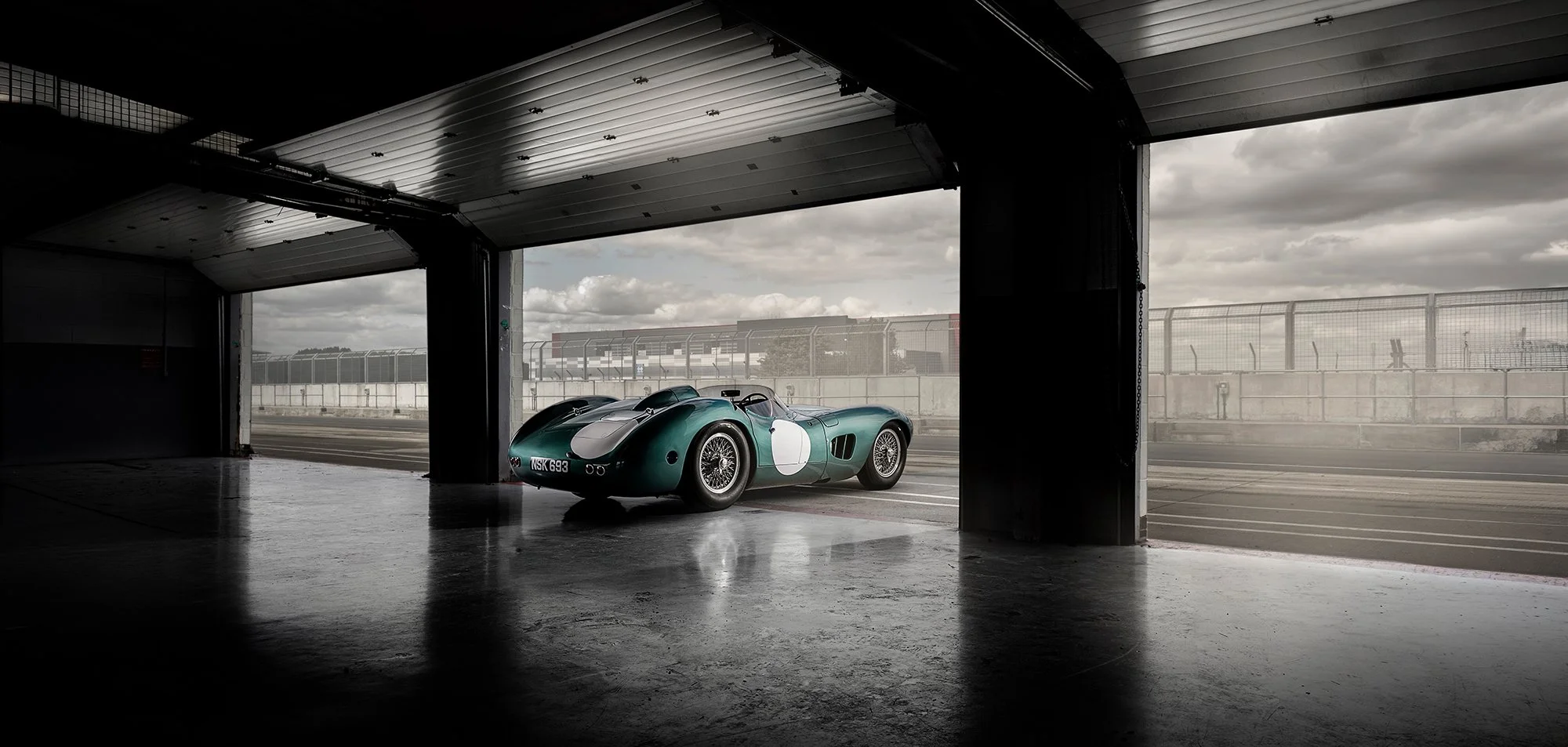
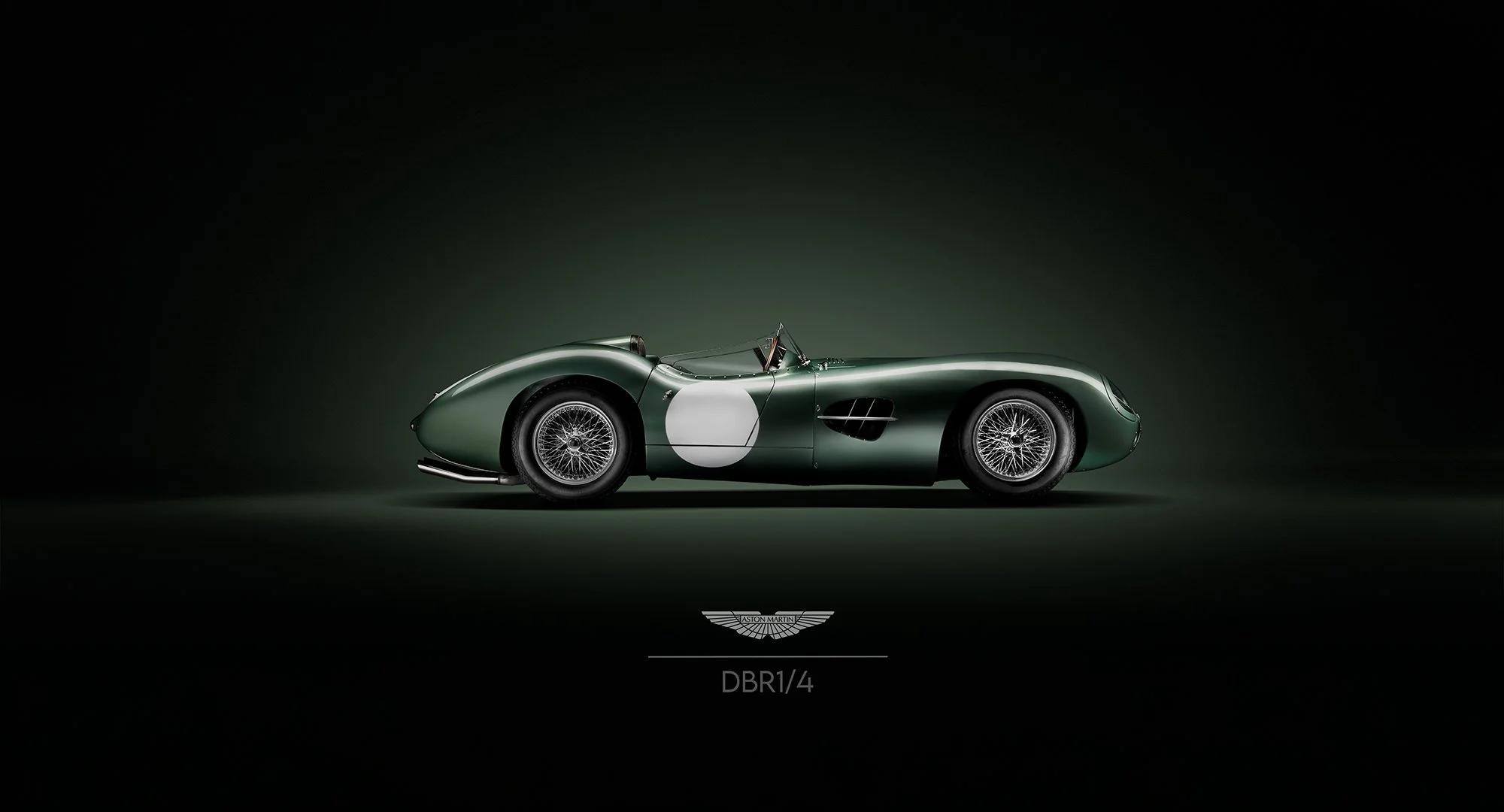
When internationally recognised automotive photographer Tim Wallace was commissioned to photograph the remarkable Aston Martin DBR1/4, the assignment brought together all three.
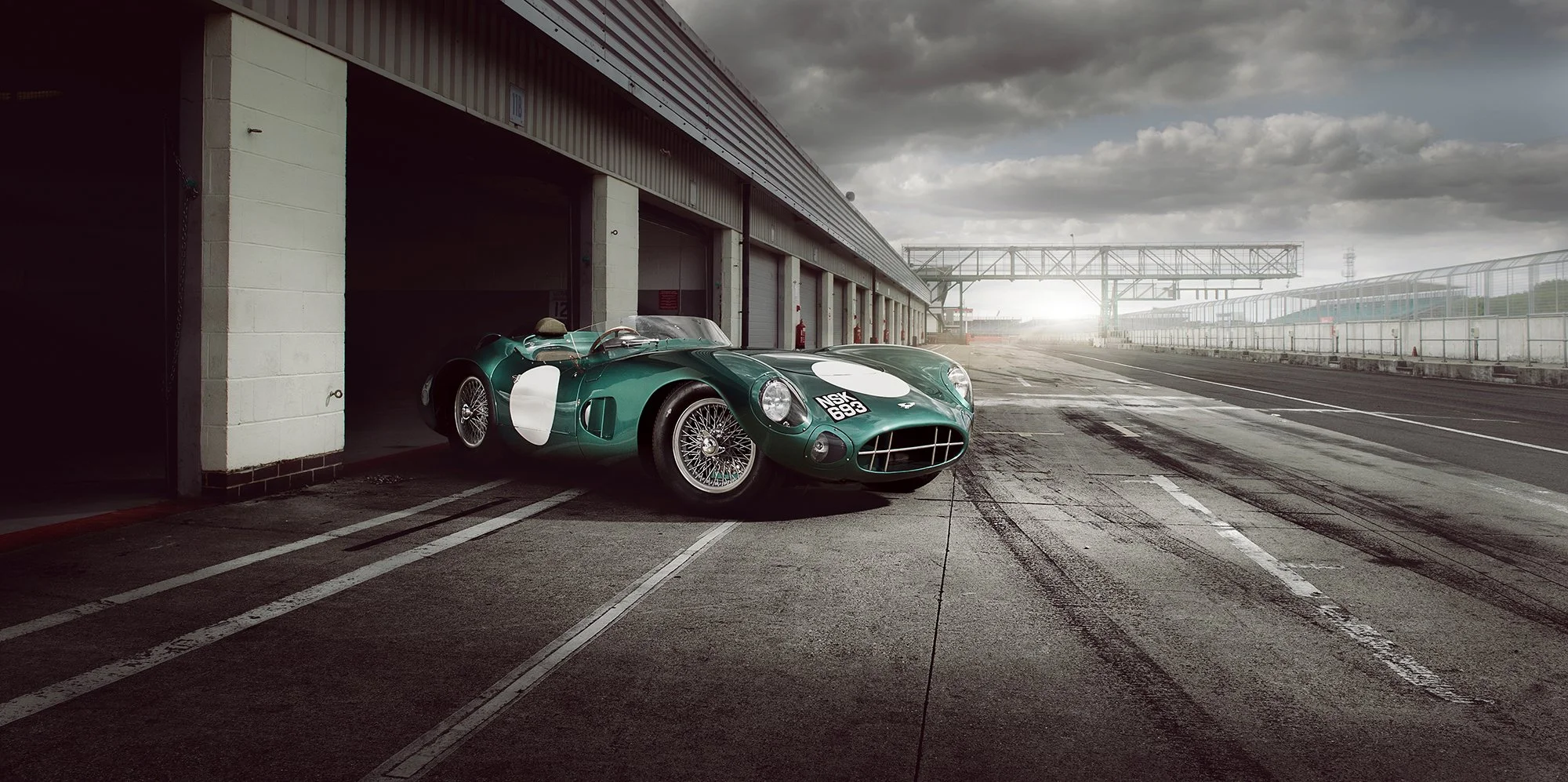
For Wallace, whose commercial automotive photography work has been used by leading global automotive brands, the opportunity to photograph one of the most historically significant racing cars ever built by Aston Martin represented a rare and special moment. The DBR1 is widely regarded as the most important racing car Aston Martin has ever produced. Developed during the golden era of endurance racing under the ownership of David Brown, the car was created with a single goal in mind, to win the legendary 24 Hours of Le Mans.
That ambition was realised in 1959 when the DBR1 secured Aston Martin’s only outright victory at the world-famous endurance race. The car itself was designed and engineered by the highly respected Aston Martin engineer Ted Cutting, who created a machine that combined advanced engineering with beautifully balanced design.
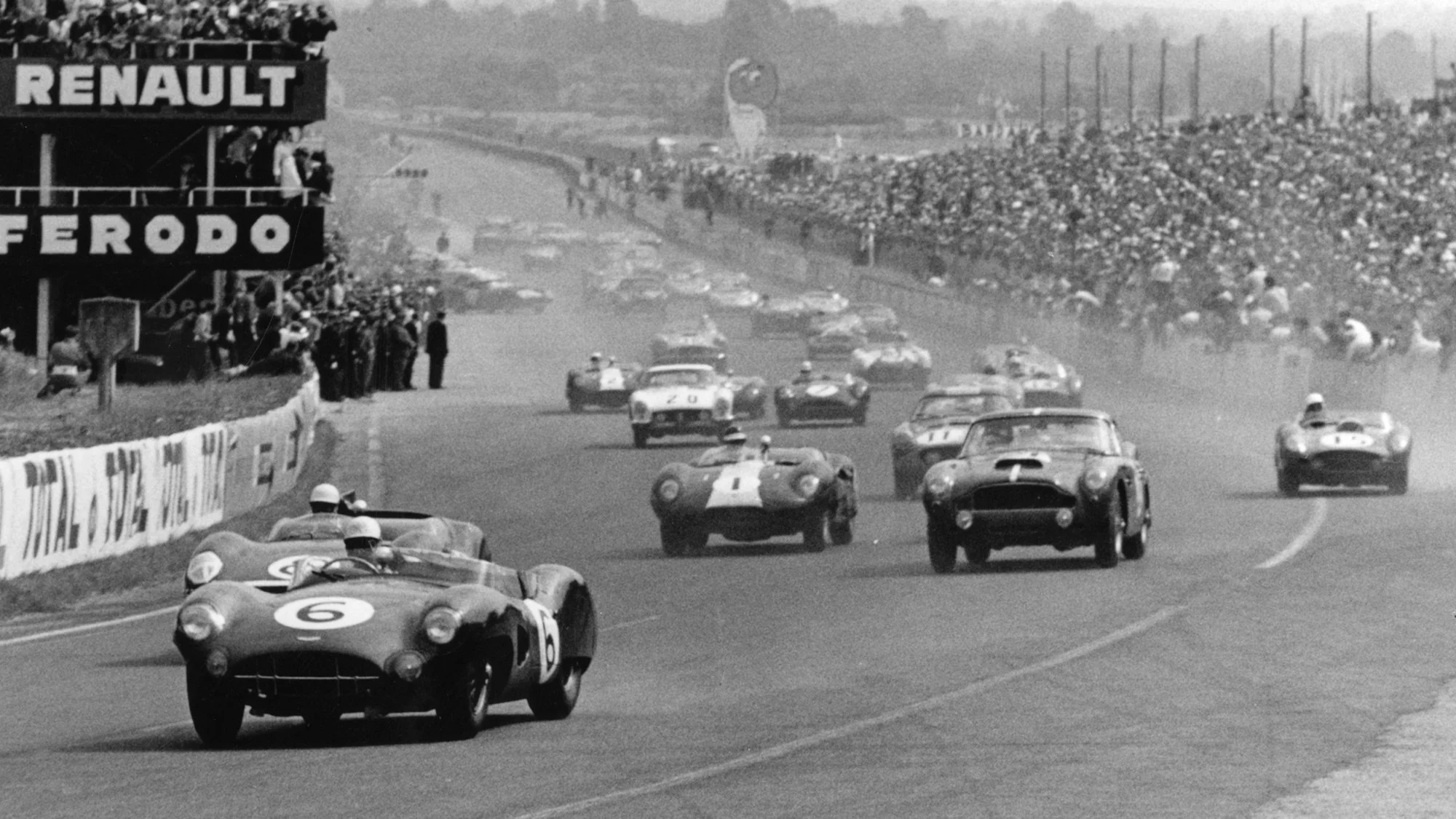
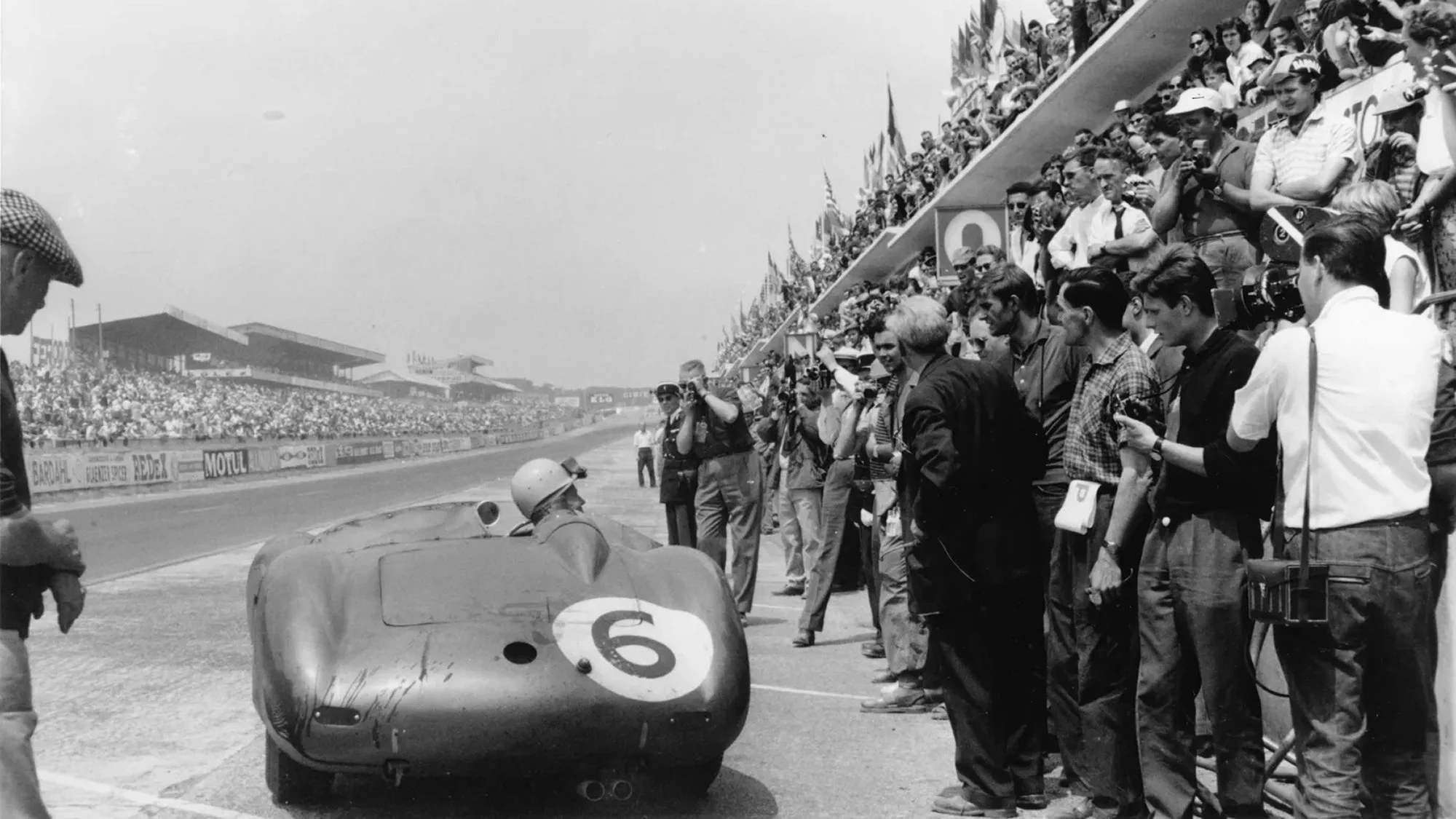
The 1959 24 Hours of Le Mans was won by the Aston Martin DBR1 driven by Carroll Shelby and Roy Salvadori, securing Aston Martin’s only outright victory at the event. The DBR1/2 car covered 323 laps, securing a 1-2 finish for the team with teammates Paul Frere and Maurice Trintignant in second, cementing the DBR1 as a legendary racing car.
· The Team & Car: The David Brown Racing Aston Martin DBR1s (chassis DBR1/2) finished first, with DBR1/4 taking second, defeating rivals Ferrari and Porsche.
· Performance: The winners completed 323 laps (approximately 2,701 miles) at an average speed of 112.5mph
· Significance: The 1959 win was the crowning achievement of the DBR1, which also secured the 1959 World Sports Car Championship.
· Legacy: In 2017, a 1956 Aston Martin DBR1 (one of only five built) became the most expensive Aston Martin ever sold at auction, bringing $22.5 million.

Seven things you probably didn’t know about Aston's '59 Le Mans win
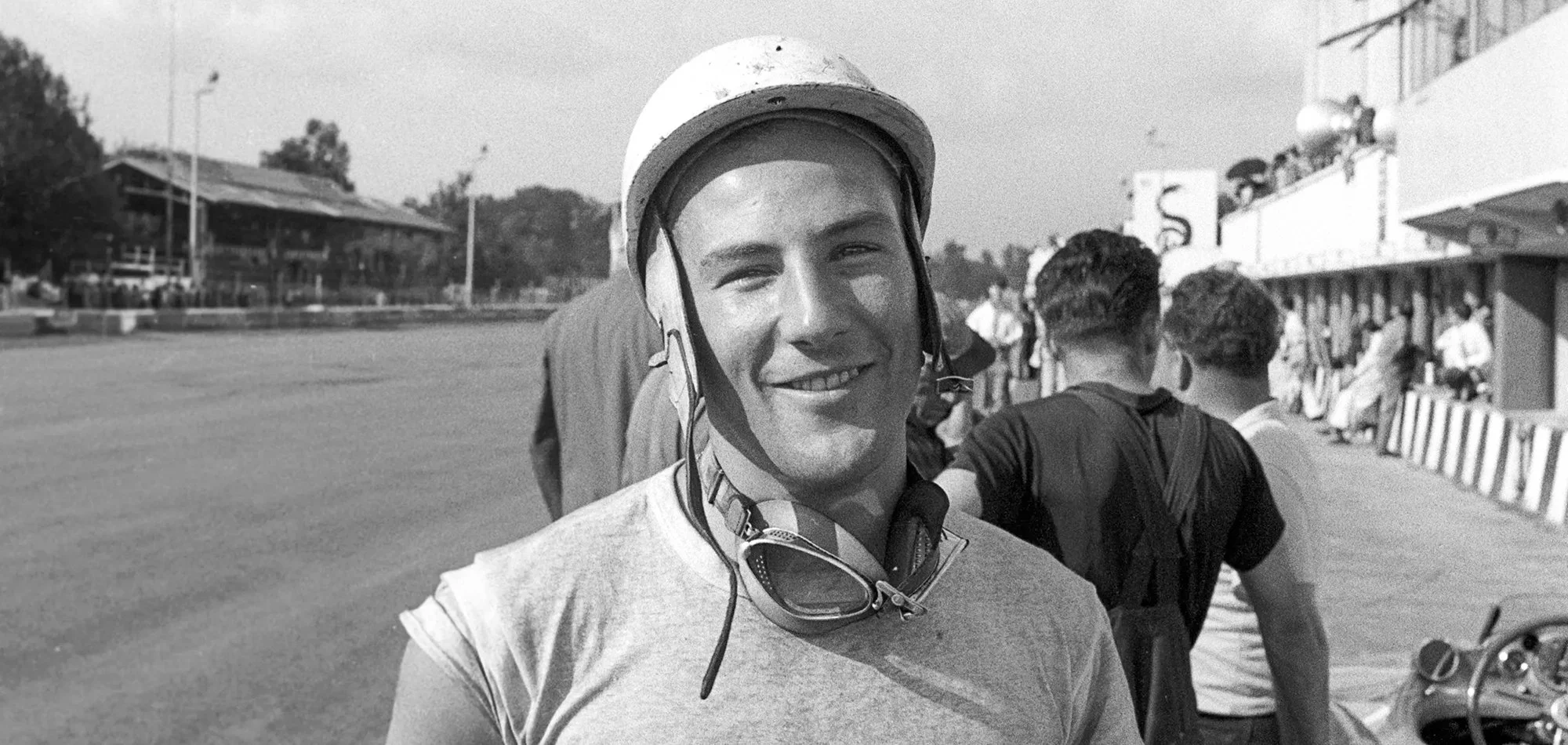
Back in 1959, Aston Martin rocked up to the Le Mans 24 Hour race with a fleet of three gorgeous DBR1s and a pretty impressive crop of drivers. The number four car was piloted by Stirling Moss and Jack Fairman, Roy Salvadori and Carroll Shelby were in number five, and Maurice Trintignant and Paul Frére drove number six.
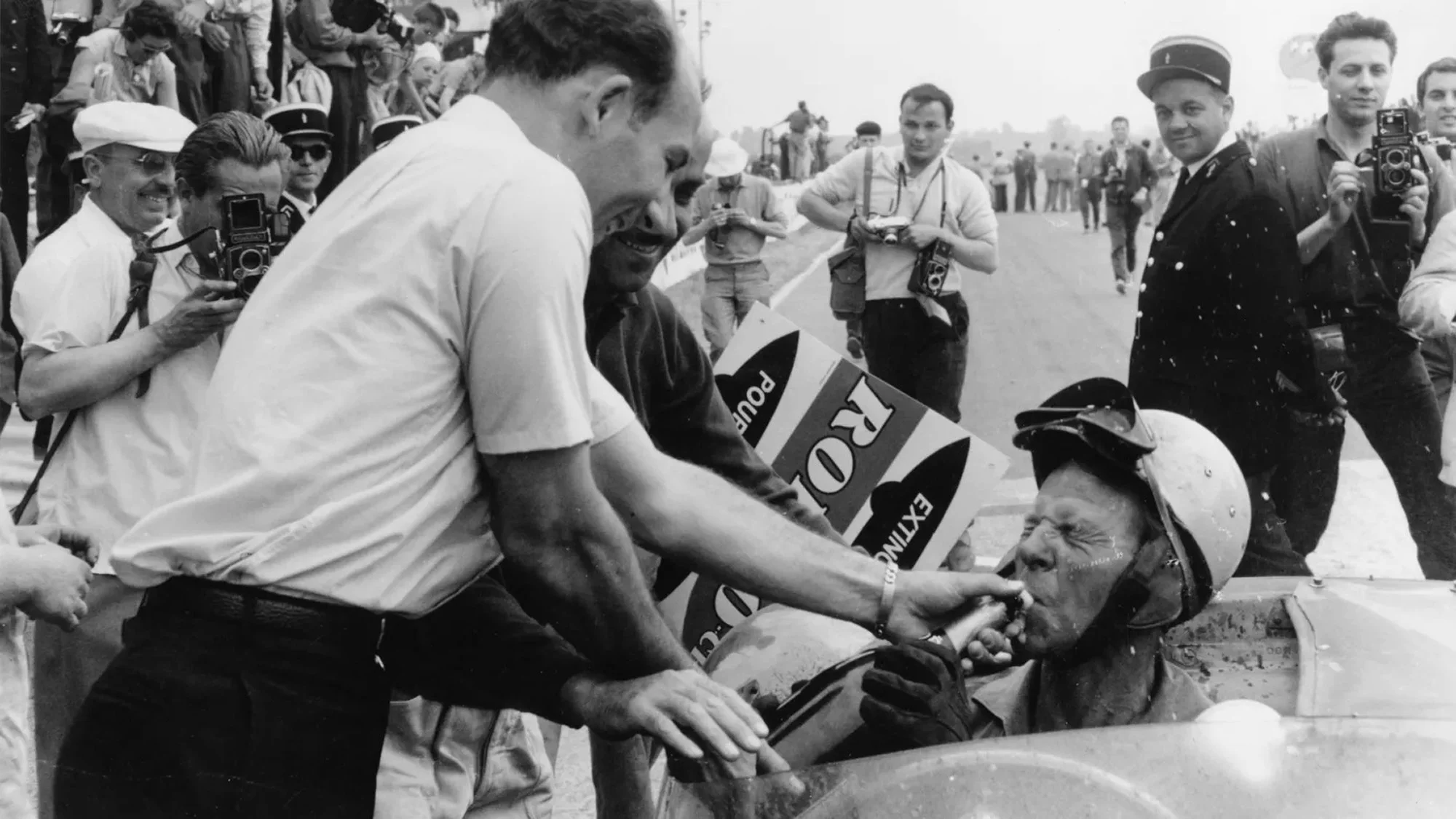
The fight was of course with Ferrari, but Salvadori and Shelby eventually came out on top to take the title, and that remains Aston’s only ever outright win at the famous endurance race.
In the build-up to the race, the Aston team were swimming in the river opposite the hotel to keep cool. When Sir Stirling dived in on the Wednesday though he lost both of his front teeth. Luckily, his secretary was on hand to fly out a spare pair of false ones before the race weekend.
The DBR1 was a fantastic racer, but one design flaw for such long stints was that the clutch pedal had been placed just above the exhaust. This, along with the aluminium body, meant that both Salvadori and Trintignant suffered badly scolded feet.
After all of those miles and 323 laps, the DBR1 was apparently in such good condition at the finish that it could have completed another 24 hours.
“The oil pressure was 80 pounds at the start and never varied. The car was 100 per cent for the entire race,” said Salvadori.
The 1959 race was the first time that either Salvadori or Shelby had ever finished the Le Mans 24hrs.
“Anyone who reckons on winning Le Mans is just daydreaming. Le Mans is 80 per cent luck. A car that’s built for out-and-out racing is not supposed to stay together for 24 hours,” said Shelby.
Aston Martin team manager Reg Parnell collected a cheque for approximately £10,000 in French francs for finishing first and second in the race. That’s £228,500 in today’s money.
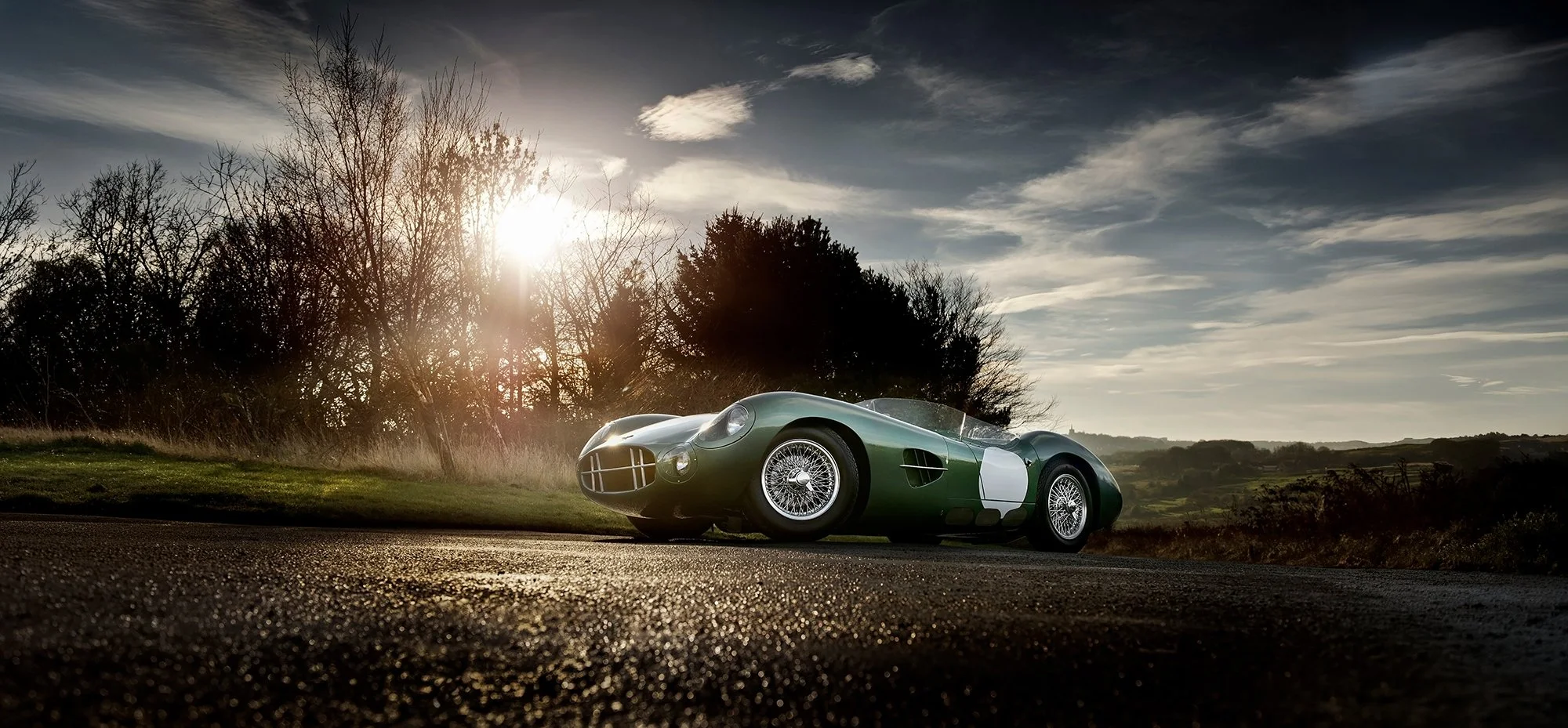
Among the extremely small number of DBR1 cars ever built, chassis DBR1/4 holds particular historical importance. Completed in 1959, the car evolved from earlier development work linked to the DBR3 programme and was built on chassis DBR3/1. Originally intended to run a short-stroke three-litre engine derived from the larger 3.7-litre unit later used in the road-going Aston Martin DB4, the car ultimately raced with the RB6/300 engine configuration.
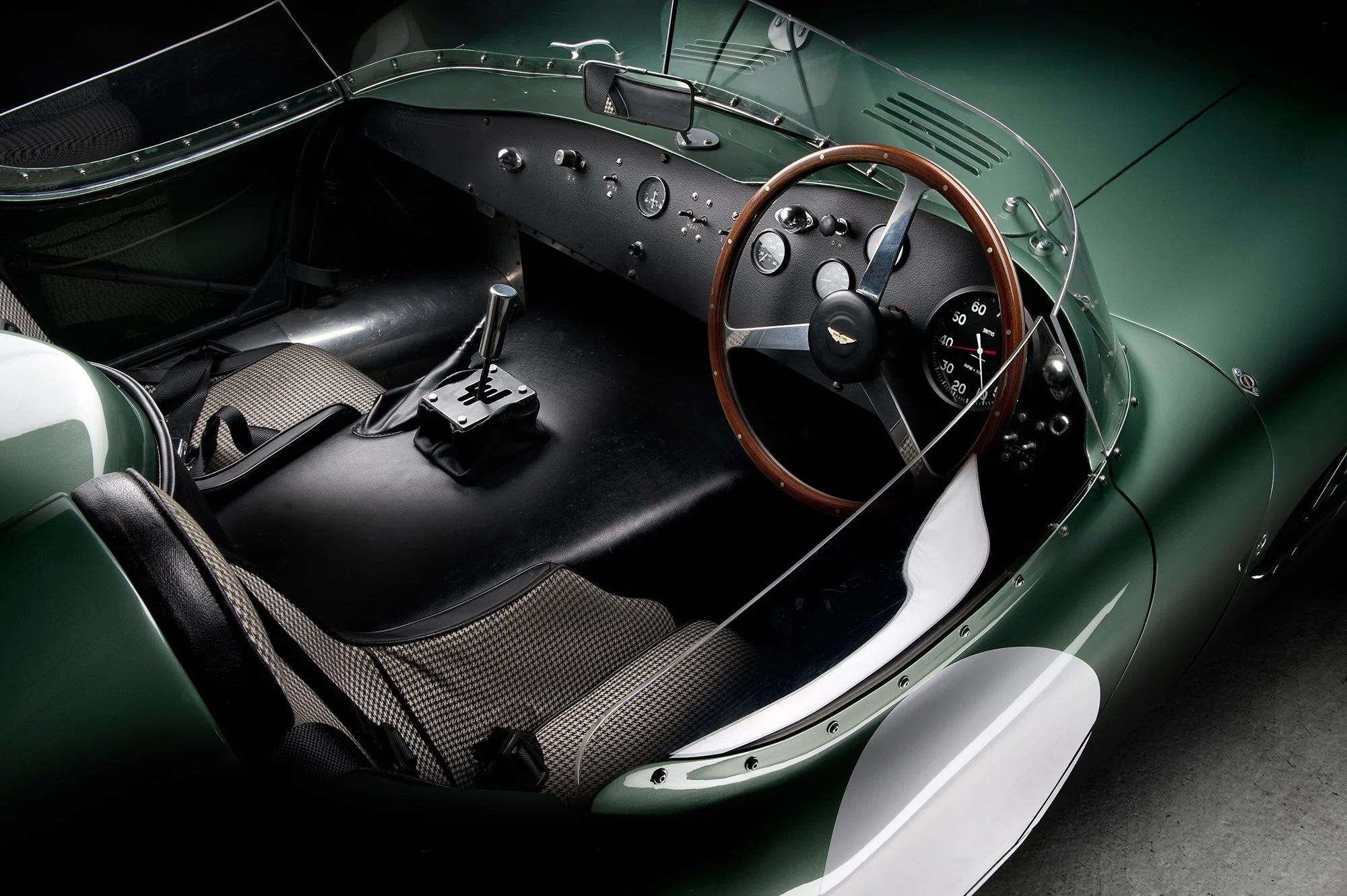
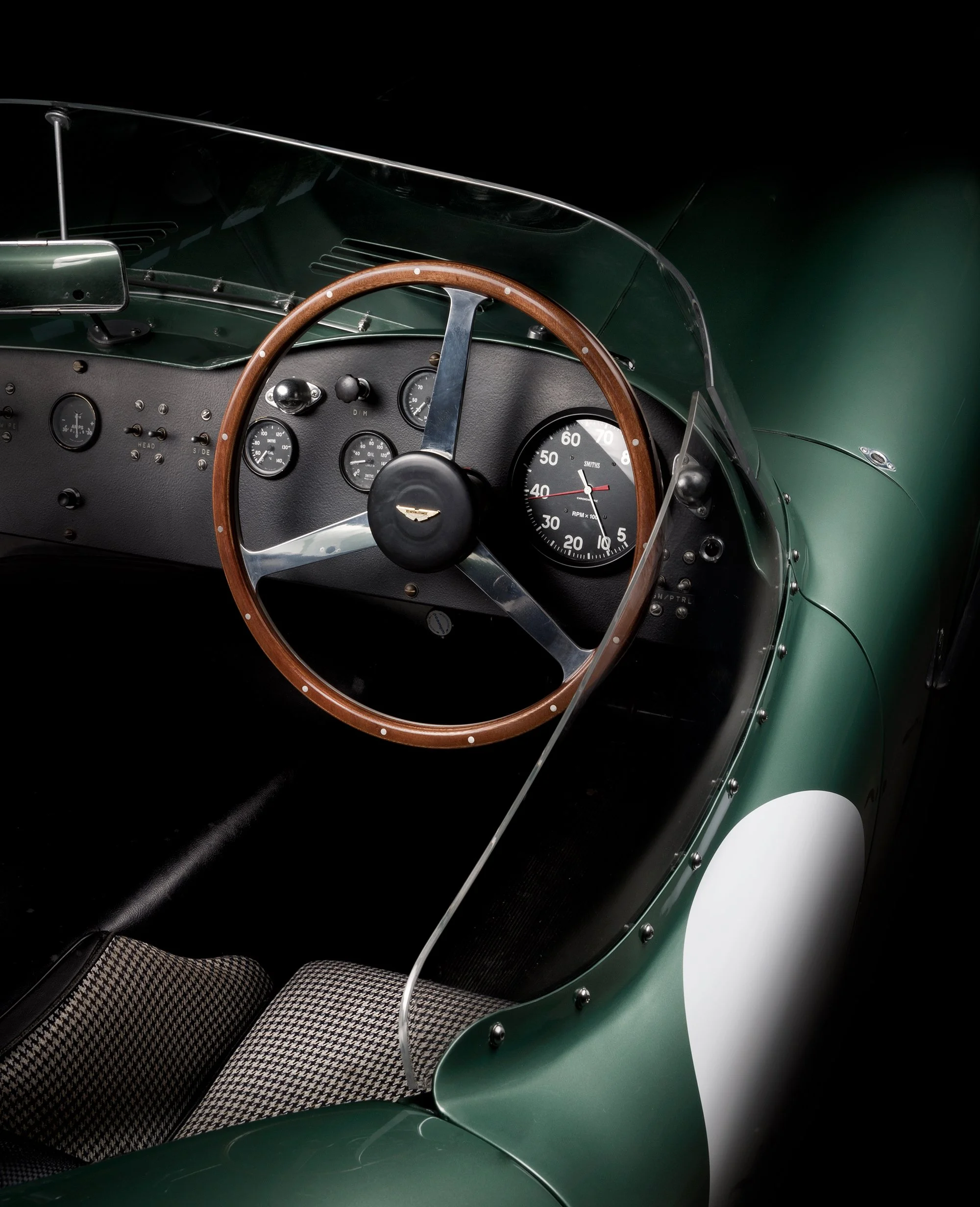
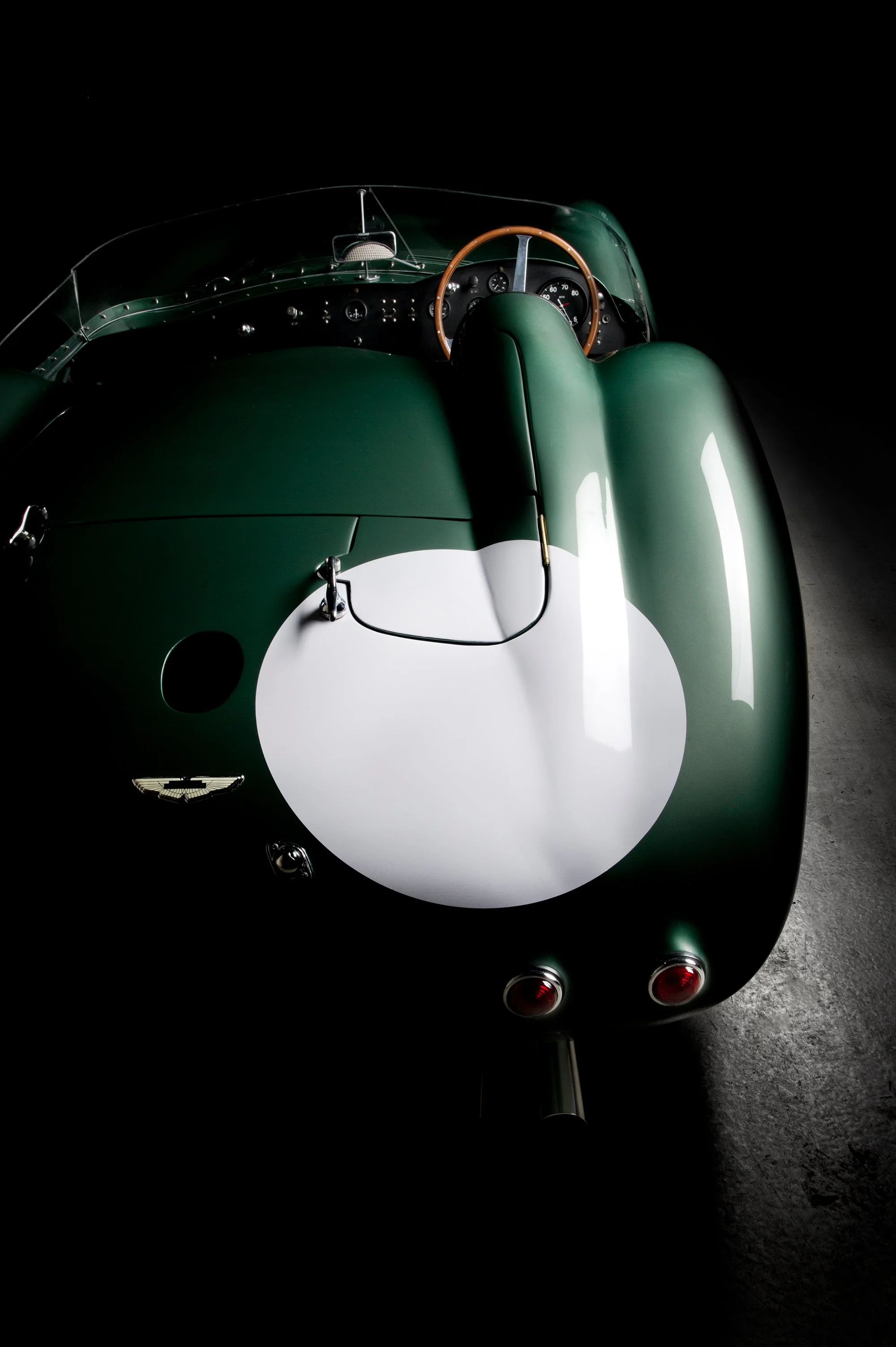
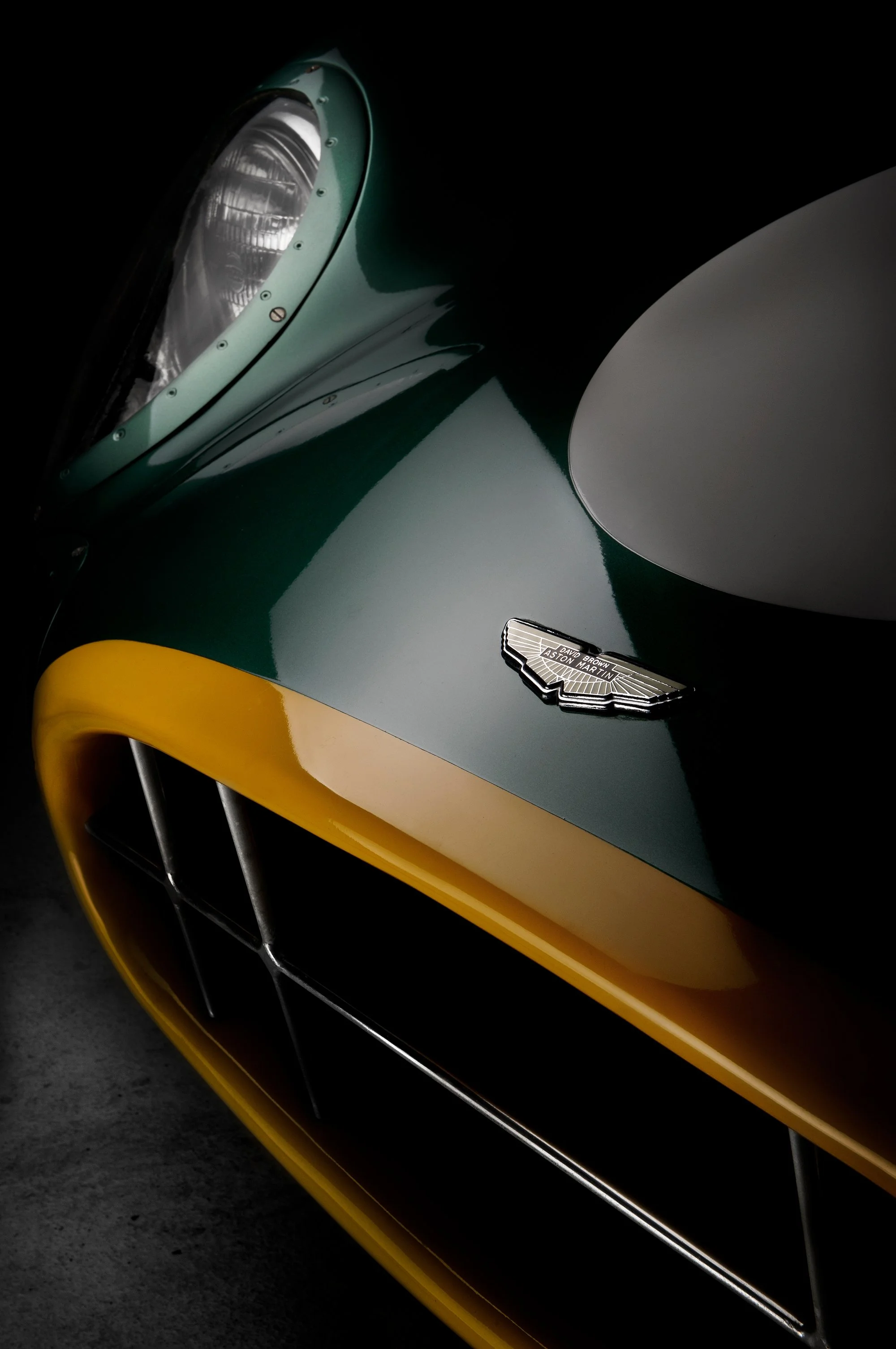
While its racing pedigree is extraordinary, the DBR1 is equally celebrated for its design. The flowing aluminium bodywork, sculpted for aerodynamic efficiency, has long been regarded as one of the most beautiful forms ever created in motorsport. Long sweeping lines, elegant proportions and muscular rear haunches give the car a timeless visual presence.
This combination of engineering innovation and sculptural beauty made the DBR1/4 a natural subject when Tim Wallace was commissioned to photograph the car for the official Aston Martin Centenary Book. The remarkable 650-page limited edition publication celebrates 100 years of Aston Martin and documents many of the most important cars ever produced by the marque.
Within the project, Wallace applied his signature automotive photography lighting techniques to reveal the craftsmanship of the car’s aluminium bodywork. Carefully controlled studio lighting was used to shape reflections across the surface of the car, emphasising the subtle curvature and design language that defines the DBR1. For an automotive photographer, cars like the DBR1 exist far beyond simple mechanical objects. They represent a meeting point between engineering, history and design. Photographing DBR1/4 was therefore not simply about documenting a historic racing car, it was about capturing a piece of automotive art.
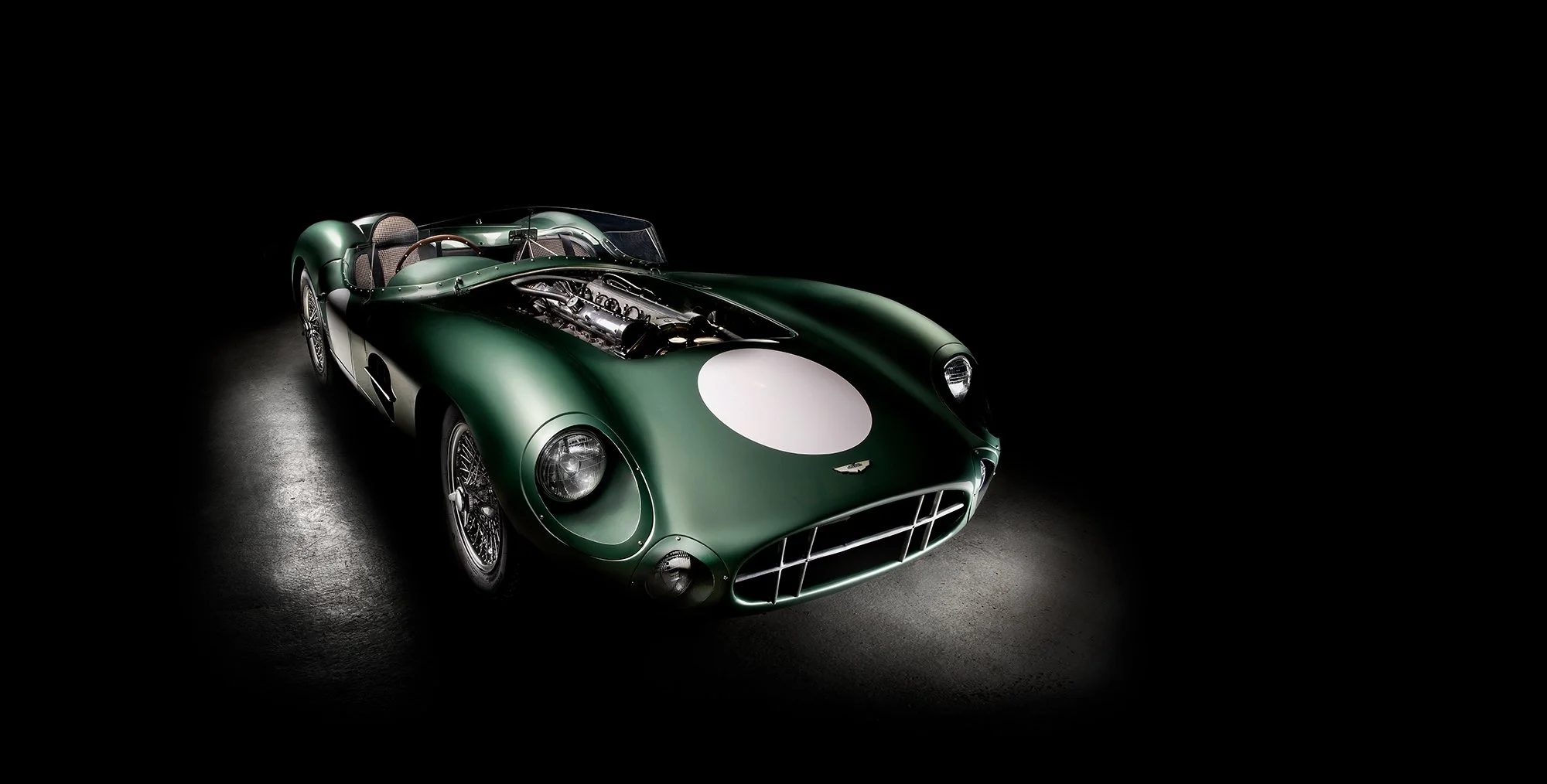
More than six decades after its creation, the Aston Martin DBR1 remains one of the most celebrated racing cars ever built and a defining moment in the heritage of Aston Martin.
Through his automotive photography, Tim Wallace continues to document some of the world’s most iconic cars for global brands, collectors and historic automotive projects.