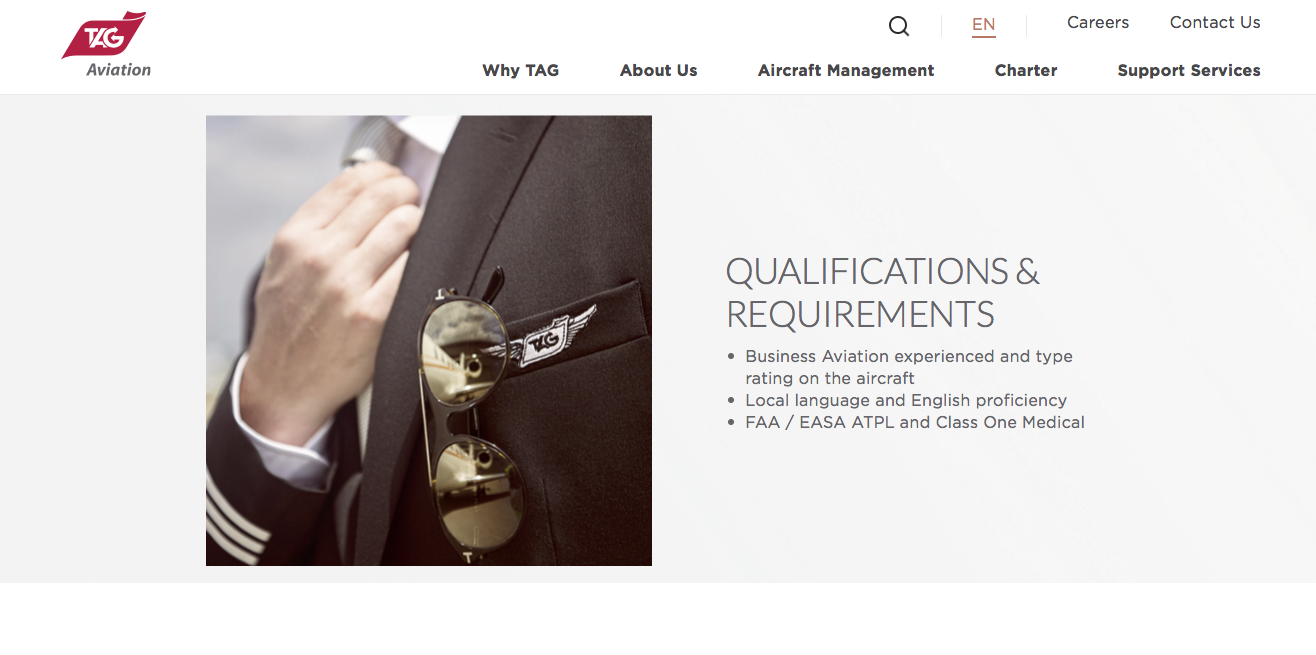
Planning and shooting a major aviation project for a business client.
TAG Aviation: A Background in Business Aviation Photography
Over the past 20 years, I have worked extensively to build a career as a professional commercial photographer, working with a wide range of clients across the transport industry. From cars and trucks to aircraft and specialist machinery, my work has taken me into some fascinating environments, often working alongside highly skilled teams of people who understand just how important their work, their equipment and their reputation are.
Aviation photography has always been a particular part of my work that I love.
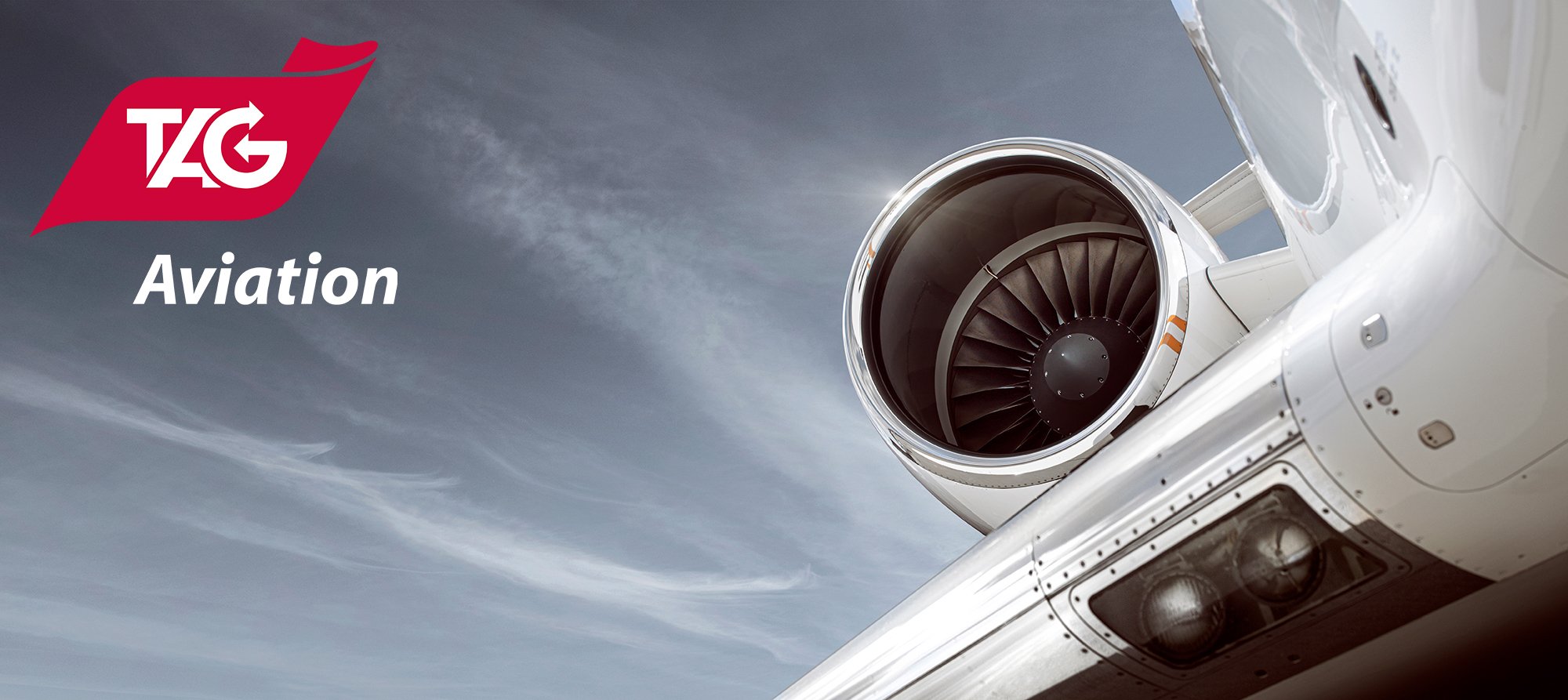
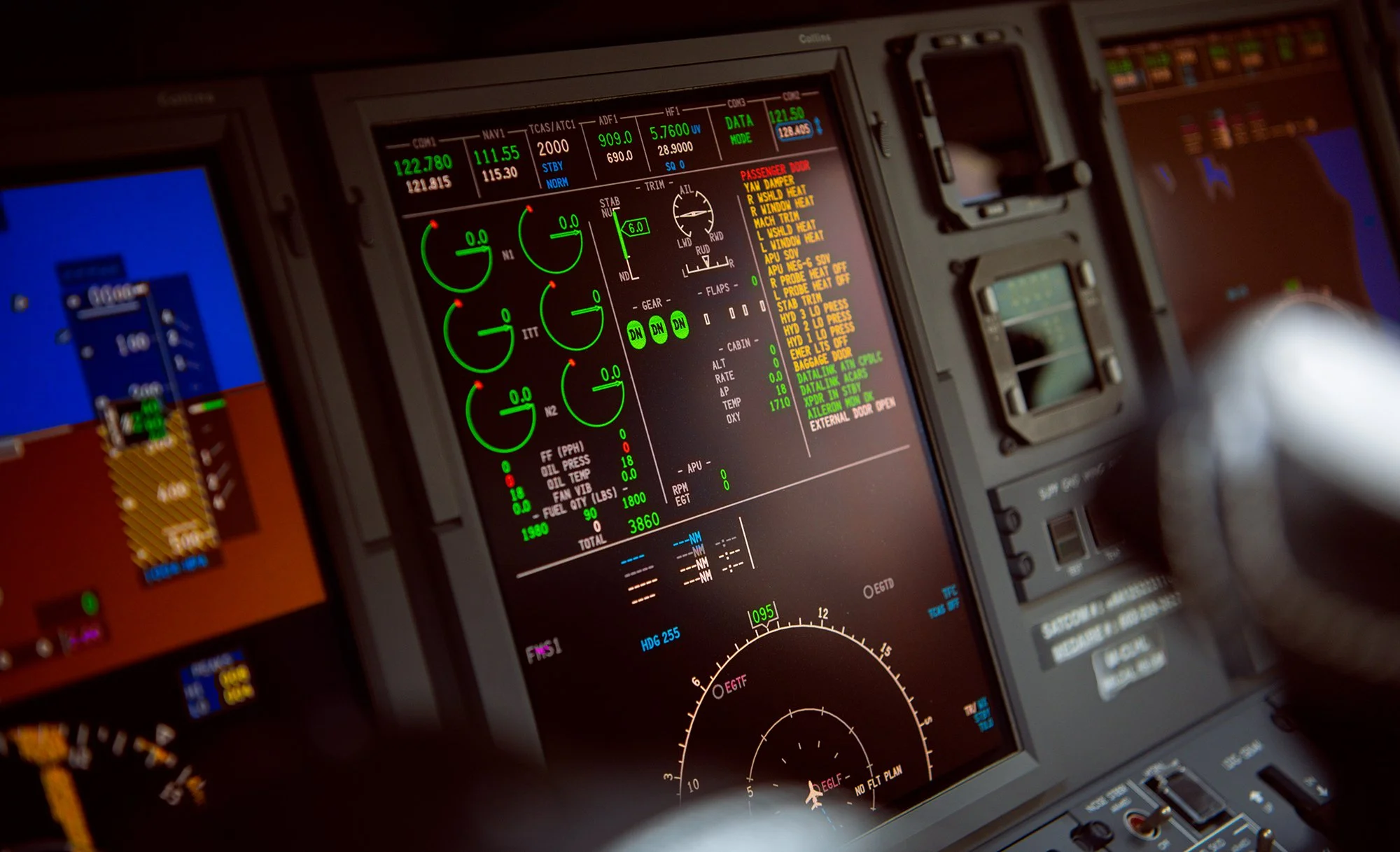
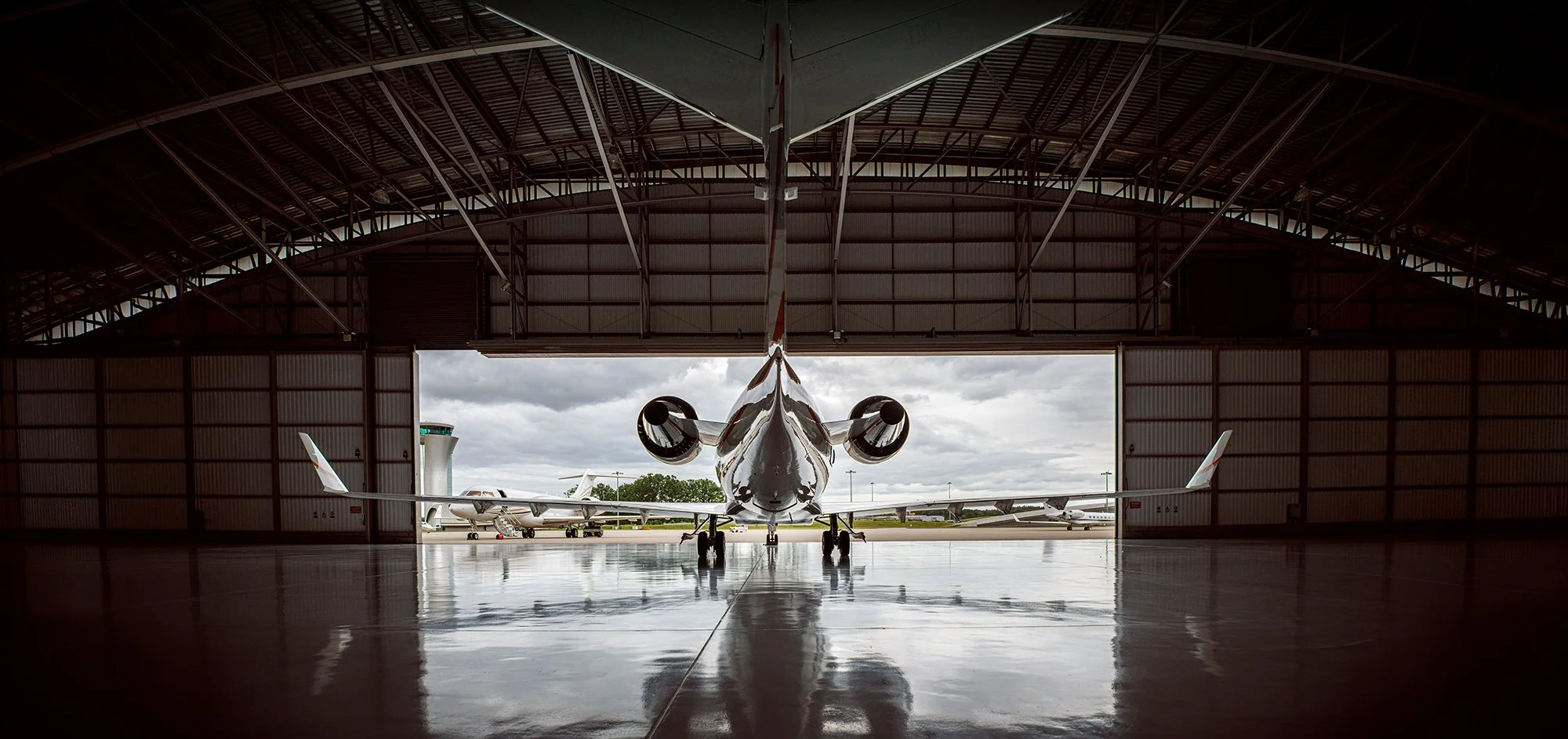
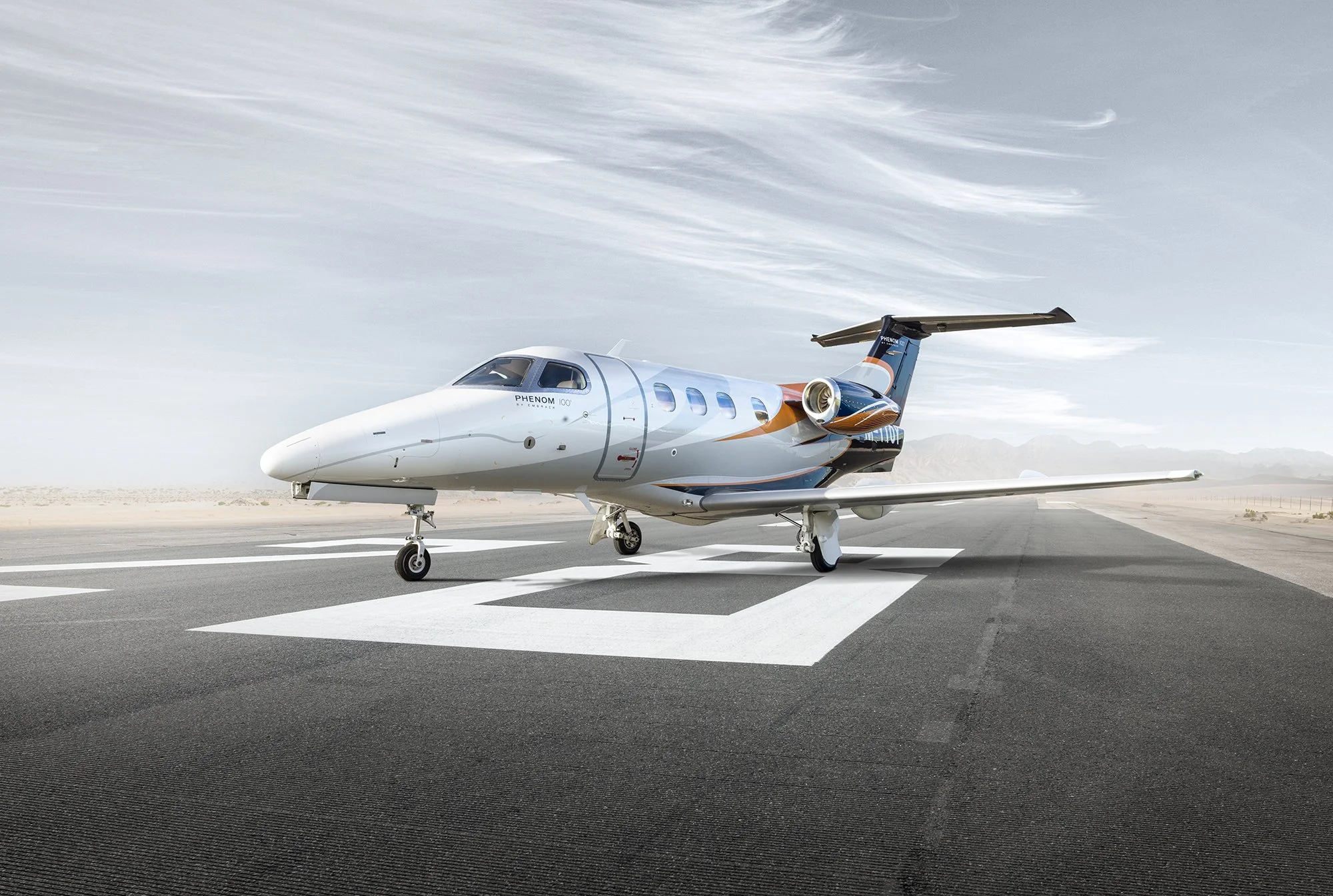
There is something quite special about photographing aircraft, whether that involves capturing the beauty of a private jet, documenting the people behind an aviation operation or creating a collection of images that communicates the quality and professionalism of a business to its customers around the world.
As an aviation photographer, I am not simply interested in making an aircraft look good. The real challenge is to create imagery that communicates something about the organisation behind it. The aircraft itself is important, of course, but so too are the people, the environment, its purpose, the attention to detail and the standards that make an aviation business what it is.
This is where commercial aviation photography becomes much more involved than simply arriving at an airfield with a camera. Understanding how aviation facilities operate, appreciating the importance of safety and knowing how to work professionally around aircraft and flight crews, as well of course as knowing how to conduct yourself in these sometimes-sensitive areas are all essential parts of the process.
With two decades of commercial photography experience behind me, I have developed a way of working that combines the creative side of photography with the practical understanding needed to deliver a successful commission. My clients trust me to take responsibility for the photography, but also to understand the wider environment in which the work is taking place.
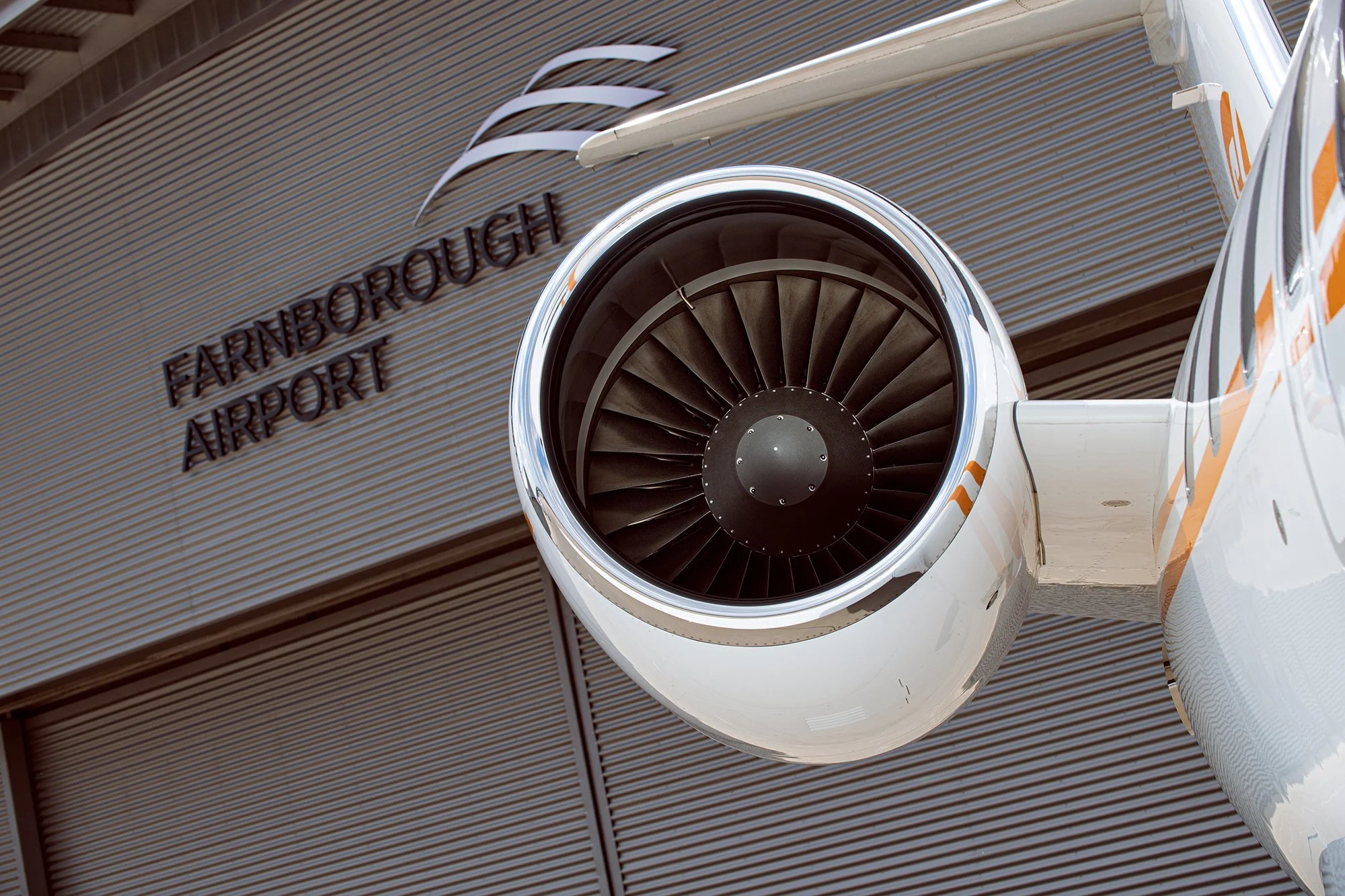
My commission for TAG Aviation, that was based at Farnborough Airport, was an excellent example of how these different elements come together, with months of preparation followed by three days of carefully coordinated photography at one of the UK's leading private and business aviation businesses.
TAG Aviation: A Global Name in Business Aviation
TAG Aviation is an established name in the world of aviation, with a history stretching back to 1966. The company provides a range of aviation services, including private aircraft management, charter services, aircraft support and maintenance, ground handling and professional aviation training. Its operations extend across Europe and Asia, serving clients who expect high standards of service, reliability and operational professionalism.
For a company working at this level, its visual identity plays an important role in communicating those standards. Photography helps potential customers understand not only the aircraft and services available, but also the experience, people and facilities that sit behind the brand.
In the world of private aviation, presentation matters. Customers are often making decisions based on confidence, trust and the expectation that every aspect of their experience will be handled professionally. The imagery used across a company's website, marketing materials and customer communications therefore needs to reflect the quality of that service.
Months of Planning for Three Days at Farnborough
Although the photography itself took place over three days at Farnborough Airport, the preparation began months beforehand. Assignments of this nature require a considerable amount of organisation, particularly when aircraft movements, ground power supply, airport access and live operational areas are involved.
One of the important considerations was that aircraft needed to be flown into the UK specifically for the shoot. This meant that the photography had to be planned around a series of moving parts, with the aircraft, crews, facilities and available shooting windows all needing to come together at the right time.
Unlike a conventional studio shoot, where the environment can be controlled and the subject remains in place, aviation photography often requires a much greater degree of flexibility. Aircraft have operational schedules, airport facilities have their own requirements, and the photography must fit around these without compromising safety or disrupting normal activities.
Farnborough Airport provided the setting for the commission, but working in this environment meant that every proposed location and movement needed to be properly coordinated. Photography on the runways and in the live areas outside the hangars (airside) required the necessary permissions and authorisations to be agreed in advance, with timings signed off in coordination with the relevant airport controllers.
This level of planning is essential. When you are working around live aircraft operations, there is no room for simply turning up and deciding what to do next. Everyone involved needs to understand the schedule, the permitted working areas and the arrangements required to move between locations.
My responsibility was to ensure that the photographic requirements were understood and that the time available was used as effectively as possible. That meant thinking ahead about compositions, camera positions, lighting conditions and the different types of imagery we needed to produce, while remaining ready to adapt if operational circumstances changed.
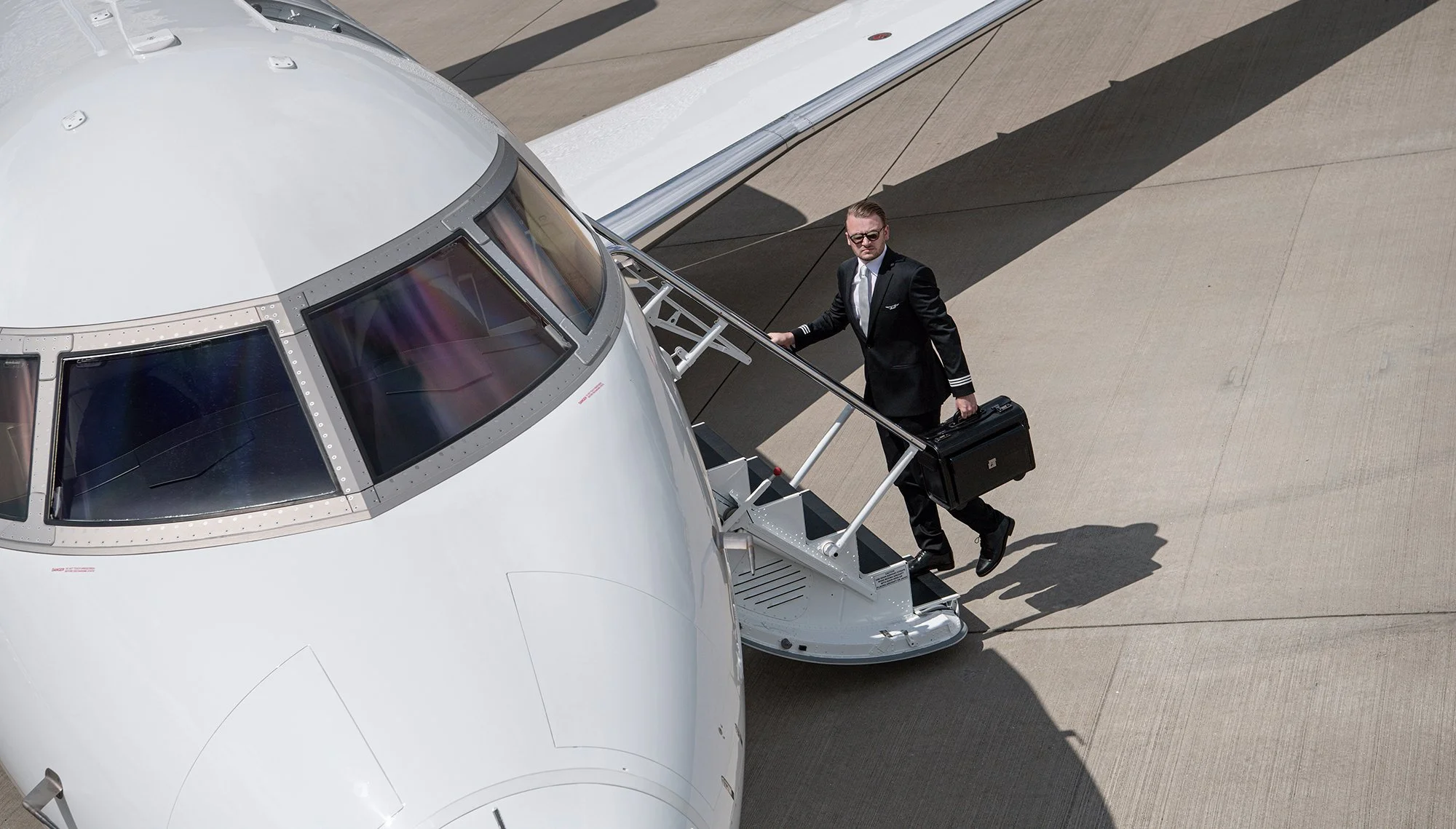
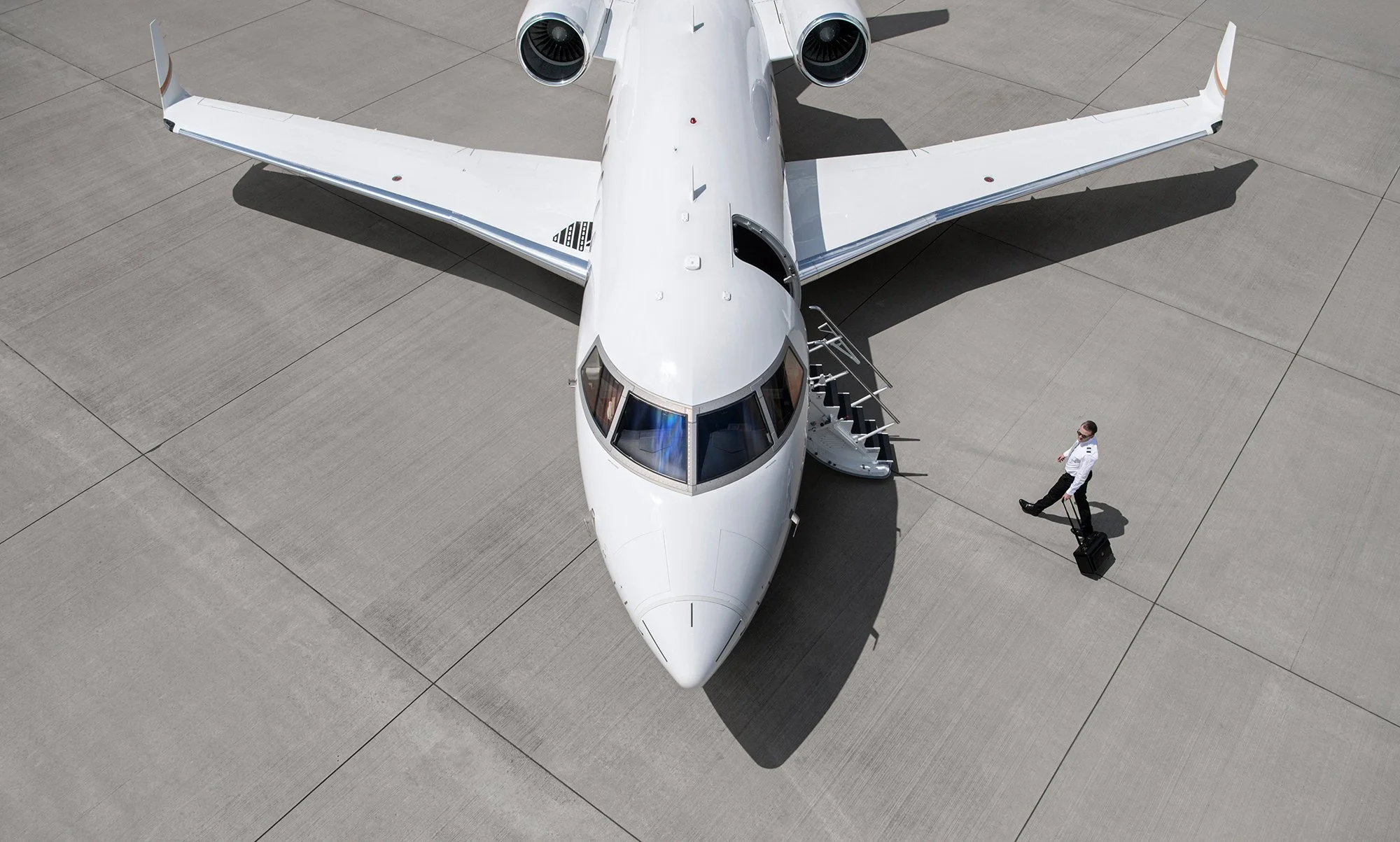
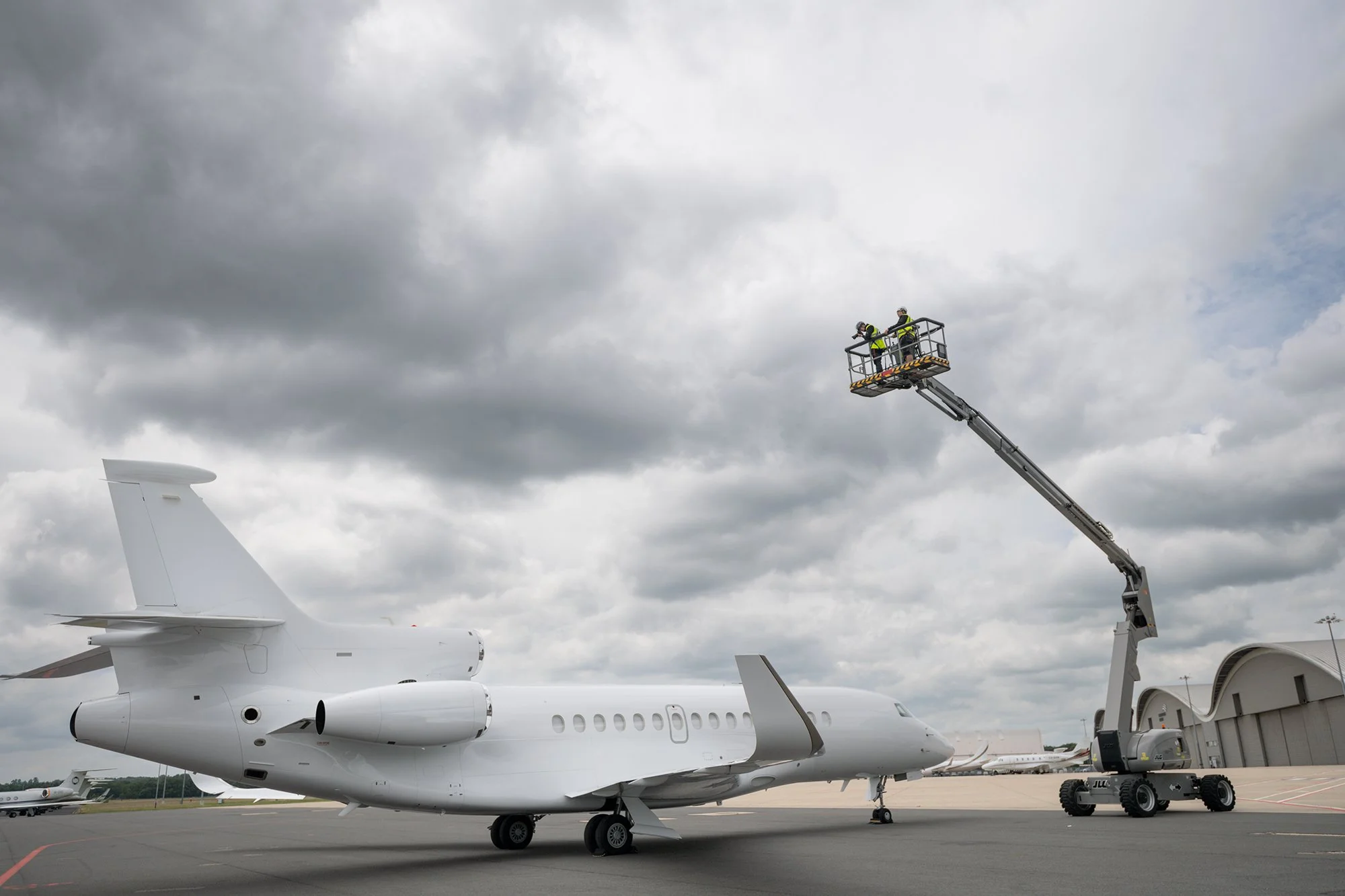
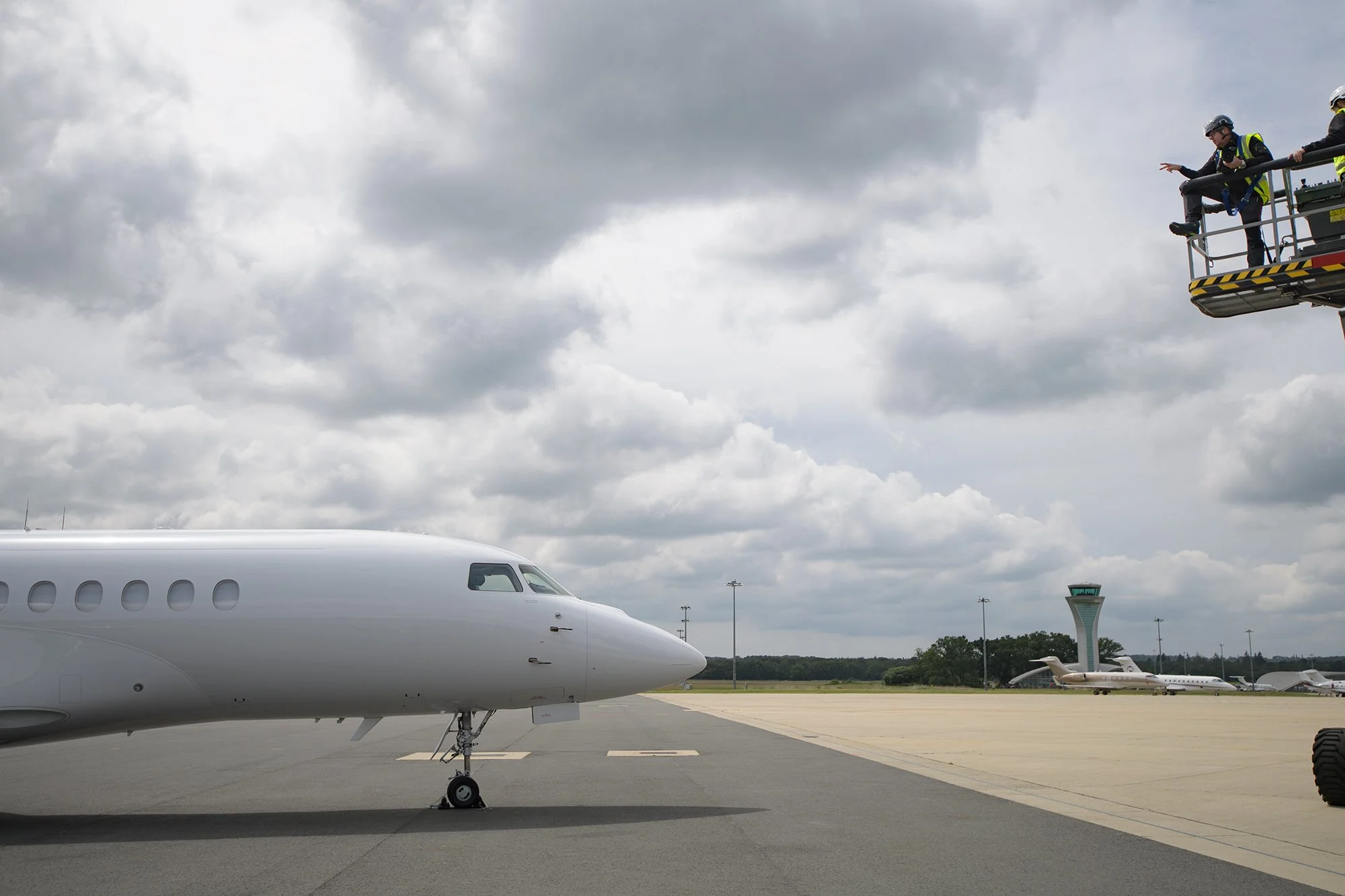
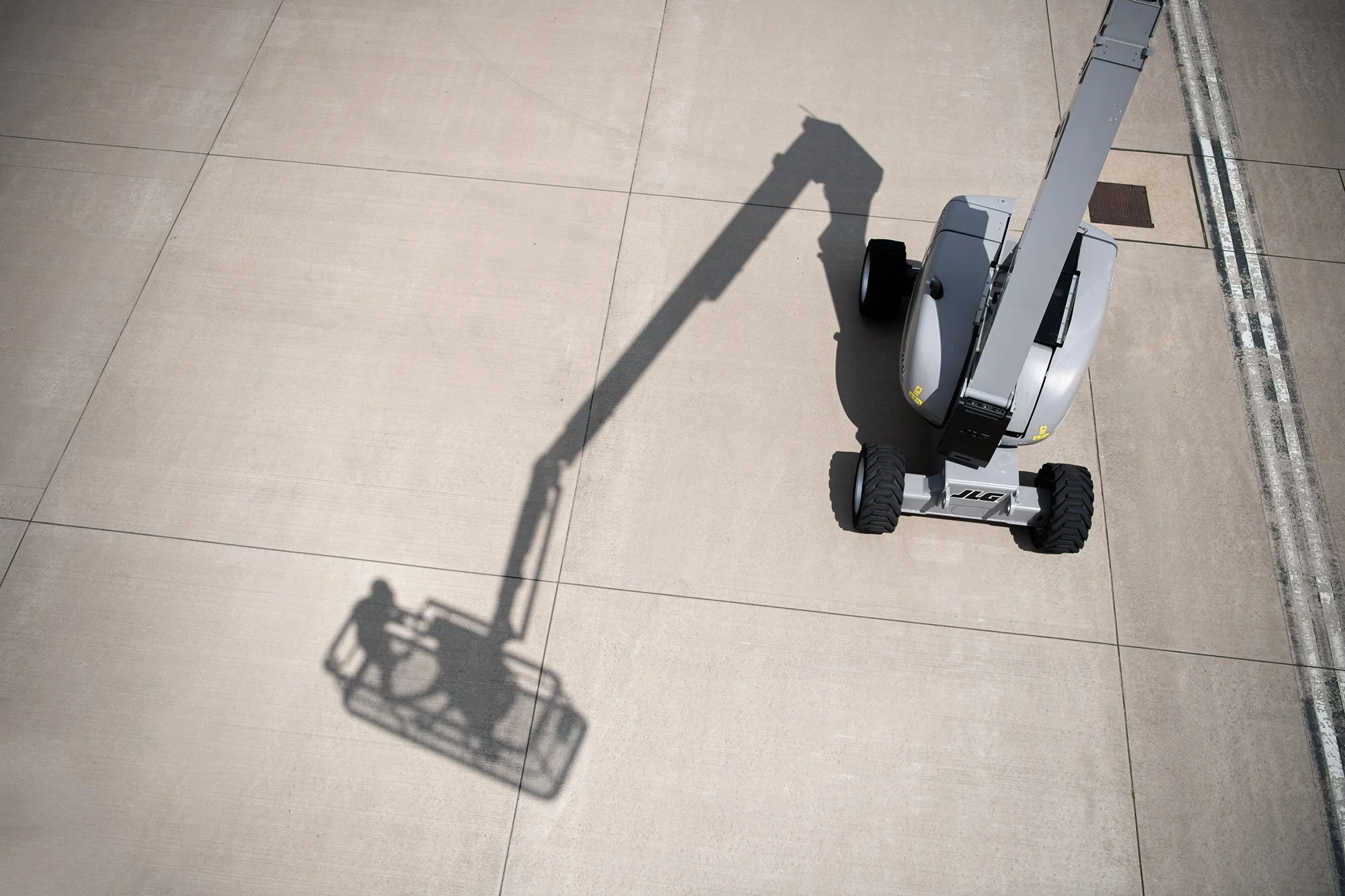
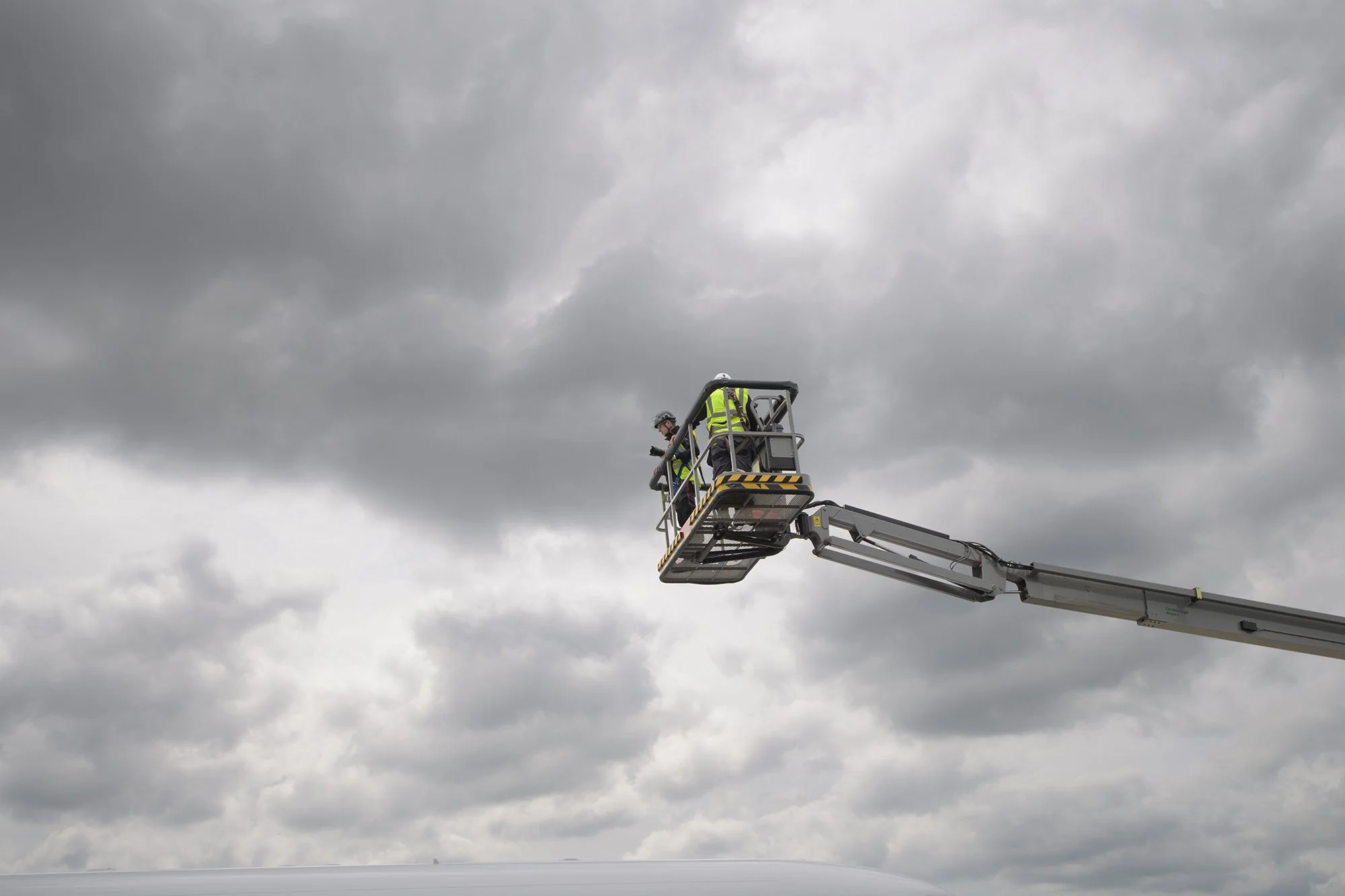
A further element of the assignment involved using high-access cherry pickers to achieve elevated viewpoints. These positions allowed me to photograph the aircraft and flight crews from above, creating images that would have been impossible to achieve from ground level.
Working at height adds another layer of responsibility to a commercial photography shoot. The equipment, access arrangements, working positions and safety procedures all need to be considered carefully, particularly when the work is taking place around valuable aircraft and within a controlled airport environment.
The planning had to be right, not just for the sake of the photographs, but for everyone involved in making the commission happen.
When a shoot has been prepared properly, the benefits become clear. Instead of spending valuable time resolving avoidable problems, the team can concentrate on the work itself. The three days at Farnborough were built around that principle, with the preparation providing the foundation for a smooth and well-coordinated photography schedule.
Creating the Images and Maintaining the Brand
Once the planning was in place and the photography began, the challenge was to make the most of the available opportunities and create a collection of images that would work for TAG Aviation across its various communications.
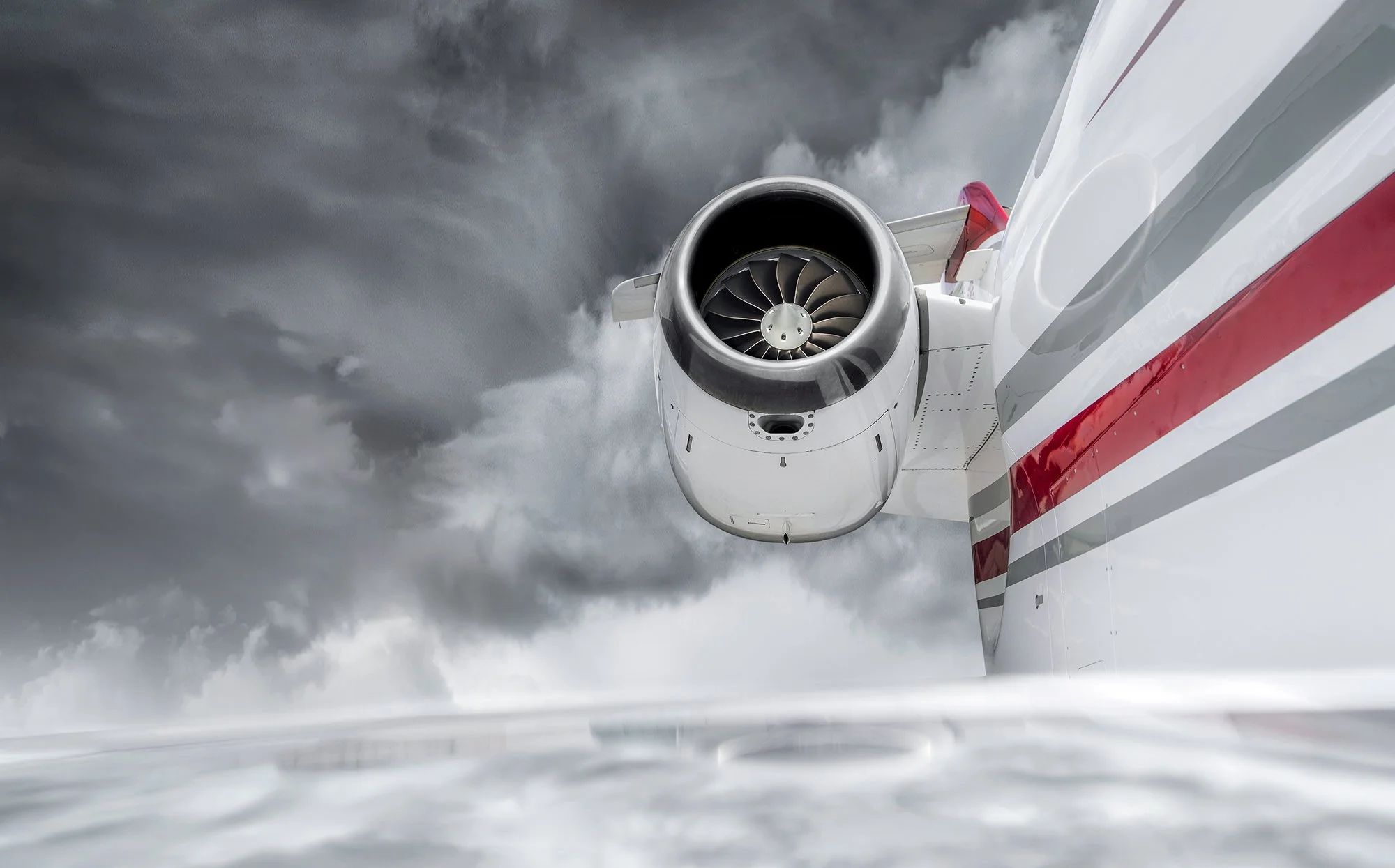
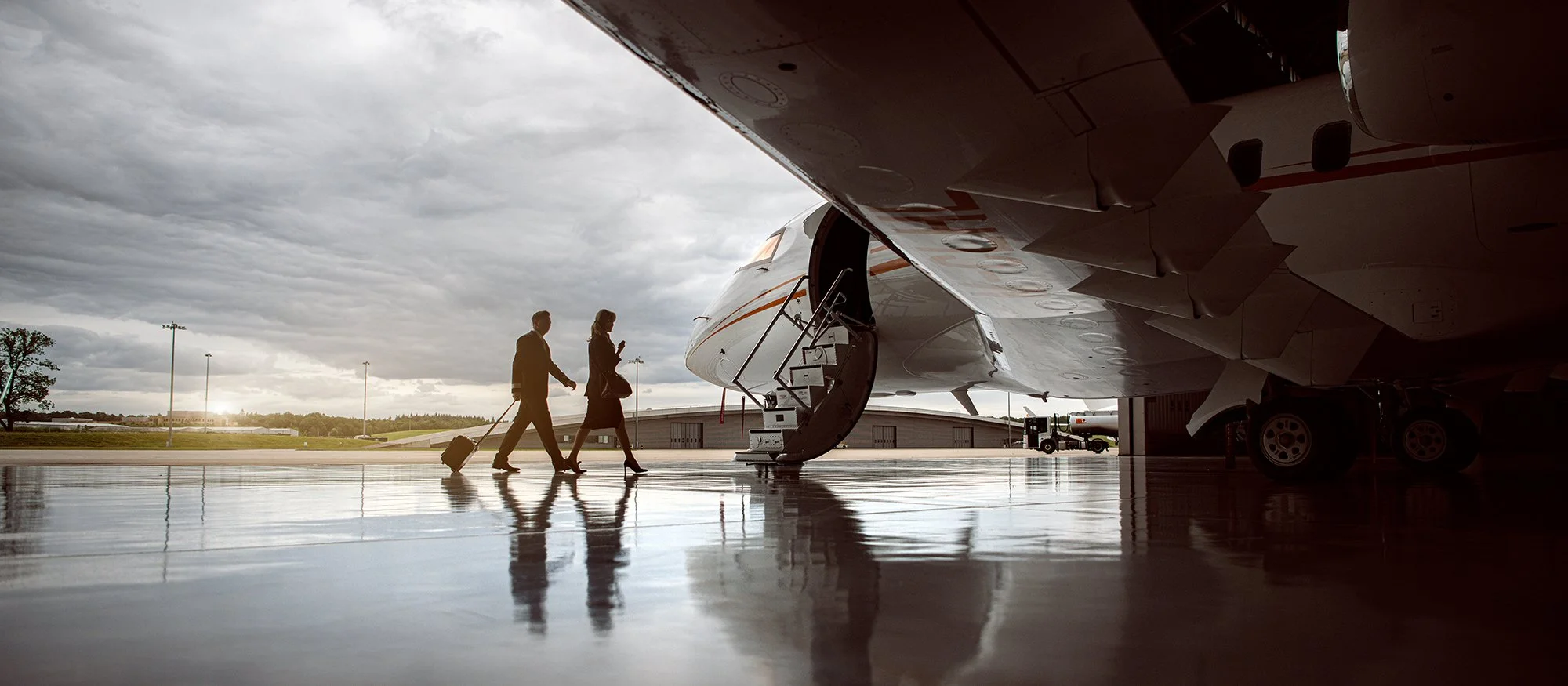
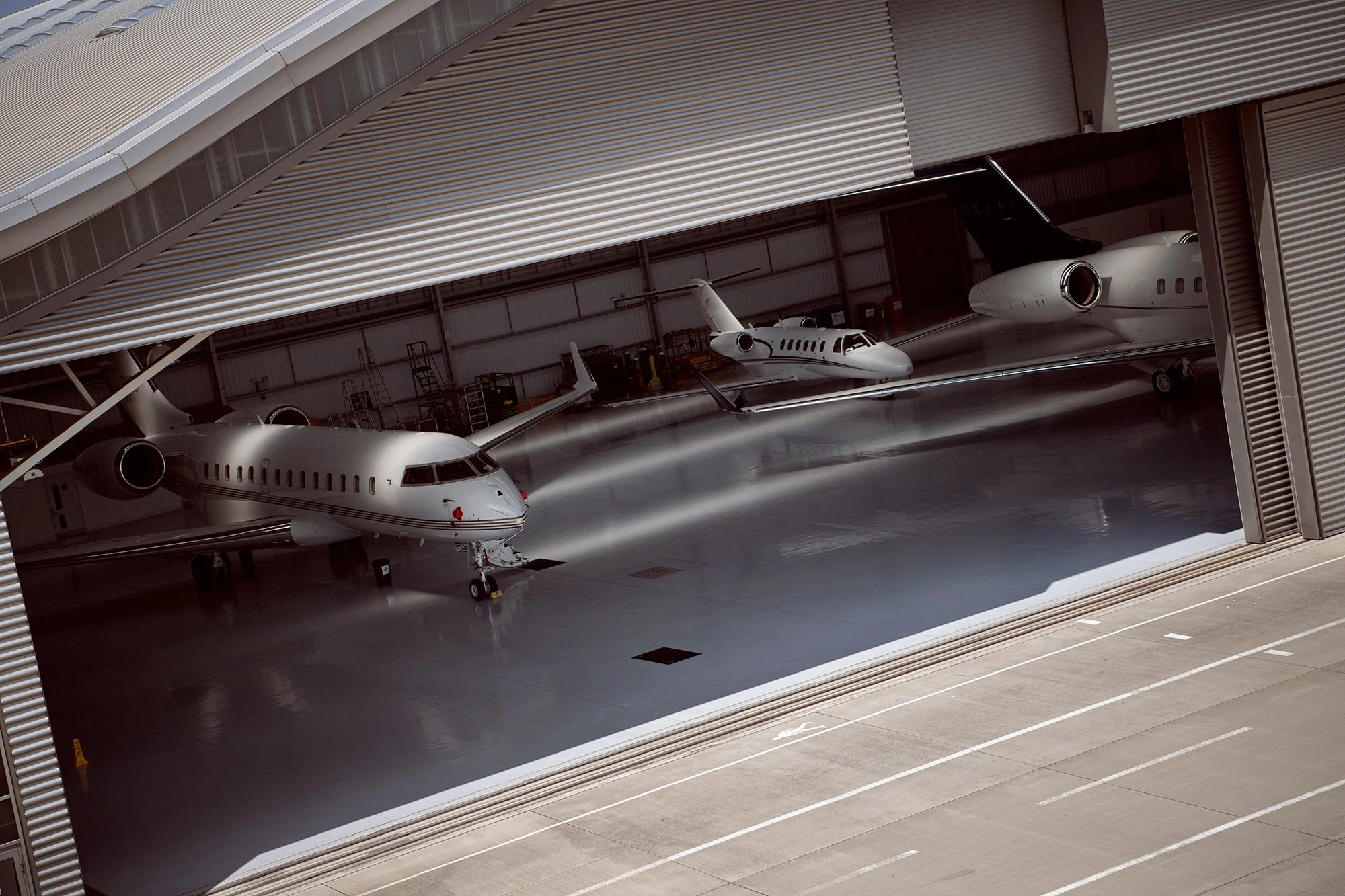
Photographing aircraft in an airport environment requires a different approach from photographing a car in a studio. The scale of the subject, the surrounding building structures, the available space and the changing light all influence how an image needs to be composed. It is important to understand how to use the environment rather than allowing it to dominate the photograph. The aircraft needs to remain the focal point, but the surroundings can also help communicate a sense of place, scale and professionalism.
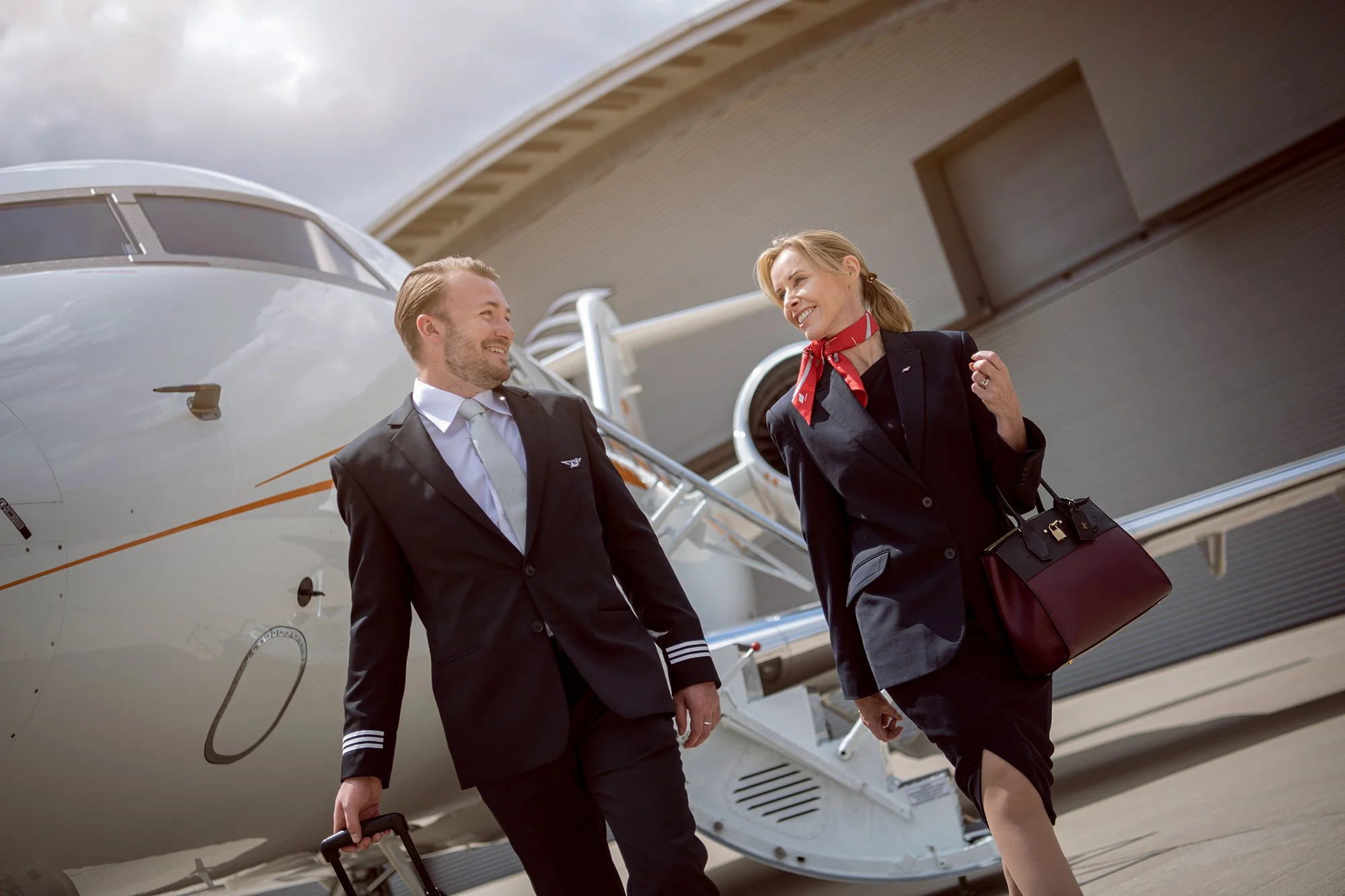
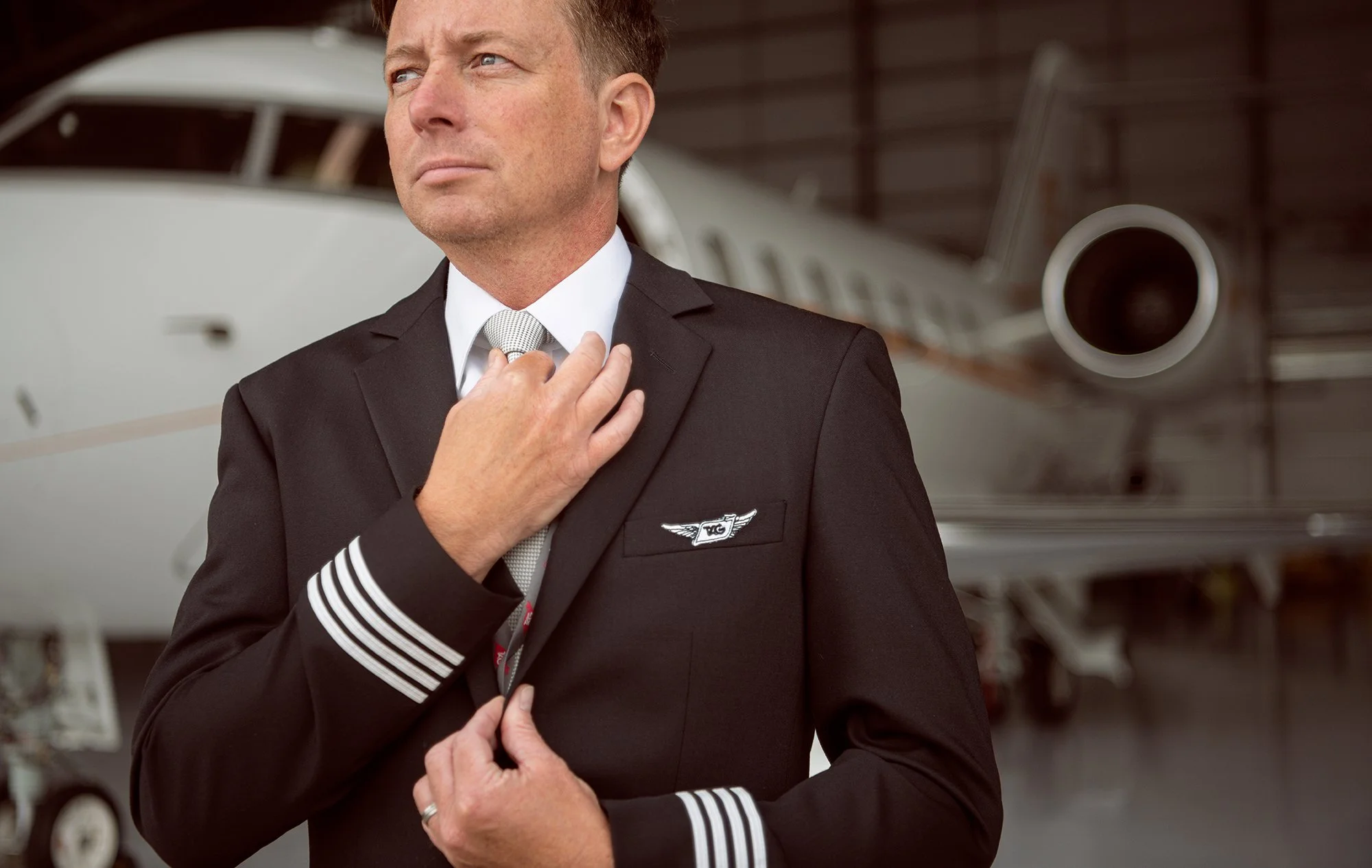
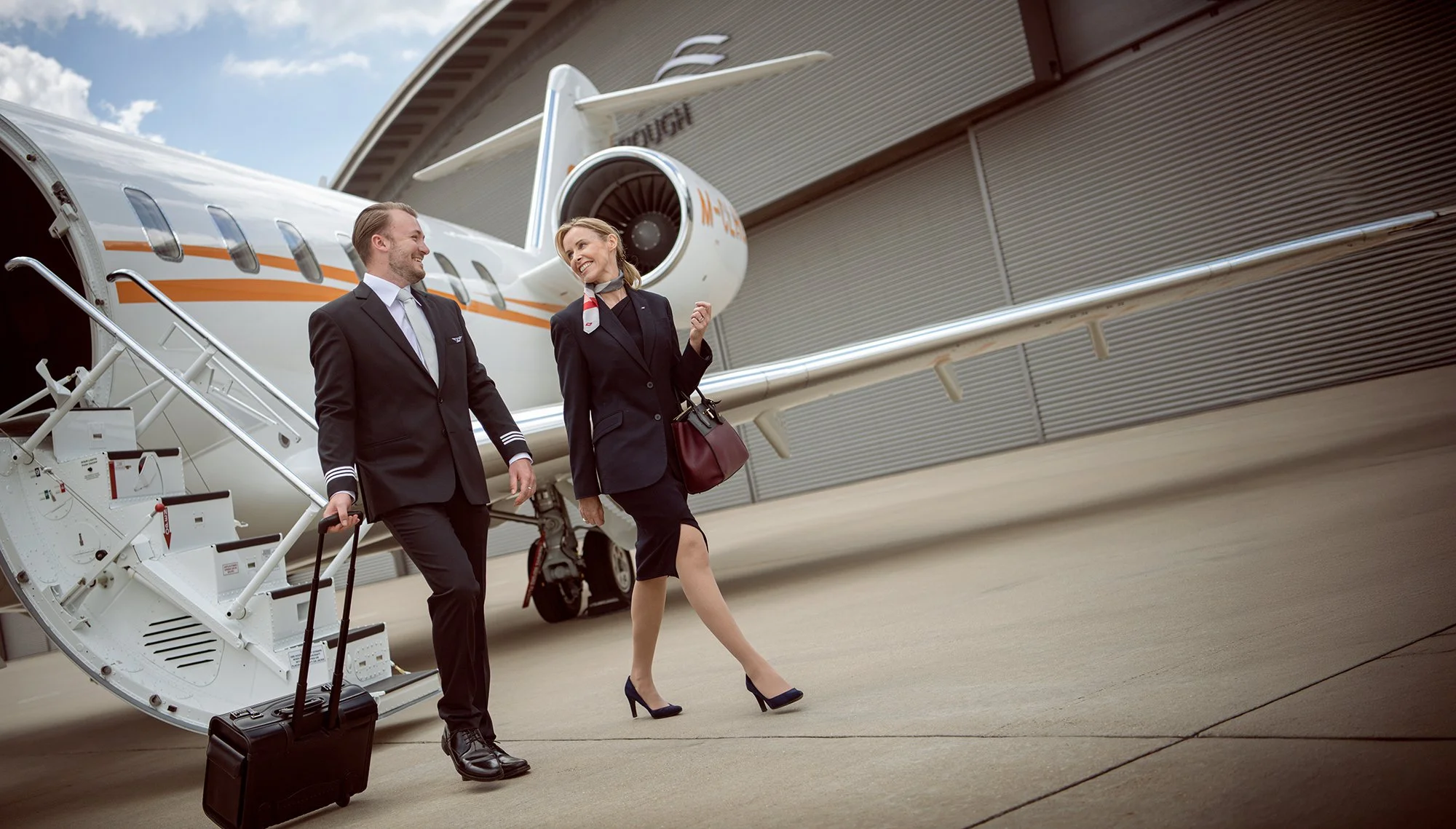
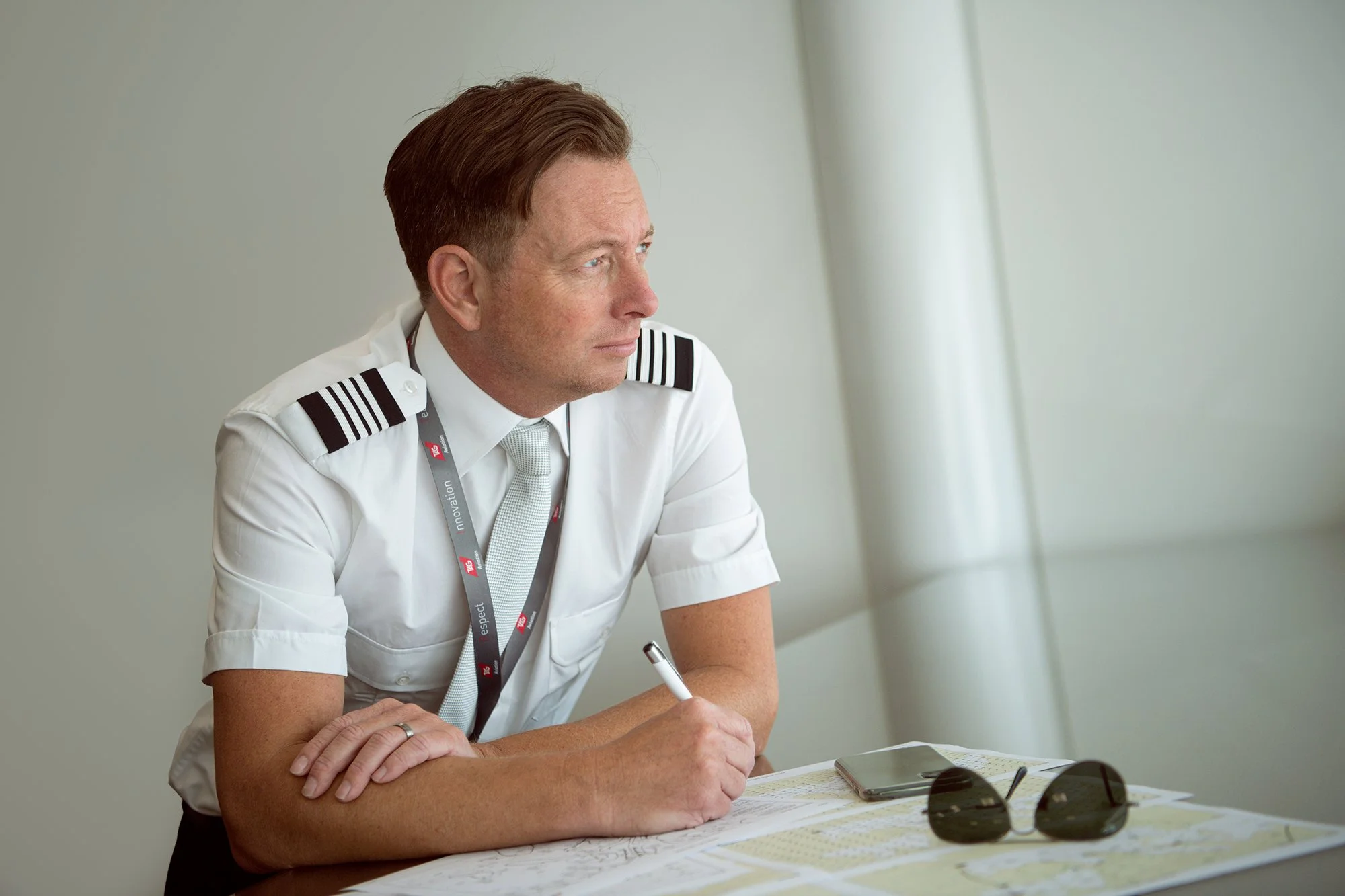
The inclusion of flight crews adds another dimension. People provide context and help tell the story of an aviation business, turning an image of an aircraft into something that communicates the people and expertise behind its operation. Achieving the right balance between the aircraft, the crew and the surrounding environment requires careful attention to composition and timing. Also to consider and build into the planning was that some of the imagery would be solely used in certain geographic areas of operations, such as the Far East. This meant that certain images needed to be shot several times and would involve items being swapped out, sometimes simply like a cabin crew neck scarf so that it was correct for that customer area, sometimes something more complex, like a change to aircraft livery colours.
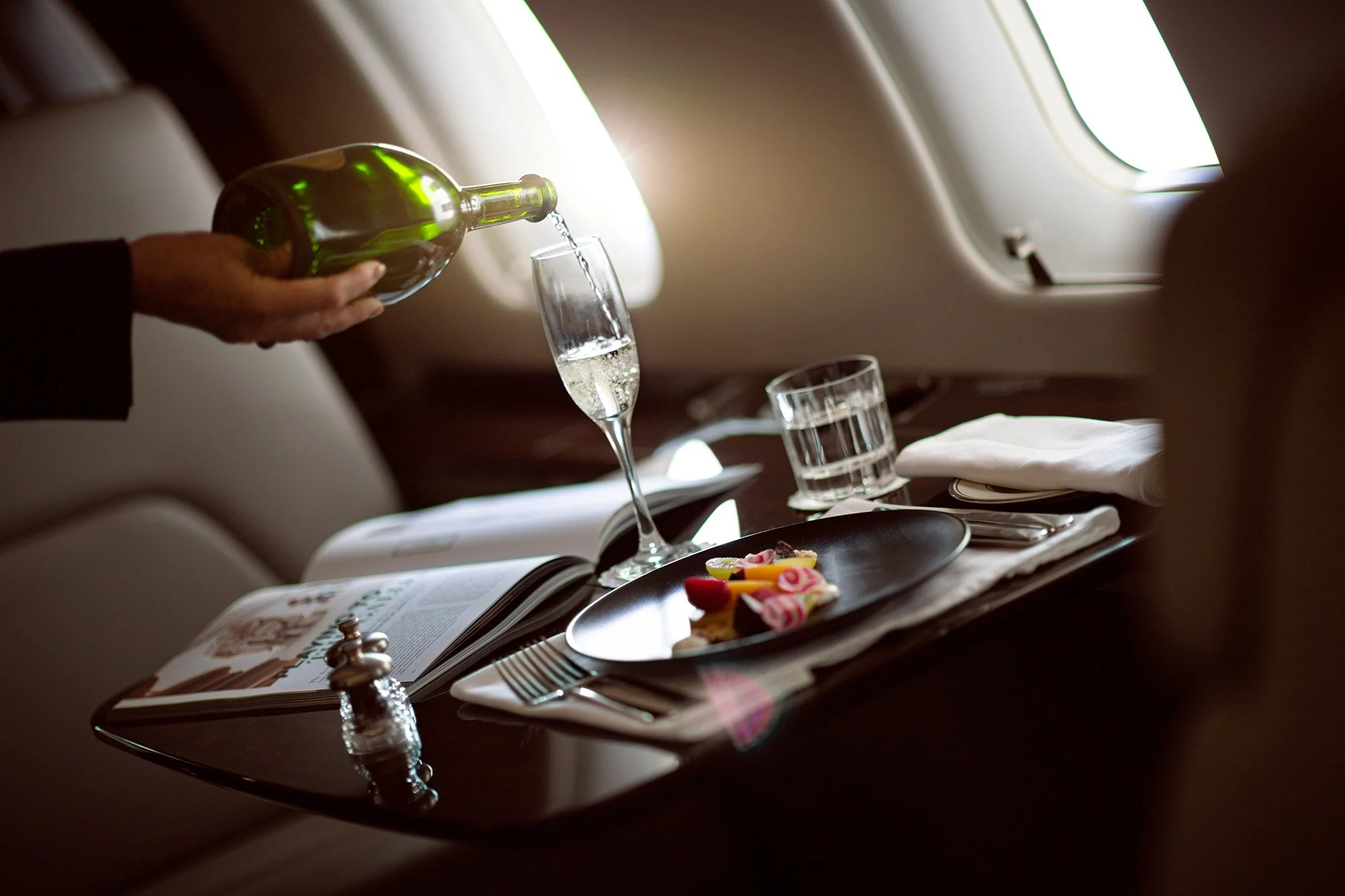
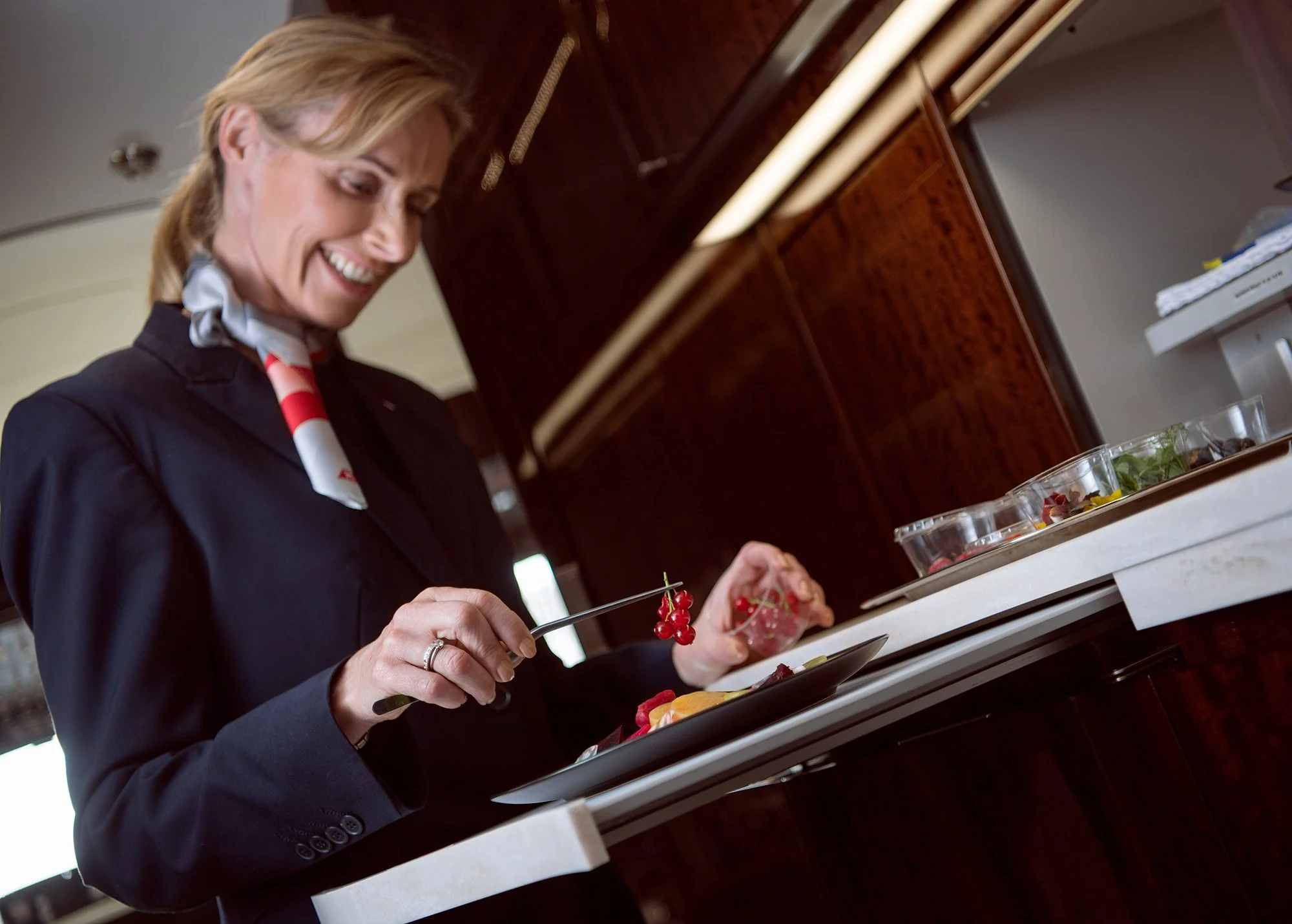
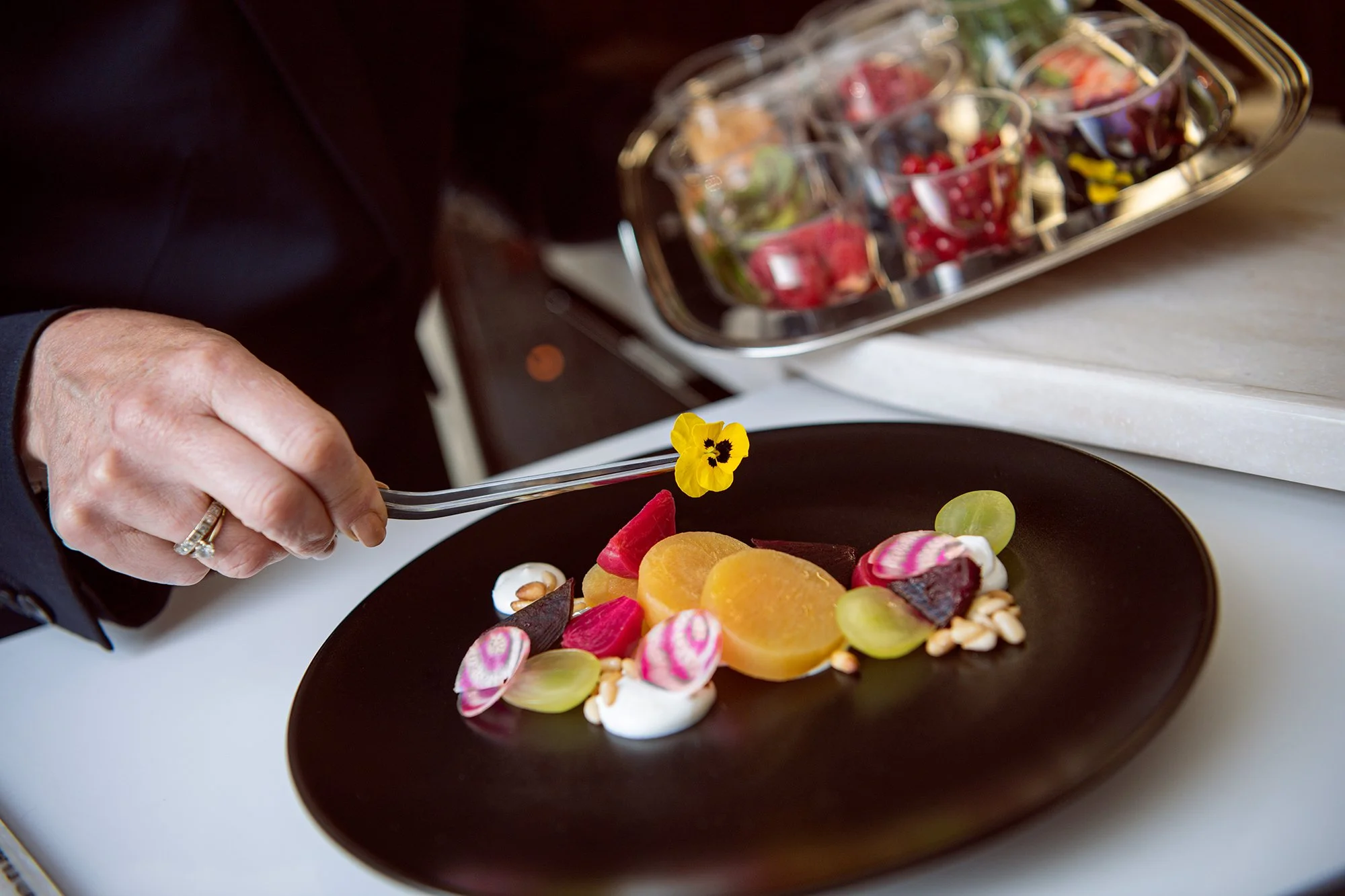

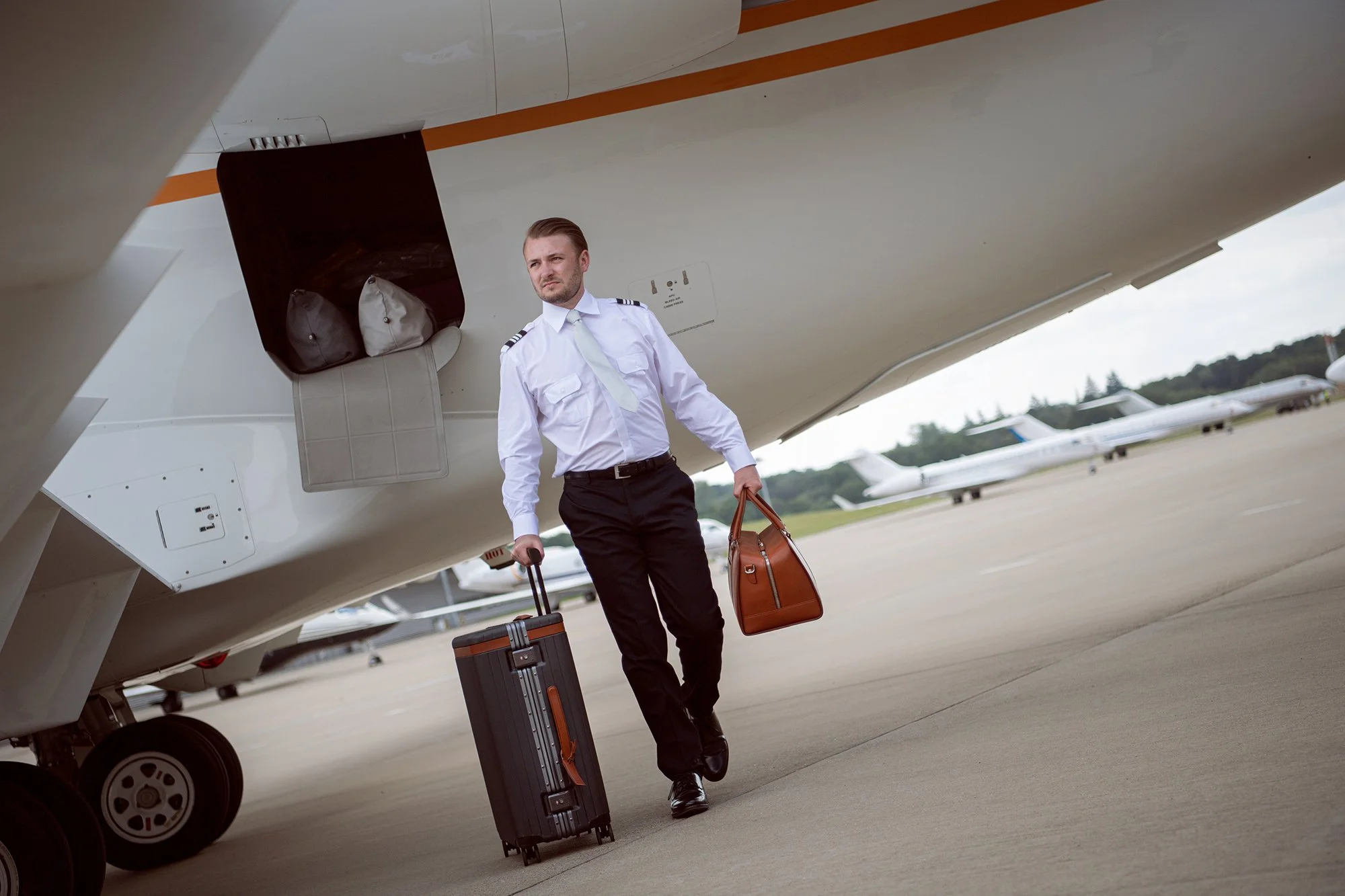
The elevated photographs provided another perspective, allowing the relationship between the aircraft and its crew to be shown from an entirely different viewpoint. These images can be particularly useful in commercial communications because they offer something beyond the familiar ground-level aircraft photograph.
However, capturing the images was only one part of the job.
Once the three-day shoot had been completed, the project moved into post-production, which took a further three days. This is an important stage in professional commercial photography, and one that is sometimes overlooked when people consider the work involved in delivering a finished image.
The photographs were carefully reviewed, cleaned up and adjusted to ensure that the finished collection sat comfortably alongside TAG Aviation's existing imagery and visual brand identity. Colour, tonal balance, consistency and the overall presentation of the photographs all needed to be considered.
The objective was not to make the images look artificially perfect or to change the character of the aircraft and locations. It was to refine the photographs so that they presented the subject in the right way and remained consistent with the client's brand guidelines.
When a company uses photography across a global website and a wide range of customer communications, consistency is particularly important. Images created at different times and in different locations still need to feel as though they belong to the same visual family.
This is where the experience of a commercial photographer becomes especially valuable. Taking a good photograph is one skill; understanding how to deliver a complete, carefully edited collection that meets a client's commercial requirements is another.
Following post-production, the finished imagery was delivered to TAG Aviation for review and approval. The work was signed off, and the commission had met the client's brief successfully.
Experience, Trust and the Value of Professional Aviation Photography
One of the things I have learnt over 20 years of working as a commercial photographer is that the quality of the final photographs is only part of what clients are investing in.
They are also investing in experience, preparation, reliability and the confidence that the person representing them on location understands what is expected.
This is particularly relevant in aviation. Airports and aviation facilities operate within carefully controlled environments, and everyone working on a commission needs to appreciate that the photography is taking place within a much larger operation. The ability to work safely, follow procedures, communicate clearly and respect the responsibilities of other people is every bit as important as knowing how to use a camera.
When I am working at a location alongside airport personnel, aircraft crews, suppliers and other agencies, I am also representing my client. My conduct, professionalism and ability to work effectively reflect on the company that has commissioned me.
That responsibility matters enormously to me. I want my clients to feel confident that they can trust me to take care of the photographic side of an assignment while respecting the people, facilities and operational requirements around it.
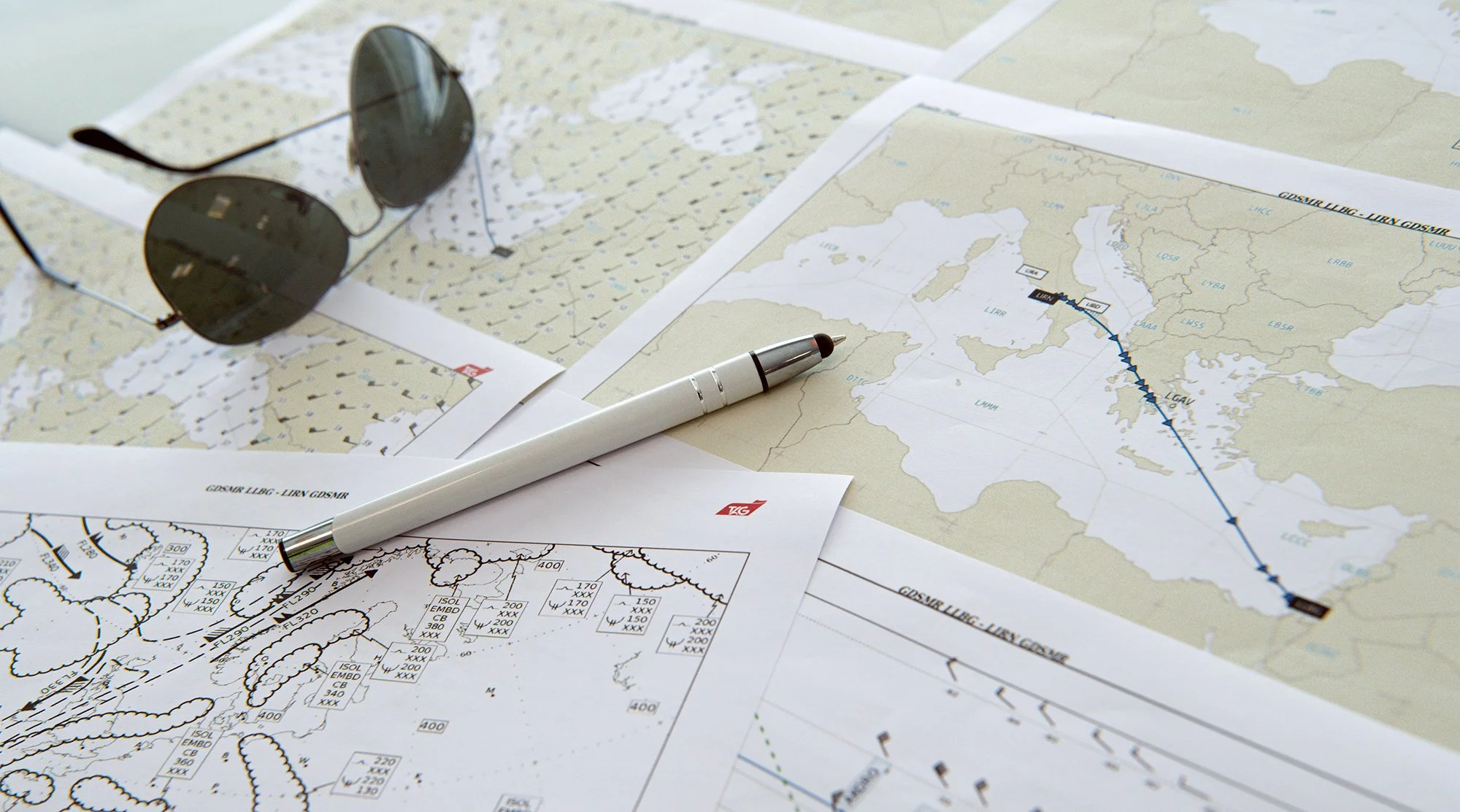
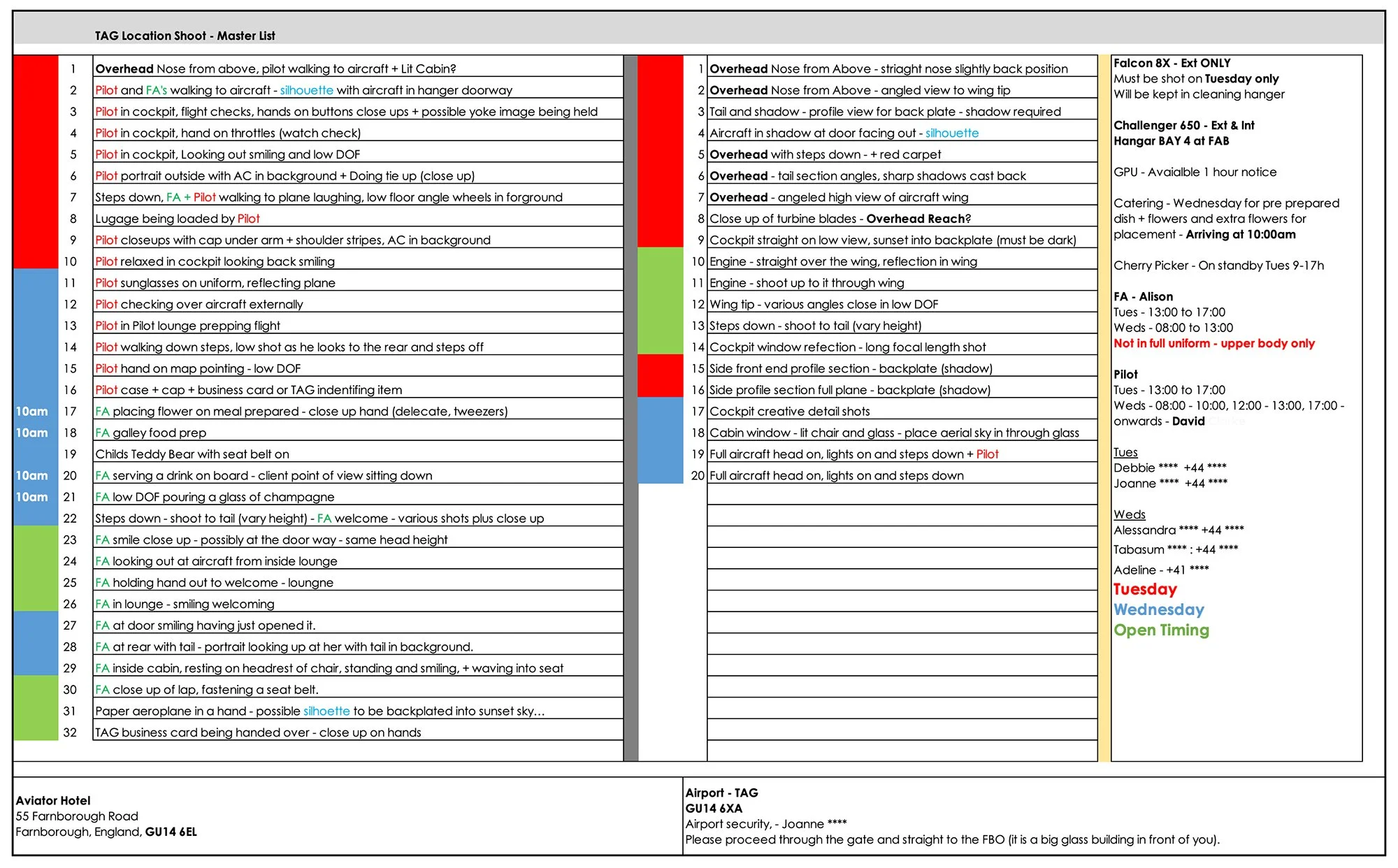
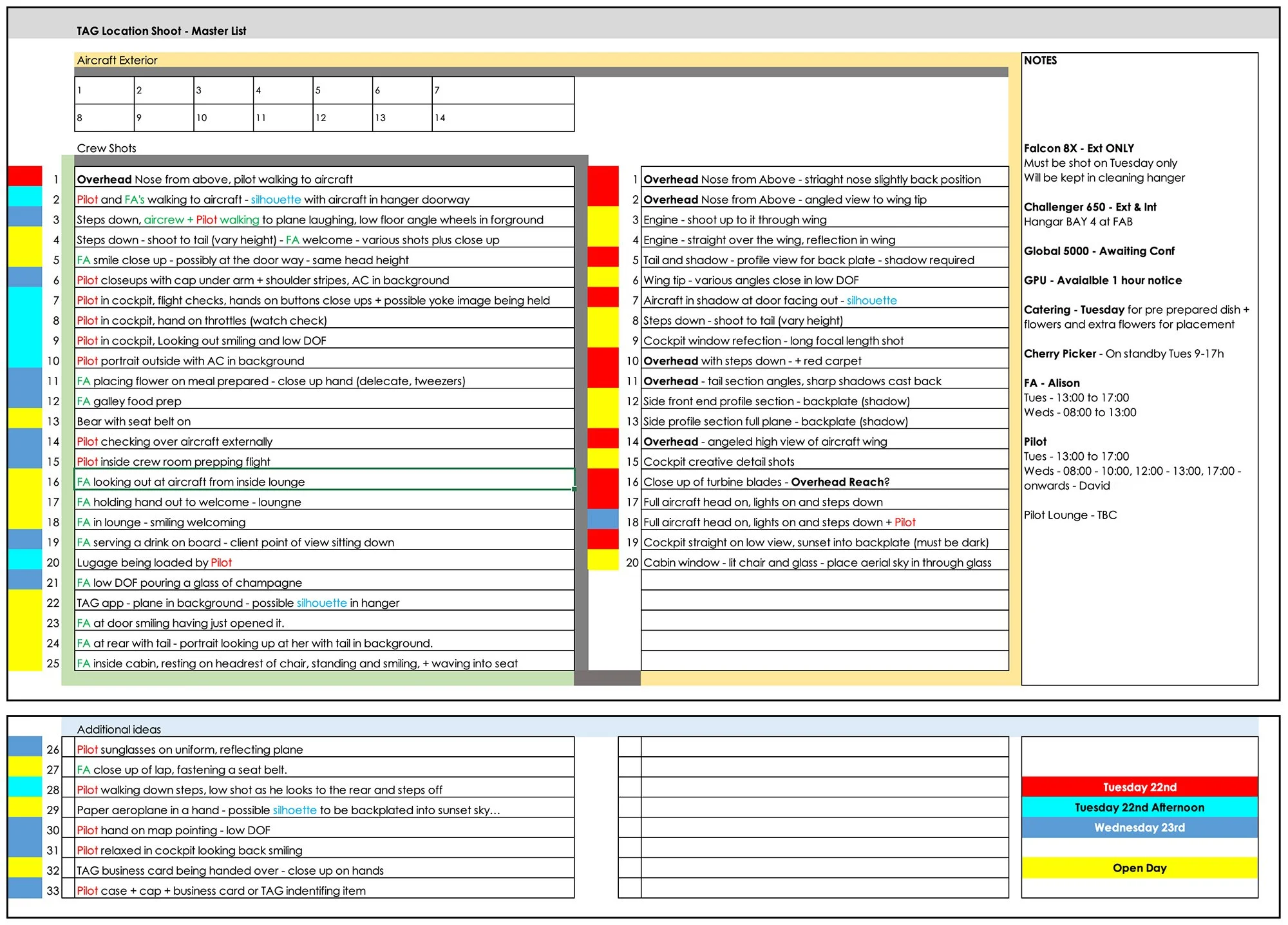
Below are the typical planning sheets that I prepare ahead of a shoot, these map out the photography that the client has requested through their brief in a way that makes the best use of assets, staff and time so that the best possible result is achieved with the minimum impact to the clients operation.
Having worked extensively across the transport sector, I understand that every industry has its own expectations and ways of working. Experience allows you to anticipate potential challenges, plan realistically and make informed decisions when circumstances change. It also helps you recognise when something needs further discussion or authorisation rather than simply pressing ahead.
For a client such as TAG Aviation, these qualities are important because the photography needs to fit into a complex operational environment without creating unnecessary disruption. The work must be visually strong, but the process of producing it must also be handled properly from beginning to end.
I believe this is one of the defining differences between a general photographer and a specialist commercial aviation photographer. Technical ability and a creative eye are essential, but they become far more effective when supported by an understanding of the industry, its people and the environments in which they work.
The completed TAG Aviation commission brought together all of these elements, from the months of preparation and the carefully coordinated three-day shoot at Farnborough to the final three days of editing and the delivery of the approved images.

Seeing the finished photography put to use across the client's customer communications and global website was a satisfying conclusion to the project. The images had a clear purpose, the client was happy with the results, and the work could go on to support the business well beyond the original shoot.
For me, that is what successful commercial aviation photography is all about. It is not simply a case of producing attractive pictures of aircraft. It is about understanding the client's needs, creating imagery that supports its brand, and delivering the entire commission with the professionalism and attention to detail that the client expects.
After 20 years working with commercial clients across the transport industry, I still find that combination of creative work, technical challenge and professional collaboration immensely rewarding. Every assignment brings its own requirements, and the opportunity to help a client communicate the quality of its business through photography is something I continue to value.
The TAG Aviation commission at Farnborough was a great example of that approach in practice, and I was delighted to deliver a suite of imagry that the client was happy to approve and use across its global communications.