


For close to two decades, award-winning commercial photographer Tim Wallace has been at the forefront of automotive and transport photography. His portfolio reads like a who’s who of industrial heavyweights, Terberg, Dennis Eagle, Veolia, and more. From rugged off-road locations to precision-lit studio environments, Wallace has dedicated his career to capturing the strength, engineering, and character of vehicles that don’t just move goods — they move industries.
While his assignments often take him to real-world working locations, where trucks and tankers perform under authentic conditions, there are times when clients require something more refined, a brochure-perfect studio image that showcases their vehicles in a controlled and polished environment. It’s one thing to take a van or mid-sized truck into a studio. But when the subject is something like a 26-tonne, 11-metre-long DiSab Centurion industrial tanker, the scale of the challenge changes entirely.
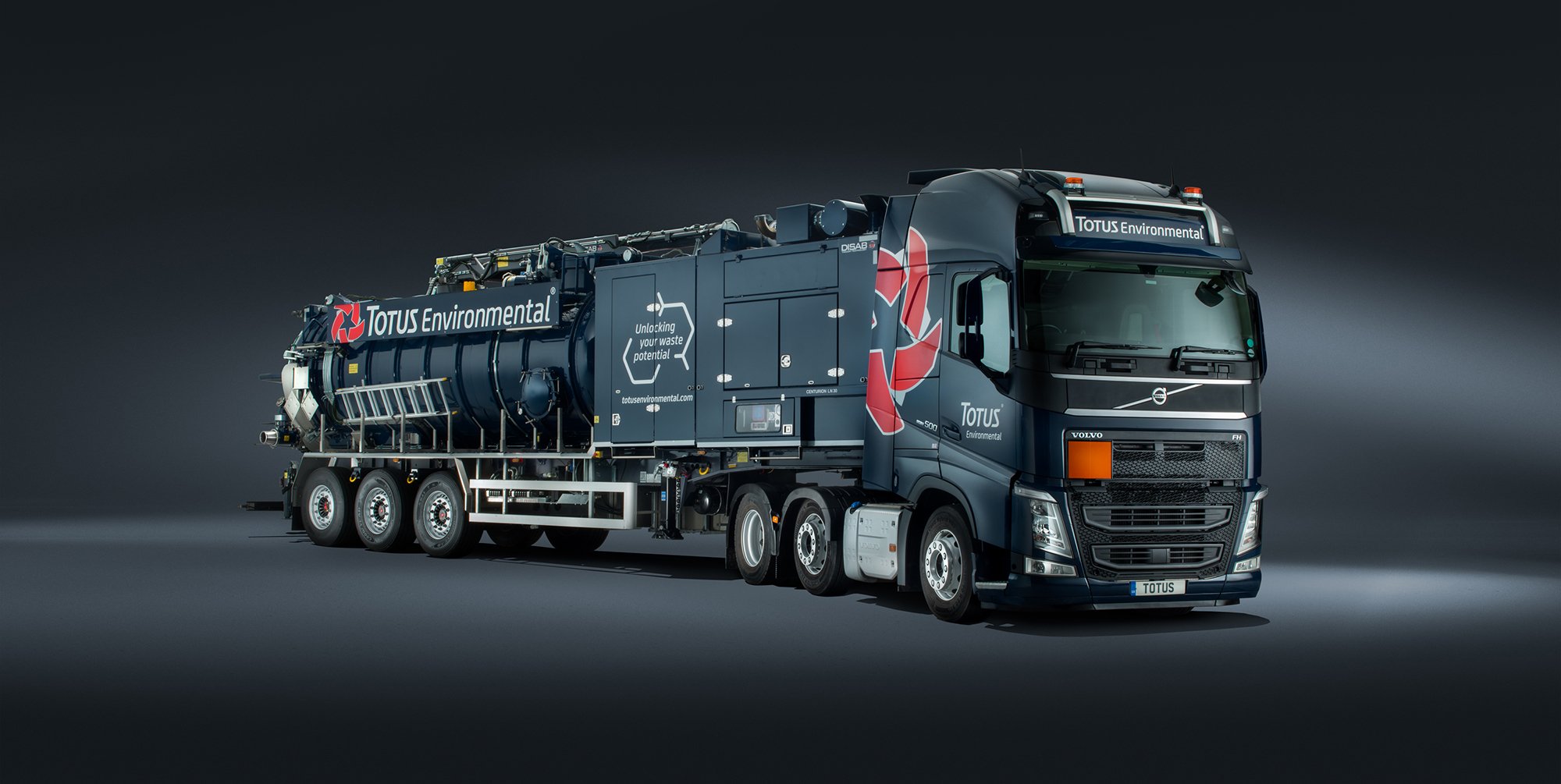
The Biggest Vehicles Ever Shot in a UK Studio
The DiSab Centurion tankers are not just large, they are monumental pieces of engineering. Designed for demanding industrial work, their sheer presence commands attention. And according to industry insiders, these machines are officially the largest vehicles ever to be photographed in a studio in the UK.
Capturing them under controlled lighting conditions required precision planning and years of specialist experience. Finding a studio capable of physically accommodating such massive vehicles was the first major challenge. Over the years, Wallace has developed close relationships with a select number of high-end studios across the UK. One in particular, a purpose-built facility near Northampton in the UK, has become his go-to space for large-scale transport photography.
This facility underwent a major rebuild a few years ago, tailored specifically to allow photographers like Tim to work with very large subjects. The result is a vast, technically advanced studio where heavy vehicles can be driven directly inside, surrounded by the kind of lighting control usually reserved for high-end automotive shoots. When the DiSab Centurion rolled in, it wasn’t just another project — it marked a milestone moment for just what is possible in studio.
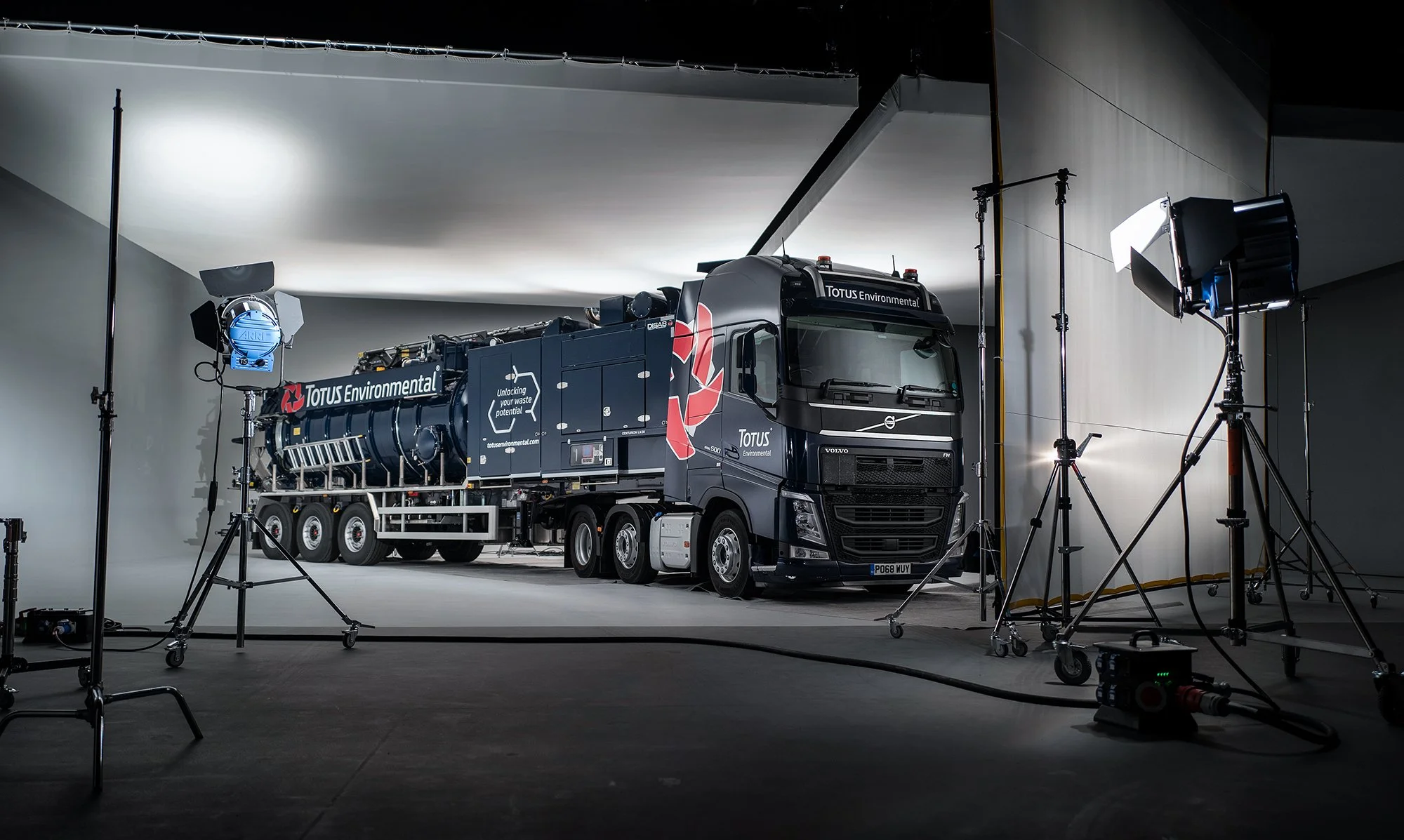
The Art and Precision of Studio Vehicle Photography
Studio photography at this scale is an entirely different discipline. There’s no dramatic landscape to rely on, an interesting or engaging backdrop, no ambient environmental context, just pure, controlled light. Every reflection on the metal, every gradient across the polished bodywork, has to be crafted with intent.
This is where Tim Wallace’s lighting and technical experience comes into play. With a background in high-end commercial imagery and years of experience lighting complex forms, he approaches these shoots with the precision of an engineer and the eye of an artist. Each line, curve, and surface is treated as a design element, and through his lighting setups, Wallace turns heavy machinery into something sculptural and dynamic.
Across his career, he has worked in studios around the world, from Europe to North America, refining his techniques to deliver the best possible results for global clients. His understanding of how light behaves on large surfaces is one of the key reasons he’s trusted by major vehicle manufacturers to handle their flagship models and industrial showpieces.


A Story of Scale, Engineering, and Photography
What makes projects like the DiSab Centurion shoot so compelling isn’t just the technical complexity, it’s the story they tell. These images are not simply documentation; they’re a celebration of design, power, and precision. Wallace’s photography transforms practical engineering into visual theatre, showing not only what the machine does, but what it represents.
Standing inside the Northampton studio as the 26-tonne tanker took its place under the lights, there was a palpable sense of occasion. The quiet hum of lighting rigs, and the sheer physical scale of the vehicle created a moment that reminded everyone on set just how ambitious modern commercial photography can be.
For Tim Wallace it was another chapter in a long career defined by pushing boundaries, not just in scale, but in what’s possible when creativity meets engineering.


