Ferrari 250 GT Berlinetta Lusso
Behind the scenes of studio car photography
There is a particular moment during a studio photoshoot when everything starts to come together. The cables are laid, the lights are positioned, the camera is ready and, almost imperceptibly, the subject begins to change. Not physically, of course, but visually. A gentle highlight appears along a body line, a previously hidden curve becomes visible and suddenly the shape of the car takes on an entirely different character. For me, this is one of the most enjoyable parts of being a car photographer.
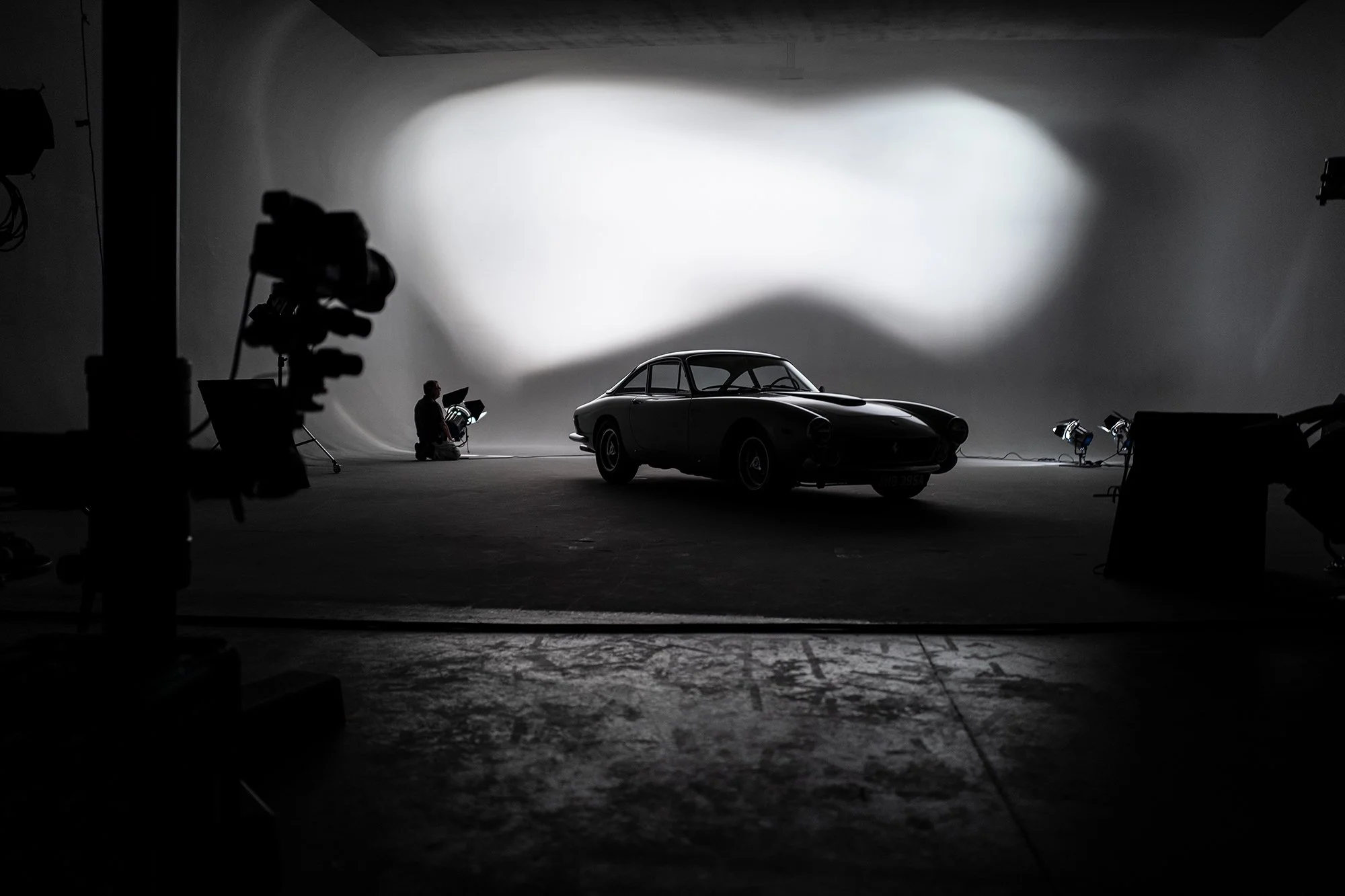
Recently, I had the pleasure of photographing something rather special for a client project, a Ferrari 250 GT Berlinetta Lusso. It is a car that needs very little introduction to anyone with an interest in classic Italian automotive design. However, having a car of this importance sitting in front of my camera also presents a wonderful opportunity to explore one of the aspects of automotive photography that I enjoy most, the creative use of continuous lighting in the studio.
A Ferrari with beautiful proportions
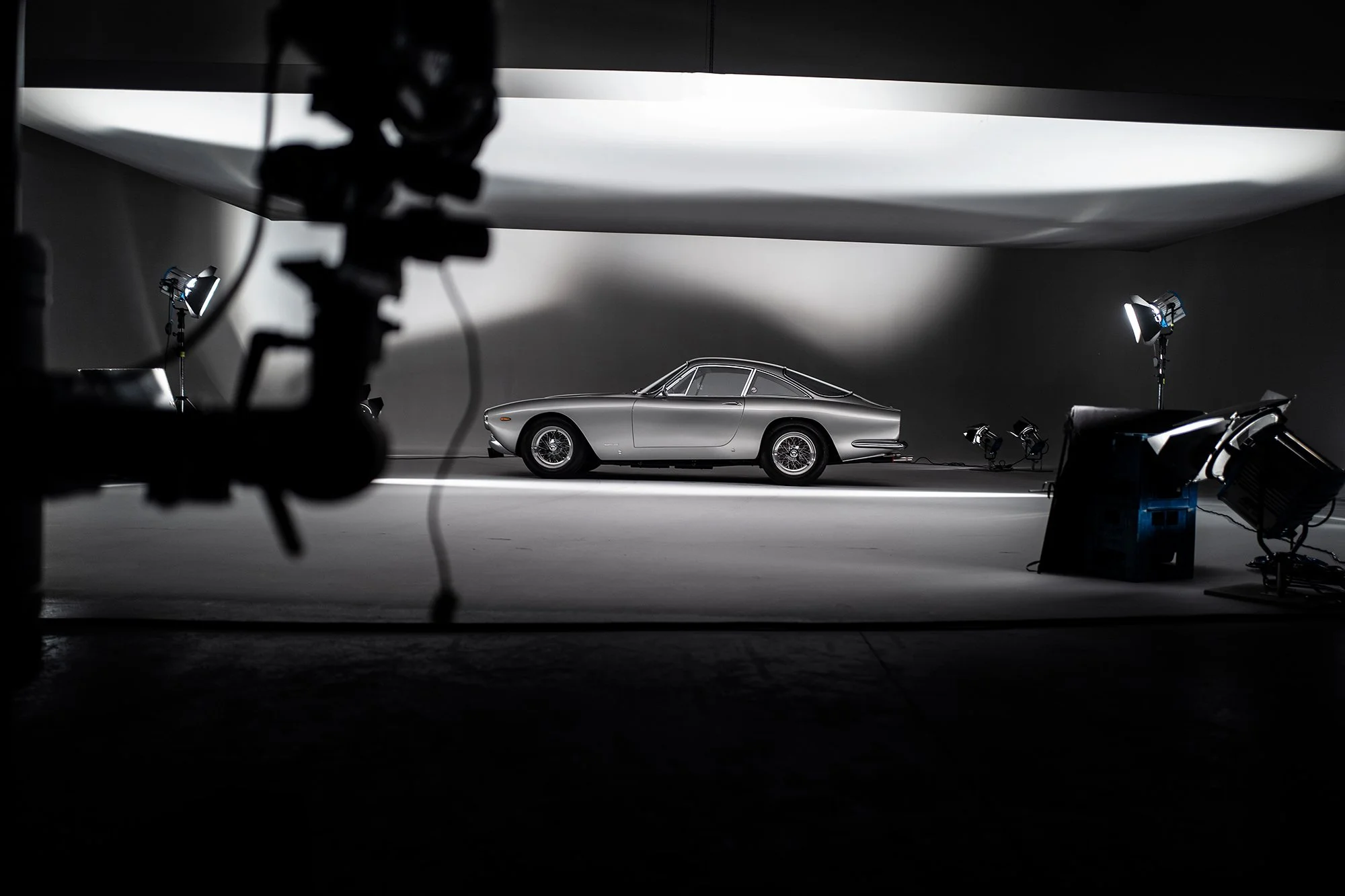
The 250 GT Berlinetta Lusso, is arguably one of the most elegant cars Ferrari has ever produced. Introduced at the Paris Motor Show in October 1962, the Lusso was the luxury grand touring model within Ferrari's hugely successful 250 range. Its beautifully proportioned bodywork was designed by Pininfarina and constructed by Scaglietti, a name that has been associated with some of Ferrari's most important cars.
Only 351 examples were built between 1963 and late 1964, making the Lusso a relatively rare sight today. Its appeal, however, goes well beyond its production numbers. The long bonnet, beautifully curved roofline, delicate glasshouse and wonderfully sculpted rear bodywork combine to create a design that still looks remarkably contemporary more than sixty years later.
Beneath that elegant exterior was a very capable sporting machine. The Lusso used Ferrari's three-litre Colombo V12 engine, while its short-wheelbase chassis architecture drew on the engineering heritage of the hugely successful 250 SWB and 250 GTO. It was a genuine grand tourer, equally at home covering long distances in comfort or enjoying a much more spirited drive through the Alpine passes. It is precisely these qualities that make the Lusso such an interesting subject to photograph. There is so much going on in its design, and the challenge is to make sure that the photography communicates those qualities rather than simply recording the appearance of the car.
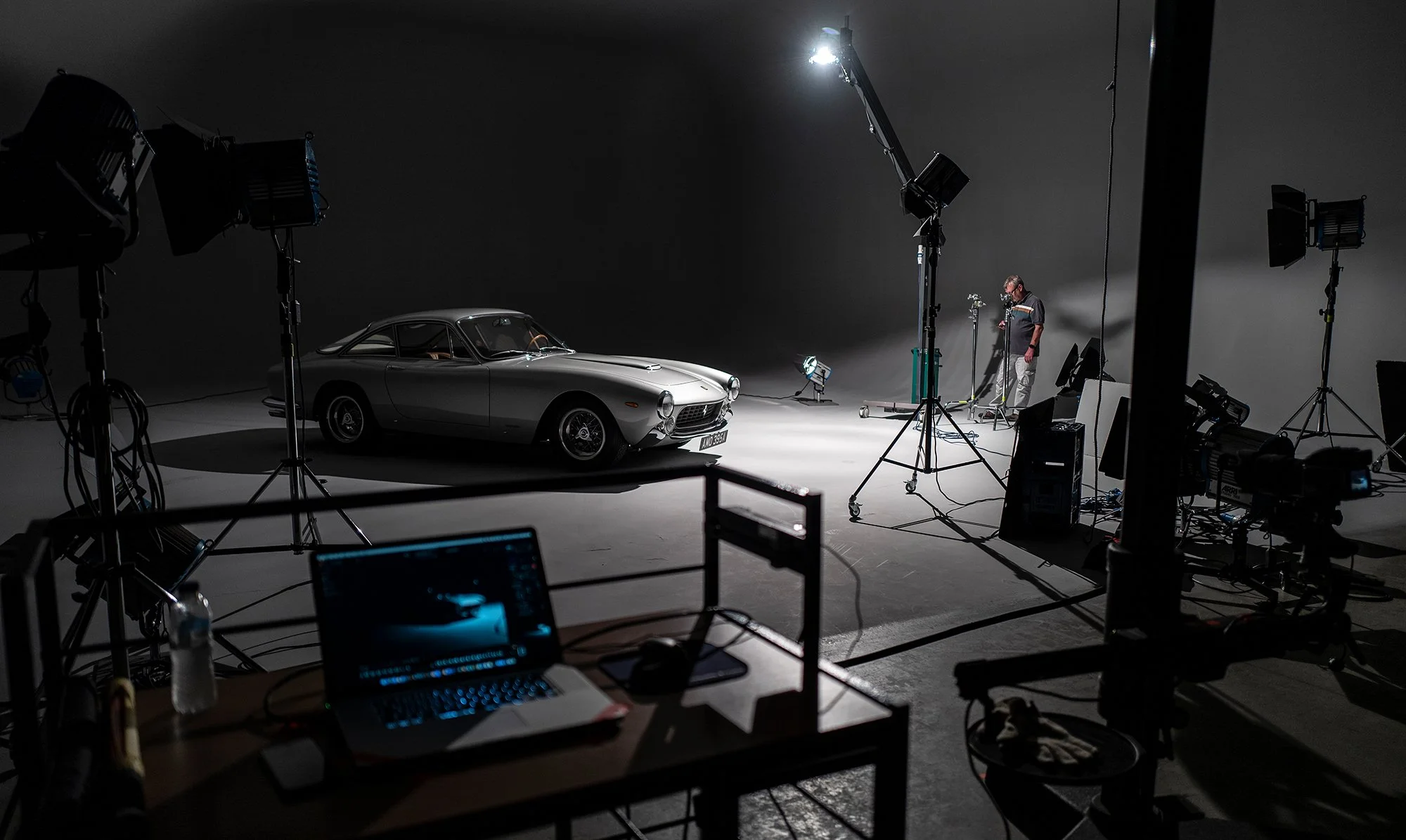
I was lucky enough to spend some time in studio with this legendary Ferrari when I shot it as part of a client project to capture seven ‘Ferrari Legends’ across the years and included this early 1962 Lusso through to the modern Monza SP1. Shooting cars in studio is not as straightforward as many people would think and to really get the best results we use the lighting to carefully sculpt the bodylines of the car to bring out its design and elegance. It’s always enjoyable to start with a car in studio in complete darkness and slowly build up the lights one by one until the car’s shape and sheer presence come to life ready for the shutter of the camera to be released.
Why I love continuous lighting
Over the years, I've worked with many different lighting systems, but for my studio car photography I have a particular affection for continuous lighting.
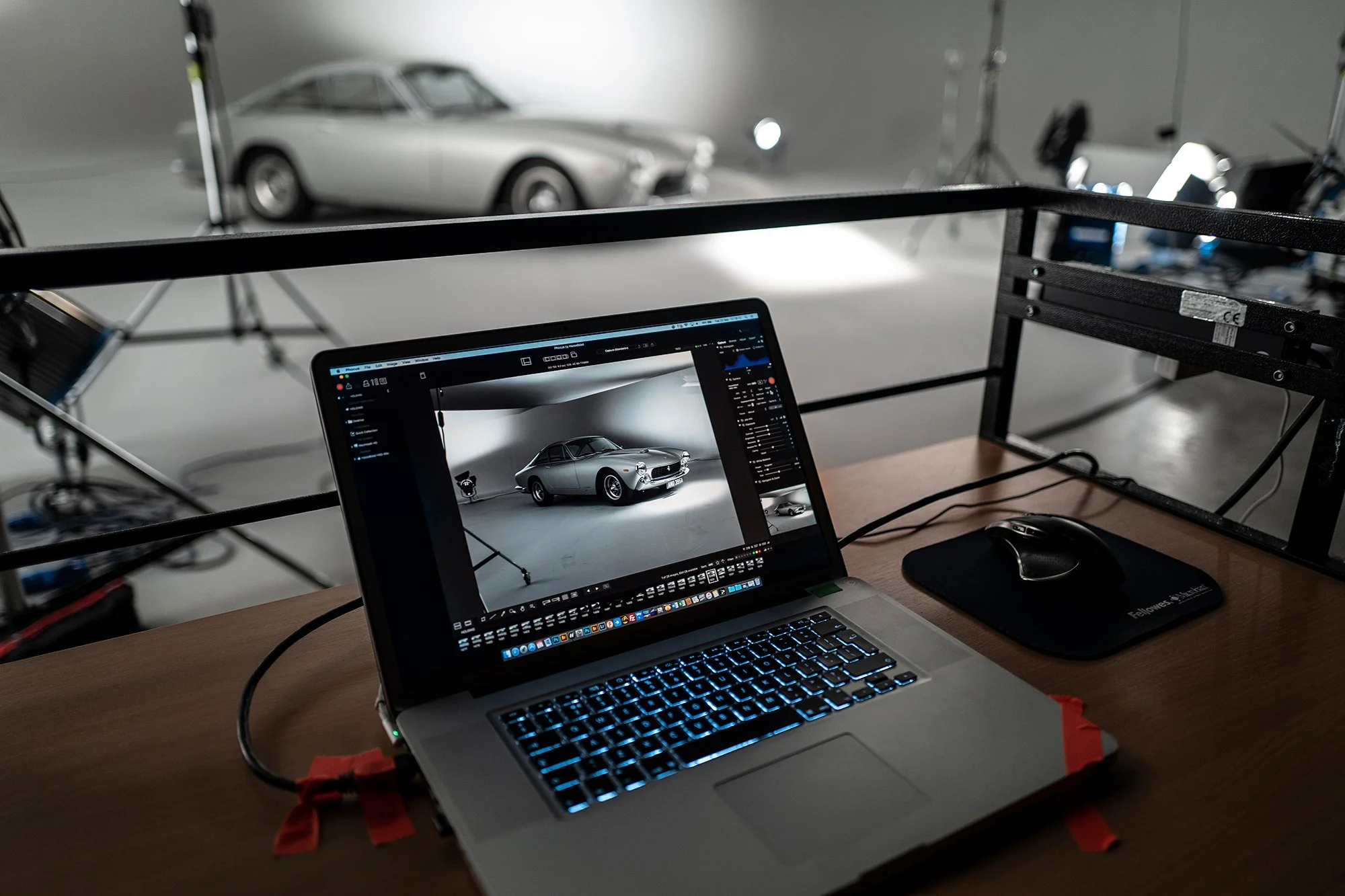
There is something wonderfully immediate about working with a light source that is permanently on. Unlike traditional flash (strobe lighting), where the photographer positions the lights and then relies on modelling lamps to understand the final result, continuous lighting allows me to see exactly what is happening to the subject in real time.
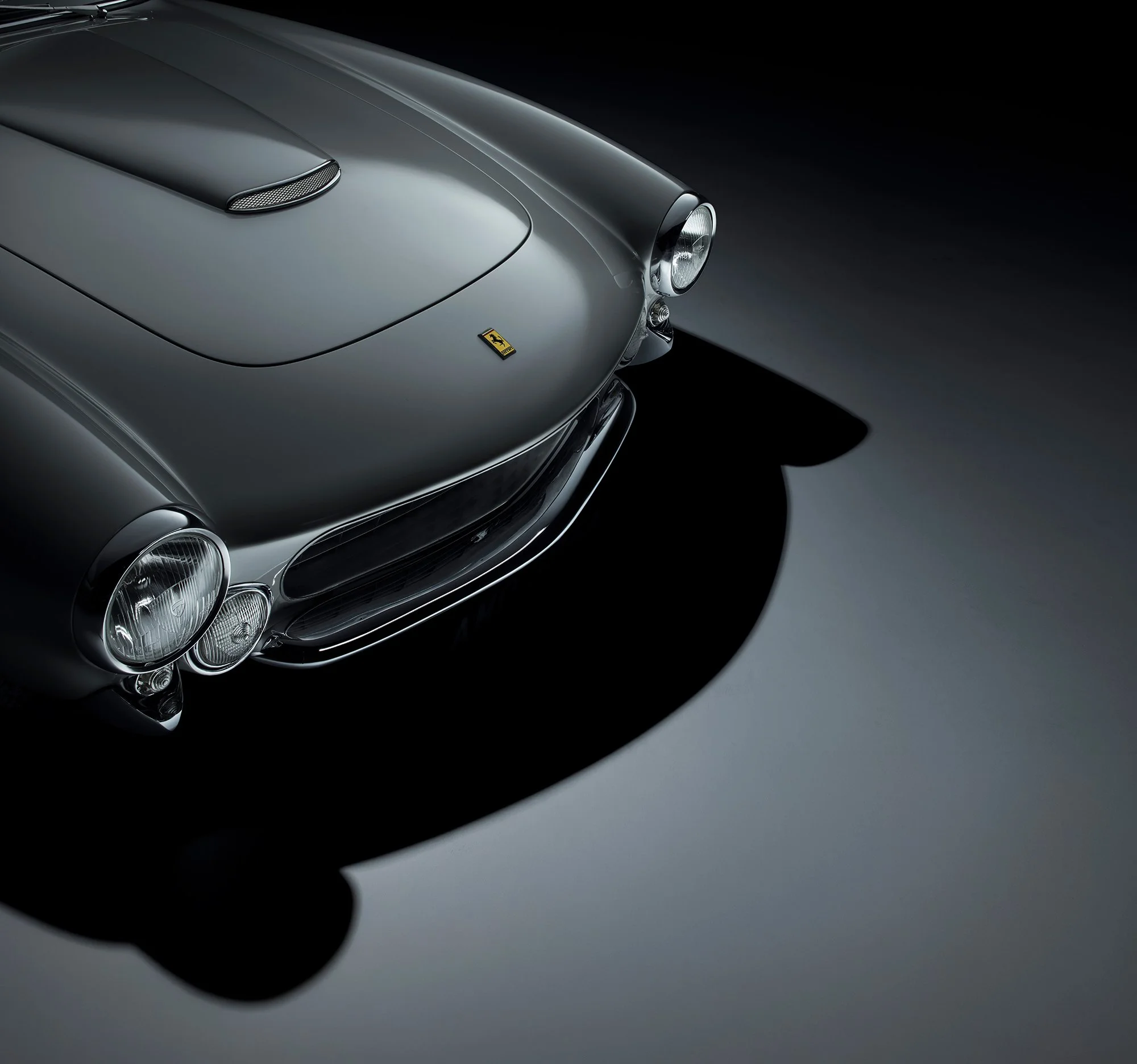
I can move a light by a few inches, change its angle slightly or introduce another reflective surface and immediately see the difference. That might sound like a relatively small advantage, but when you're photographing a vehicle with the complex curves and delicate proportions of a Ferrari Lusso, those tiny adjustments can make an enormous difference.
Flash photography certainly has its place, particularly when working on location or when a very high level of output is required. It can be an extremely effective way of producing automotive imagery. However, my preference for continuous lighting comes from the degree of visual control it gives me during the creative process when working in studio.
I don't have to imagine what the light might do when it fires. I can see it, study it and make adjustments until the result is exactly where I want it to be.
For me, that is a very satisfying way to work.
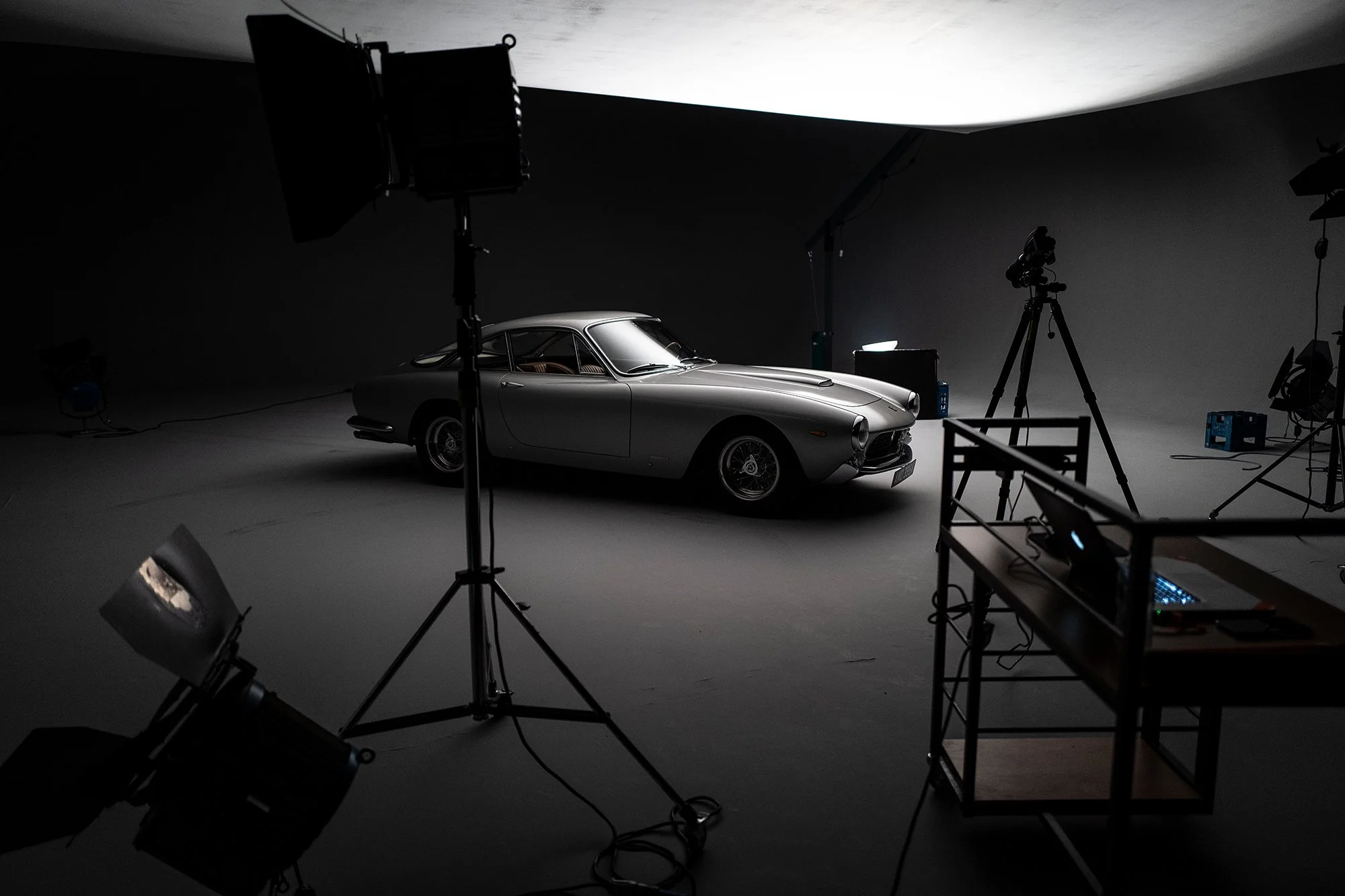
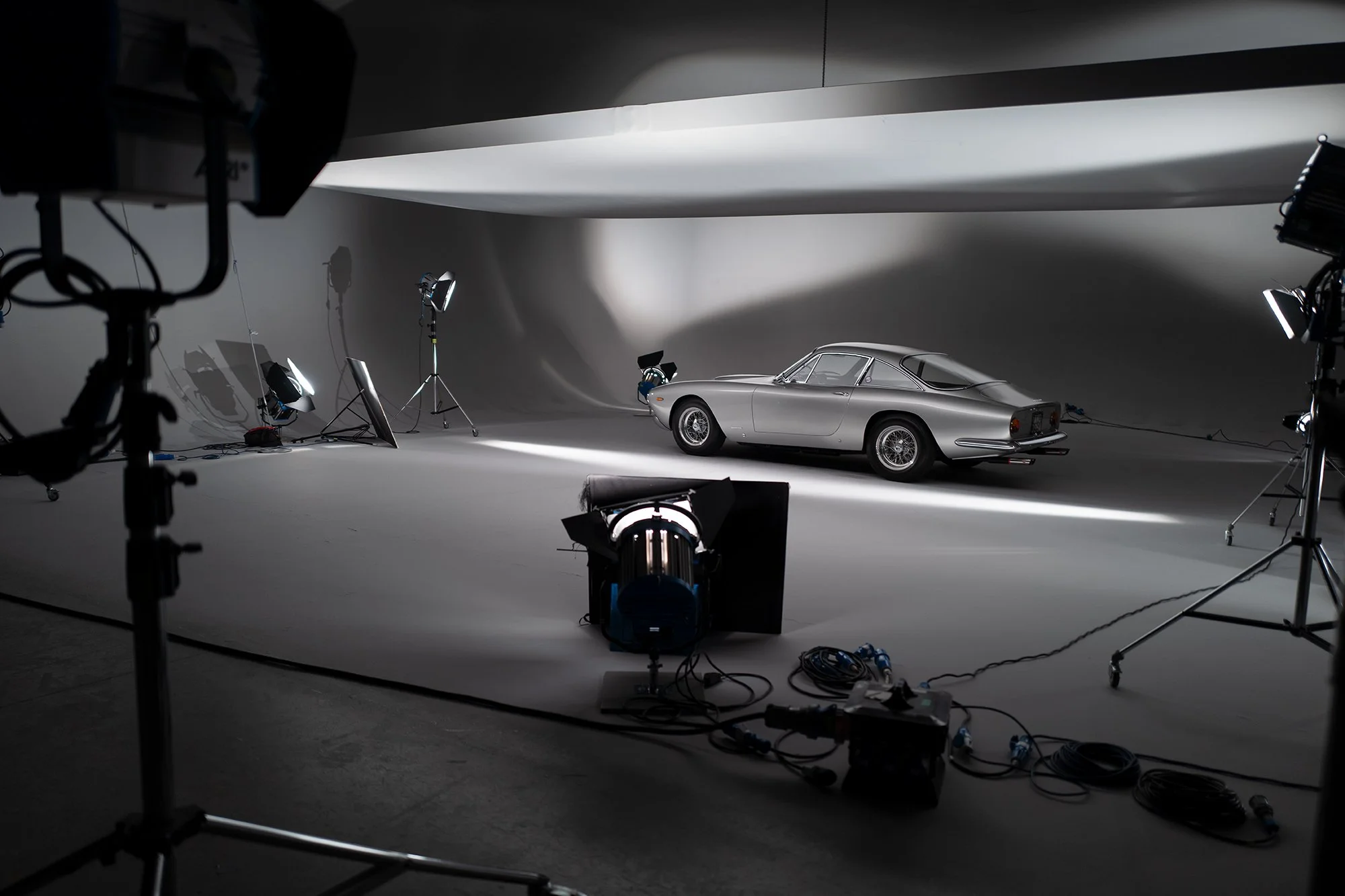
Painting with reflected light
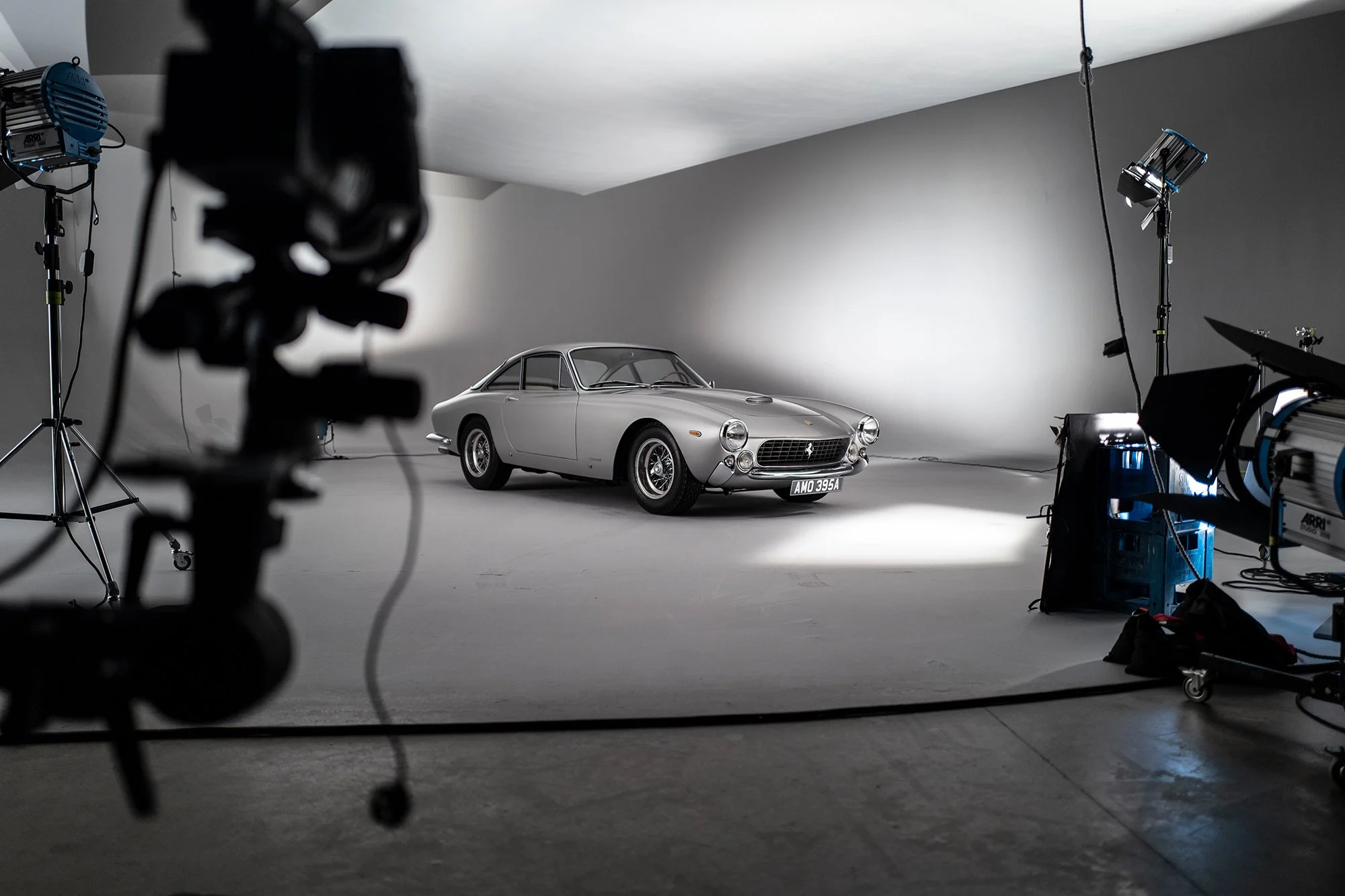
One of the things that people sometimes find surprising when they look behind the scenes at my studio car photography is that the lights aren't necessarily pointed directly at the car.
In fact, much of the lighting I use is created by bouncing and reflecting light around the studio rather than shining it straight onto the vehicle. We have a floating ceiling within the studio, along with reflective boards and large areas of grey wall that all become part of the lighting environment. Rather than simply illuminating the Ferrari with individual lights, I'm using the studio itself to create a much larger, softer and more controlled source of illumination.
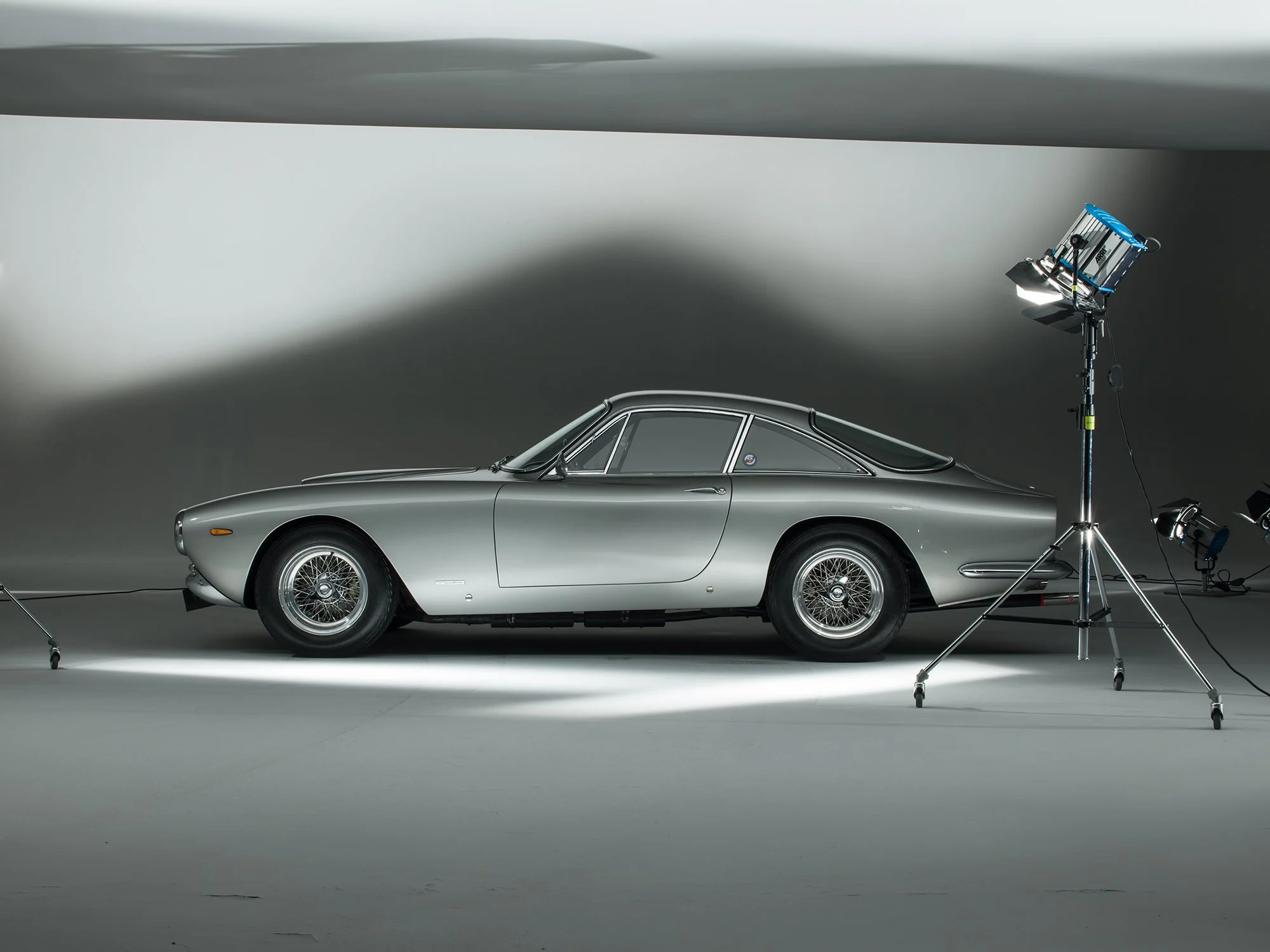
The light is directed towards the floating ceiling, reflective boards or other surfaces, where it is bounced back towards the car. This creates a wonderfully soft quality of light that can almost appear to wrap itself around the bodywork. On a car like the Lusso, this is particularly important. Its bodywork is full of gentle transitions, from the broad front wings and bonnet through to the flowing rear quarters. I want to reveal those shapes without creating harsh, distracting reflections or losing the beautiful form of the original design.
The reflected light gives me the ability to create long, controlled highlights that follow the shape of the bodywork. I can gradually introduce brightness in one area, reduce it in another and use the relationship between light and shadow to give the car a real sense of depth.
It is rather like painting, except that instead of using a brush and colour, I'm using light and reflection.
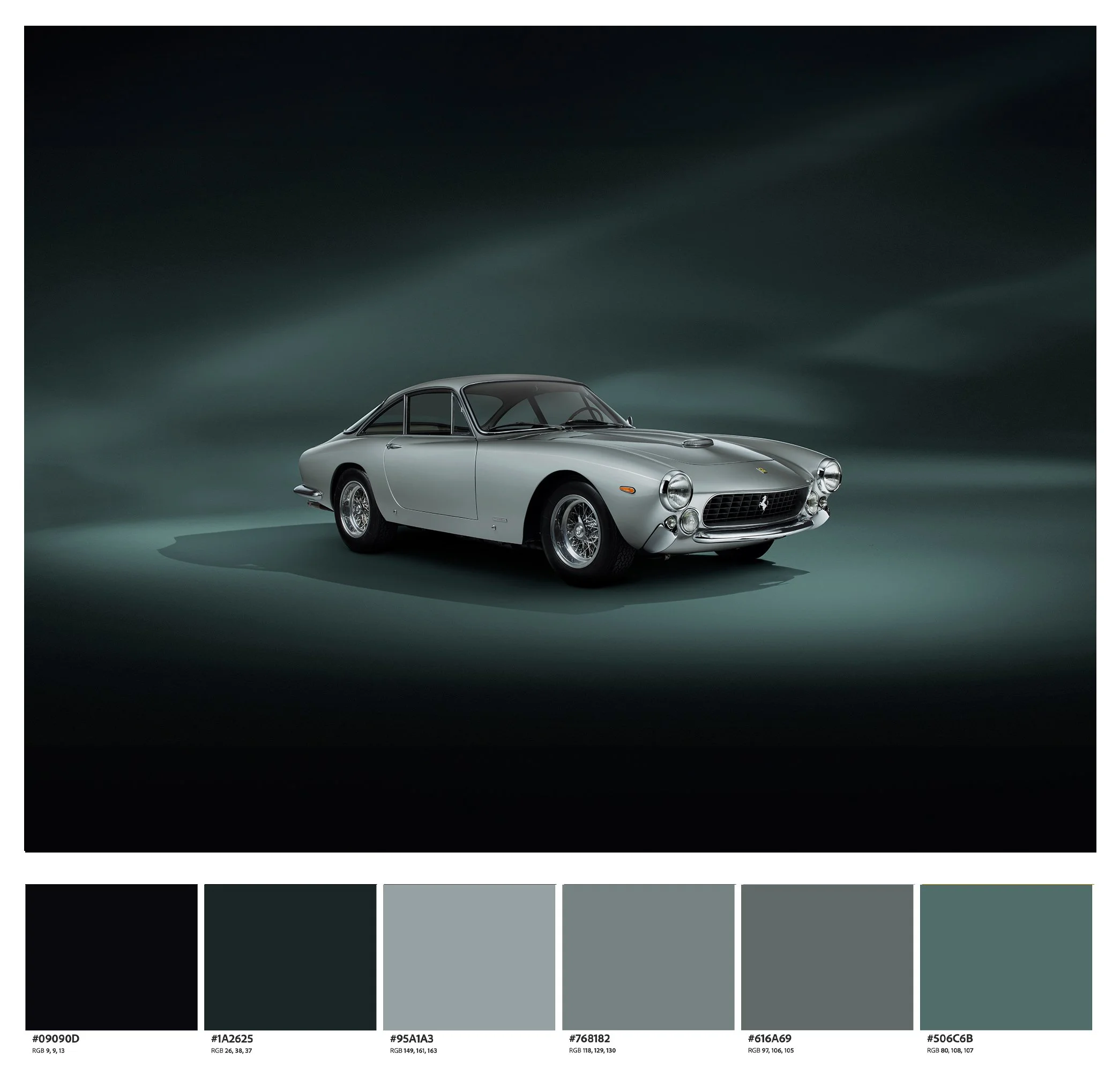
Building the lighting, one light at a time
A typical studio setup for this kind of automotive photography doesn't happen in five minutes. In fact, it can take a considerable amount of time to get everything exactly as I want it. In fact the most complex lighting we do in studio is to shoot a car interior, this can take up to 2 hours to rig up.
We generally build the lighting gradually, introducing one light at a time and assessing what each addition brings to the overall image. It is important not to rush this process because every new light affects the balance of everything already in place. With the Lusso, I wanted to make sure that the lighting respected the natural elegance of the car. There is little point in creating an overly aggressive lighting setup that fights against the character of a vehicle whose greatest strength is its flowing, understated design.
I'll often make incredibly small adjustments, the flood of the light that controls the overall contrast / intensity of the light source, moving a light or reflective board slightly, changing the angle of a reflection or altering the balance between two areas of illumination. Sometimes the difference between an image that looks okay and one that really works is simply a few inches.
This is where having continuous lighting becomes such an advantage. I can see those small changes, which allows me to work with a degree of precision that is incredibly rewarding.
The process is slow and considered, but there is a very good reason for that.
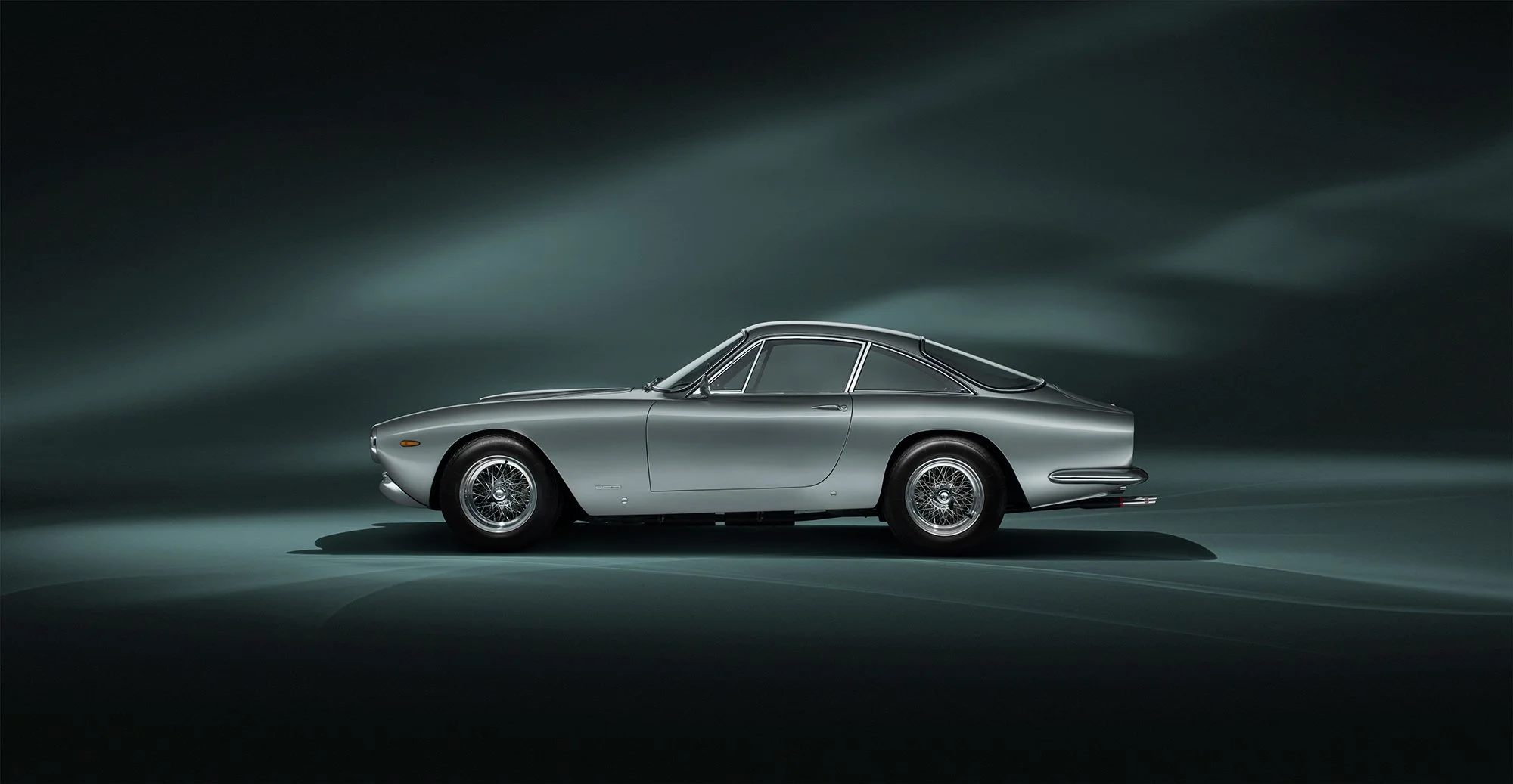
Getting it right in camera
One of the biggest benefits of spending this time building the lighting correctly is what happens when we eventually make the photograph.
My philosophy has always been that the camera should capture as much of the finished image as possible. Post-production certainly has its place in professional automotive photography, and there are always refinements to be made, but I don't want to rely on extensive editing to correct lighting problems that could have been addressed in the studio.
When the lighting is properly constructed, the reflections are controlled, the highlights are sitting exactly where they should be and the shape of the car is already being presented in the way I intended, there is very little left to correct afterwards. In many respects, the time invested in the studio actually saves time later in the process.
More importantly, it gives me confidence that what I'm delivering to my client is a genuine photographic result, created through the careful control of light rather than relying on layers of digital intervention to manufacture the appearance of a finished image.
For me, this is real photographic lighting at its best.
The craft behind the photograph
I think one of the interesting things about professional car photography is that the finished image can sometimes make the entire process look rather straightforward. You see a beautiful Ferrari, beautifully lit, photographed against a clean studio background and it is easy to overlook everything that has happened before the shutter is released.
But behind that single photograph might be hours of preparation, lighting adjustments, testing and careful consideration of how the subject should be presented.
As a commercial car photographer, I'm always conscious that the images I produce need to work for the client and the project they have commissioned. It isn't simply about creating something that looks attractive. The photography needs to communicate the quality, design and character of the subject, while being suitable for its intended use across marketing, advertising, editorial or a client's own visual library.
With a car such as the Ferrari 250 GT Berlinetta Lusso, that responsibility is particularly enjoyable. You're working with a piece of automotive history, but you're also working with a design that deserves to be photographed thoughtfully. I've been fortunate throughout my career to photograph some extraordinary cars, from historic Ferrari models to modern supercars, and some of the most exciting vehicles produced by the automotive industry. Every one presents a different lighting challenge, and that's exactly what keeps the work interesting.
I still get an enormous amount of satisfaction from standing in the studio, looking at a car through the camera and making those final little adjustments until everything comes together.
It might be a small change to a reflection across a front wing, a subtle highlight running along the shoulder of the car or simply finding the right balance between light and shadow. Whatever it happens to be, those are the moments I enjoy most.
The Ferrari Lusso is a wonderful reminder that great automotive photography isn't always about adding more. Sometimes it is about understanding the subject, knowing where the light needs to be and having the patience to put it there.
And when it all comes together, there really is nothing quite like it.
If you are interested in learning more about car photography please take a look at my ‘Beginners Guide to Car Photography’
You can also view more ‘Behind the Scenes’ of different photographic shoots in studio with many varied subjects at our dedicated ‘Behind the Scenes’ area.