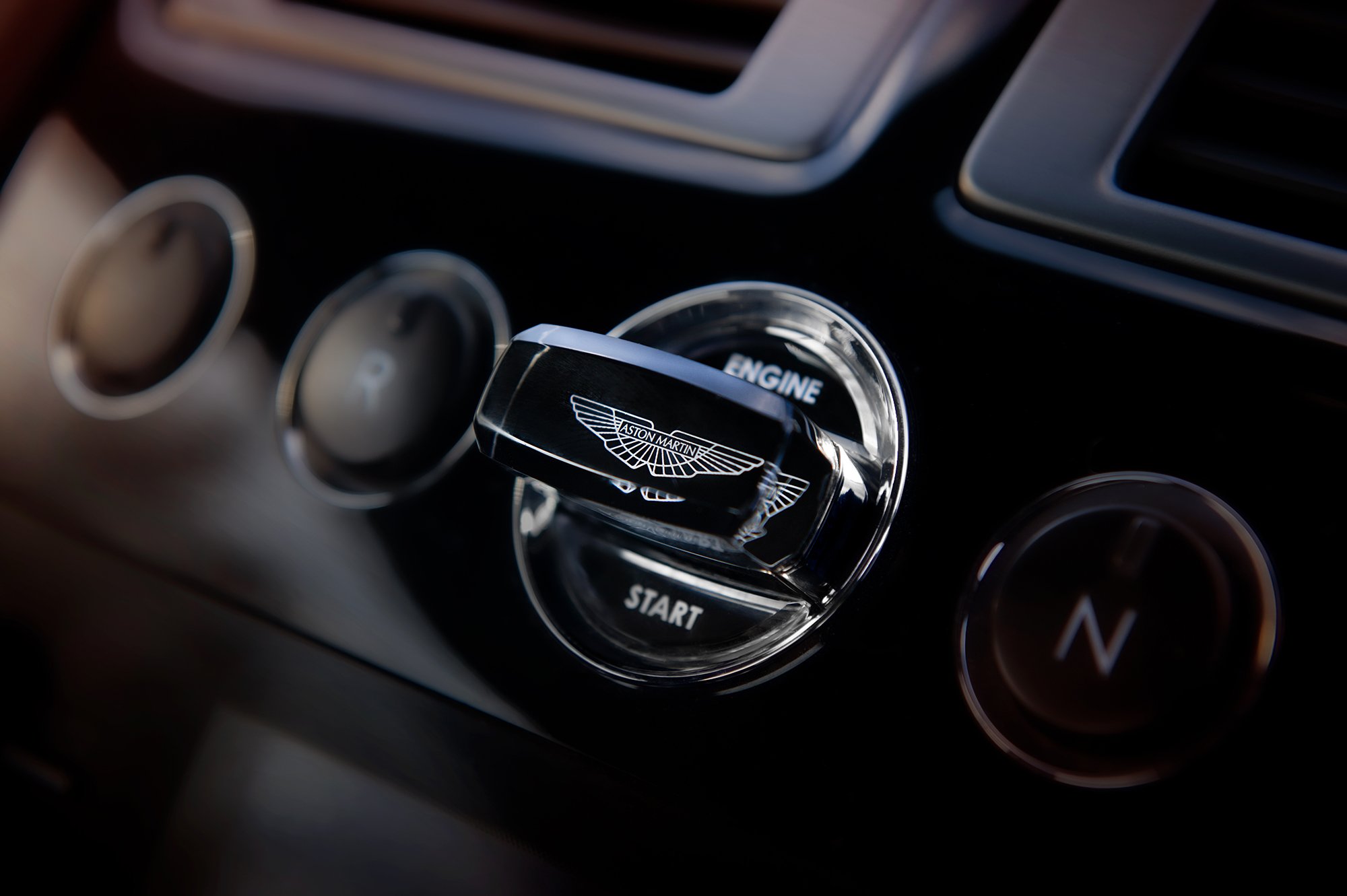
The DBS Design Icon
The DBS V12 an Aston Martin Design Icon.
For more than 20 years I have made my living as a professional commercial photographer, and during that time I have been fortunate enough to photograph some truly remarkable cars. My work as a car photographer has taken me from studios and manufacturers' facilities to private collections, workshops and locations across the UK and Europe, working with some of the world's best known automotive brands including Aston Martin, Ferrari, McLaren, Lexus, Land Rover and Peugeot, alongside agencies, manufacturers, collectors and specialist automotive businesses.
Every car presents a different photographic challenge, which is one of the reasons I have remained so passionate about automotive photography throughout my career. A modern supercar might demand one approach, a beautifully preserved classic something completely different, while a race car with genuine history can require an entirely different way of thinking about how the vehicle should be photographed. For me, the objective is never simply to produce a technically good photograph of a car. It is about understanding the design, finding what makes the vehicle special and then using light, composition and perspective to communicate that to somebody who may never have the opportunity to see the car in person.
This is particularly true when I photograph Aston Martins.
Over the years I have photographed more than 150 Aston Martins, from some of the earliest and most historically important cars in the company's history through to modern production cars, and the marque has become an important part of my own journey as a commercial car photographer. I have photographed everything from the extraordinary DBR1 through to DB5s, modern supercars and some of the company's most significant road cars, and there is something about the way Aston Martin combines engineering, design and British craftsmanship that continues to make its cars incredibly rewarding photographic subjects.
Amongst all of those cars, however, there is one that has always held a particularly special place for me. The Aston Martin DBS V12.
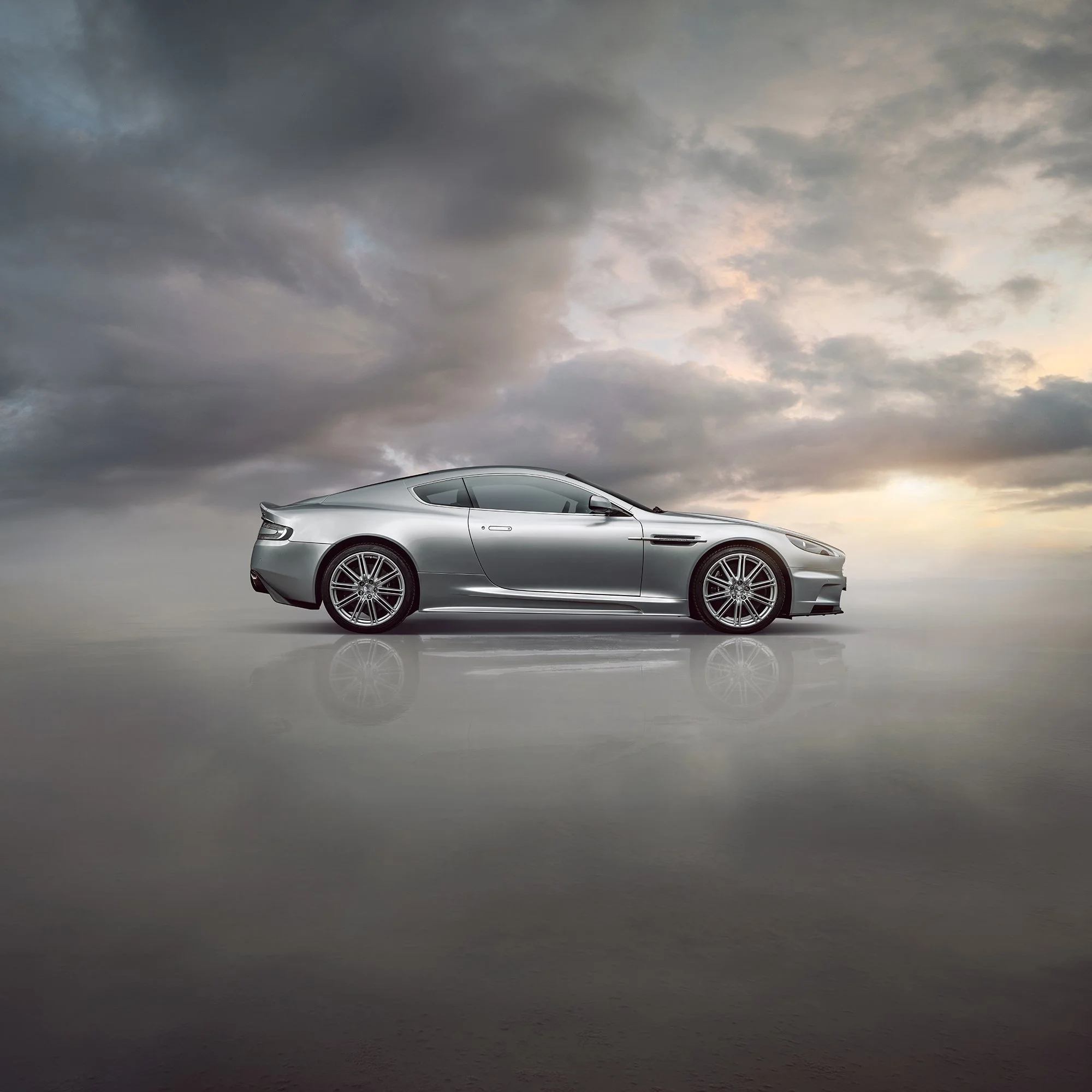
The Sculpture and Design
One of the things I have learnt over many years of commercial car photography is that the most important piece of equipment I have is not actually the camera, it is my eye.
Before I take a single photograph, I want to understand the car in front of me, how its lines move through the bodywork, where the strongest shapes are, how the surfaces interact with one another and, perhaps most importantly, how the car is going to respond to light. This is particularly important when working with cars because almost every surface is reflective. When you photograph a beautifully finished Aston Martin you are not simply illuminating the paintwork. You are effectively photographing everything that the paintwork reflects, which means that the size, shape, position and quality of the light become absolutely critical.
I have always had a passion for lighting, both in the studio and on location, and over the years I have developed an approach that allows me to use light almost as another form of composition. Rather than simply putting a light onto a car, I am looking at how that light travels across the bodywork, where it falls away, where the reflections become stronger and where a highlight can reveal the curvature of a panel.
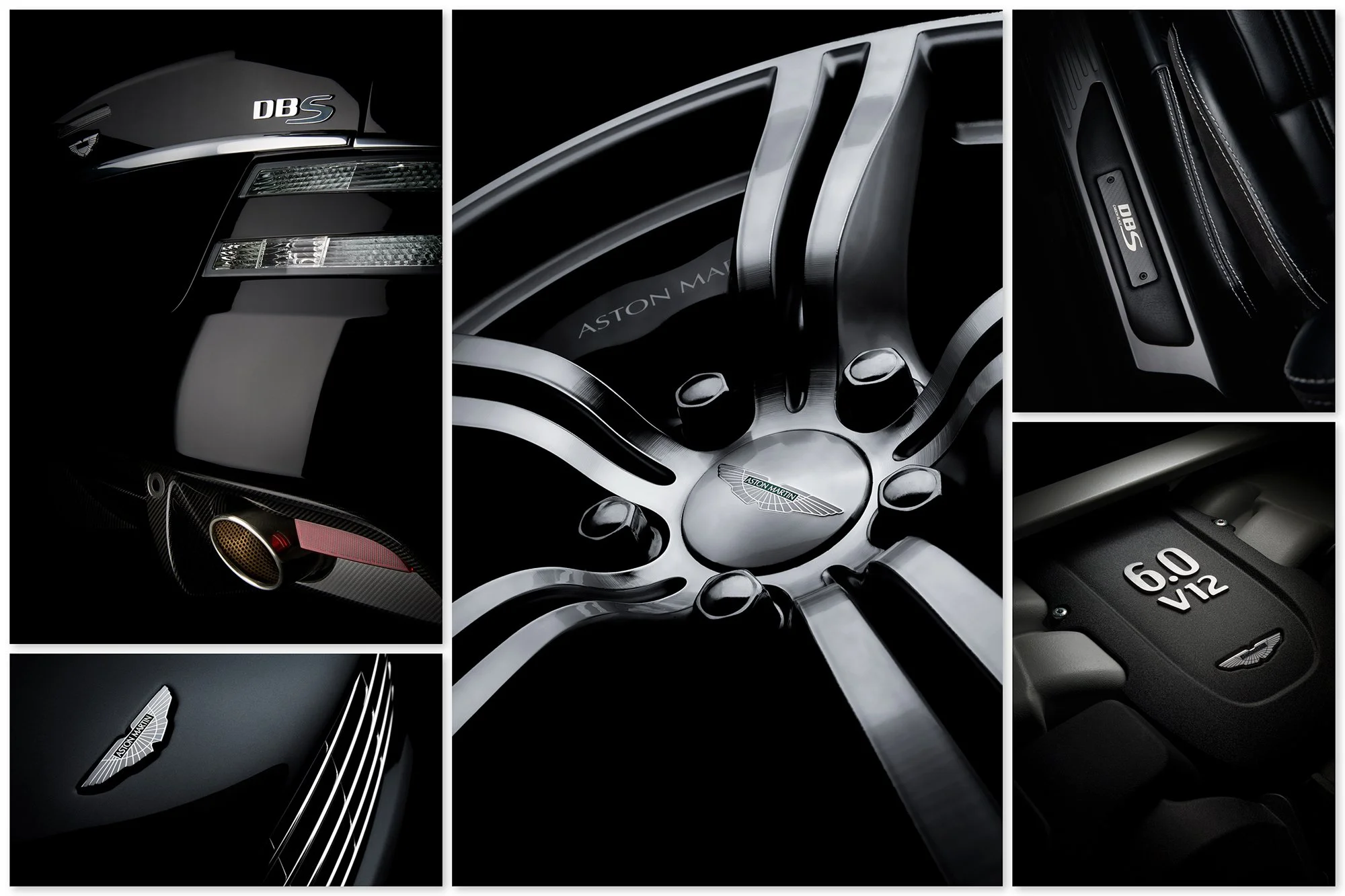
The DBS V12 is a wonderful car for this because there is so much going on within its design. Its long bonnet, low roofline, wide stance, deep front grille, sculpted wings and distinctive rear treatment all respond differently to light, while the carbon fibre components introduce another layer of texture and contrast. With continuous lighting, I can see those reflections moving across the car in real time, allowing me to make subtle adjustments until the shape begins to reveal itself.
It is a very tactile way of photographing a car.
The camera simply records the final result, but the photograph is really created before the shutter is pressed.
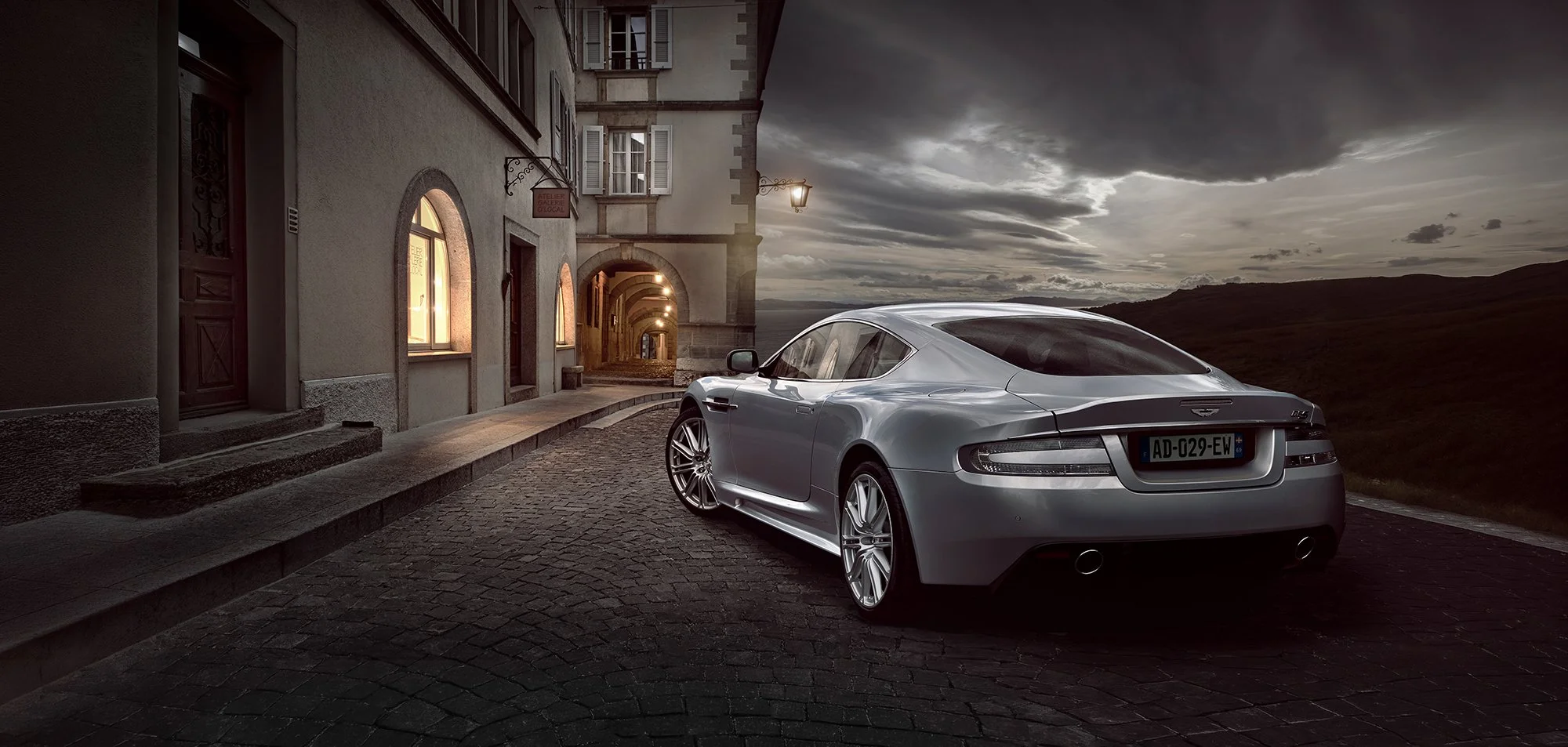
The Birth of the DBS V12
The modern DBS arrived at an important point in Aston Martin's history.
The company had established a new design direction with the DB9, but the DBS was intended to take that concept somewhere considerably more aggressive. It became the new flagship of the Aston Martin range, effectively replacing the Vanquish S, and although the two cars shared the responsibility of representing the very top of the Aston Martin road car range, they were quite different in character.
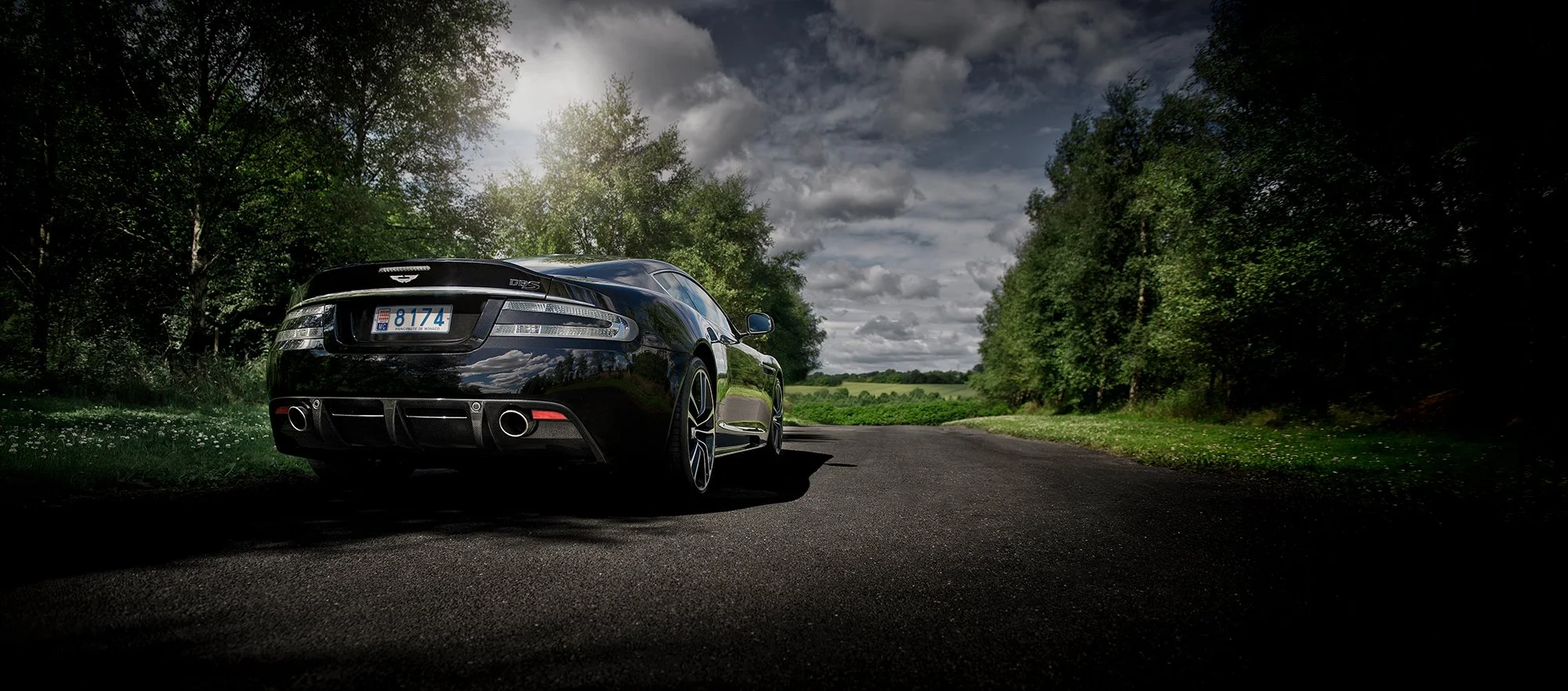
The DBS was based upon the DB9 architecture, but it was far more than simply a DB9 with a more aggressive body. The design was the first Aston Martin penned by Marek Reichman after he became the company's design director in 2005, and he transformed the more restrained shape of the DB9 into something considerably more purposeful. The deeper front end, sculpted bodywork, extended side sills, bonnet vents, carbon fibre elements and dramatic rear diffuser gave the DBS an entirely different personality.
What I find particularly interesting about the DBS is the way it sits between Aston Martin's grand touring heritage and its racing DNA.
The car was visually influenced by the DBR9 racing car, and the result was something that looked as though it could quite comfortably occupy the world of both luxury grand touring and motorsport. It was never intended to be a stripped-out race car for the road, but it carried enough visual aggression to suggest that there was something considerably more serious underneath the beautifully finished exterior.
That balance is one of the reasons I think the DBS photographs so well.
It has elegance, but it also has attitude.
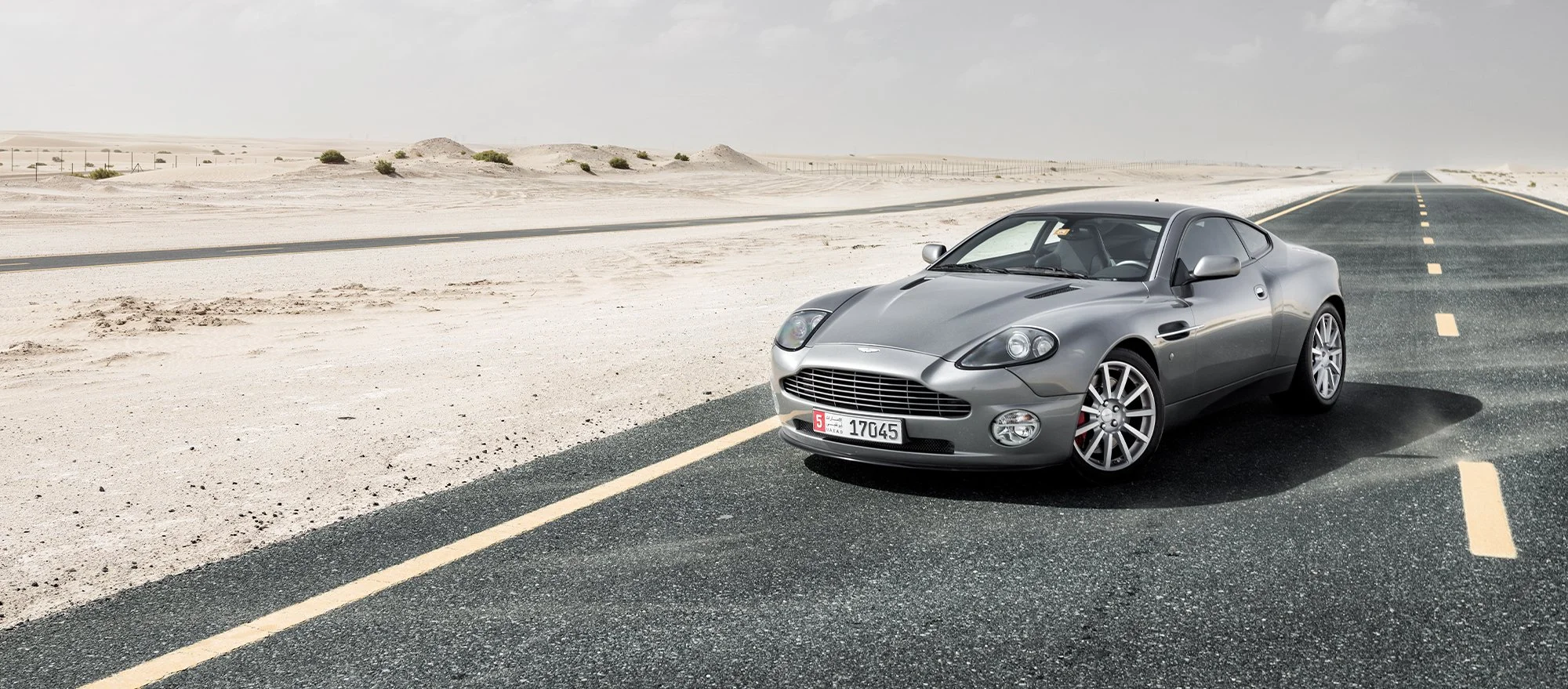
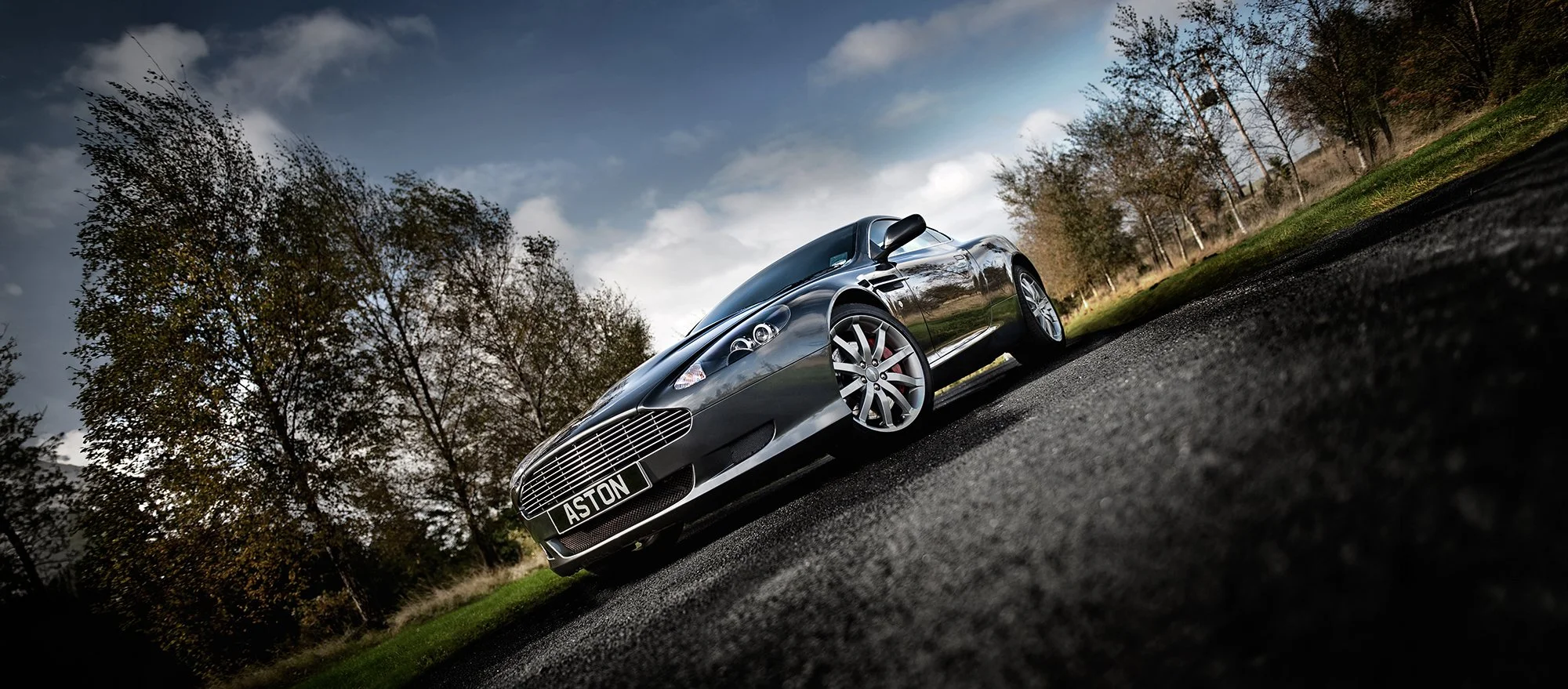
V12 Power House
Of course, the DBS V12 was not simply about appearance.
Under that long bonnet was Aston Martin's 5.9 litre V12, producing 510 bhp, giving the DBS the performance to match its much more aggressive appearance. According to the Nicholas Mee model guide, the engine incorporated a number of revisions over the DB9 unit, including changes to its breathing and compression, resulting in considerably more power. The DBS could reach 60mph in around 4.2 seconds and had a top speed approaching 190mph.
There was also considerable engineering beneath the bodywork, including adaptive dampers, upgraded suspension components, 20 inch wheels and carbon ceramic brakes, with the DBS becoming the first Aston Martin road car to use carbon ceramic brakes as standard. Perhaps even more interestingly, Aston Martin brought back a conventional six-speed manual gearbox for the DBS, something that gave the car a very different character from the automated manual transmission used in the outgoing Vanquish. A Touchtronic automatic option followed later, while the DBS Volante convertible arrived in 2009.
For me, though, all of those engineering details eventually come back to the same thing, the way the car looks.
A photographer is always interested in the relationship between form and function, and the DBS has plenty of visual clues that tell you there is serious engineering beneath the surface. The large brakes, deep air intakes, bonnet vents, muscular rear quarters and low stance all tell a story before you have even started the engine.
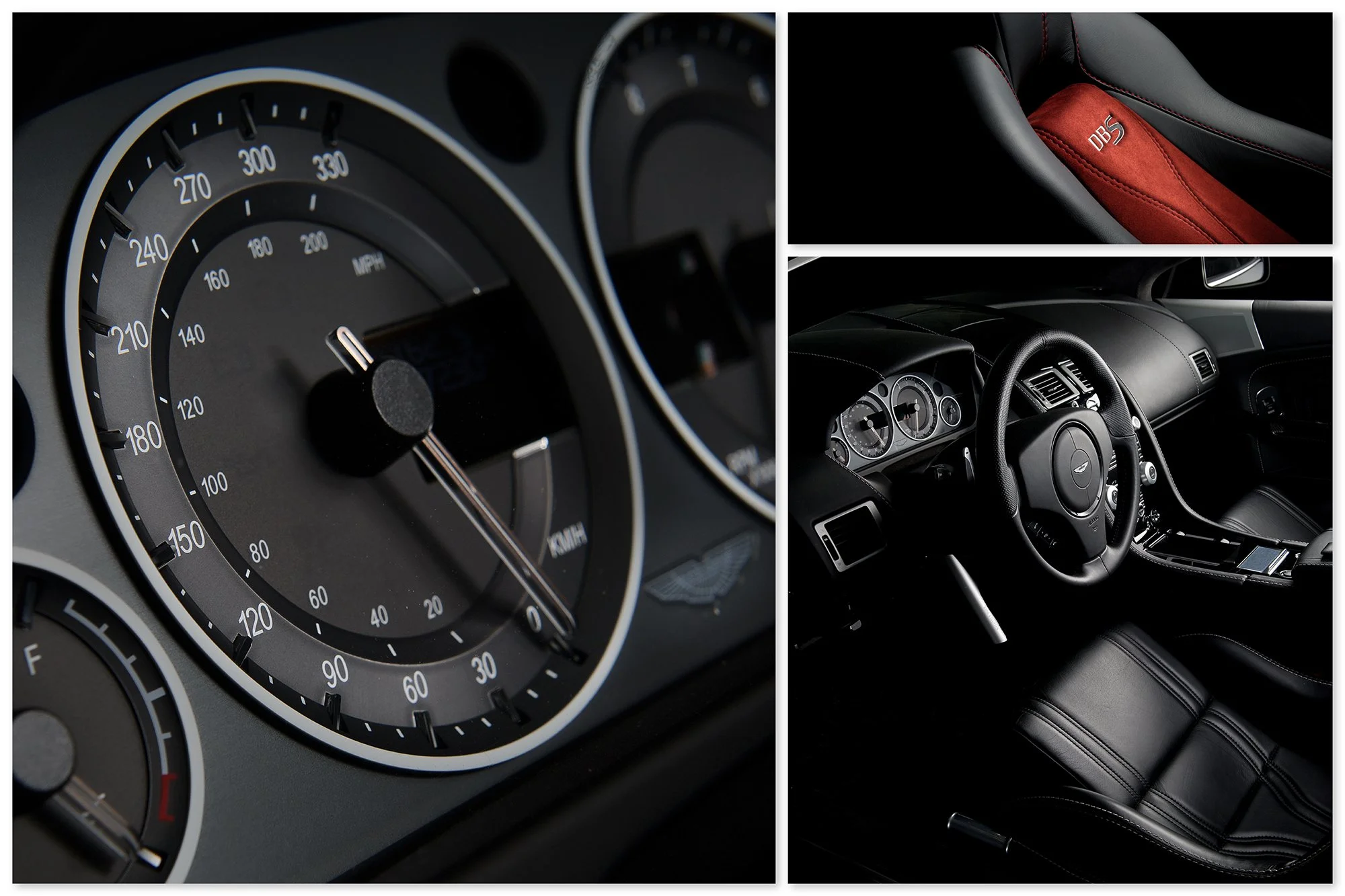
The Bond Connection
Of course, there is another reason why the DBS became so instantly recognisable to a much wider audience.
James Bond.
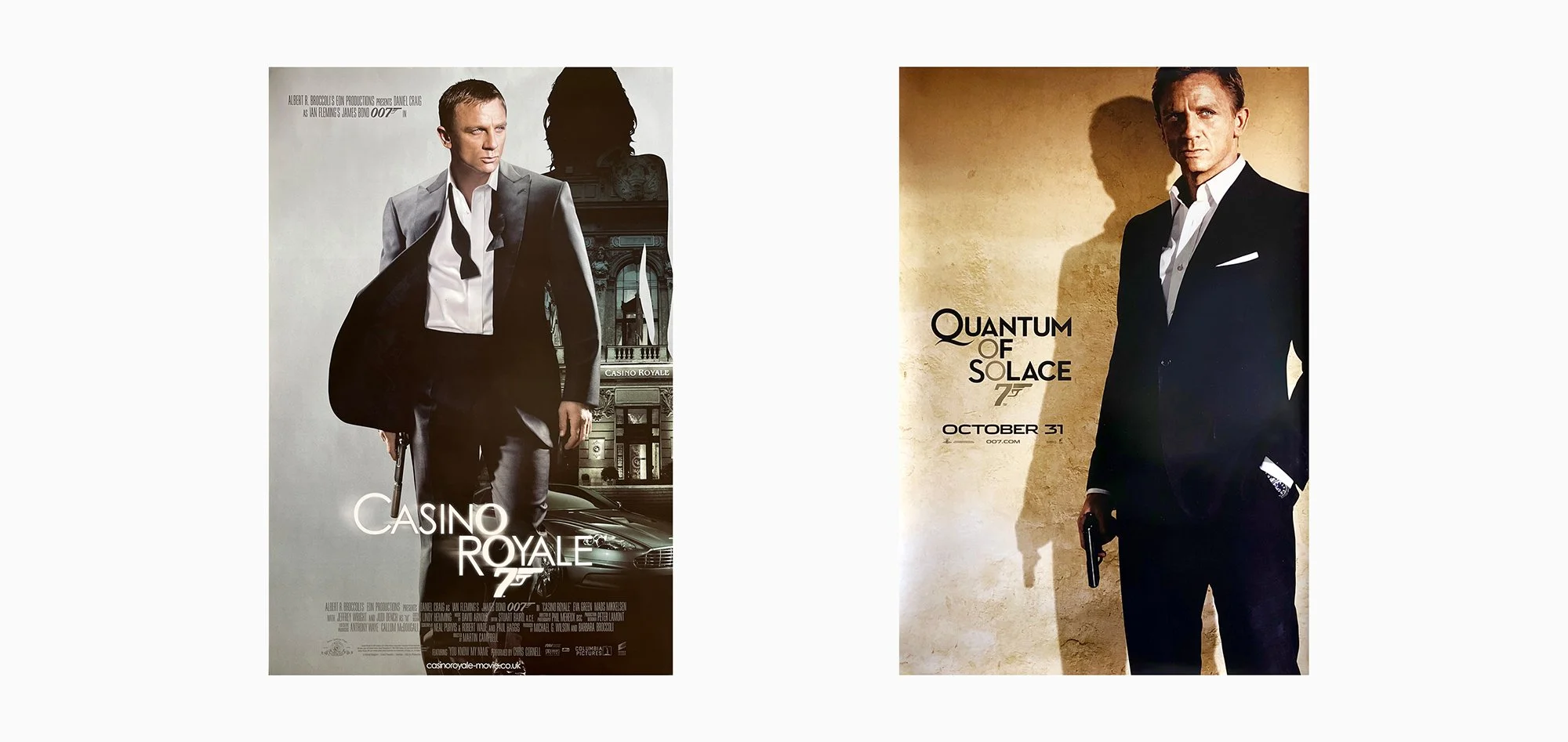
The world first saw the new DBS in the 2006 film Casino Royale, where it was driven by Daniel Craig's newly established 007. Aston Martin had deliberately connected the new car with Bond, and the association gave the DBS an extraordinary level of exposure before the production car had even properly reached the road.
Its appearance in Casino Royale was not exactly a gentle introduction.
During one of the film's most memorable action sequences, the DBS famously barrel rolled seven times, setting a Guinness World Record for the most cannon rolls in a car stunt at the time. The car then returned for the opening sequence of Quantum of Solace in 2008, appearing in the spectacular chase around Lake Garda.
It is difficult to imagine a better piece of publicity for a new Aston Martin. For many people who knew very little about cars, the DBS suddenly became the Aston Martin from James Bond. Yet beneath that cinematic association was a serious piece of engineering and one of the most distinctive Aston Martins of the modern era.
That combination of beauty, performance and cultural recognition has helped make the DBS increasingly interesting to enthusiasts today.
My Love of its Design
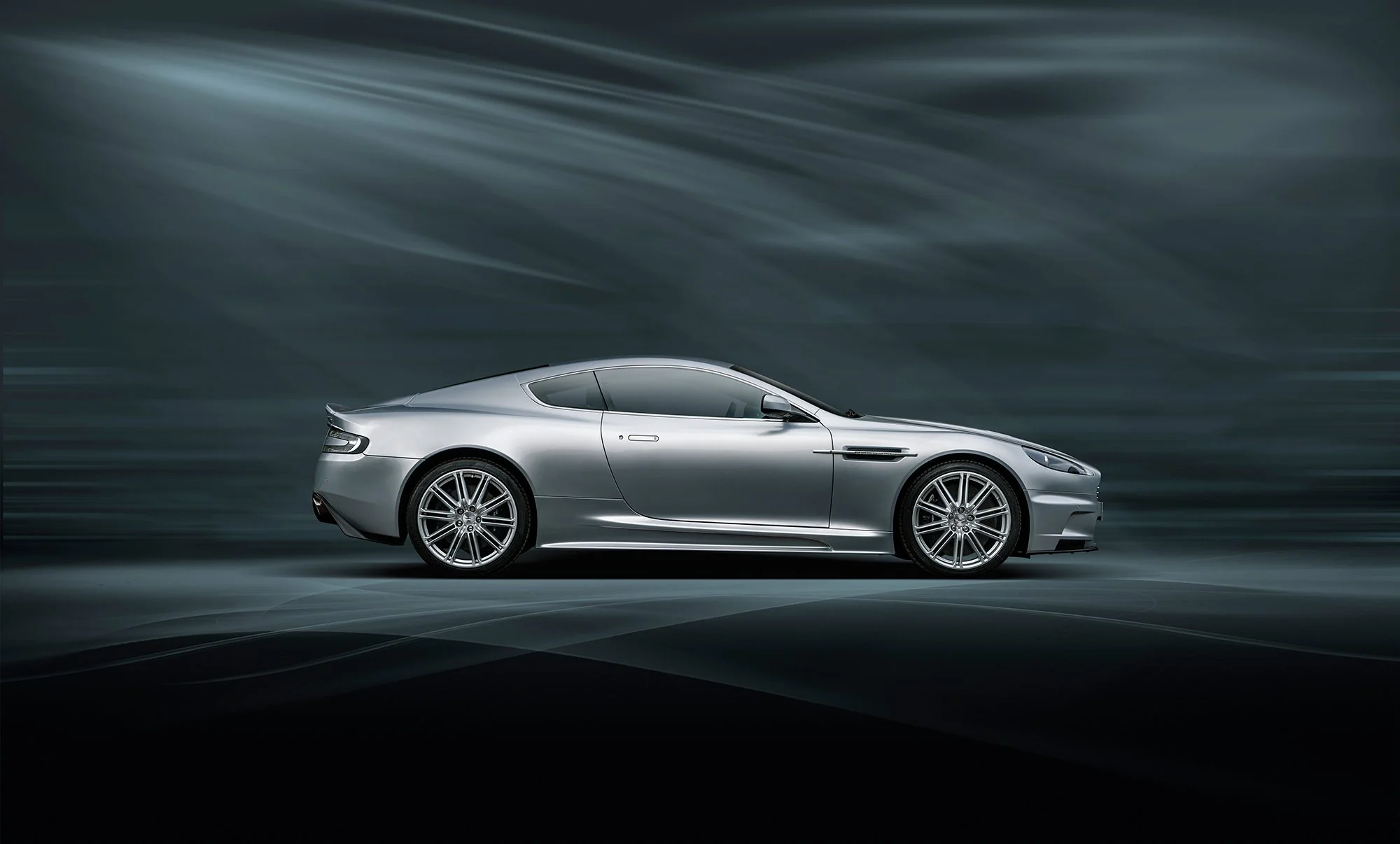
From a photographer's perspective, the DBS V12 is almost a perfect subject because it gives you so many different things to work with.
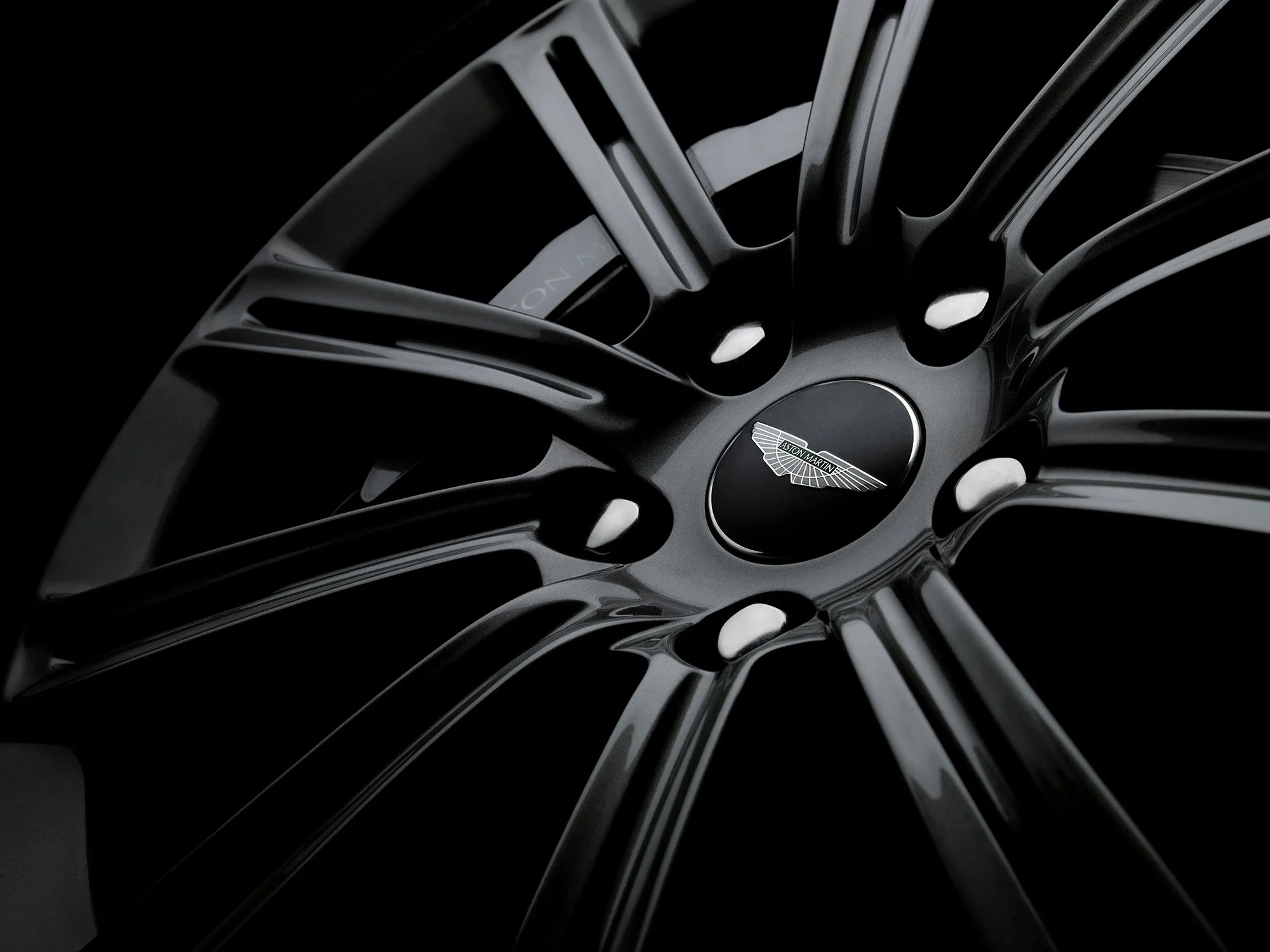
There are the obvious elements, such as the beautiful proportions and aggressive stance, but then there are the details that reveal themselves as you spend more time with the car. The carbon fibre, the intricate wheels, the grille, the vents, the glasshouse and the way the rear of the car falls away all create different photographic opportunities.
This is where studio lighting becomes particularly powerful.
In a studio I can control almost everything, allowing me to remove the distractions of the outside world and concentrate entirely on the relationship between the car and the light. I can create a long, controlled reflection across the bonnet, allow the light to fall gradually away across the doors or use a much harder source to emphasise a particular edge or detail.
On location, the challenge is completely different.
There I have to work with the environment rather than control every element of it, using natural light, ambient conditions and additional lighting to create an image that feels connected to its surroundings while still keeping the car as the main subject.
Both approaches are hugely enjoyable, and both have formed a major part of my work as a professional car photographer. After more than two decades behind the camera, I still find myself approaching every new car with the same question.
How can I make somebody stop and look?
That is ultimately what good commercial car photography should do. It should make the viewer notice the shape, imagine the sound, understand the character and, for a moment, feel as though they are standing next to the car themselves. The Aston Martin DBS V12 makes that relatively easy.
It is a car with presence, history and an extraordinary visual identity, but it is also a car that sits at an interesting point in Aston Martin's story, bringing together the elegance of the DB9, the aggression of the DBR9 and the unmistakable character of a big naturally aspirated V12. Production ended in 2012 after around 3,400 examples of the Coupe and Volante had been built, making it considerably less common than the DB9 and helping to establish the DBS as an increasingly desirable modern classic.
For me, however, its appeal is simpler, I just love photographing it.
There are cars that are interesting because of their engineering, cars that are important because of their history and cars that become famous because of the people who drive them. The DBS V12 manages to bring all three together, but when I am standing in a studio with the lights positioned around the car, watching the reflections move across those beautiful lines, all of that history becomes secondary for a moment.
I am simply looking at a great subject and thinking about light.
And after more than 20 years as a professional commercial photographer, that is still one of the things I enjoy most about being a car photographer.