An Uncertain Future
Professional Commercial Photography in 2026
The Changing Landscape of an Industry in Transition
Twenty Years in Business, Yet Never More Uncertain.
Next February will mark twenty years since I established my business as a professional commercial photographer, specialising in transport and industrial photography for clients throughout the United Kingdom and across the globe. It is a milestone that, by any measure, should bring with it an overwhelming sense of achievement, because twenty years in any industry represents thousands of hours spent refining a craft and building lasting client relationships. It represents early mornings and late nights, weeks spent travelling, countless commissions completed under pressure, and an unwavering commitment to delivering work that genuinely helps businesses communicate more effectively through photography.
Yet if I am completely honest, reaching this landmark has prompted far more reflection than celebration, because whilst I remain immensely proud of what has been built over the past two decades, I have also found myself questioning where our profession is heading with a level of uncertainty that I have never previously experienced.
That uncertainty is not born from a lack of confidence in the value of professional commercial photography, because I have seen first-hand what carefully planned, professionally executed visual communication can achieve for businesses operating in every corner of the globe. Instead, it stems from watching an industry that has evolved steadily for many years suddenly begin changing at a pace that feels altogether different, driven not by a single technological breakthrough or economic event but by a complex combination of financial pressures, changing client expectations, political uncertainty and the rapid emergence of artificial intelligence, all of which are reshaping the commercial landscape at the same time.
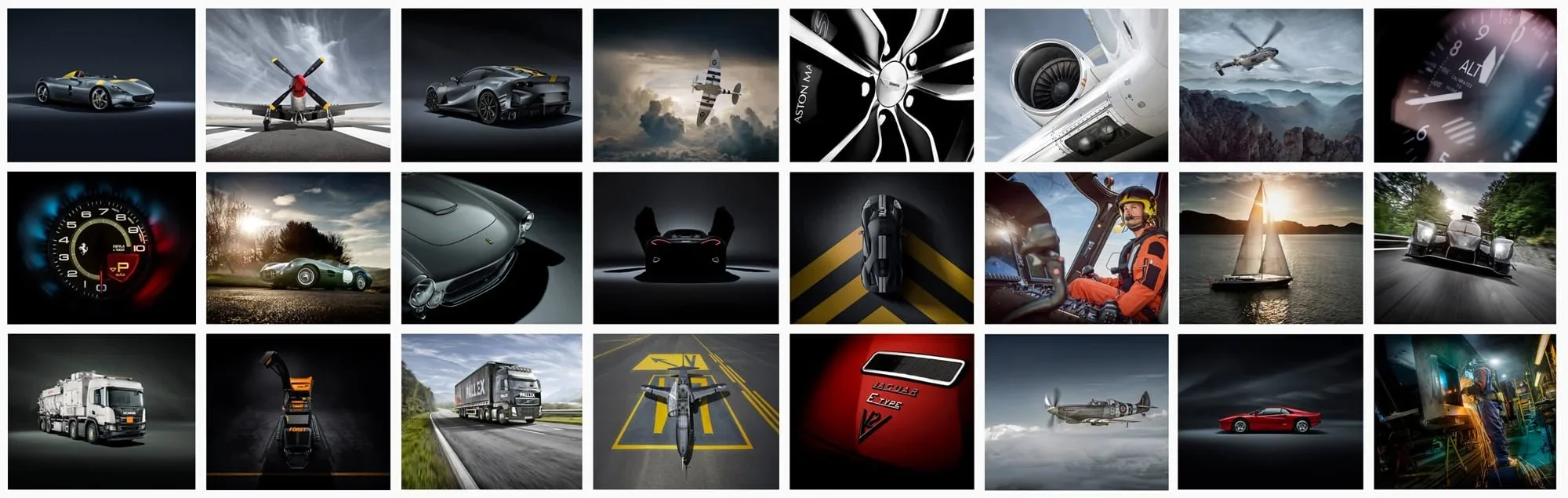
Perhaps the most surprising realisation has been discovering just how many other photographers share exactly the same concerns, despite the fact that very few of us openly discuss them. Spend just a few minutes scrolling through LinkedIn or Instagram and you could easily conclude that professional photography has never been healthier, with photographers announcing new commissions, sharing behind the scenes films from impressive productions and celebrating another successful campaign for another recognisable brand, because social media has become a carefully curated shop window where confidence is expected, success is projected and vulnerability rarely feels welcome.
Behind those polished updates, however, conversations taking place privately between professional photographers often paint a rather different picture. They are conversations about shrinking marketing budgets, fewer enquiries, clients delaying projects that once seemed routine and established businesses beginning to question whether they still need to commission photography as frequently as they once did. They are conversations about talented photographers with decades of experience wondering whether the market they spent years building their careers around is gradually changing into something almost unrecognisable.
I know this because I have experienced many of those conversations myself.
Over the past six months alone I have seen the loss of approximately forty per cent of what I would describe as my mid-tier commercial clients. That does not mean those businesses have disappeared, nor does it suggest that they suddenly no longer appreciate quality photography. In many cases they are simply making commercial decisions that reflect the financial climate in which they now operate, reducing marketing expenditure, delaying planned campaigns or choosing to consolidate several photography commissions into one larger production each year rather than commissioning fresh content every few months.
Other companies have adopted an entirely different approach, investing instead in creating visual content internally by equipping members of their own marketing teams with increasingly capable cameras and supplementing that photography with artificial intelligence powered software, allowing them to produce imagery that, whilst perhaps falling short of the quality a specialist commercial photographer would deliver, is considered entirely sufficient for many day-to-day marketing requirements.
It would be easy to dismiss those decisions as misguided, but doing so would ignore the reality facing businesses throughout the United Kingdom, because many organisations are navigating exactly the same economic uncertainty as the creative professionals who supply them. Rising operating costs, cautious investment, political instability and fluctuating consumer confidence have forced directors and marketing departments alike to examine every area of expenditure with increasing scrutiny, and photography is by no means immune from those conversations. For many years professional commercial photography occupied a position that was rarely questioned. Businesses recognised the importance of investing in high-quality visual assets because they understood that those images would represent their brand, influence customer perception and support sales activity across every area of their marketing.
The discussion was rarely centred around whether professional photography had value, but rather around selecting the right photographer to deliver the project.
Today, the conversation often begins somewhere entirely different.
Questions surrounding budgets now arrive much earlier than they once did, and whilst cost has always been an important consideration for every commercial client, there was a time when it was seldom the first subject discussed. Throughout much of my career I was more likely to receive a call asking whether I was interested in a commission and whether I was available to undertake the work before the financial conversation even began, because clients had already reached the conclusion that professional photography formed an essential part of the project itself. Increasingly, that sequence appears to have reversed.
Photography is now, in some organisations, treated as one option amongst many rather than the obvious starting point, and before a photographer has even had the opportunity to explain how they might help strengthen a campaign or add value to a business, they are often being asked to justify the investment itself. That subtle shift in thinking may appear insignificant, yet it fundamentally changes the relationship between photographer and client because the discussion no longer begins with creative possibilities but with commercial justification.
"For almost twenty years my clients rarely asked me what it would cost before asking whether I was interested in the commission.
Today, the first conversation is increasingly about budgets, and that tells us far more about the changing commercial climate than it does about photography itself."
The effects of this shift are visible beyond individual photographers.
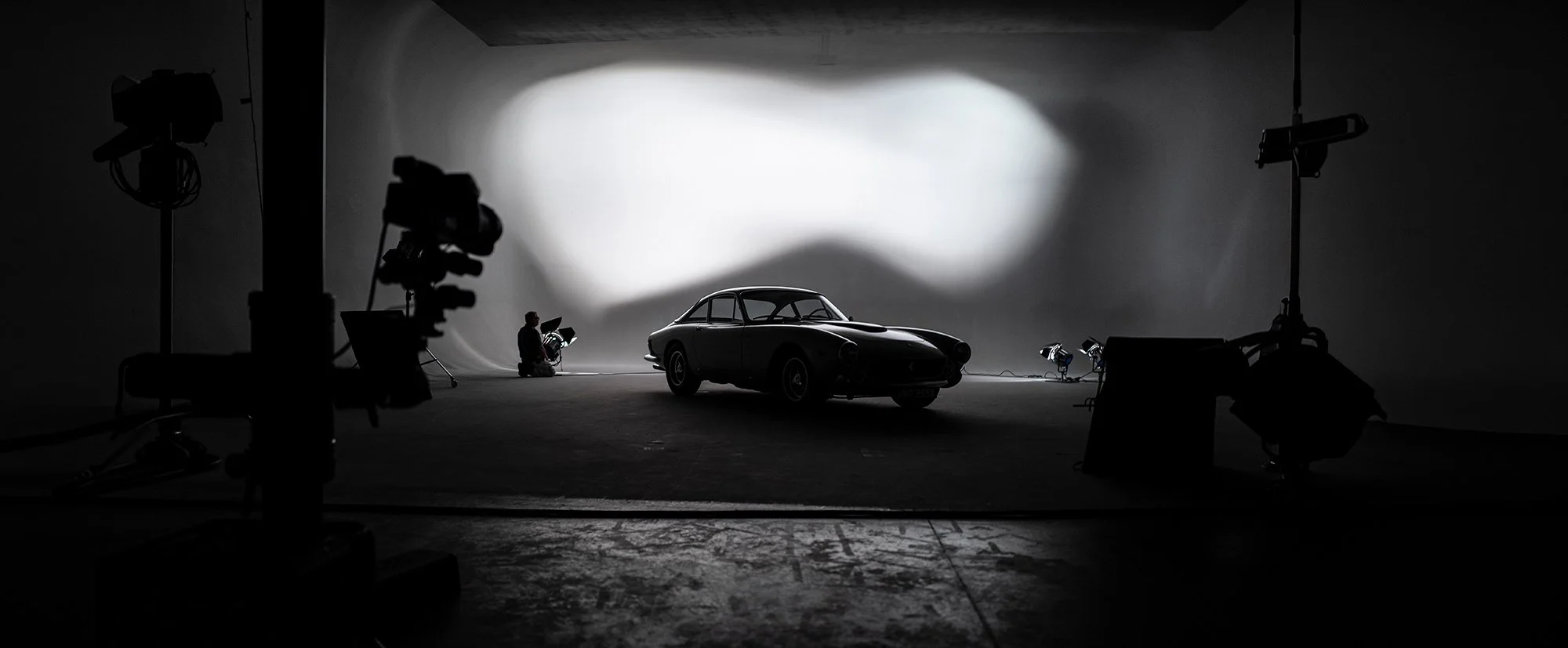
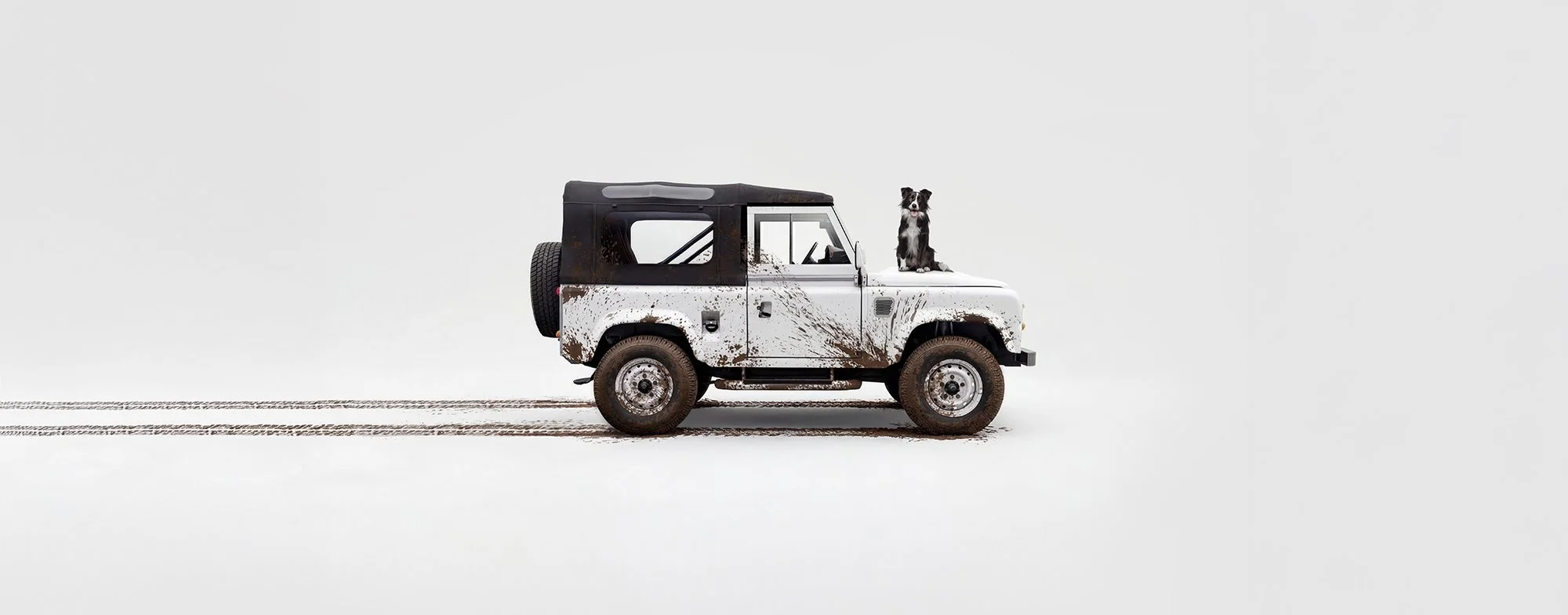
Only recently I learned that Junction 11 Studios in Banbury, a facility where I have photographed everything from Ferrari supercars and Aston Martins to heavy commercial trucks over the course of more than fifteen years, had closed its doors, with the familiar infinity coves removed and the studio space in the process of being ripped out. For anyone outside our profession it may seem like little more than another business changing direction, yet for those of us who spent years working within those iconic walls it felt symbolic of something much larger, because studios have always represented more than bricks and mortar. They have been places where creative ideas became reality, where clients invested in ambitious campaigns and where commercial photography demonstrated exactly what was possible when experience, planning and production came together.
Their disappearance serves as a reminder that the challenges facing our industry are no longer theoretical discussions taking place on internet forums or within photography podcasts. They are becoming tangible, visible and impossible to ignore.
Of course, there will always be those who argue that every generation believes its own challenges are unprecedented, and there is certainly some truth in that observation because professional photography has adapted continually throughout its history. We have witnessed the transition from film to digital, embraced increasingly sophisticated postproduction techniques, transformed the way imagery is delivered to clients and learned to work within a world dominated by websites, smartphones and social media, each of which fundamentally altered both our workflows and the expectations placed upon us.
The difference in 2026, however, is that these changes are no longer arriving one at a time, allowing businesses and photographers to adapt gradually as they always have done. Instead, we find ourselves navigating a period where technological innovation, economic uncertainty and changing commercial priorities have converged simultaneously, creating an environment in which even experienced professionals can find it difficult to predict what the industry might look like only a few years from now.
That, perhaps more than anything else, is what makes this particular moment feel so different.
More Than Artificial Intelligence: Understanding Why the Market Is Changing
Whenever professional photographers talk, whether over coffee after a commission, at an industry event or increasingly through conversations online, it rarely takes long before artificial intelligence enters the discussion. In many respects that is hardly surprising, because Ai has become the most visible symbol of the changes sweeping through the creative industries, capable of producing imagery within seconds that, only a few years ago, would have required the time, skill and experience of a professional photographer or digital artist. It is easy to understand why so many photographers view it as the defining challenge of our profession, yet I cannot help feeling that reducing everything we are currently experiencing to artificial intelligence alone risks overlooking a far more complex and, perhaps, more uncomfortable truth.
Artificial intelligence has undoubtedly altered the landscape, particularly within stock photography and the production of generic commercial imagery where businesses once relied upon extensive image libraries to illustrate concepts, industries or lifestyles. Today, many of those same organisations can generate acceptable visual content in moments, often at little or no additional cost, removing an entire layer of demand that previously supported photographers whose work supplied those markets. There is no value in pretending otherwise because the impact has been significant, but I do believe it represents only one piece of a much larger picture, and focusing exclusively upon it can sometimes prevent us from recognising the broader commercial realities that have been unfolding for several years.
The United Kingdom has experienced a prolonged period of economic uncertainty, during which businesses of every size have found themselves navigating rising operating costs, cautious consumer confidence, fluctuating energy prices and an ever-changing political landscape that has made long term planning increasingly difficult. When uncertainty becomes the dominant business environment, companies inevitably begin examining expenditure with far greater scrutiny, asking difficult questions about every department and every supplier, not because they necessarily wish to reduce quality but because they are under pressure to justify every pound they spend.
Marketing budgets are almost always among the first areas to come under review, and whilst the importance of visual communication has never been greater in an increasingly digital world, the way businesses choose to create that content is changing rapidly. Where once a marketing campaign may have involved several carefully planned photography commissions spread throughout the year, it is now becoming increasingly common for companies to combine those requirements into one substantial production, capturing months of imagery in a single visit before stretching that content across websites, social media, brochures, advertising campaigns and internal communications for as long as possible.
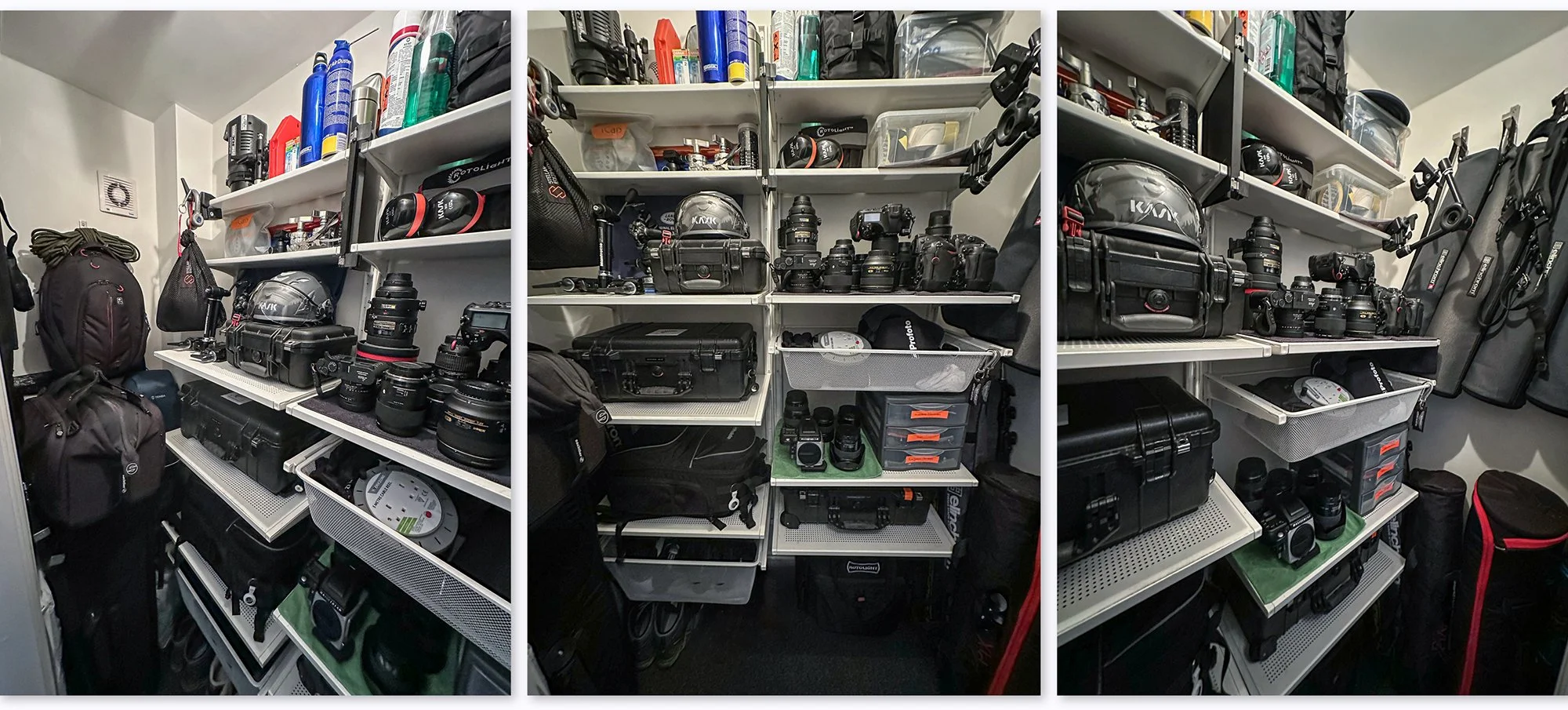
From the perspective of the client, it is an entirely logical decision, because maximising the return on every investment has become a necessity rather than a preference, yet from the perspective of the professional photographer it means fewer opportunities to engage with that client, fewer commissions throughout the year and longer periods between projects that once arrived with reassuring regularity when your ‘equipment room’ seems to have an opportunity to actually register dust, something I’ve not seen before…
What concerns me most is not necessarily the loss of individual commissions but the gradual disappearance of what many photographers have traditionally regarded as the foundation of a sustainable commercial business. Large multinational companies with substantial marketing budgets will almost certainly continue commissioning specialist photography because they understand the importance of brand consistency and high-quality visual assets, whilst at the opposite end of the market there will always be businesses seeking the cheapest possible solution regardless of quality.
It is the vast middle ground, occupied by companies that genuinely value professional photography but are increasingly forced to compromise because of financial pressures, that appears to be shrinking at an alarming rate. That middle tier has long been the lifeblood of countless commercial photography businesses across the country, providing regular commissions, repeat work and relationships that developed steadily over many years. As those clients become more cautious with their spending, reduce the frequency of photography projects or decide to experiment with creating content internally, many experienced photographers are discovering that the dependable workload upon which they built their businesses is becoming far less predictable.
There is another factor that receives far less attention than artificial intelligence, yet I believe it is influencing our profession just as profoundly, and that is the extraordinary accessibility of photography itself. Modern cameras, whether dedicated systems or those built into mobile phones, have reached a level of technical sophistication that would have seemed almost unimaginable when I first began my business, enabling almost anyone to produce sharp, well exposed images with very little technical understanding.
When those photographs are then enhanced using increasingly intelligent editing software, the gap between amateur and professional appears, at least to the untrained eye, significantly narrower than it once did. Of course, those of us who work professionally understand that photography has never been defined simply by sharpness or exposure. We know that creating imagery capable of strengthening a brand involves understanding light, composition, colour, storytelling, logistics, production, marketing objectives and client expectations, all whilst working efficiently under pressure and consistently delivering results that justify the investment being made. Yet it would be naïve to assume that every client fully appreciates the distinction, particularly when they are presented with technology that promises fast, inexpensive alternatives.
“In many respects we are no longer competing solely against other professional photographers. We are competing against convenience.”
That may sound like a subtle difference, yet it changes almost everything because convenience is remarkably persuasive in a commercial environment where deadlines are becoming shorter, budgets tighter and expectations higher. If a marketing department believes it can produce imagery internally within a matter of hours, even if the final result falls short of what a specialist photographer would achieve, the temptation to do so can be extremely difficult to resist, particularly when financial pressures dominate boardroom discussions.
The challenge for professional commercial photographers therefore extends far beyond demonstrating that we can create better photographs, because most experienced clients already understand that we can. The real challenge lies in demonstrating why those better photographs matter, how they influence perception, reinforce trust, strengthen a brand and ultimately contribute to commercial success in ways that cannot always be measured immediately but become increasingly evident over time. That conversation is fundamentally different from the one many of us were having ten years ago, because photography itself is no longer viewed in isolation. Clients are evaluating the complete marketing process, comparing professional photography with internally generated content, video production, social media campaigns and AI generated imagery, all whilst attempting to achieve more with budgets that, in many cases, are becoming increasingly constrained.
Perhaps this is why I have become increasingly uncomfortable whenever I hear photographers describe artificial intelligence as the enemy, because enemies suggest that victory is achieved simply by defeating them, whereas the reality facing our profession is considerably more complicated. Artificial intelligence is not responsible for rising inflation, reduced marketing budgets, political instability or changing patterns of consumer spending, just as it is not responsible for businesses seeking greater efficiency throughout their operations. It has accelerated change, certainly, but many of the underlying pressures influencing commercial photography today were already present long before the first Ai generated image appeared.
That does not make the situation any less concerning.
Indeed, in some respects it makes it more so, because unlike previous periods of technological change where photographers could reasonably predict the direction in which the industry was moving, today's commercial landscape feels remarkably difficult to read. Some businesses are investing more heavily than ever in high-quality visual communication because they recognise that strong branding has become a competitive advantage, whilst others are reducing photography to little more than another operational expense, believing that acceptable content is sufficient for their immediate needs. Both approaches currently exist side by side, making it increasingly difficult for photographers to identify where the market is heading and how best to position their businesses for the future.
Perhaps that uncertainty is the defining characteristic of professional commercial photography in 2026. It is not that opportunities have disappeared, because they clearly have not, nor is it that clients no longer appreciate quality, because many still do. Rather, it is that the market has become fragmented, unpredictable and increasingly difficult to interpret, leaving photographers to navigate a profession in which the rules that governed the previous two decades can no longer be relied upon with the same confidence.
"The greatest challenge facing professional photographers today isn't proving that we can create exceptional images. It's convincing businesses why exceptional images still deserve exceptional investment when acceptable has become easier, faster and considerably cheaper."
Fighting for the Opportunity, Not Just the Commission
If there is one lesson that the past twenty years have taught me, it is that commercial photography has never really been about photography.
That may sound like an unusual statement coming from someone who has spent two decades making a living behind a camera, yet the longer I work within this profession the more convinced I become that clients rarely commission photographers simply because they need photographs. What they are actually looking for is somebody who understands their business well enough to help solve a problem, strengthen their brand, communicate more effectively with their customers and ultimately contribute towards their commercial success. The camera, important though it undoubtedly is, has always been the tool rather than the product.
Perhaps that explains why some of the strongest relationships I have built with clients have lasted for well over a decade. Those relationships were never founded upon a single successful photograph or an impressive lighting technique. They developed because trust was established over time, because I took the time to understand how those businesses operated, what challenges they faced, who their customers were and how photography could genuinely contribute towards achieving their objectives. The commissions that followed were not simply transactions but the natural outcome of partnerships that had been allowed to grow steadily through mutual respect and a shared understanding of what success looked like.
It is precisely because I value those relationships so highly that I have become increasingly concerned by the way in which many creative businesses now feel pressured to market themselves. Spend a few minutes on LinkedIn and it quickly becomes apparent that an extraordinary amount of effort is being invested in what has become known within the industry as ‘pitch slapping’, where photographers send identical messages to hundreds of businesses in the hope that somebody, somewhere, might happen to require photography at exactly the right moment. The wording changes slightly from one message to the next, yet the underlying theme is almost always the same. ‘We think we would be a great fit for your business. Please let us know if you need a photographer.’
I understand entirely why photographers resort to this approach because many are understandably anxious about where the next commission will come from, but I have never believed that meaningful commercial relationships are built in that way. Businesses are not looking for another generic sales message appearing in an already overcrowded inbox, and they are certainly not searching for suppliers who know nothing about their organisation beyond the fact that they operate within a particular industry sector.
If we genuinely want to become valuable to a client, surely the starting point has to be understanding who they are.
What products do they manufacture?
What challenges are they facing?
How are they trying to position themselves within their market?
Where do they currently communicate well, and where might photography genuinely strengthen that communication?
Only once those questions begin to be answered can any photographer hope to explain where they might add value, because until that point they are simply offering photography without understanding why it is needed.
I have often said that there has never been a more important time to fight for what I describe as 'the in', by which I mean earning the opportunity to sit down with a prospective client, listen carefully, understand their business and begin a conversation that has nothing whatsoever to do with cameras, lenses or lighting. That opportunity has become significantly harder to achieve because businesses are approached constantly by agencies, designers, videographers, marketers and photographers, all competing for exactly the same attention, yet it has also become significantly more valuable because once genuine trust has been established, photography naturally becomes part of a much wider discussion about communication and branding rather than simply another line within a procurement budget.
"Never before have I felt that we have needed to fight so hard for the opportunity simply to demonstrate our value. Once we are invited into that conversation, we can explain what we do, but earning the chance to have that conversation has become one of the greatest challenges facing commercial photographers today."
There is another subtle change that I have noticed over recent years, one that perhaps says more about the wider commercial environment than photography itself.
For much of my career I gave remarkably little thought to whether clients would pay my invoices on time because, quite simply, most of them did. There were always occasional exceptions, as there are within every industry, but the overwhelming majority of businesses understood that professional suppliers relied upon healthy cash flow just as they did themselves. Increasingly, however, I have found invoices remaining outstanding well beyond agreed payment terms, with finance departments becoming noticeably slower in settling accounts despite projects having been completed successfully and delivered in full.
No company is ever likely to admit openly that delaying supplier payments forms part of its financial strategy, yet it is difficult to ignore the growing number of photographers, designers and other creative professionals who quietly share exactly the same experience. It would be unfair to suggest that every late payment reflects poor business practice because many organisations are themselves operating under significant financial pressure, but the cumulative effect upon small creative businesses can be considerable, particularly when commissions are becoming less frequent at the very same time.
These may appear to be relatively small observations when viewed individually, yet together they begin to illustrate something much larger. Clients are commissioning less frequently, scrutinising budgets more carefully, creating increasing amounts of content internally and often taking longer to settle invoices once projects have been completed. None of these developments alone would fundamentally alter the profession, but taken together they represent a significant shift in the commercial environment within which photographers now operate. The uncomfortable reality is that technical ability alone is no longer enough.
There was a time when producing exceptional imagery was, in itself, sufficient to distinguish a photographer from the competition because relatively few people possessed the equipment, experience or technical knowledge required to deliver consistently high standards. Today, whilst quality remains every bit as important, it has become only one element of a much broader proposition. Clients increasingly expect photographers to understand branding, social media, content strategy, marketing, digital delivery, licensing, production planning and increasingly even video, often within the same commission. In many respects the role of the commercial photographer has expanded far beyond photography itself.
That expansion brings opportunities, certainly, but it also brings additional pressure because clients now expect more whilst frequently operating with tighter budgets than they did previously. We are therefore expected to deliver increasingly comprehensive solutions whilst simultaneously justifying our value more carefully than at any other point in recent memory.
Perhaps this is why I find myself returning repeatedly to one simple phrase that has shaped the way I have tried to build my own business over the past twenty years.
Add value, not cost.
It sounds almost deceptively simple, yet I believe it captures the fundamental difference between photographers who become trusted long-term partners and those who remain occasional suppliers. Every business incurs costs. Every business purchases products and services. The organisations that continue investing in professional photography despite economic uncertainty do so because they believe those photographs contribute something measurable to their business, whether that means strengthening a brand, supporting sales activity, improving customer confidence or helping them stand apart within increasingly competitive markets.
If we fail to communicate that contribution clearly, then photography risks becoming little more than another expense to be reduced whenever budgets tighten.
If, however, clients understand that our work forms part of the value they deliver to their own customers, the conversation changes completely.
The challenge, of course, is that earning that understanding takes time, patience and consistency. It cannot be achieved through automated messages, aggressive sales techniques or promises of the cheapest quotation. It requires genuine relationships, careful listening and a willingness to understand a client's business almost as thoroughly as they understand it themselves.
Perhaps that has always been true.
The difference today is that it has never mattered quite so much.
An Industry at a Crossroads
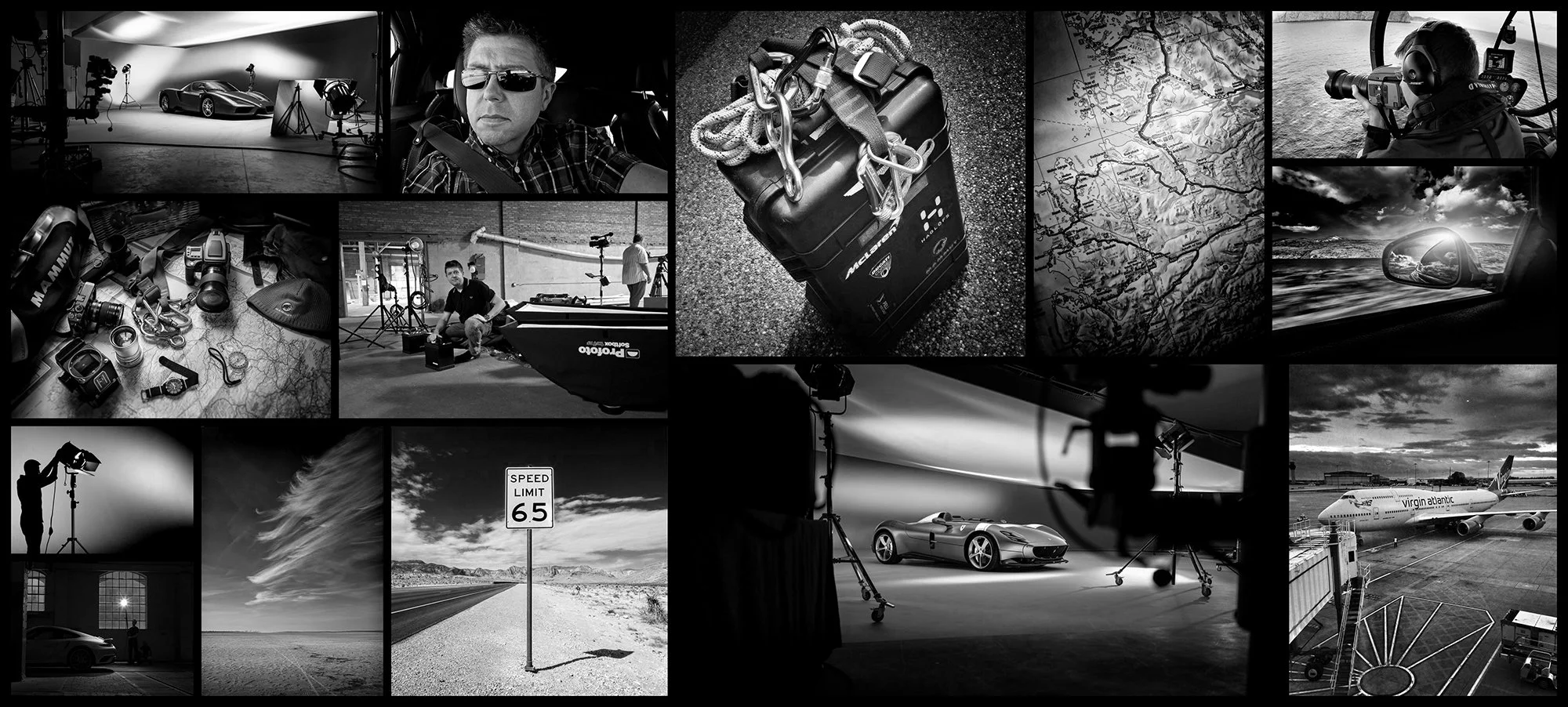
Looking back over almost twenty years in business, I sometimes find myself reflecting on just how much our profession has already changed, because the industry I entered in 2007 bears remarkably little resemblance to the one we find ourselves working within today. During those two decades we have witnessed the transition from film to digital becoming complete, the emergence of social media as one of the most influential marketing platforms ever created, the arrival of mirrorless camera systems, the evolution of post-production software into something almost unrecognisable and the transformation of websites from simple online brochures into sophisticated marketing tools capable of reaching audiences across the world within seconds. Each of those developments changed the way photographers worked, yet throughout every stage there remained a reassuring certainty that businesses would always require professional photography. The equipment evolved, the methods improved and expectations became ever higher, but the underlying demand for carefully crafted commercial imagery remained largely unquestioned because organisations understood that the quality of the photographs representing their brand reflected directly upon the quality of the business itself.
Today, for the first time in my career, I am no longer certain that assumption can be made with the same confidence.
That is not because businesses suddenly care less about their public image, quite the opposite in fact, because visual communication has never played a more significant role in shaping perception than it does today. Every website, every social media platform, every digital advertising campaign and every product launch depends upon imagery capable of capturing attention in an increasingly crowded marketplace. The demand for visual content has, if anything, increased beyond anything many of us could have imagined twenty years ago.
The paradox is that whilst the demand for content has grown dramatically, the willingness to invest in creating that content professionally has, in many areas of the market, begun to move in the opposite direction. That contradiction sits at the very heart of the commercial photography industry in 2026. Businesses need more imagery than ever before, yet many are attempting to create it more quickly, more cheaply and increasingly without the involvement of specialist photographers. Some will undoubtedly succeed because not every photograph requires the production values associated with a large commercial commission, but there is also a danger that organisations gradually become accustomed to accepting work that is merely adequate rather than asking whether it genuinely reflects the quality of the products, services or people they are trying to promote.
Perhaps the greatest risk is not that artificial intelligence, or increasingly capable cameras will replace professional photographers entirely, because I simply do not believe that will happen, particularly within sectors where authenticity, trust and credibility remain fundamental. The greater risk is that businesses slowly lose sight of the difference between creating content and creating communication, because whilst those two activities may appear similar on the surface, they are separated by experience, understanding and intent.
A photograph should never exist simply because a space needs filling on a website or because another social media post has to be published before the end of the week. At its best, commercial photography should reinforce a brand, inspire confidence, tell a story and communicate something meaningful about the organisation behind it. Achieving that outcome has never been determined solely by the quality of the camera being used, nor will it ever be.
It is determined by understanding.
Understanding the client.
Understanding their customers.
Understanding their products.
Understanding the message they are trying to communicate.
Only then does the photography itself become truly valuable.
As I write this article, I cannot honestly say where our profession will be in another five years, because the pace of change is unlike anything I have experienced since beginning my business. New technologies continue to emerge almost monthly, marketing strategies evolve constantly, economic pressures remain unpredictable and businesses themselves are still trying to understand how artificial intelligence will ultimately fit within their own operations. Anyone claiming to know exactly what the future holds for commercial photography is, I suspect, demonstrating a level of confidence that simply is not supported by reality.
Perhaps that uncertainty is what many professional photographers are finding most difficult to come to terms with. For much of my career there was a comforting sense that if you continued improving your craft, invested in your equipment, treated clients well and consistently produced outstanding work, the opportunities would continue to come. It was never easy, but the pathway was relatively clear because quality, reliability and professionalism were recognised and rewarded.
Today, those qualities remain every bit as important, yet they no longer guarantee the same level of security because they now exist within a marketplace that has become considerably more fragmented and significantly more unpredictable than at any previous point in recent memory. That is not a criticism of clients, nor is it an attack upon technology, because businesses must make decisions based upon their own commercial realities just as photographers must make decisions based upon theirs.
It is simply the world in which we now find ourselves.
"I don't fear change. Every professional photographer who has built a career over the last twenty years has learned to adapt because that's what our industry has always demanded. What concerns me is that, for the first time, I genuinely cannot see where this period of change will eventually settle, and I know many others feel exactly the same."
Perhaps that is why I believe this conversation matters.
It is not about asking clients to spend money they do not have, nor is it about suggesting that every photograph should be created by a specialist commercial photographer regardless of its purpose. Neither is it an attempt to criticise businesses for embracing new technology or searching for greater efficiency because that is precisely what successful organisations should be doing. Instead, it is about encouraging a broader discussion around value.
Professional commercial photography has never been an indulgence reserved for businesses with generous marketing budgets. At its best it is an investment in perception, reputation and trust, all of which influence how customers judge an organisation long before they ever speak to a member of staff or purchase a product. That has not changed, even if the way businesses choose to procure photography undoubtedly has. As photographers, perhaps we also have a responsibility to recognise that our profession is no longer defined solely by technical excellence. Clients expect more from us today than simply the ability to create beautiful imagery. They expect strategic thinking, commercial awareness, flexibility, efficiency and an understanding of how visual communication fits within a much broader marketing landscape. Those expectations are entirely reasonable, yet meeting them requires us to evolve continuously, to listen more carefully than ever before and to become genuine partners rather than simply suppliers.
Whether that evolution alone will be enough, however, remains impossible to answer.
As I approach my twentieth year in business, I still wake up every morning with the same enthusiasm for photography that first encouraged me to pick up a camera all those years ago, and I remain incredibly grateful to every client who has trusted me to help tell their story through my work. I continue to believe, wholeheartedly, that professionally created commercial photography has an important place within modern business, because authenticity, craftsmanship and experience cannot simply be manufactured by software or replicated by shortcuts.
What has changed is my certainty about where our profession is heading.
For the first time in my career, I find myself looking towards the future with as many questions as answers, and whilst history tells us that photography has always adapted, history offers remarkably little guidance when so many economic, political and technological changes arrive at precisely the same moment.
Perhaps that is the most honest conclusion I can offer after almost twenty years behind the camera.
I am not pessimistic.
I am not optimistic.
I am simply realistic enough to recognise that commercial photography stands at one of the most significant crossroads it has ever faced, and like many others who have dedicated their working lives to this profession, I can only hope that the value we have spent decades demonstrating to our clients continues to be recognised in the years ahead.
The future of professional commercial photography is not yet written.
At the moment, it is simply uncertain.