Documenting the life-saving work of Air Ambulance Charity Kent Surrey Sussex
More Than Just Aviation Photography
There are certain areas of commercial photography that take you into environments and situations that are quite different from the everyday world of professional photography.
My work with Air Ambulance Charity Kent Surrey Sussex (KSS) is a particularly good example of this. While aviation photography is naturally at the heart of the project, the real purpose of the photography goes considerably further than simply documenting helicopters and their crews. It is about telling the story of an extraordinary emergency service, the people who make it possible and the life-saving work they carry out across the Southeast of England every single day.
As an aviation and documentary photographer, I have always been interested in the people behind the machines.
Whether I am photographing commercial aircraft, historic aviation or emergency services, there is nearly always a much bigger story to tell than the subject immediately in front of the camera. With an organisation such as KSS, that story is particularly important.
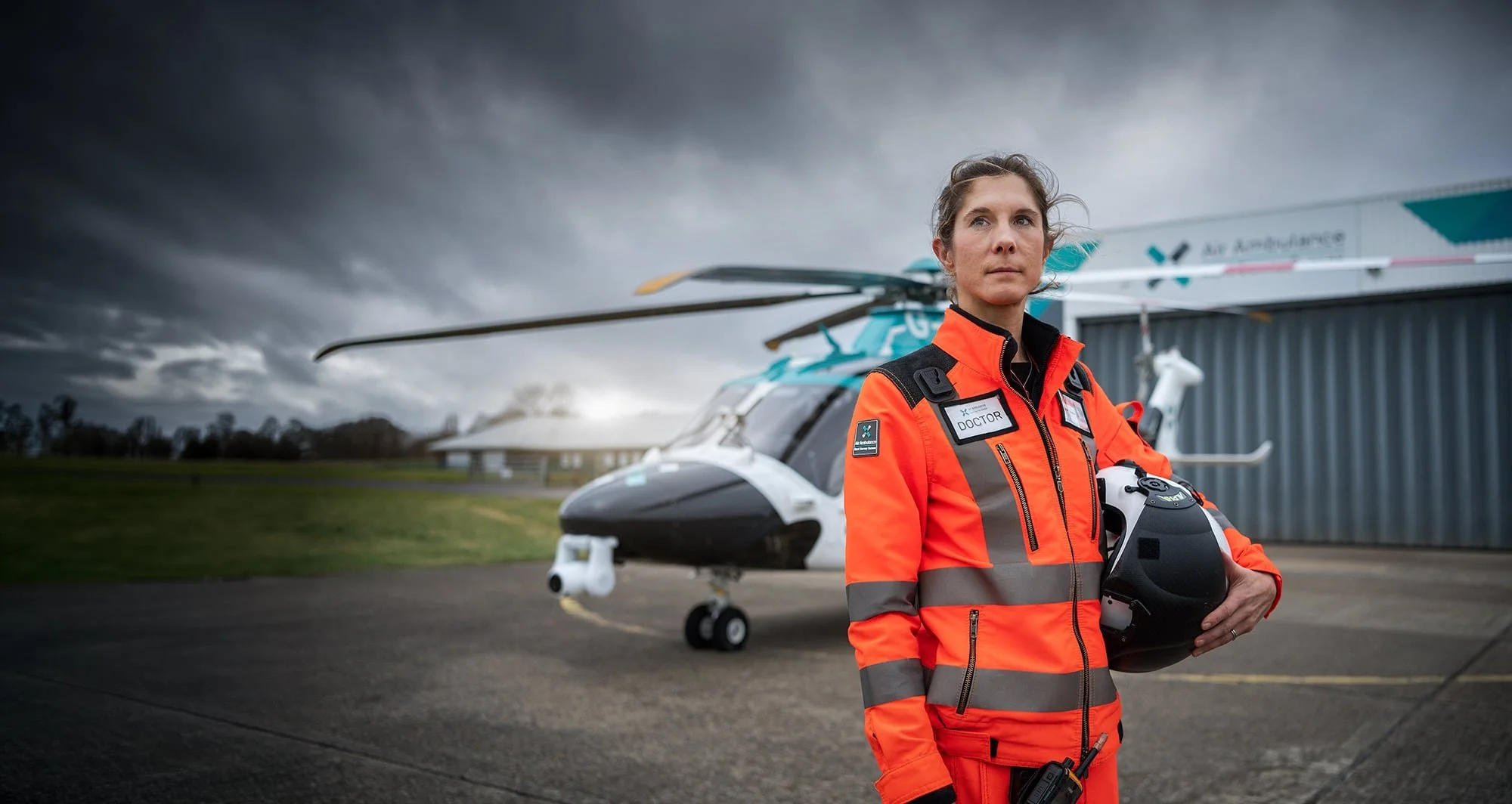
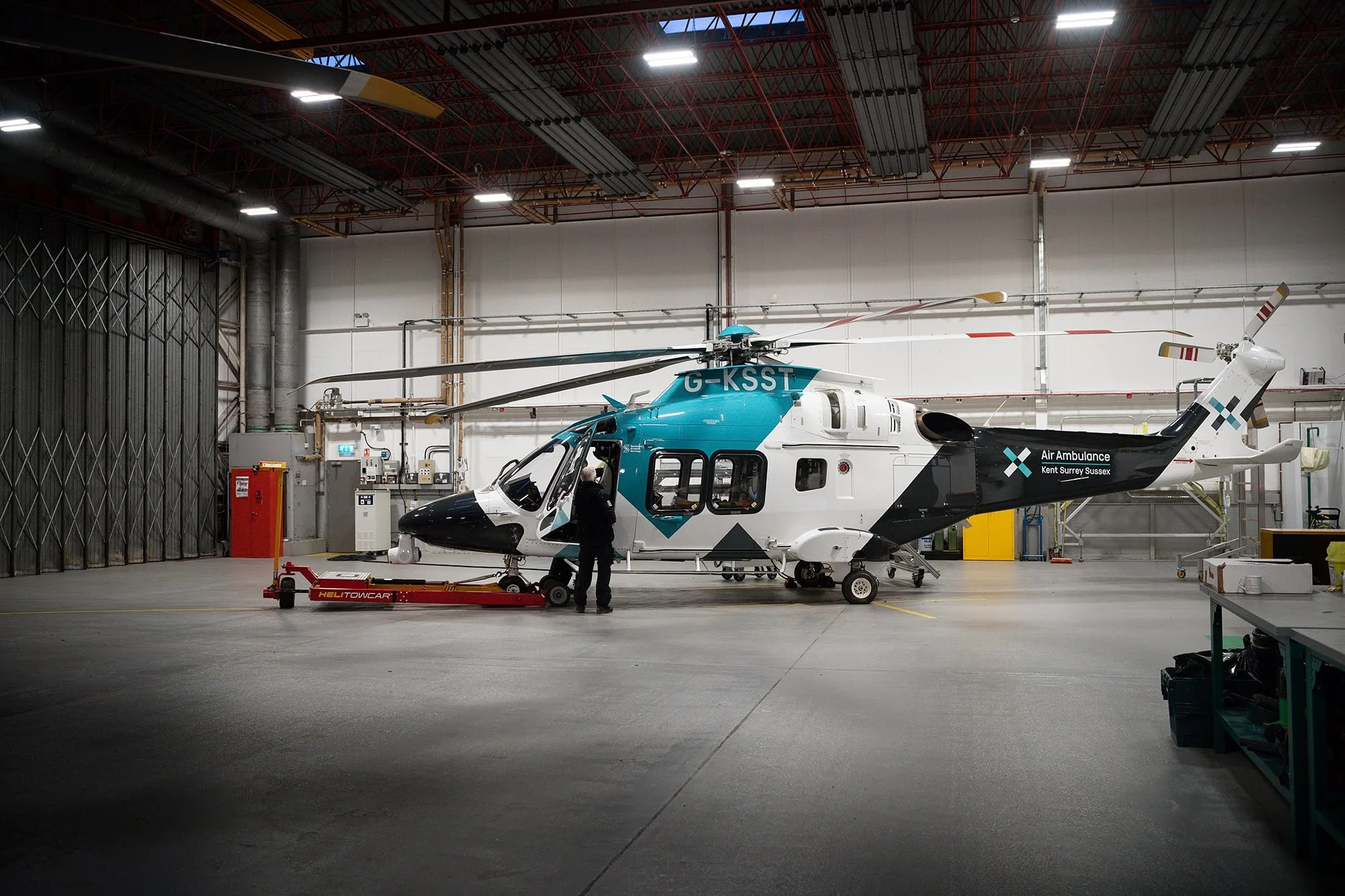
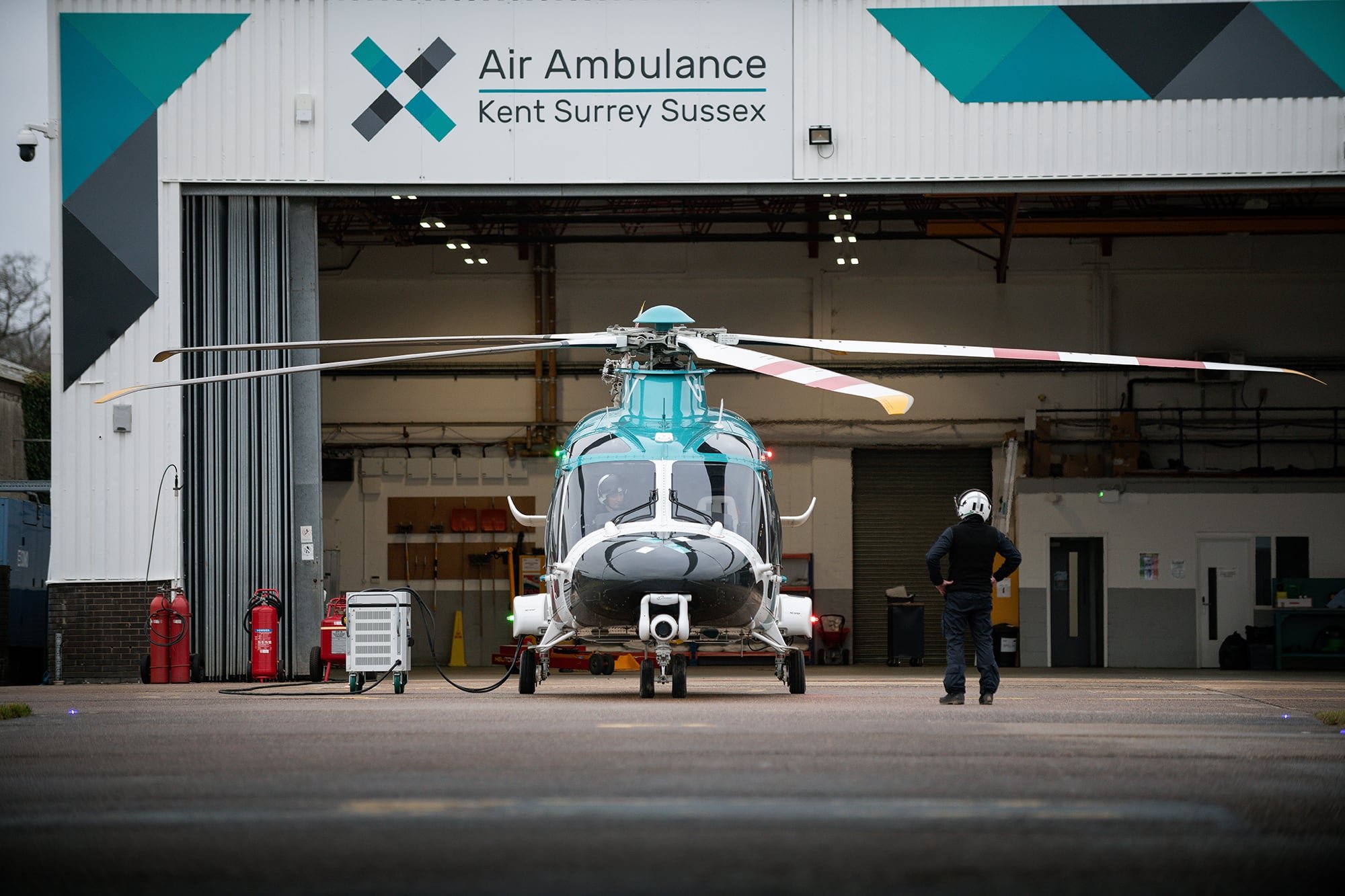
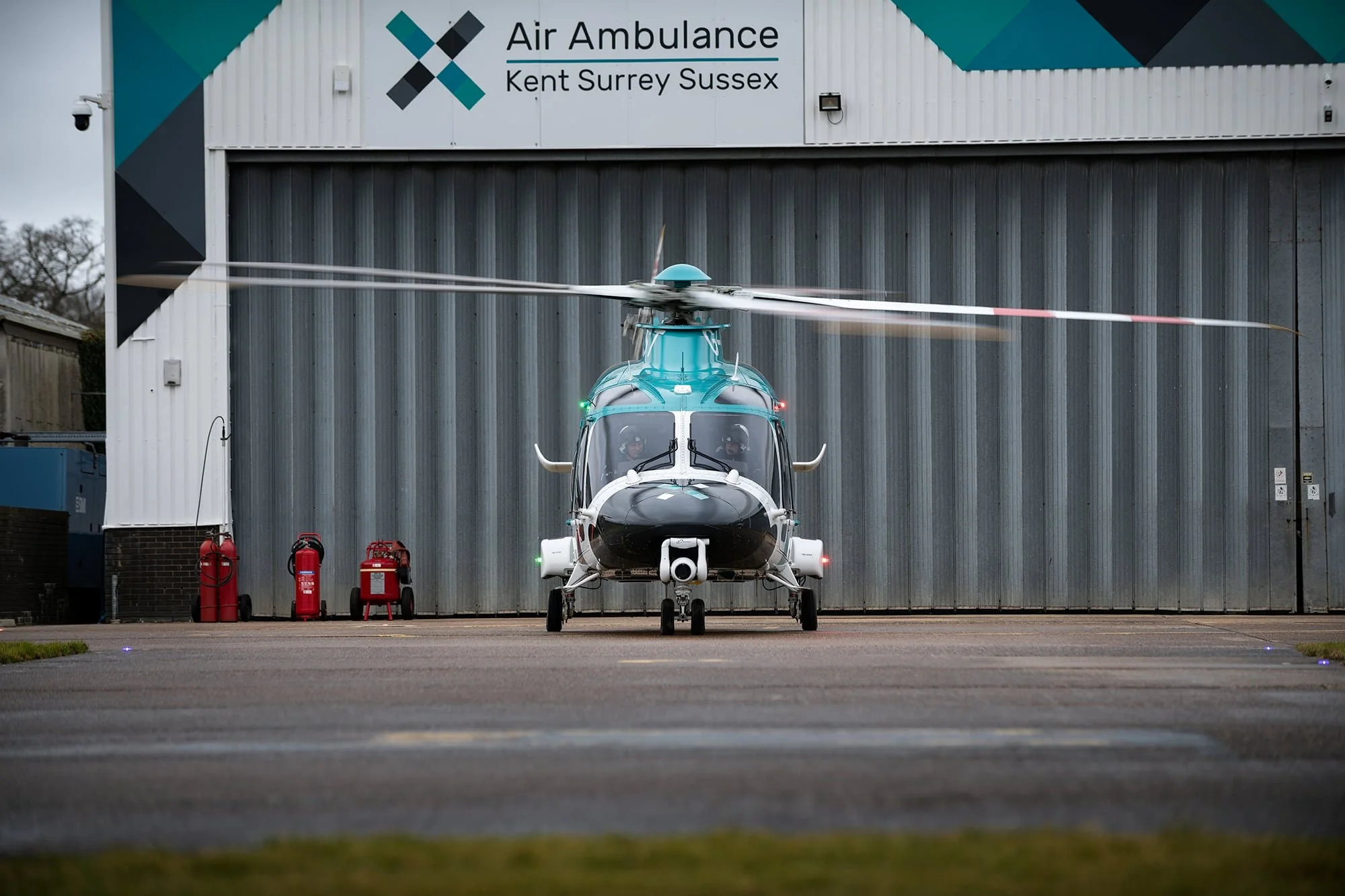
Air Ambulance Charity Kent Surrey Sussex has been providing advanced pre-hospital critical care for more than 34 years, attending thousands of incidents and supporting people at some of the most difficult moments of their lives. Its operational area covers an enormous 7,390 square kilometres across Kent, Surrey and Sussex, making it an essential service for communities throughout the region. The charity operates three state-of-the-art Leonardo AW169 helicopters, alongside four Rapid Response Vehicles (RRVs). Together, these provide the ability to deliver specialist medical teams to patients by air or road, depending on the circumstances and operational requirements.
My photography focuses on helping people understand what happens behind this service. The helicopters are undoubtedly impressive subjects, but it is the pilots, doctors, specialist paramedics and supporting teams who make everything possible. Their knowledge, experience and ability to work together under considerable pressure are what ultimately make the difference. For me, the challenge is to create a photographic record that reflects this reality, producing images that are visually engaging but, just as importantly, authentic to the people and the work being documented.
Working Alongside the HELIMED Teams
Photographing an operational Air Ambulance service is very different from a conventional aviation photography assignment. There are obviously opportunities to create carefully considered photographs of the aircraft, but the real value comes from understanding the environment in which the crews work and finding ways to document their activities without interfering with the operation.
My work with KSS and its HELIMED 21 and HELIMED 60 teams involves working alongside the pilots and medical crews to build a photographic library that represents the different aspects of their work. This requires communication, planning and, above all, an appreciation of the responsibilities that come with working around an active emergency service. Unlike a conventional commercial shoot, where the photographer might have complete control over the schedule, location and subjects, operational aviation photography must work around the demands of the service. The priority is always the patient and the crew, not the photography.
An Air Ambulance helicopter can be required at any moment, and the crews need to remain ready to respond. This means that photographic opportunities must be planned carefully, with sufficient flexibility to accommodate the changing demands of the operation.
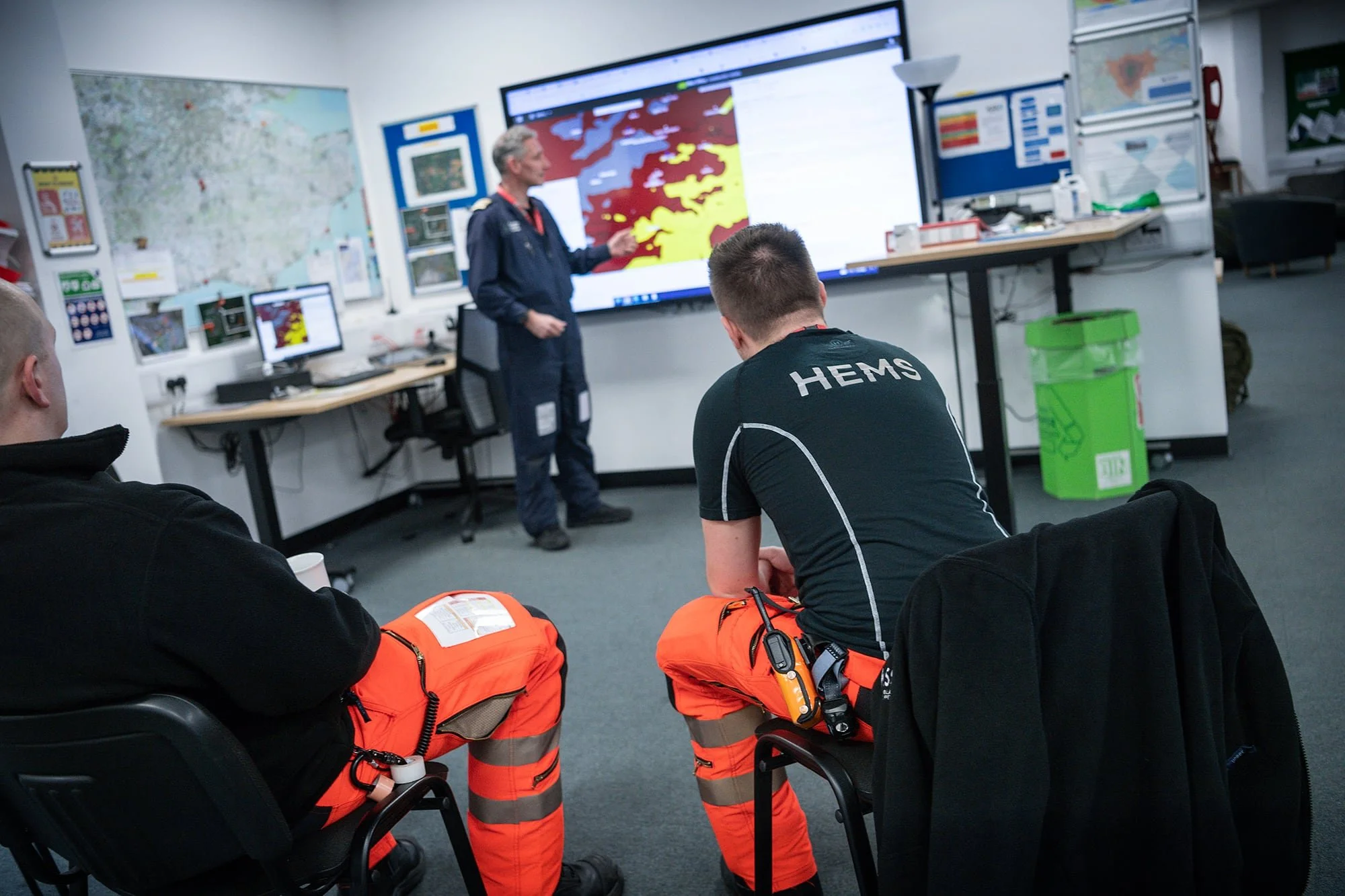
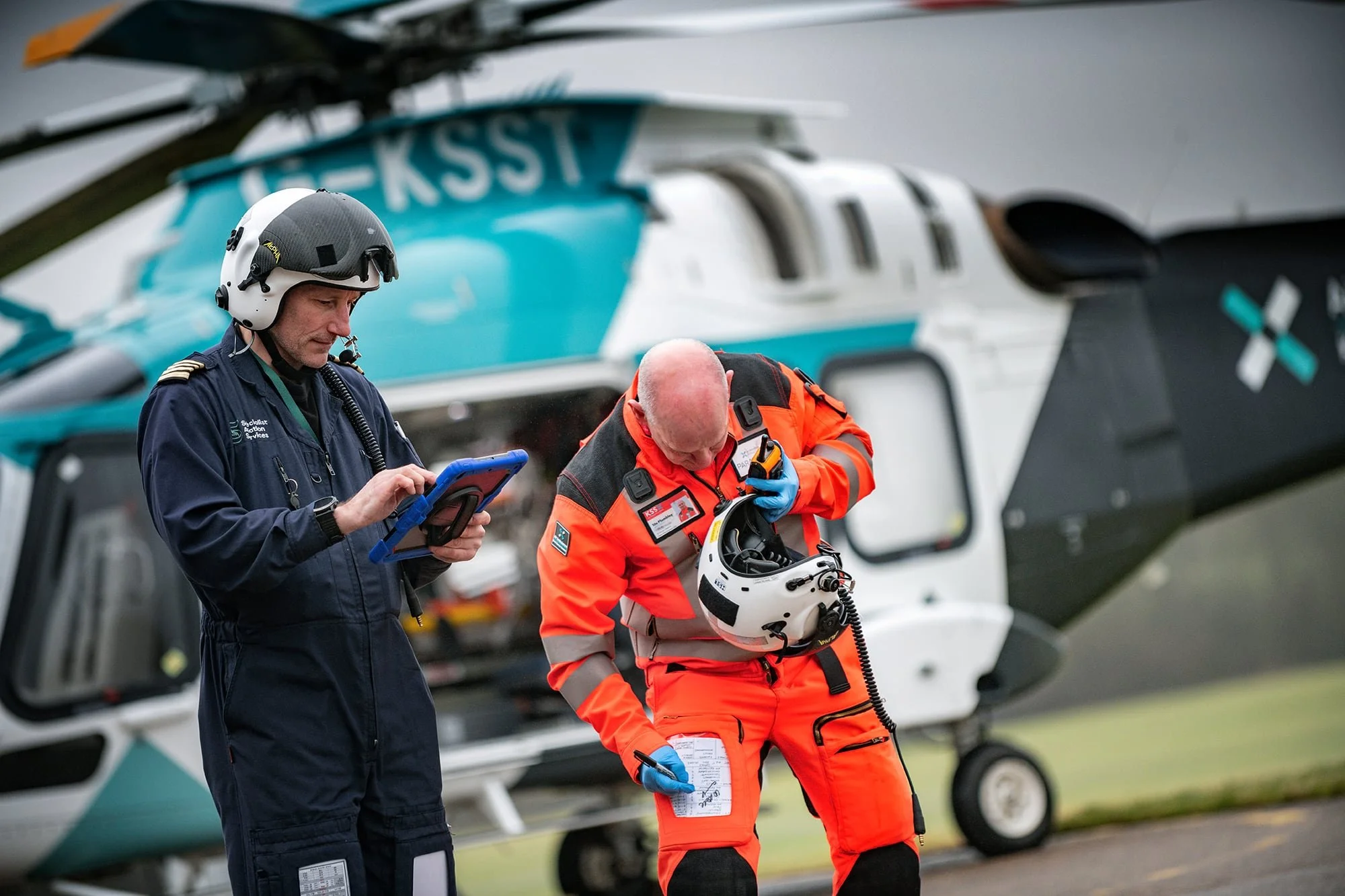
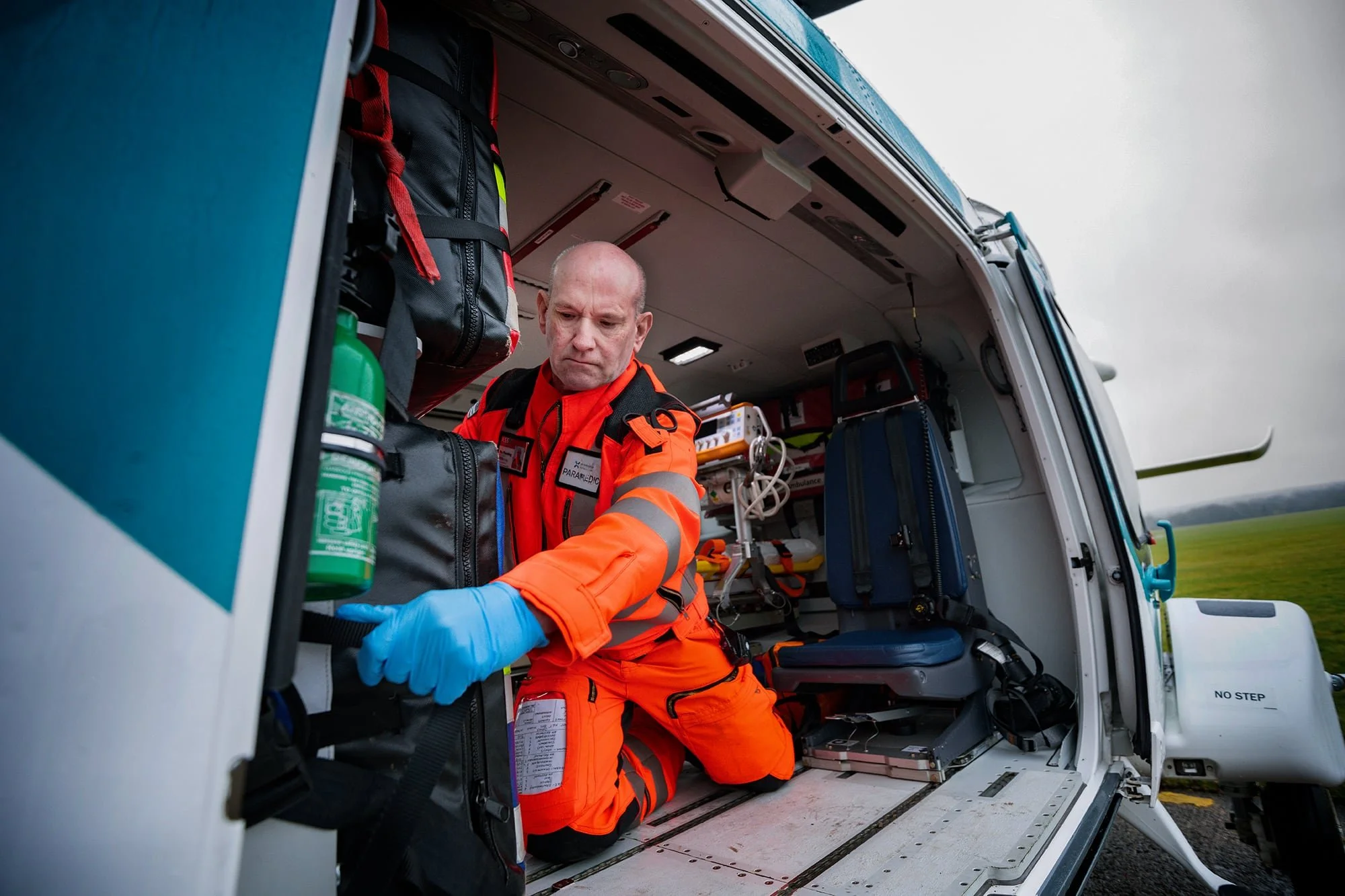
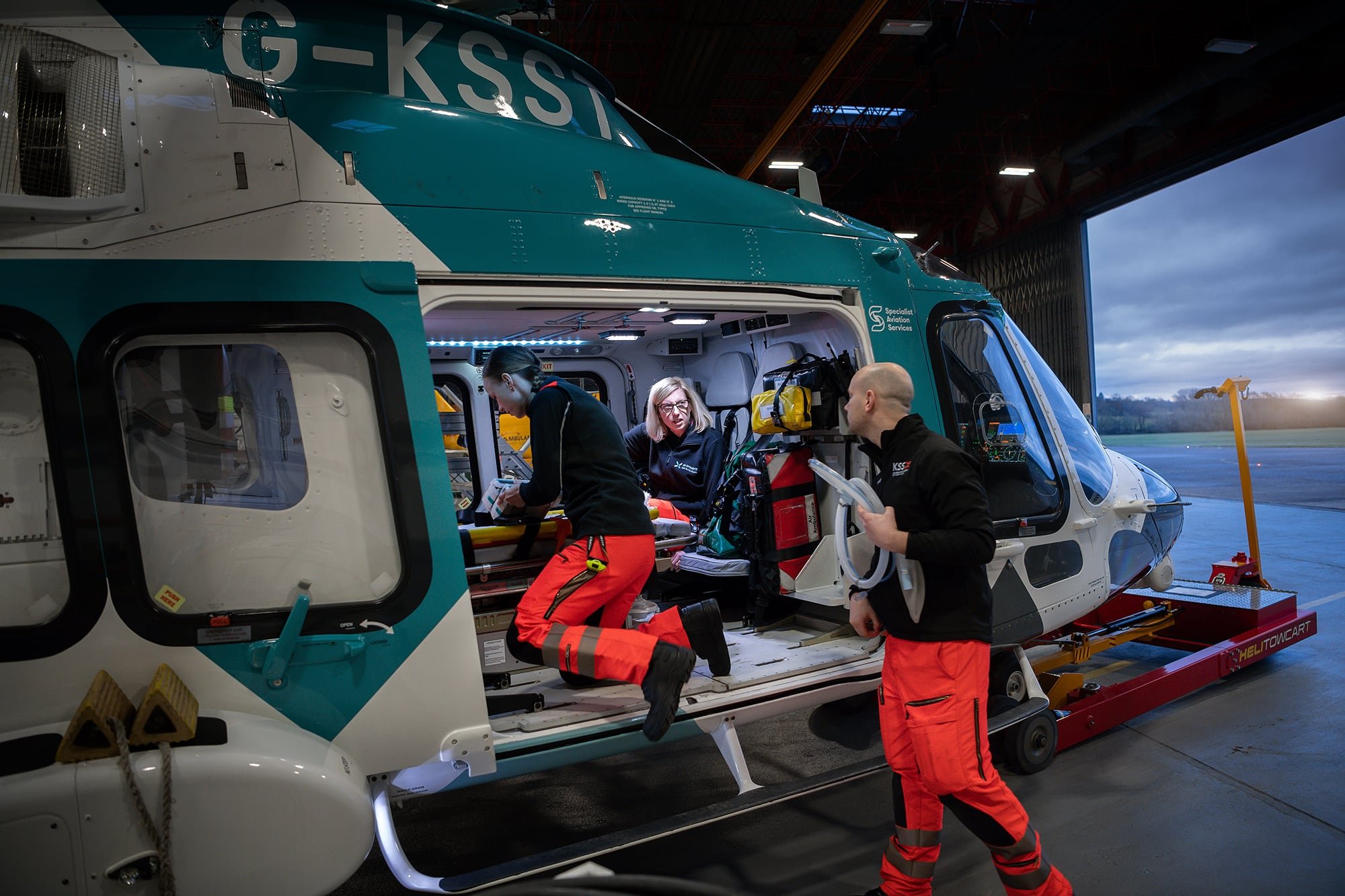
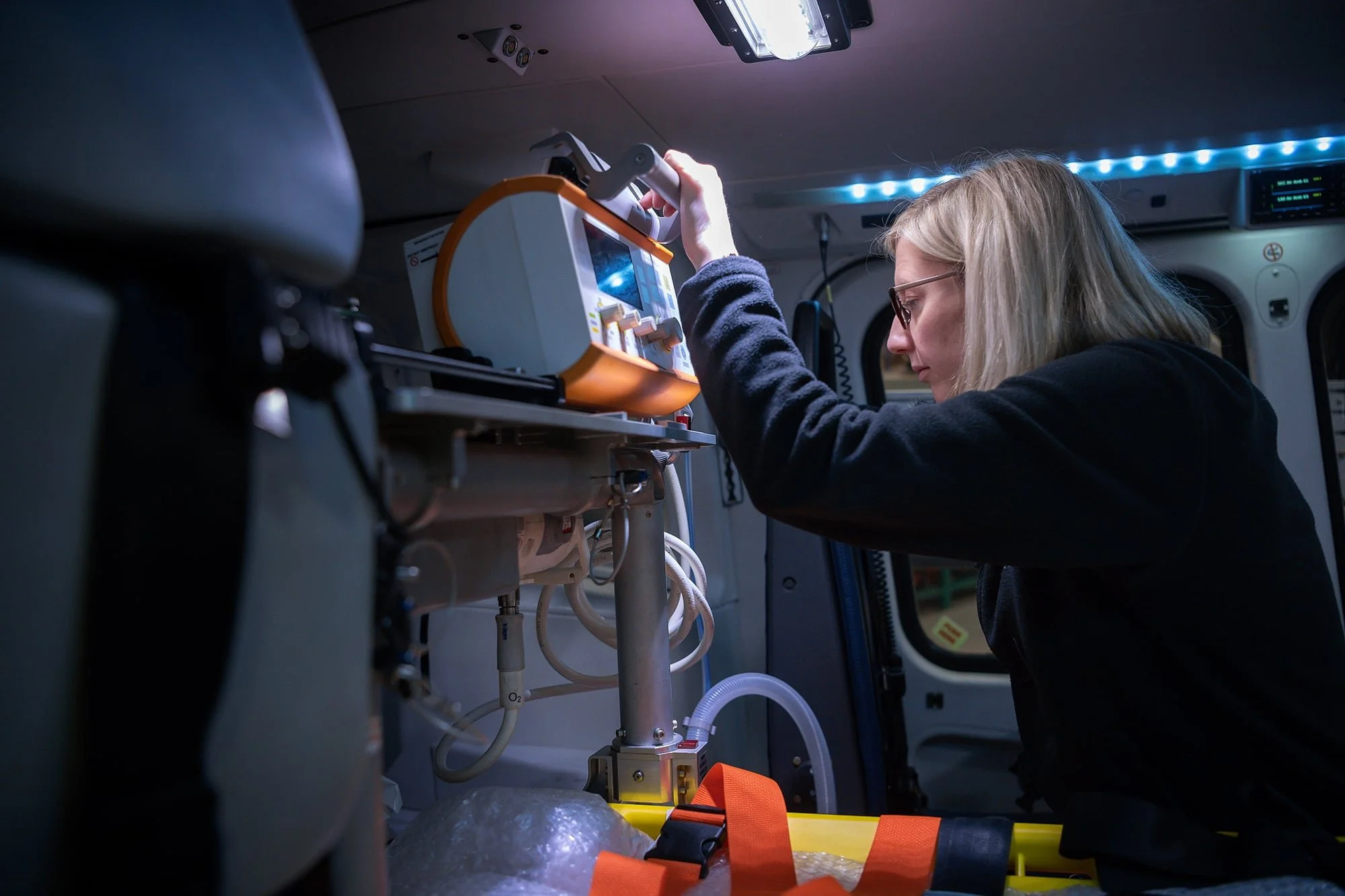
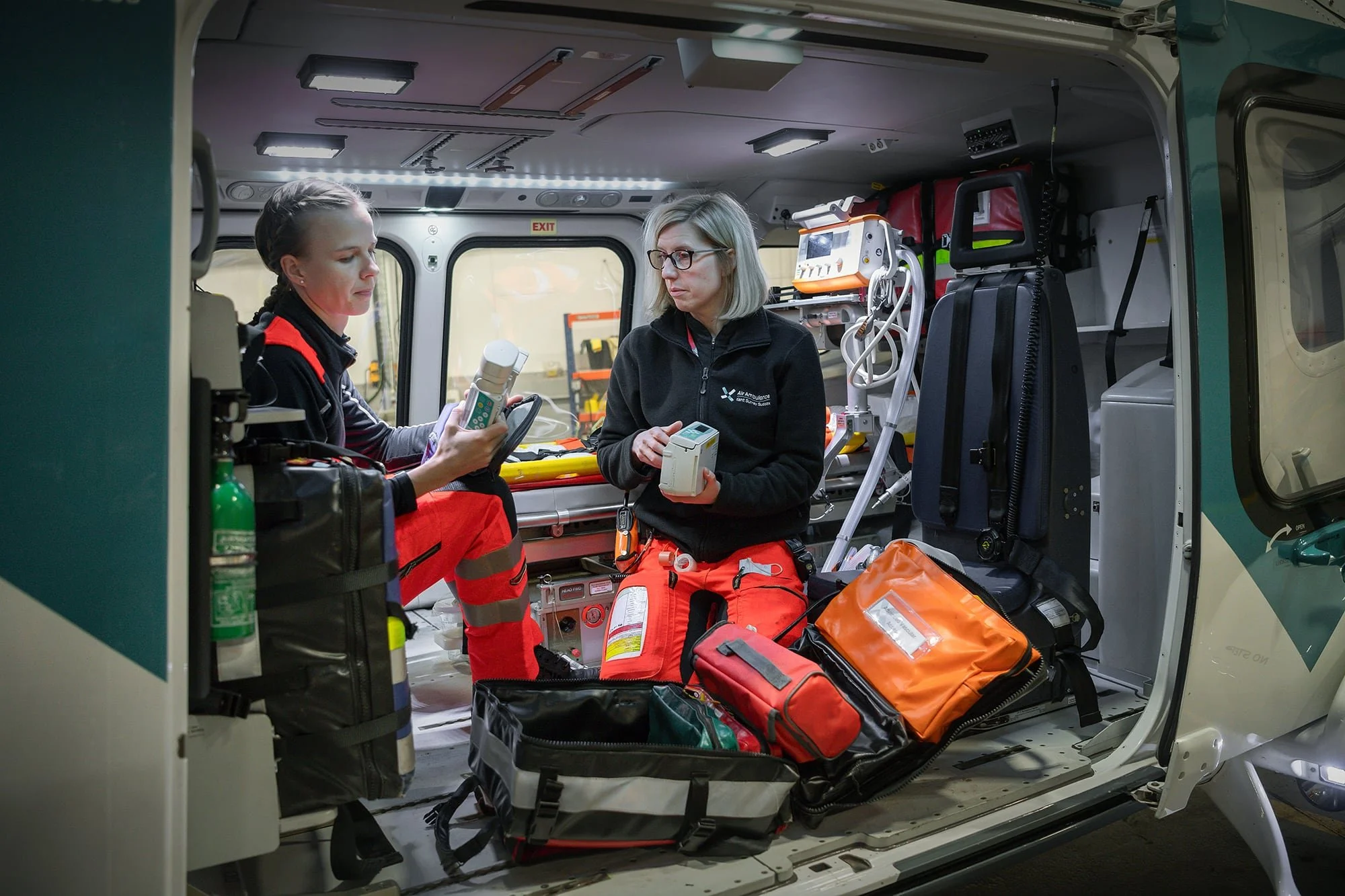
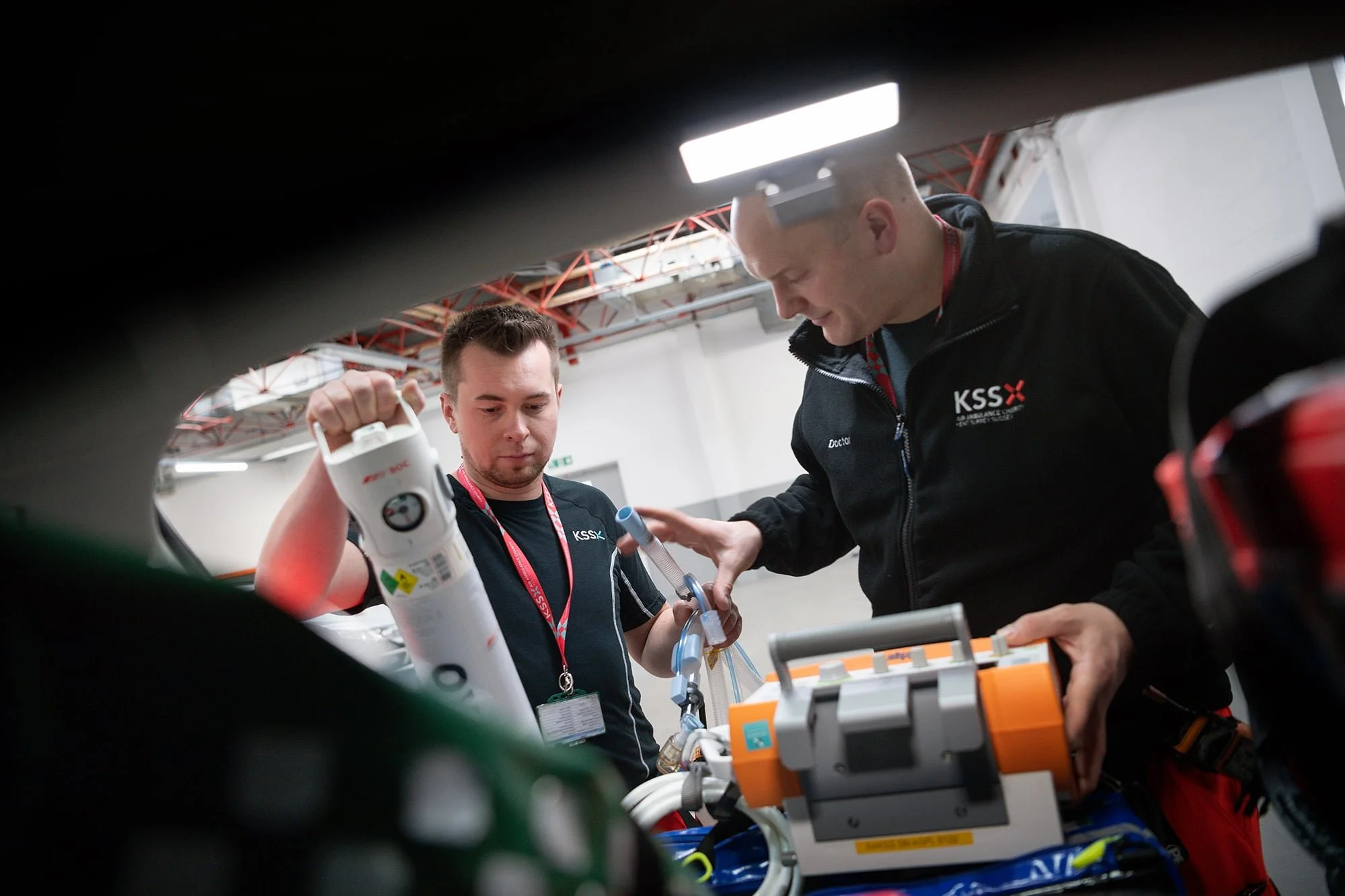
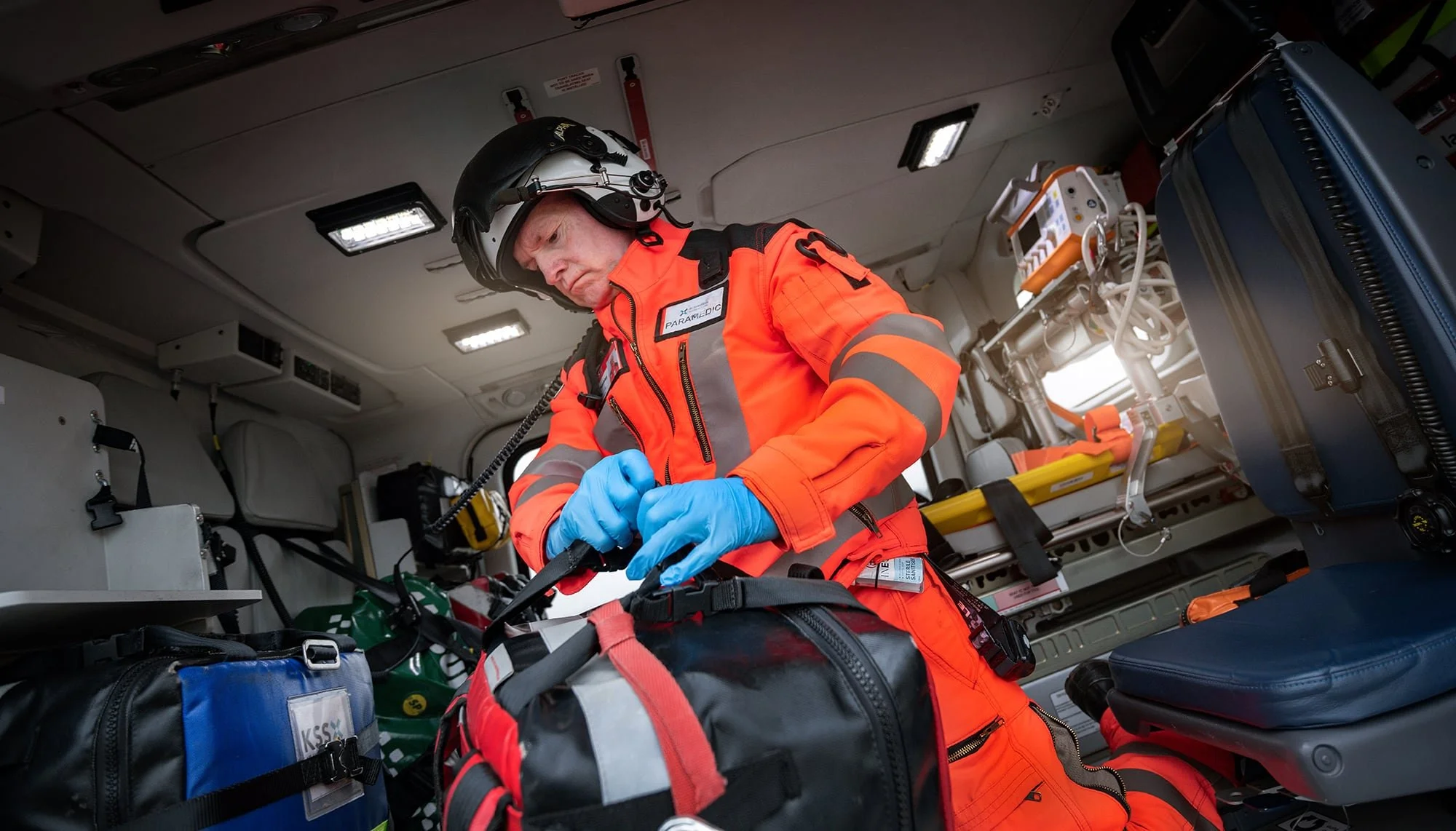
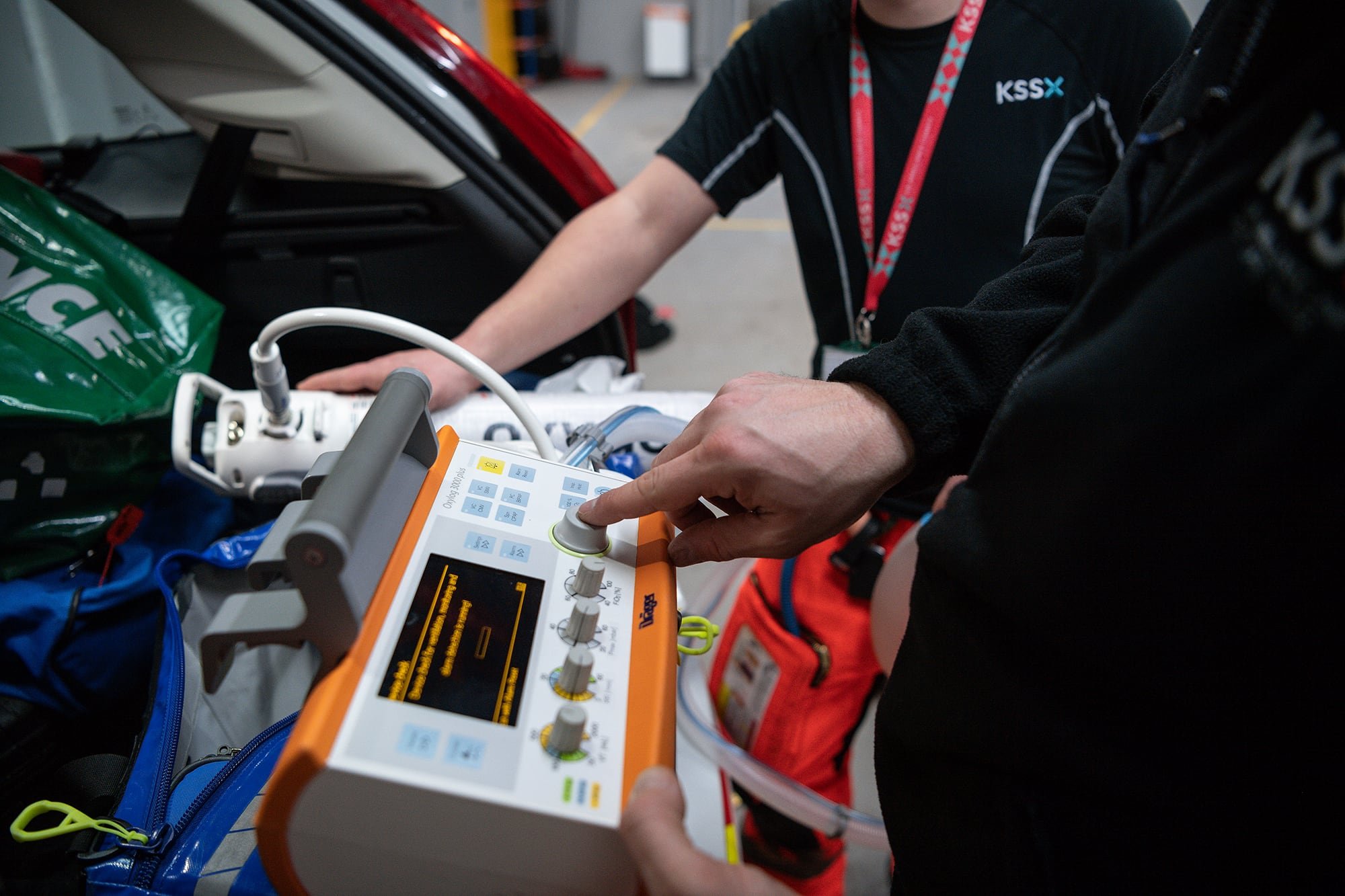
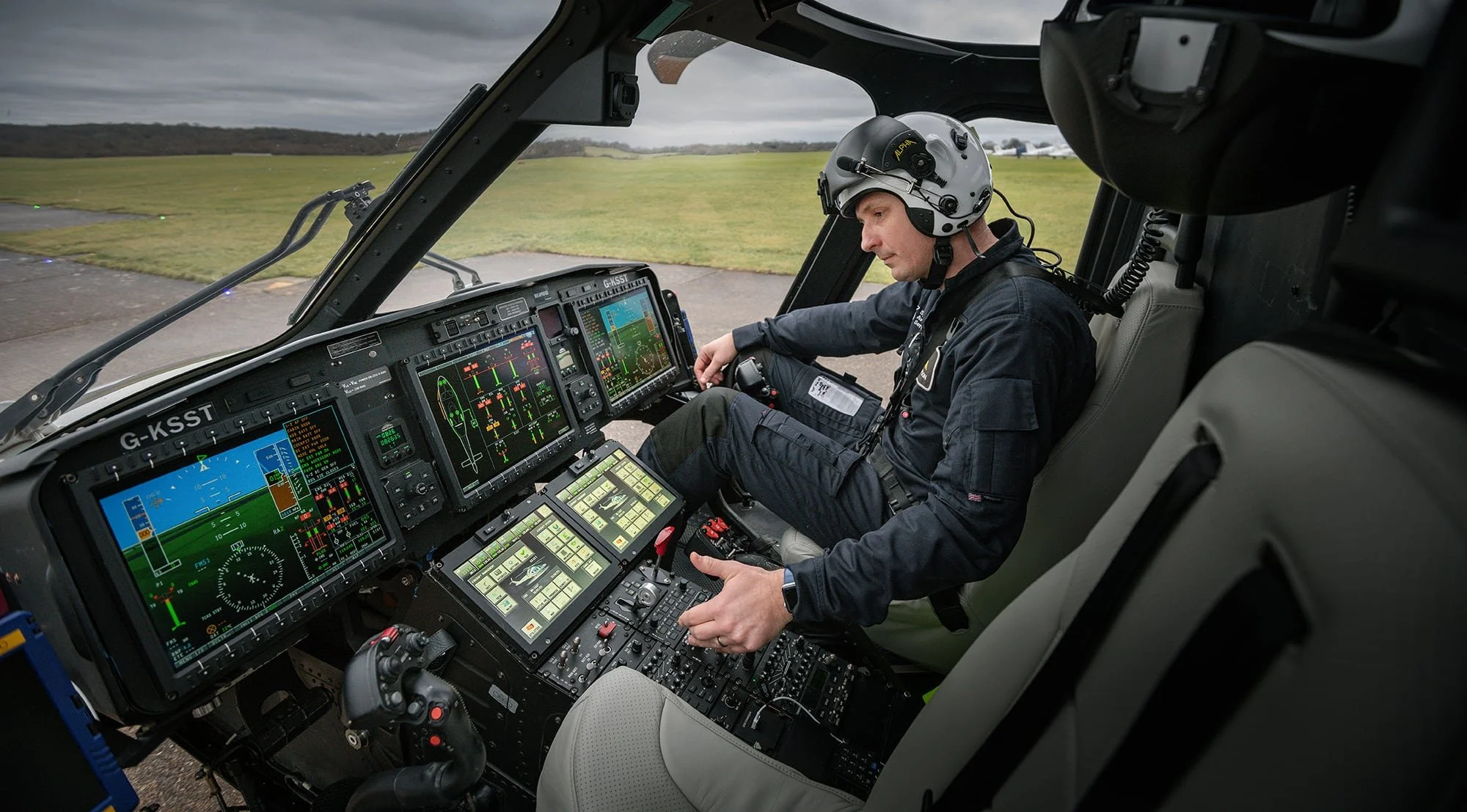
Working with the pilots and medical teams is an important part of this process. Their knowledge of the aircraft, their individual responsibilities and the procedures they follow helps me understand which situations are worth documenting and how best to approach them photographically.
It is also important that the photographs accurately represent what happens during an emergency response. There is little value in creating an image that looks dramatic but does not reflect the reality of the operation. Documentary photography should be honest, and that means understanding the subject well enough to recognise the difference between a genuine operational moment and something that simply looks good in a photograph. Having spent considerable time working within the wider HEMs and Search & Rescue environment with other clients such as HELIMED 56 based in Southampton and Bristow SAR in Prestwick, I have developed a genuine appreciation for the demands placed on these teams. It is an environment where preparation, communication and trust are essential, and where everyone has a clearly defined role.
That understanding helps me work more effectively with the crews, anticipate photographic opportunities and produce images that feel natural rather than staged.
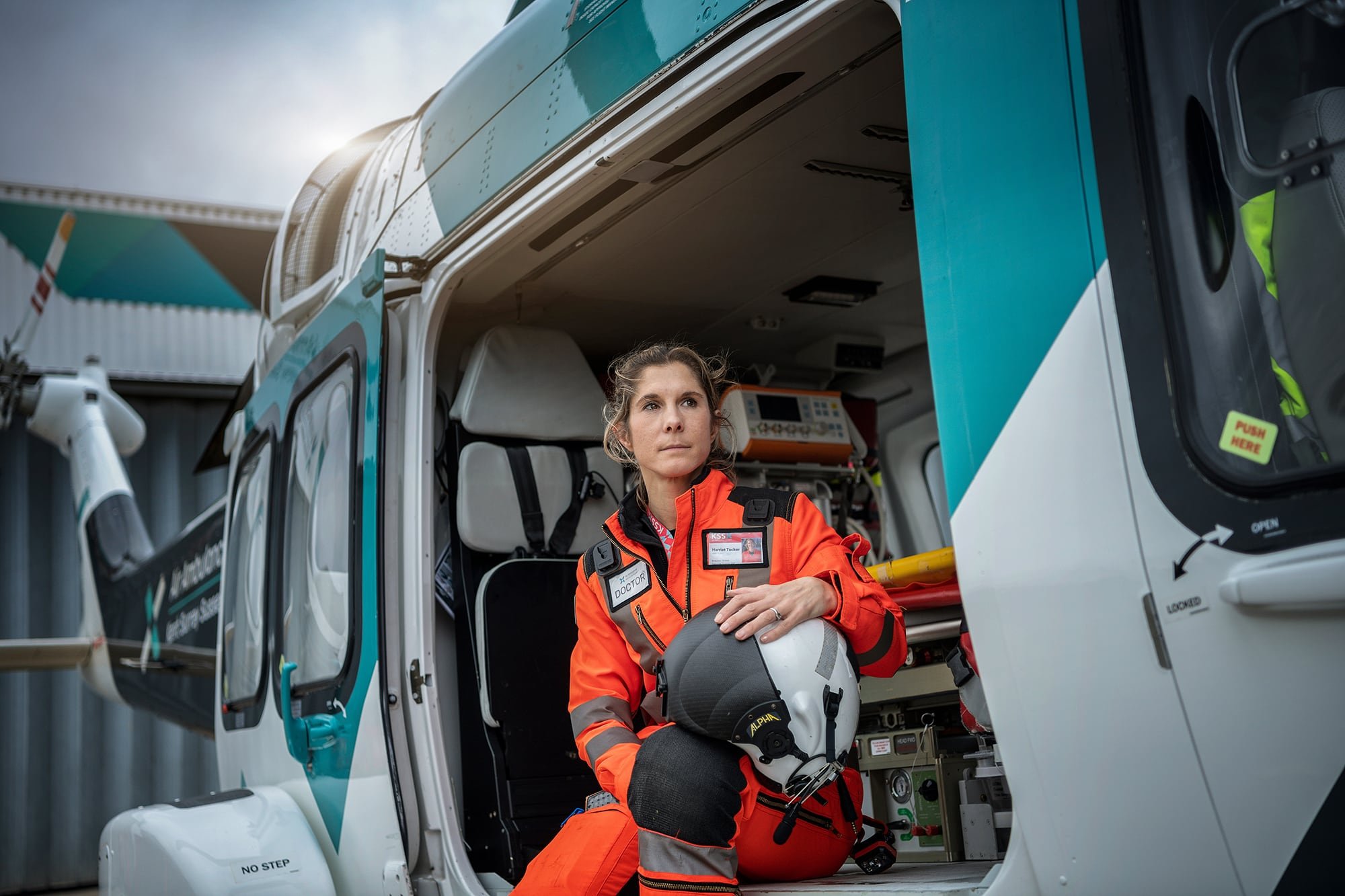
Capturing the Reality of HEMS Operations
One of the things I find particularly interesting about photographing an Air Ambulance service is the sheer variety of subjects and situations involved. It would be easy to assume that most of the photography would simply revolve around helicopters, but the reality is that an effective documentary photography project needs to tell a much broader story.
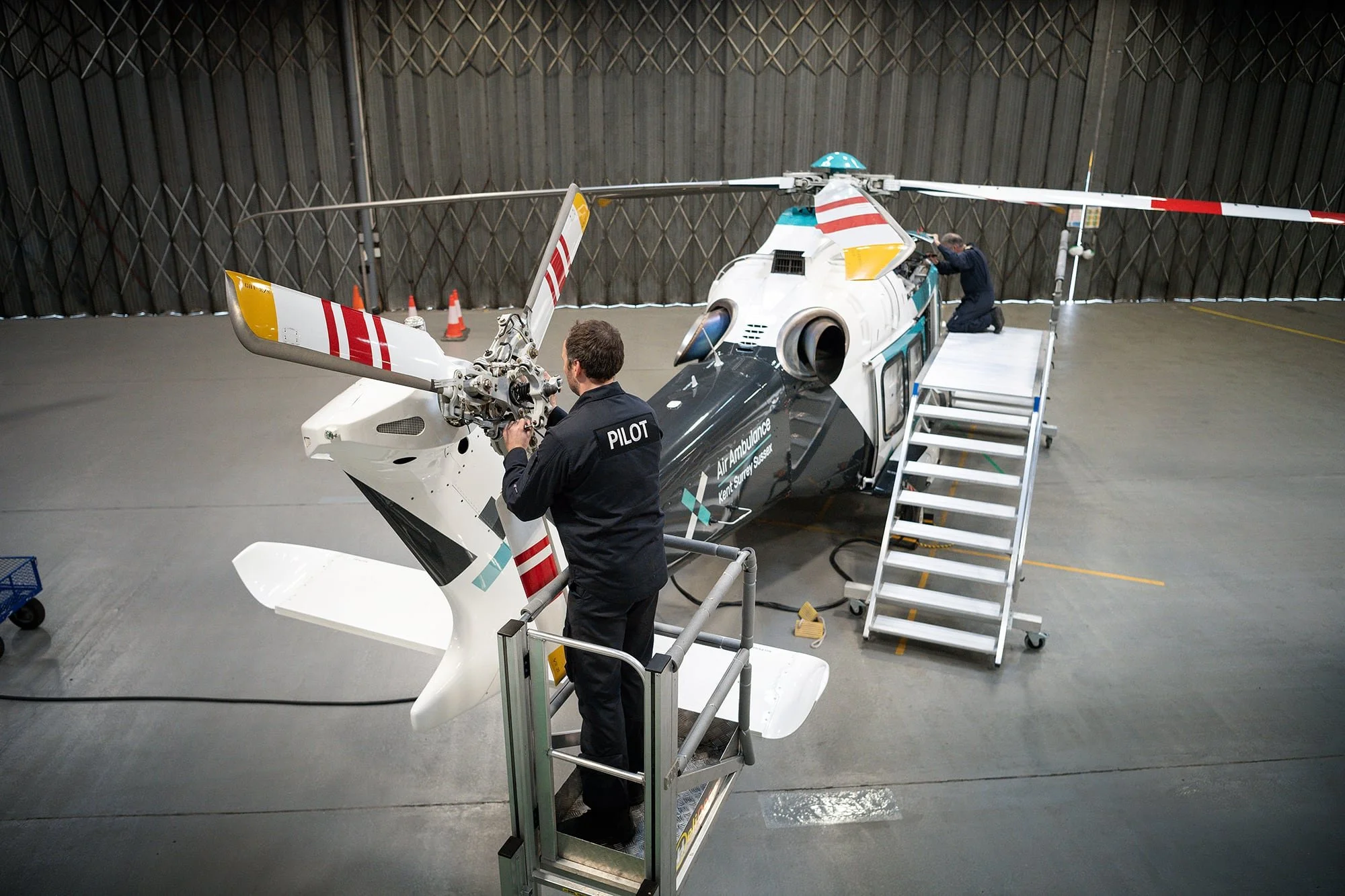
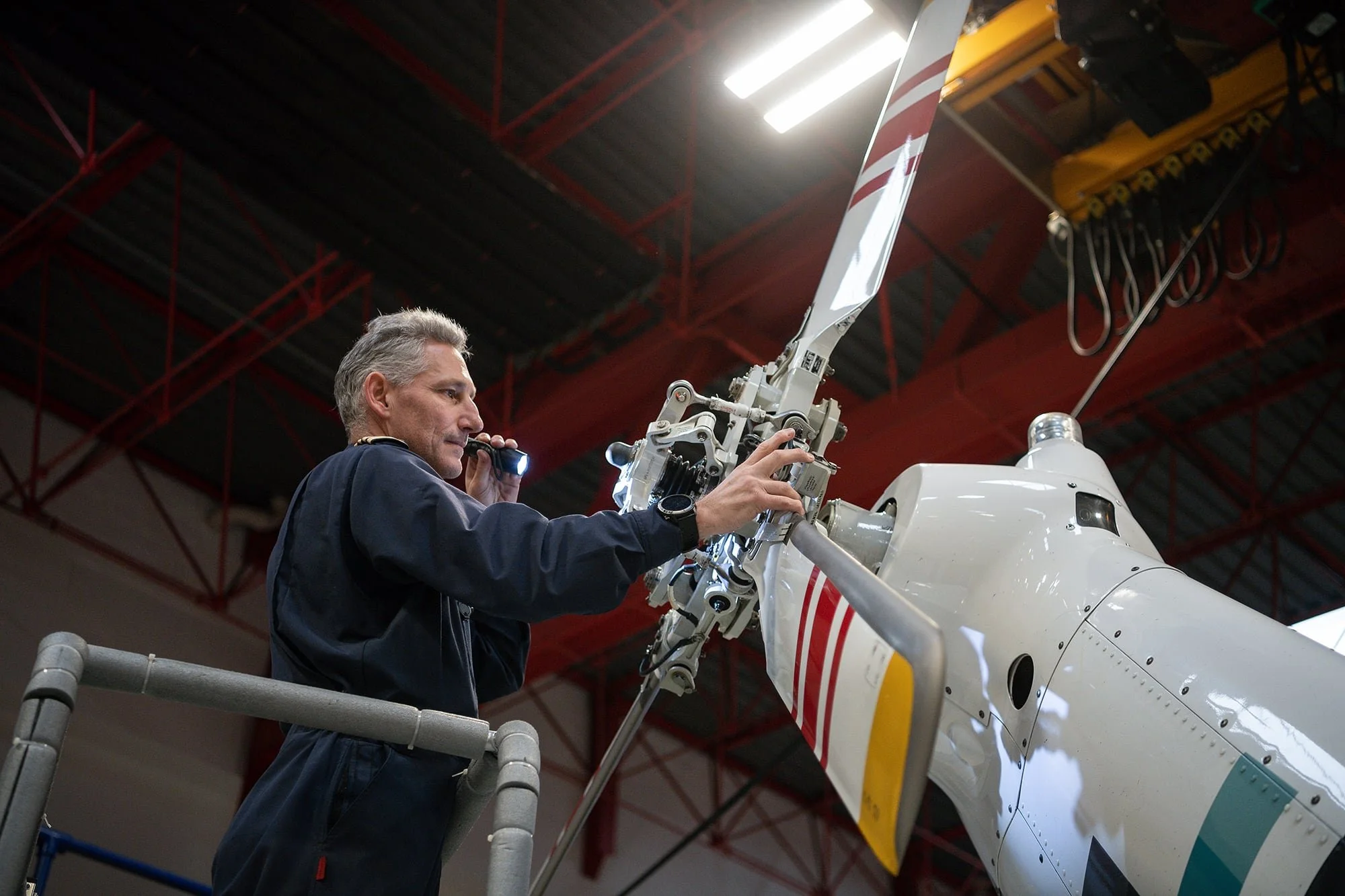
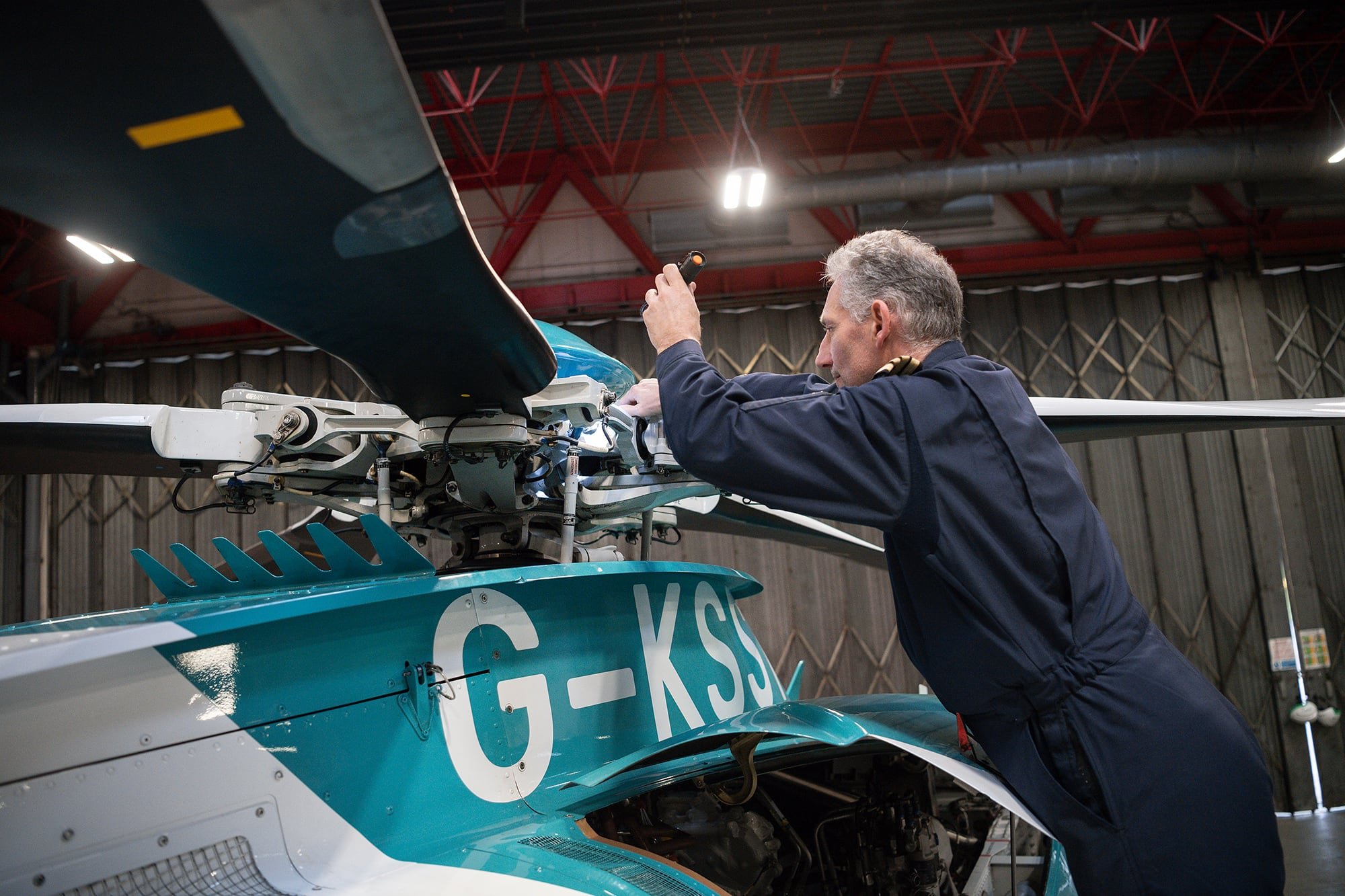
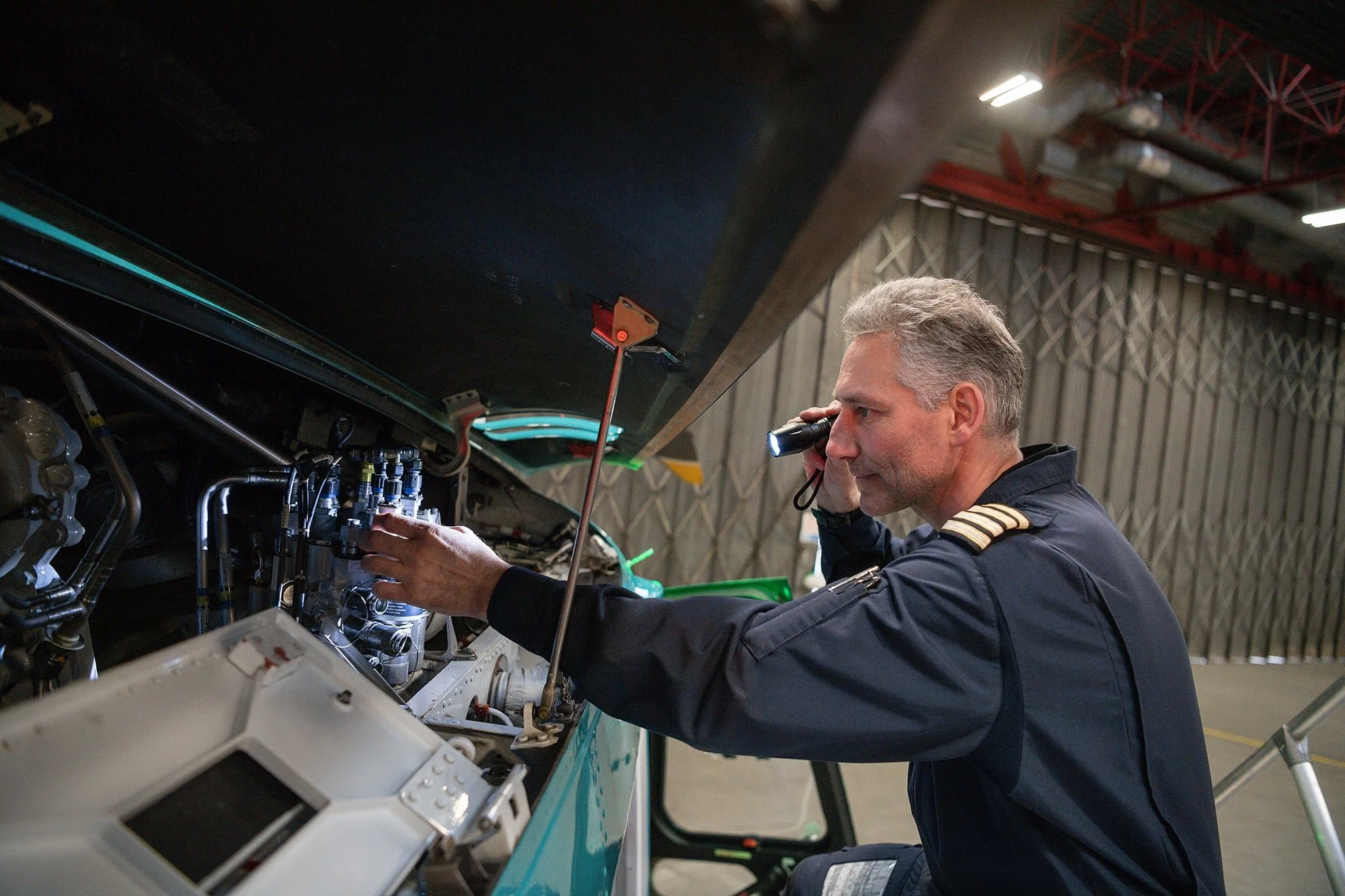
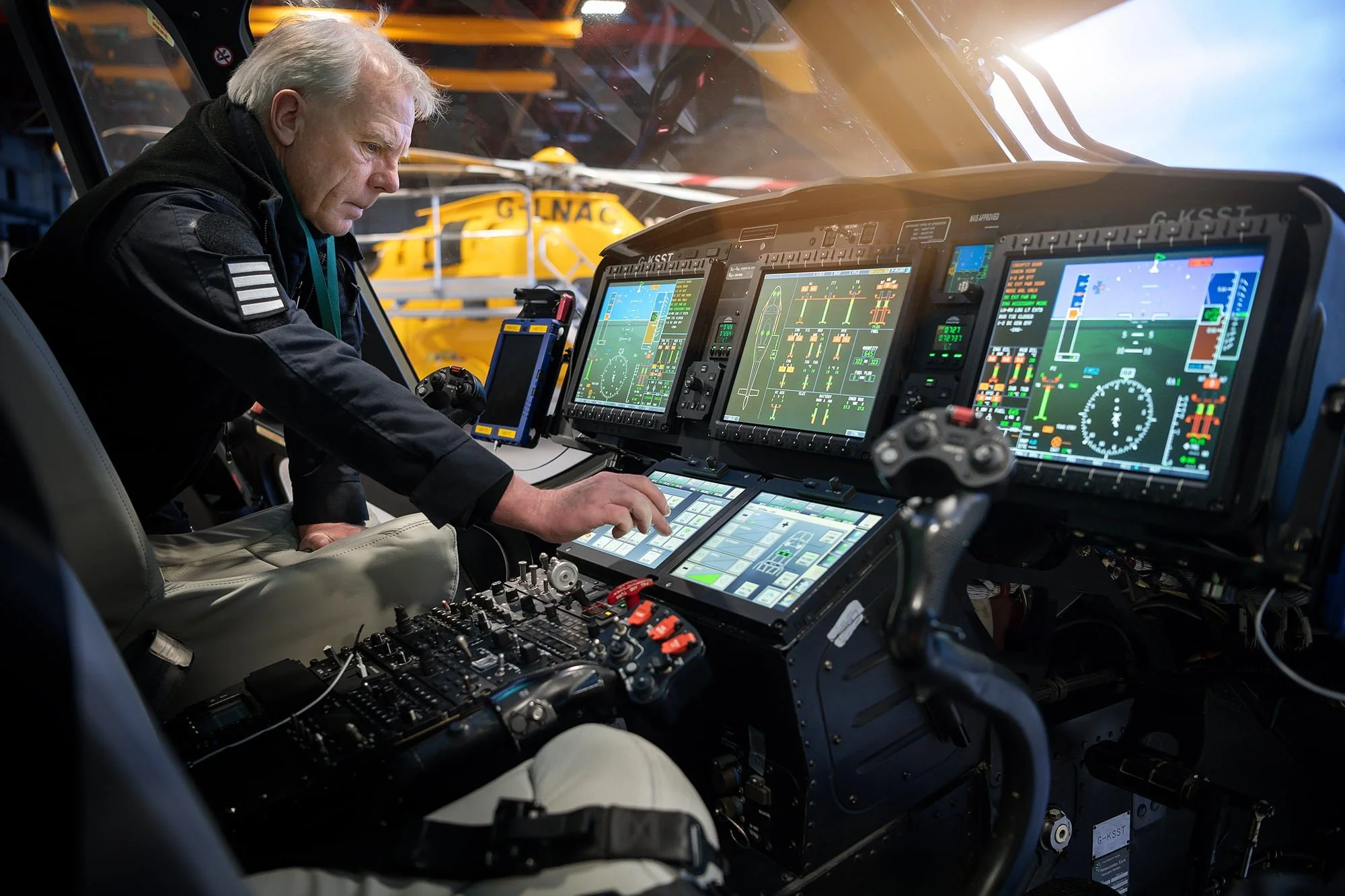
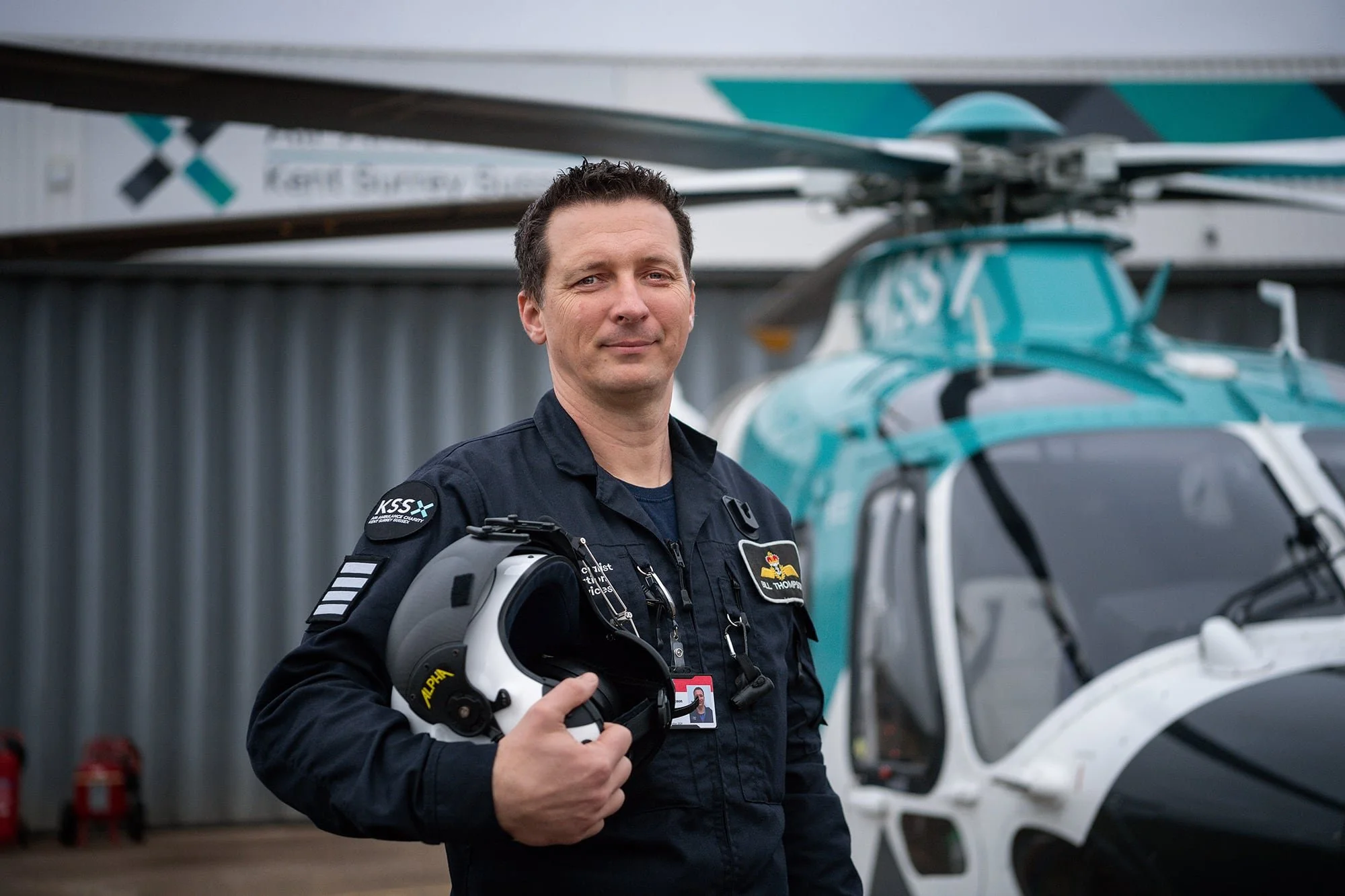
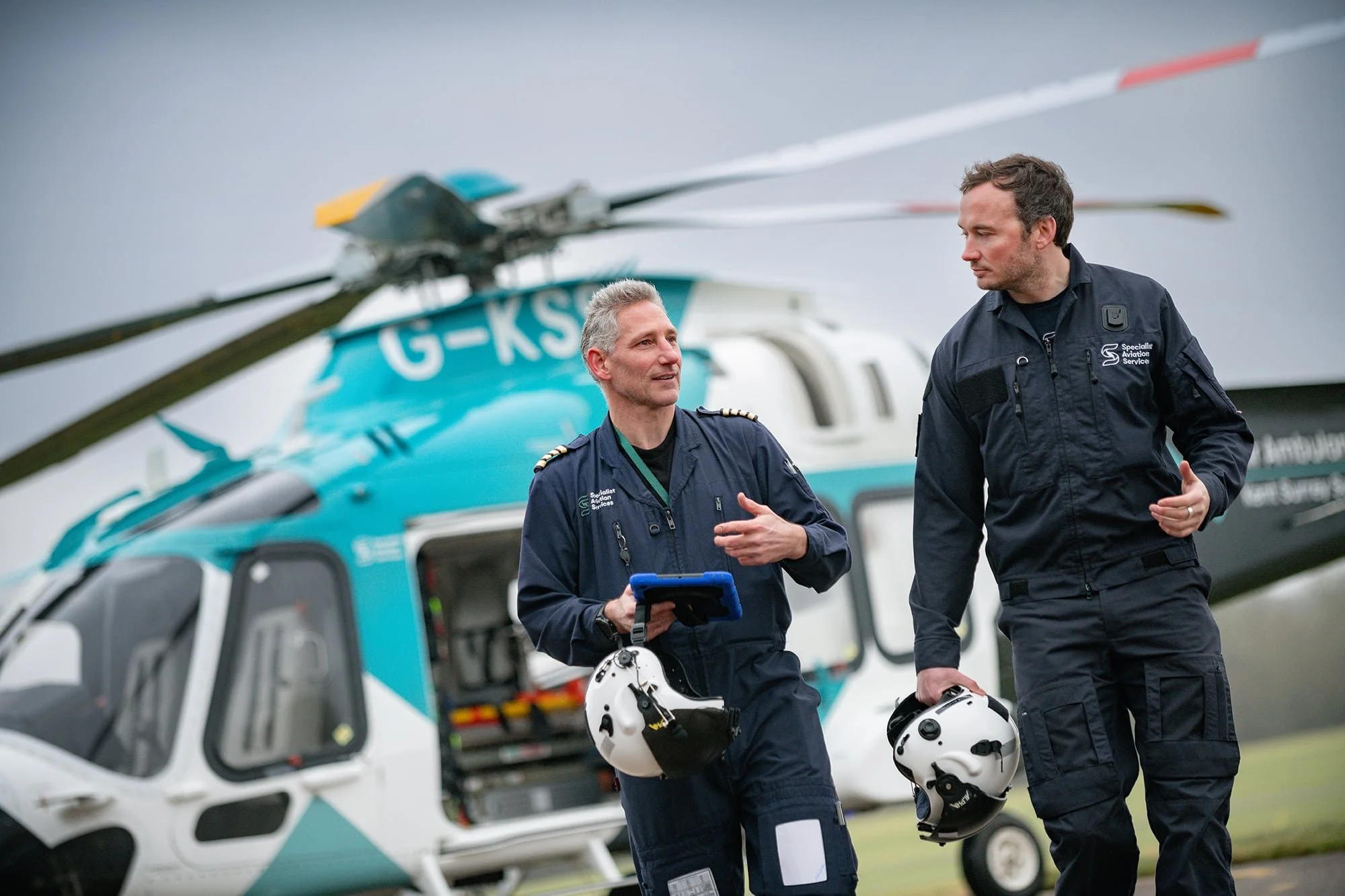
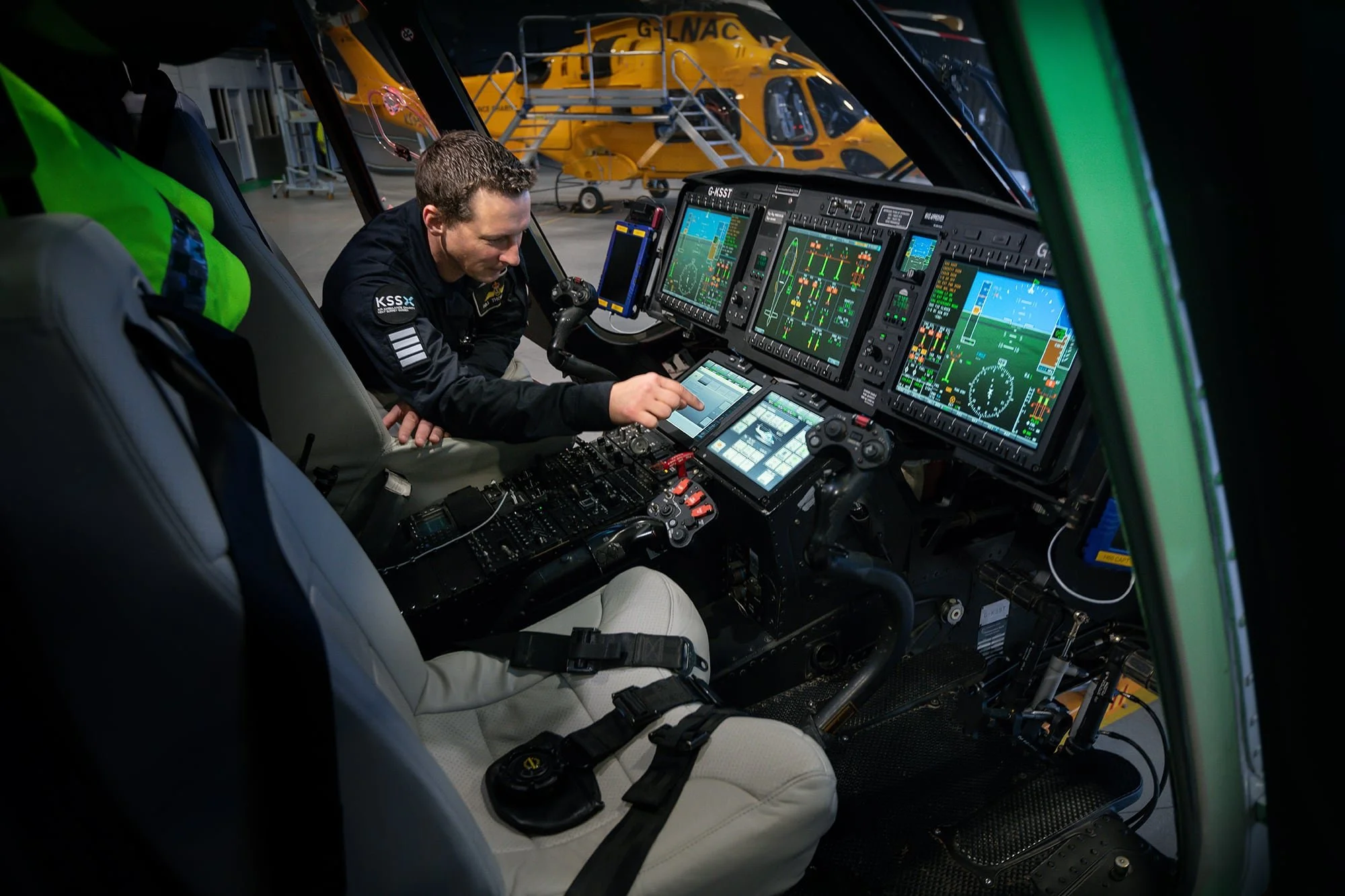
The aircraft are an important part of that story, of course. The Leonardo AW169 is an impressive modern helicopter, and photographing its design, presence and operational capabilities provides an excellent opportunity to create strong aviation imagery. Whether photographed on the ground, with the crew preparing for a flight or in its wider operational environment, the helicopter provides an instantly recognisable visual connection to the charity. However, I am equally interested in the smaller details that help communicate what goes into delivering this service. The preparation carried out by the pilots, the medical equipment used by the doctors and paramedics, the interaction between members of the crew and the concentration involved in their individual responsibilities all provide valuable photographic opportunities.
These are often the images that help bring a documentary project to life. They allow someone looking at the photographs to gain a better understanding of the people involved and the level of professionalism required to operate such a specialist emergency service. Another important aspect of the work is documenting the Rapid Response Vehicles. While the helicopters understandably attract much of the attention, the road vehicles play an equally important role in ensuring KSS can continue to provide critical care when flying is not possible or appropriate. Together, the aircraft and road vehicles provide a flexible response capability, allowing specialist medical teams to reach patients around the clock, throughout the year.
There is also an important distinction between what many people imagine an Air Ambulance does and what actually happens during a modern HEMS operation.
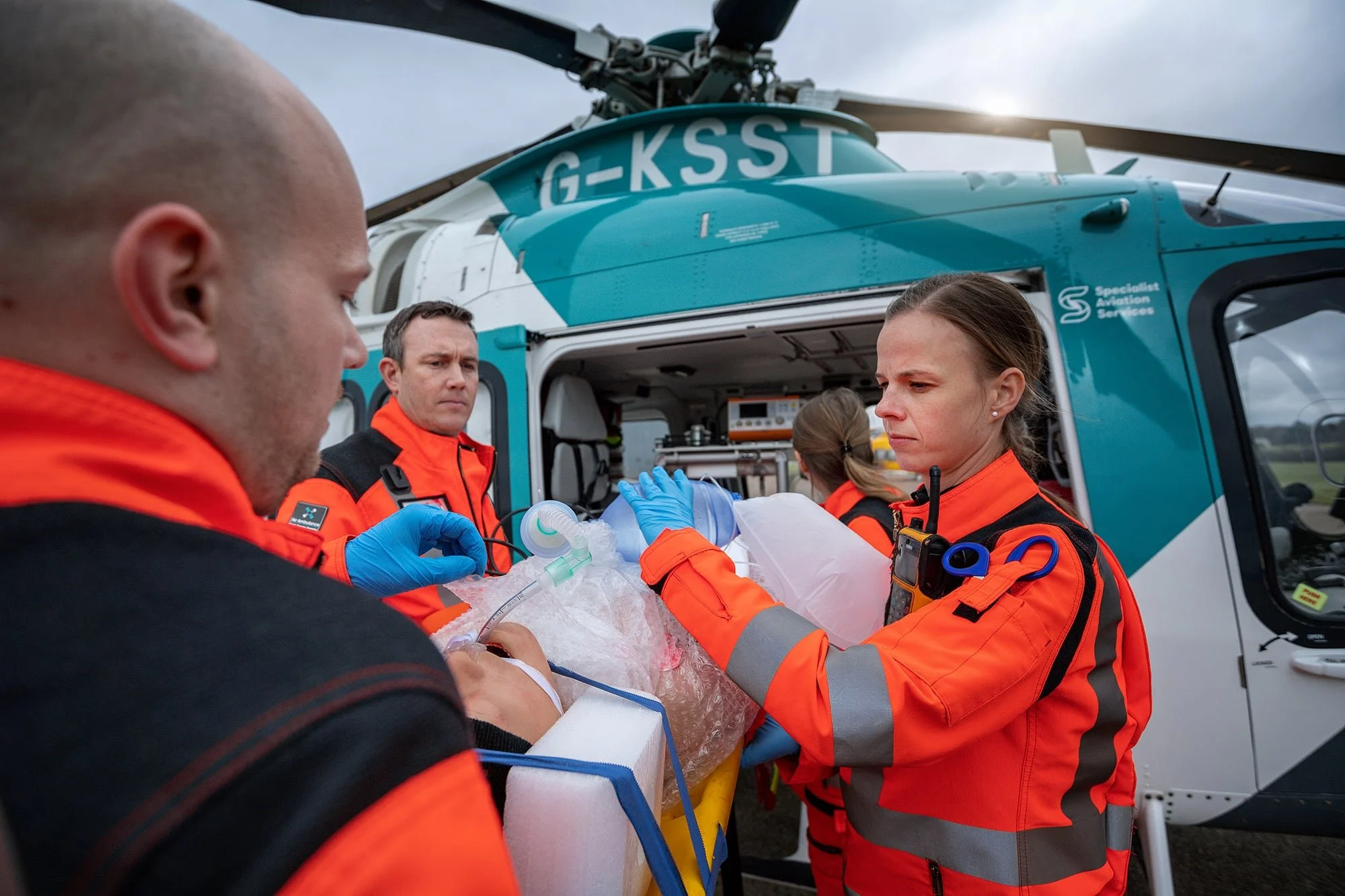
It is easy to think of the helicopter primarily as a means of transporting injured people to hospital. In reality, one of its most important functions is bringing highly trained medical professionals and specialist equipment directly to the patient. The aim is to deliver advanced medical treatment as quickly as possible, often in circumstances where immediate intervention can make a significant difference to someone's chances of survival. In many respects, the helicopter brings the emergency room to the scene.
This is an important message for the photography to communicate. By showing the medical teams, their equipment, their preparation and the aircraft that enables them to respond, the images help explain the full extent of the service rather than simply presenting it as an aviation operation.
Documentary Photography with a Purpose
One of the most rewarding aspects of working with charitable organisations is knowing that the photographs have a purpose beyond the immediate assignment.
For a charity such as Air Ambulance Charity Kent Surrey Sussex, photography is an important communication tool. The images need to work across a variety of platforms and help tell the organisation's story to people who may have very little previous understanding of what it does. This might include someone seeing a photograph in a fundraising campaign, reading an annual report, visiting a charity event, browsing the website or encountering a social media post. In each situation, the photography has an opportunity to make a connection and encourage someone to find out more.
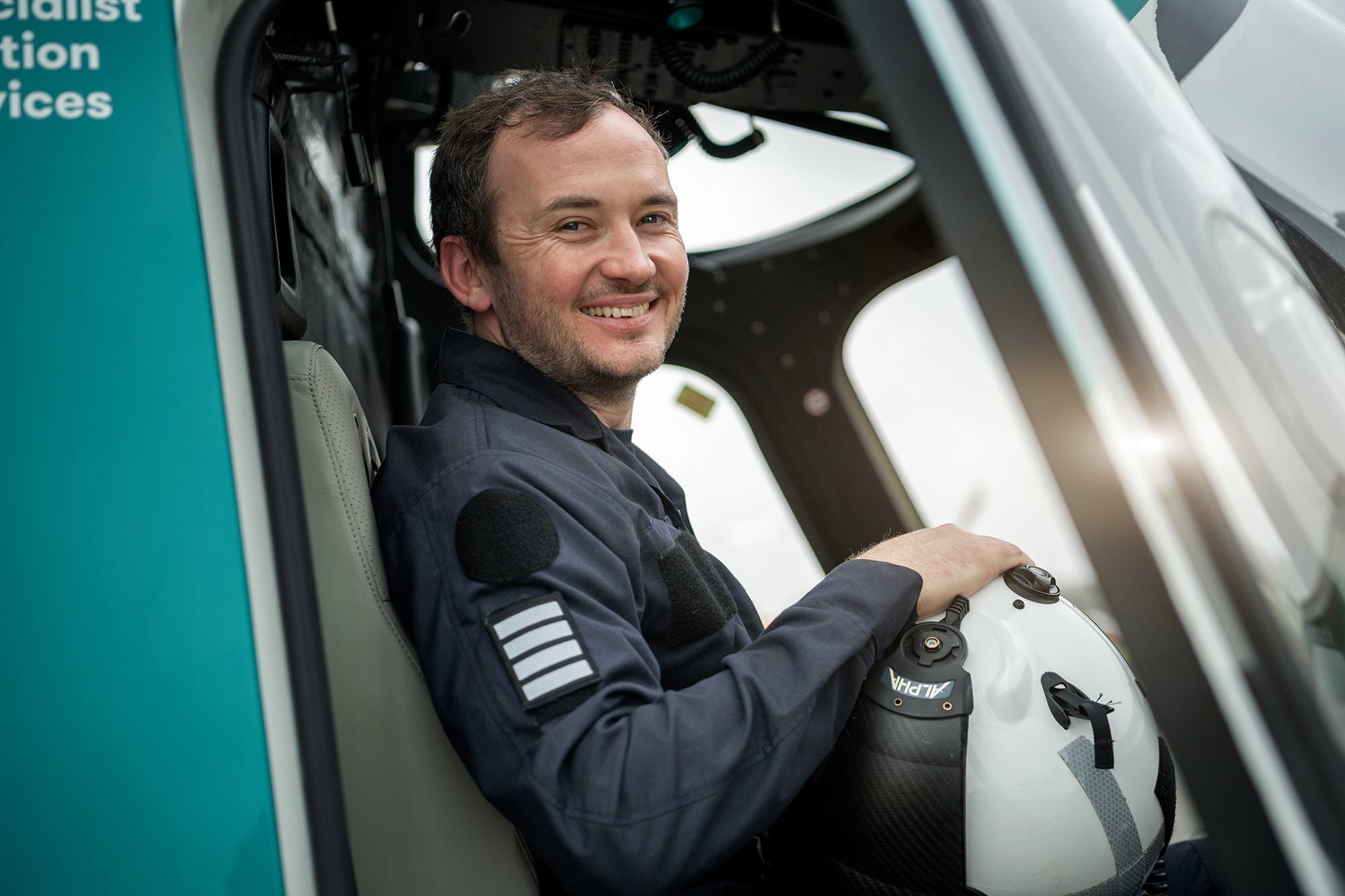
Good documentary photography can achieve something that statistics and written information sometimes struggle to do on their own. It puts a human face to an organisation and allows people to see the individuals behind the service. A photograph of a helicopter is useful, but a photograph that shows the people who operate it, the medical professionals who deliver the care and the preparation that takes place before every response can communicate so much more.
This is particularly important when it comes to fundraising. Unlike many emergency services, Air Ambulance charities rely heavily on the generosity of the public, fundraising activities, corporate partnerships and charitable donations to maintain their operations. The aircraft, specialist medical equipment, vehicles, training and people required to deliver this level of care all come at a considerable cost. The public needs to understand not only what these charities do, but also why their continued support is so important.
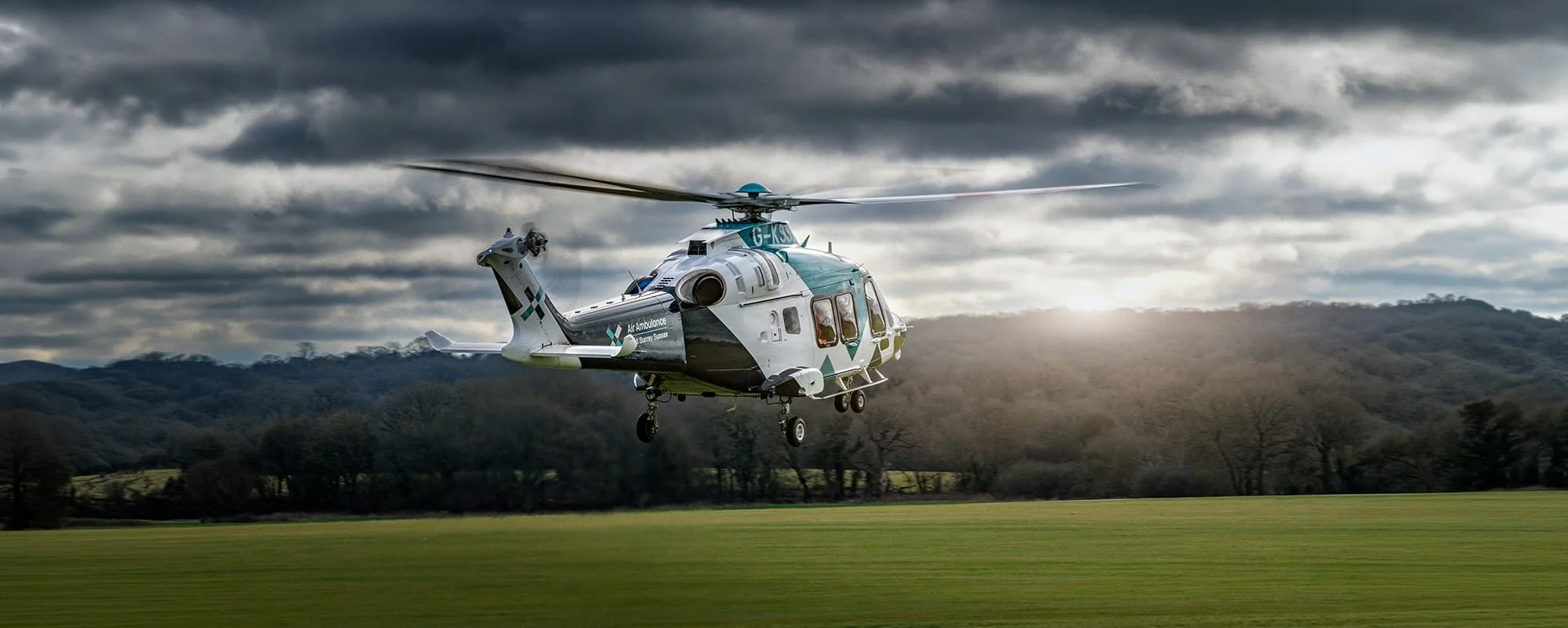
For KSS, having a strong and consistent photographic library helps communicate that message. It provides the charity with genuine imagery that can be used across its marketing, fundraising and public awareness activities, helping supporters understand where their contributions go and the difference they make.
From a photography perspective, this is something I take very seriously. I am not simply trying to create a collection of attractive aviation photographs. I want every image to contribute to the bigger picture, whether that means showing the scale of the operation, documenting the people involved or communicating the importance of keeping this service available to the communities it serves. There is also something particularly valuable about using genuine photography in this environment. These are real people carrying out real work, and the images should reflect that. There is no need to manufacture drama or exaggerate what is happening. The reality of the service is compelling enough.
The Importance of Telling Their Story
Over the years, I have photographed a wide variety of aviation subjects, from private and commercial aircraft through to historic aircraft and emergency services. Each presents its own challenges, but projects such as my work with KSS are particularly rewarding because they allow me to combine my interest in aviation with documentary photography and visual storytelling. I have enormous respect for the people who work within the Air Ambulance environment. The pilots, doctors, paramedics and supporting teams operate in circumstances that most of us will hopefully never experience. They have to make difficult decisions, work effectively under pressure and maintain an extraordinary level of professionalism, often in situations where time is critical.
What I find particularly interesting is that, despite the highly specialised nature of their work, the people involved are simply doing their jobs. There is a remarkable amount of preparation, training and teamwork behind every response, much of which happens away from public view.
Being able to document some of this work and help bring it to a wider audience is something I consider a real privilege. For me, successful documentary photography is about finding the balance between creating strong visual images and remaining completely faithful to the subject. It requires patience, an understanding of the environment, good communication and the ability to recognise the moments that genuinely tell a story. With KSS, that story is one of commitment, professionalism and an extraordinary desire to help people when they need it most.
Since its foundation in 1989, Air Ambulance Charity Kent Surrey Sussex has attended more than 46,000 incidents. Behind that figure are thousands of individual stories, families, patients and communities who have benefited from the specialist care provided by the charity.
Every one of those incidents represents a reason why this service matters.
My aim through this photography is to help ensure that the work of the HELIMED 21 and HELIMED 60 teams is seen, understood and appreciated. The images provide a lasting visual record of the people and equipment involved, while giving KSS a valuable resource to support its ongoing communications and fundraising. Ultimately, photography cannot save lives in the way that these remarkable crews do. But it can help people understand why their work is so important, encourage them to support the charity and play a small part in ensuring that this vital service can continue to operate. And that, for me, is what makes this type of aviation and documentary photography so worthwhile.