

150 Aston Martins
A Decade Photographing Astons Greatest Automotive Icons
There are very few automotive brands that carry the same emotional weight as Aston Martin. For more than a century the marque has occupied a unique position in the automotive world, creating cars that combine performance, craftsmanship, elegance and beauty in a way that few manufacturers have ever managed. Aston Martin cars have never been simply about transportation. They have always been about aspiration, character and identity. This is a brief look at Aston Martin and my own personal journey photographing some of the worlds most beautiful and iconic cars that were ever designed and made by this historic British car manufacturer.
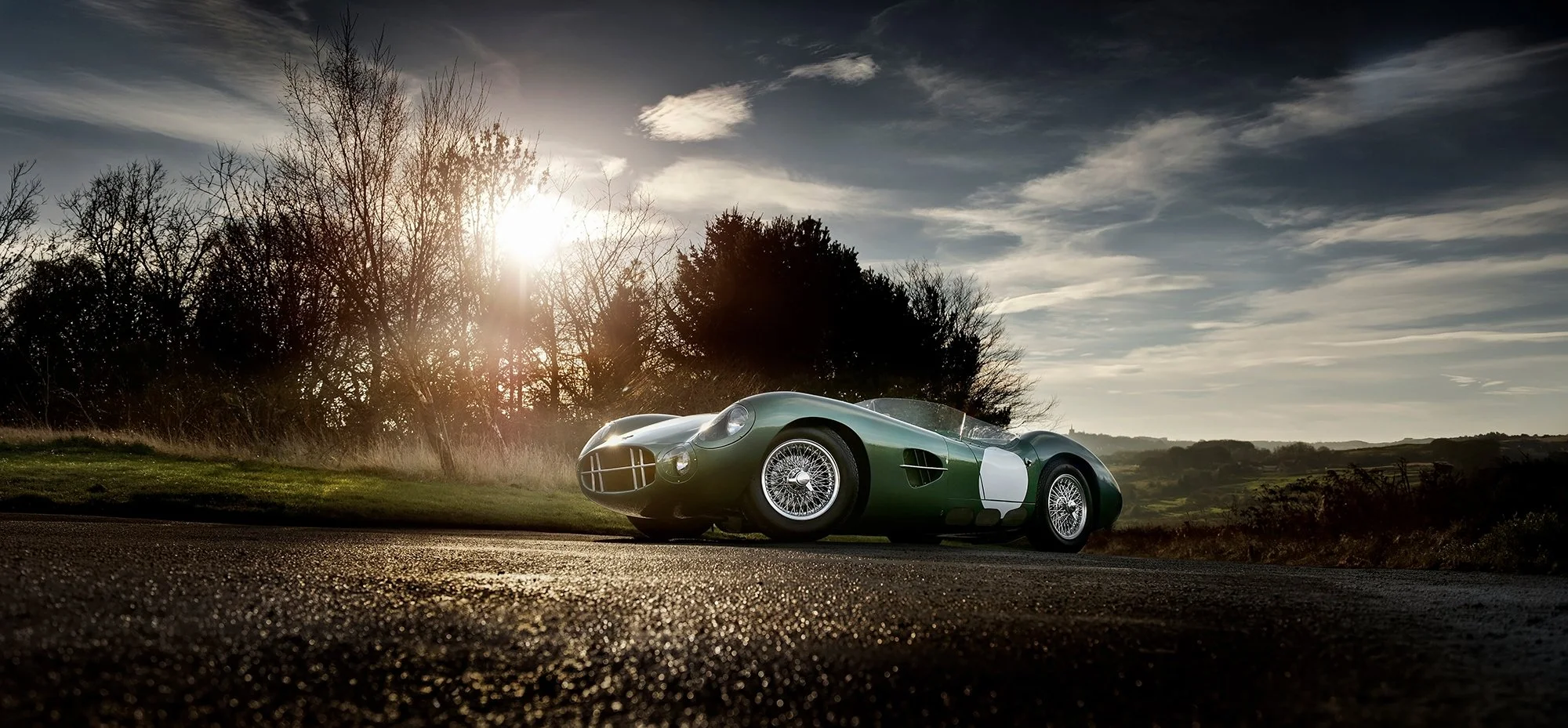
Founded in 1913 by Lionel Martin and Robert Bamford, Aston Martin's story has been one of determination, innovation and an unwavering commitment to creating some of the most desirable cars ever built. From early racing machines through to grand tourers, Le Mans winners and modern-day supercars, the company has consistently produced vehicles that stir emotions long before the engine is ever started.
As a professional automotive photographer, I have spent well over a decade photographing these remarkable machines. During that time I have had the privilege of photographing more than 150 individual Aston Martins, covering almost every era of the company's history. From the oldest surviving Aston Martin in existence to some of the most significant competition cars ever built, it has been an extraordinary journey that has given me a unique perspective on one of Britain's most iconic automotive brands.
What began as a photographic assignment evolved into something much more meaningful. Over the years I have not only photographed these cars but also driven many of them, spent time with their owners, explored their histories and gained a deeper appreciation for what makes Aston Martin so special.
For me, these cars are far more than engineering achievements. They are rolling sculptures, pieces of industrial art that tell stories through shape, proportion and detail.
The Beginning: The Aston Martin A3
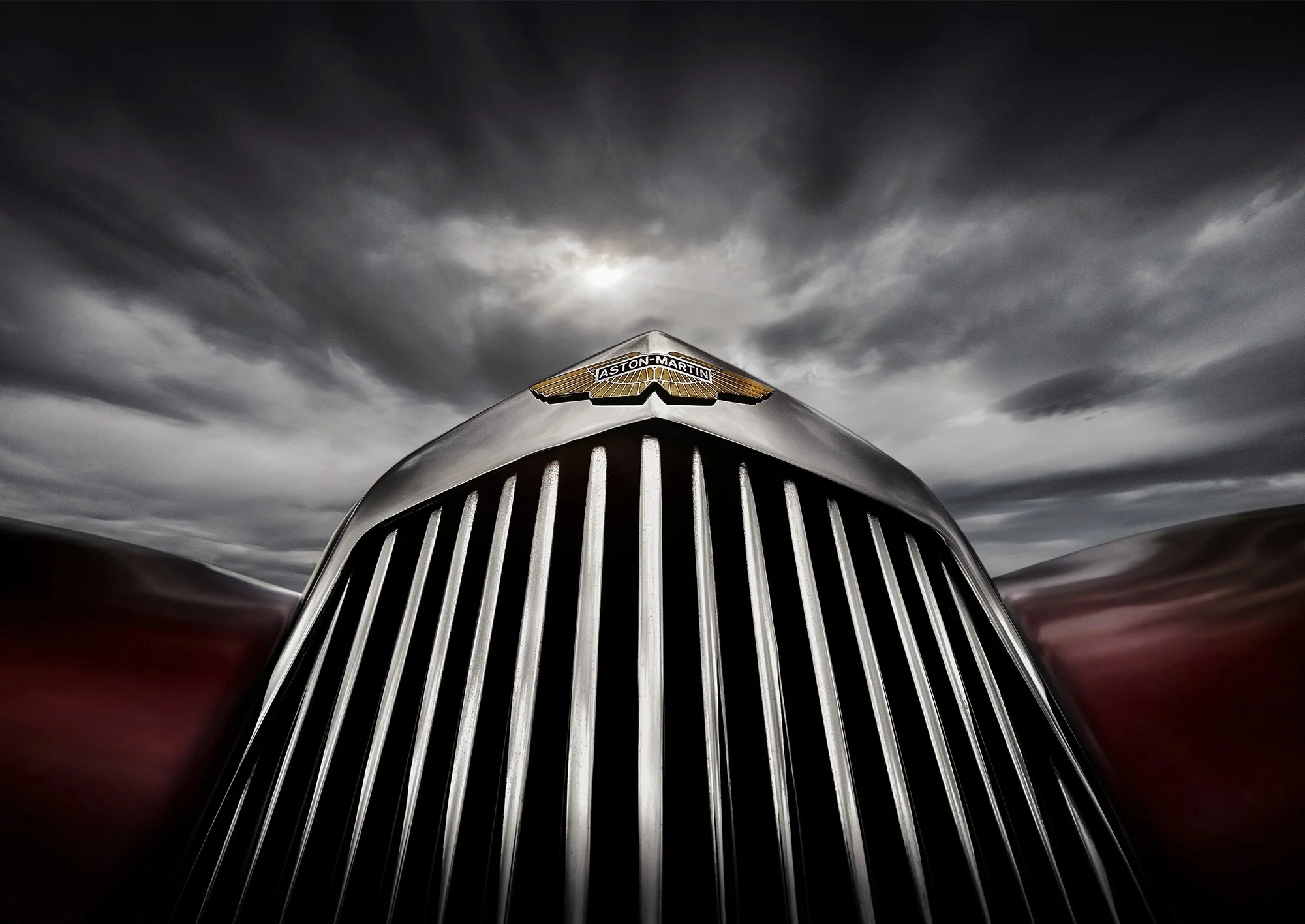
One of the greatest privileges of my career was photographing the Bamford & Martin A3, the oldest surviving Aston Martin in the world.
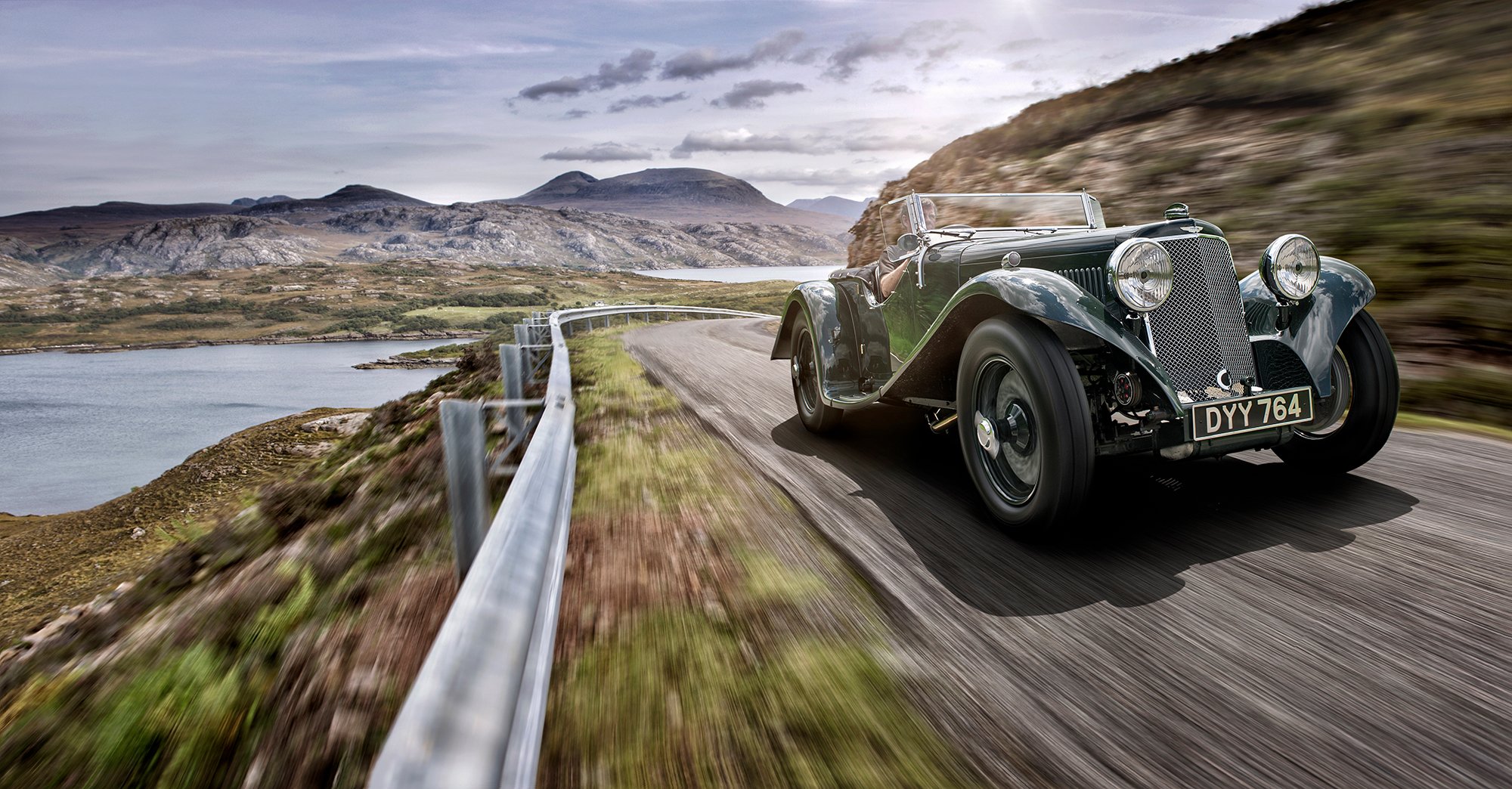
To stand beside the A3 is to stand at the very beginning of Aston Martin's story. Built in 1921, this remarkable machine represents the foundations upon which an entire automotive legacy would be built. Unlike modern performance cars, the A3 possesses a wonderfully raw and mechanical honesty. Every component is visible, every surface purposeful. It reflects an era when engineering was driven by ingenuity rather than computer modelling and when motor racing pioneers were creating history as they went along.
Photographing the A3 wasn't simply about documenting a historic vehicle. It was about capturing a moment in time. Looking through the camera, I was conscious that I was photographing the starting point of a company that would go on to produce some of the world's most admired cars. The responsibility felt enormous, but so did the privilege.
More Than Cars: Capturing Automotive Sculpture
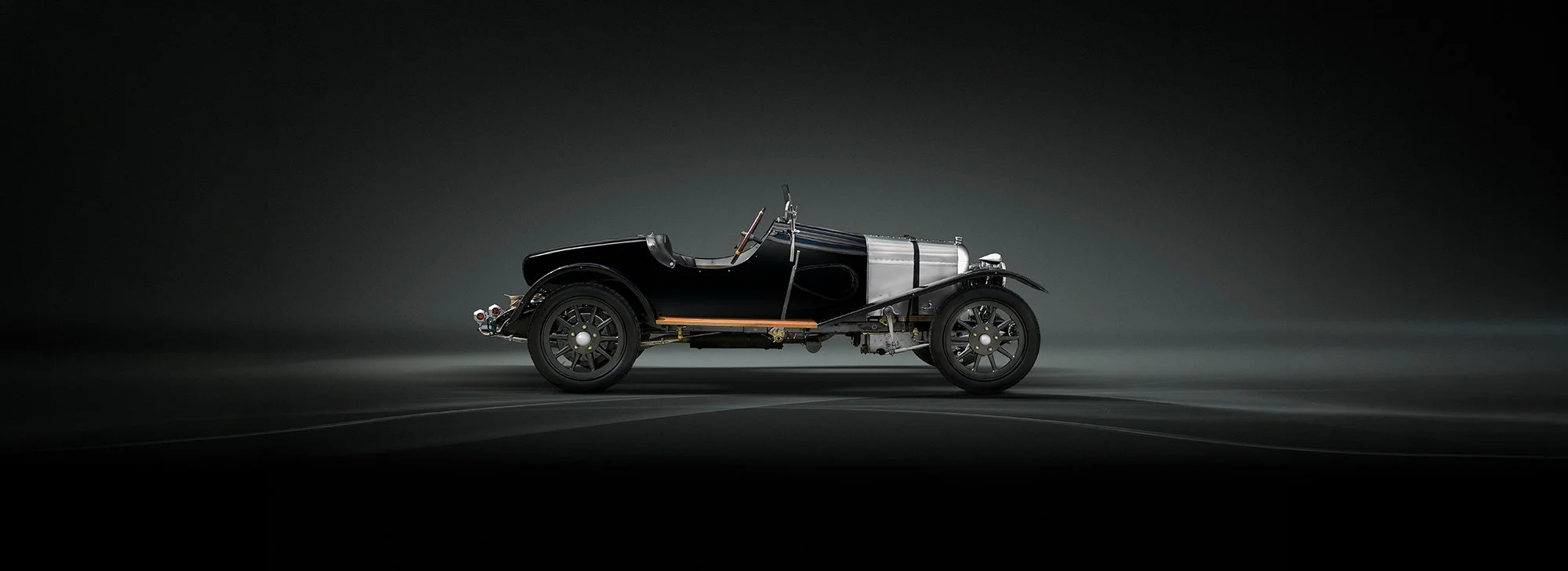
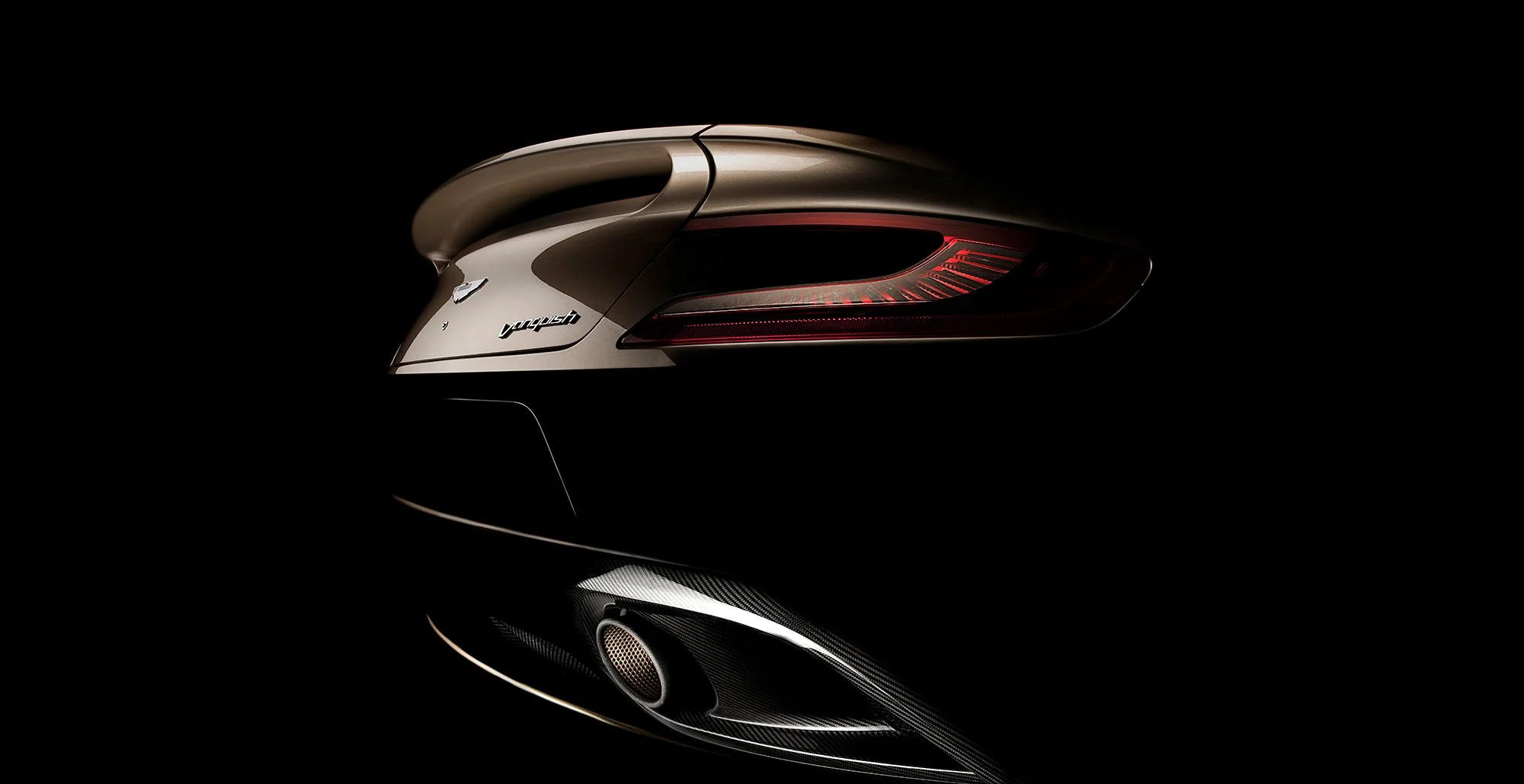
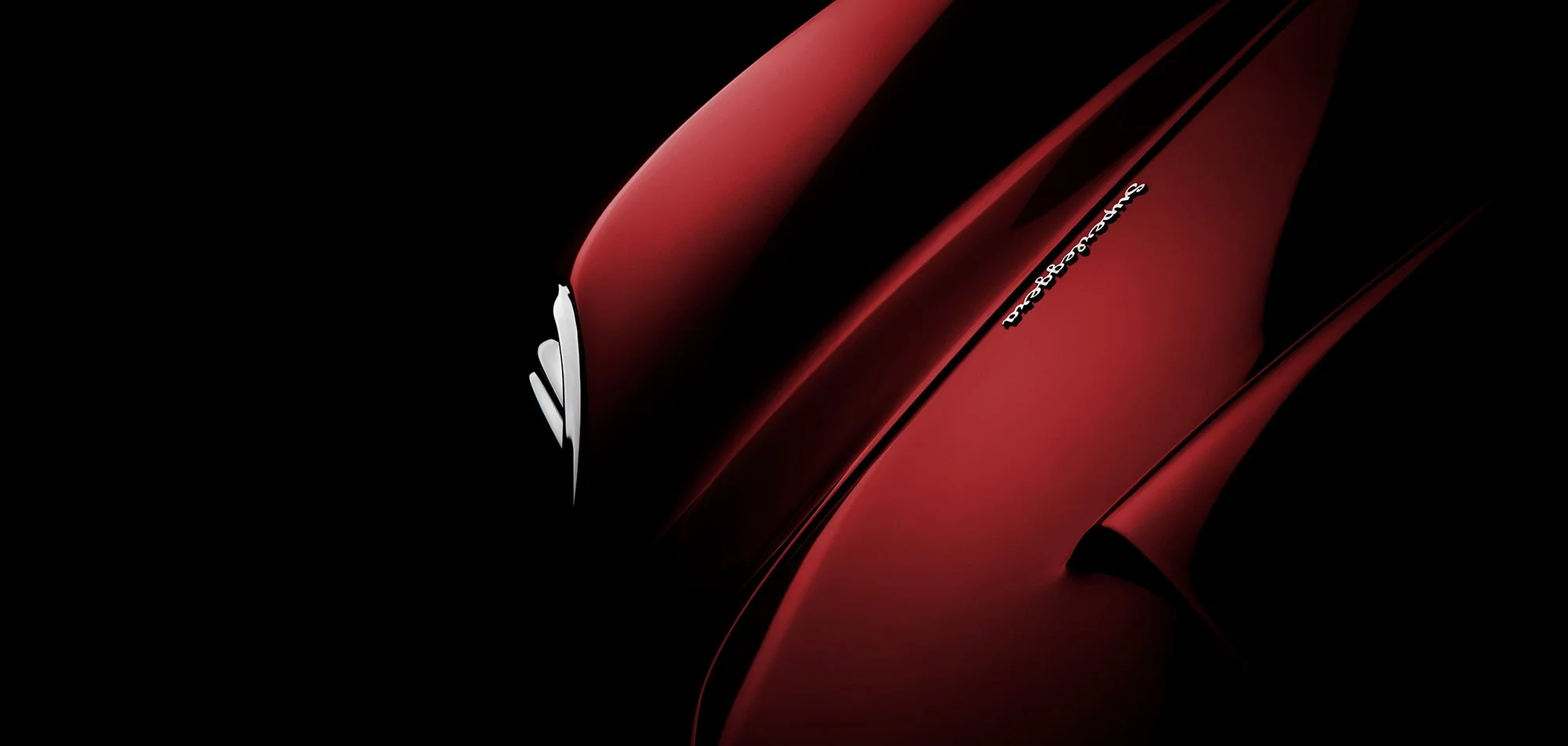
One thing that has become increasingly clear over the years is that the greatest Aston Martins transcend their role as cars. The very best designs become sculpture.
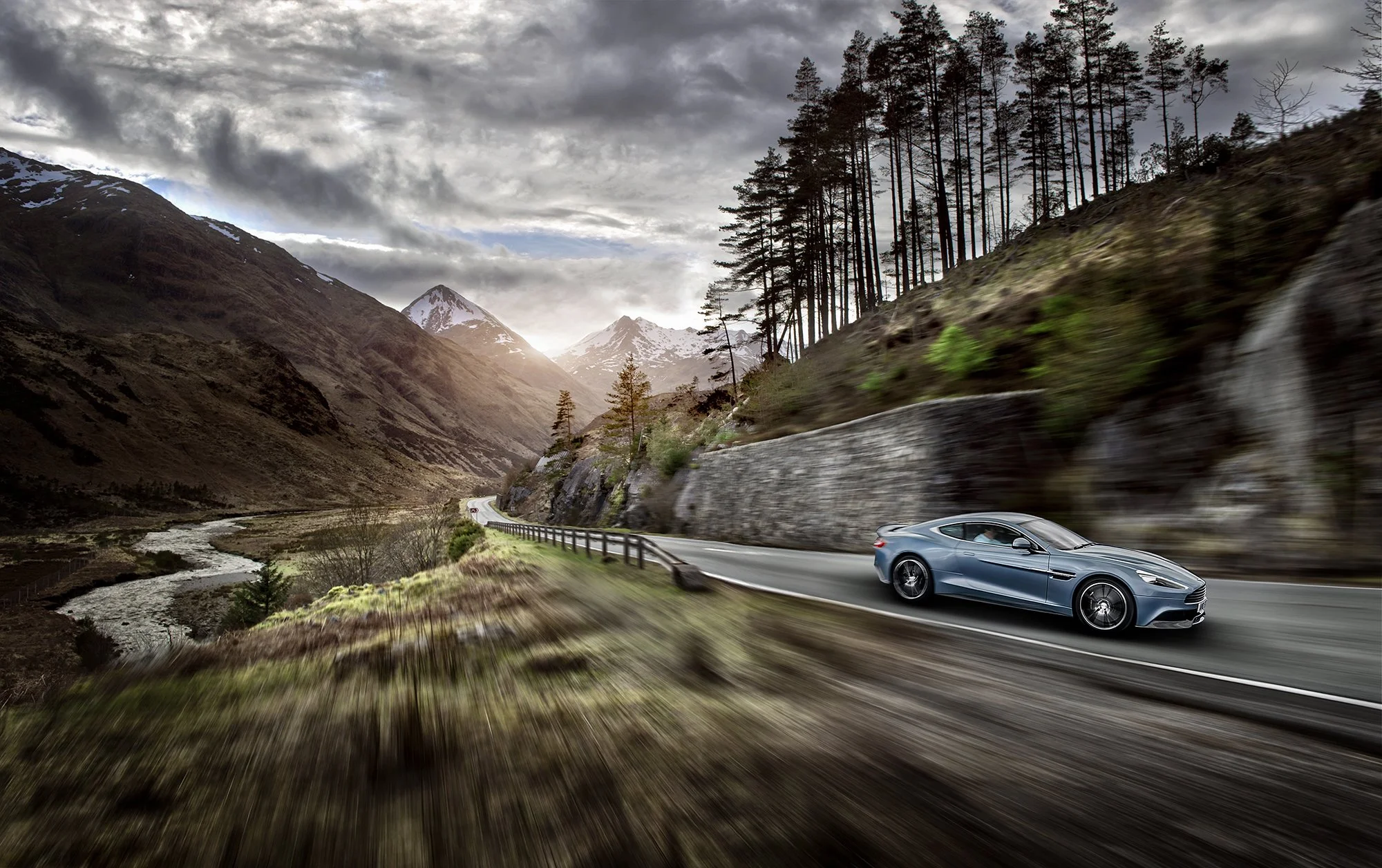
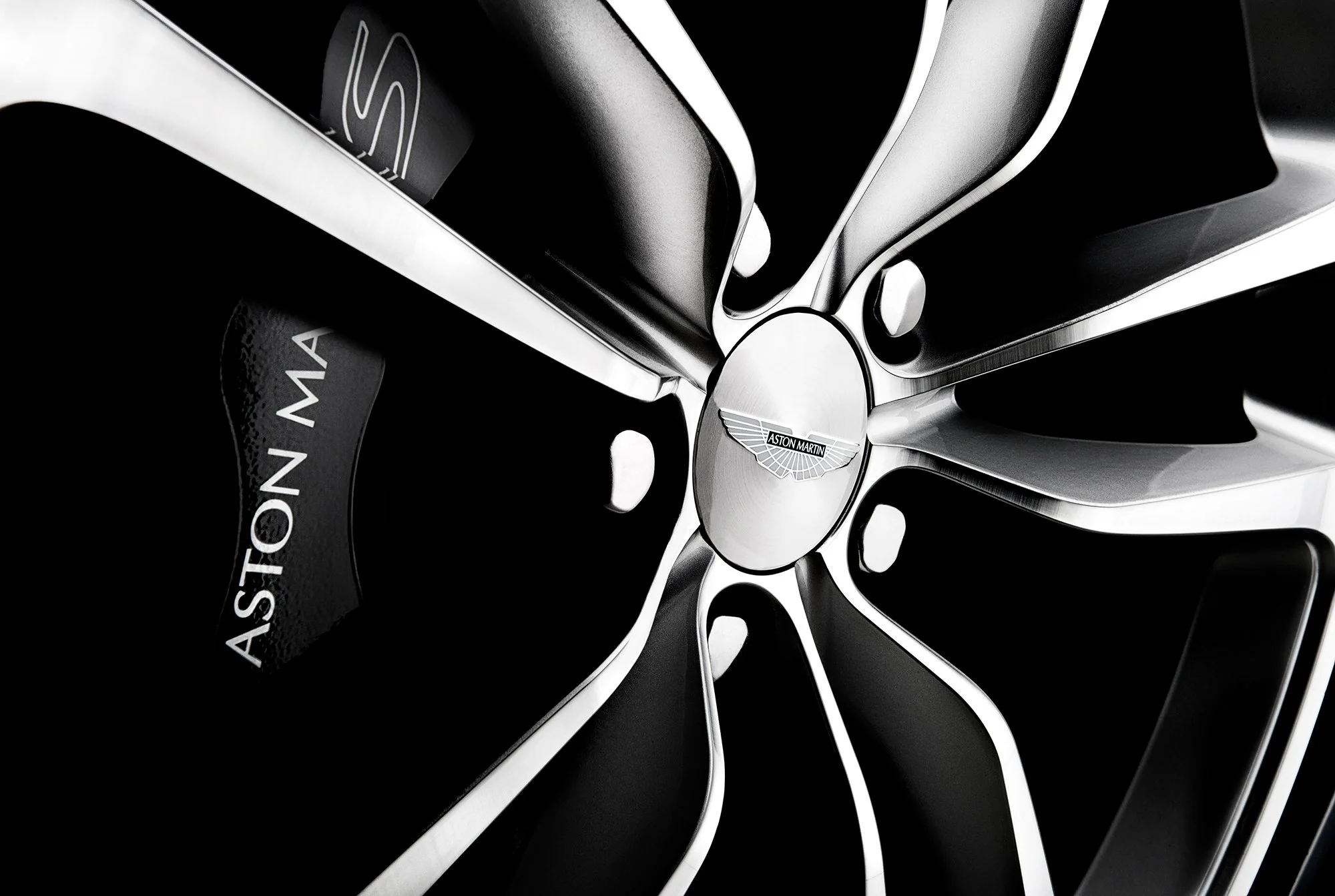
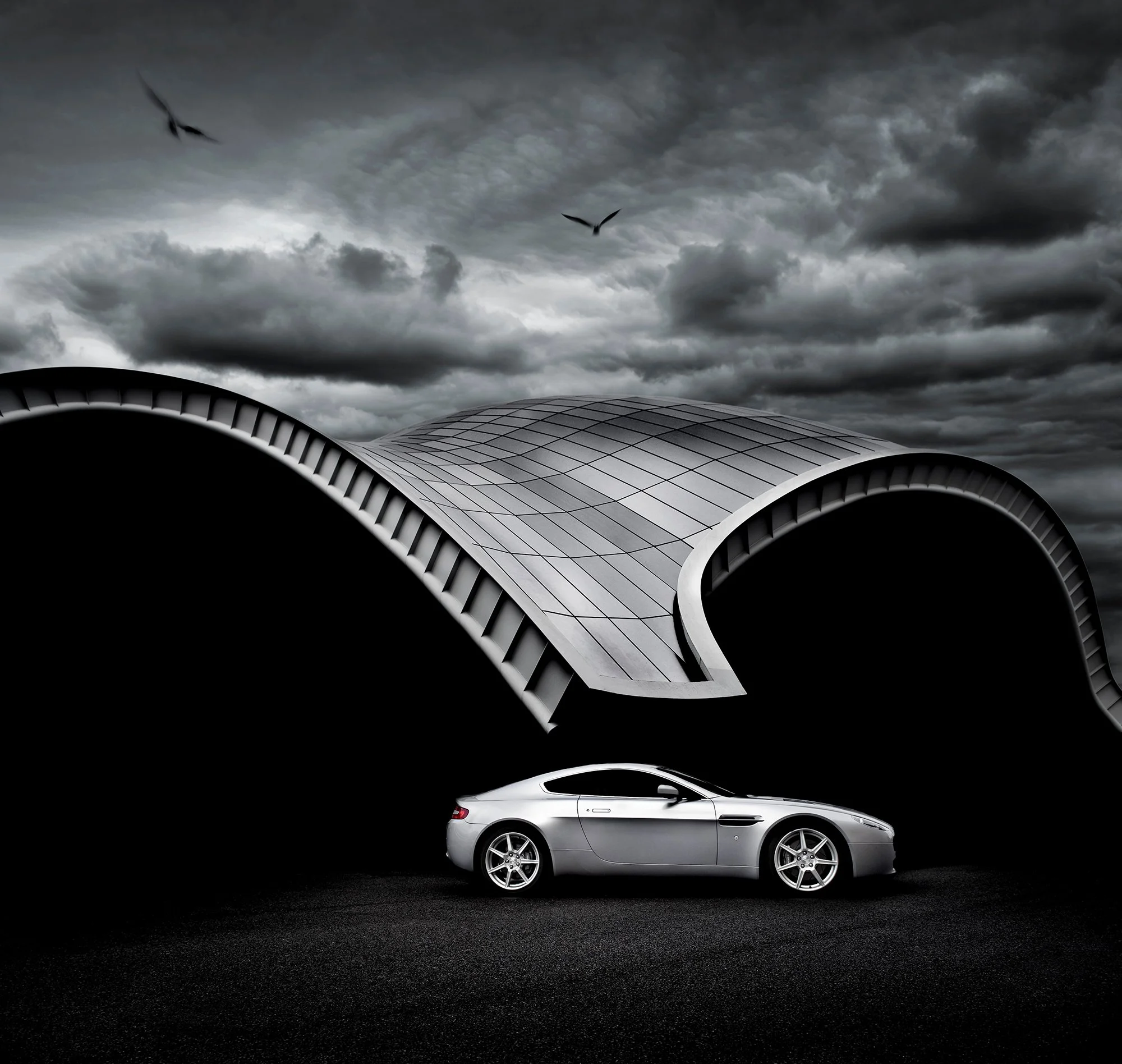
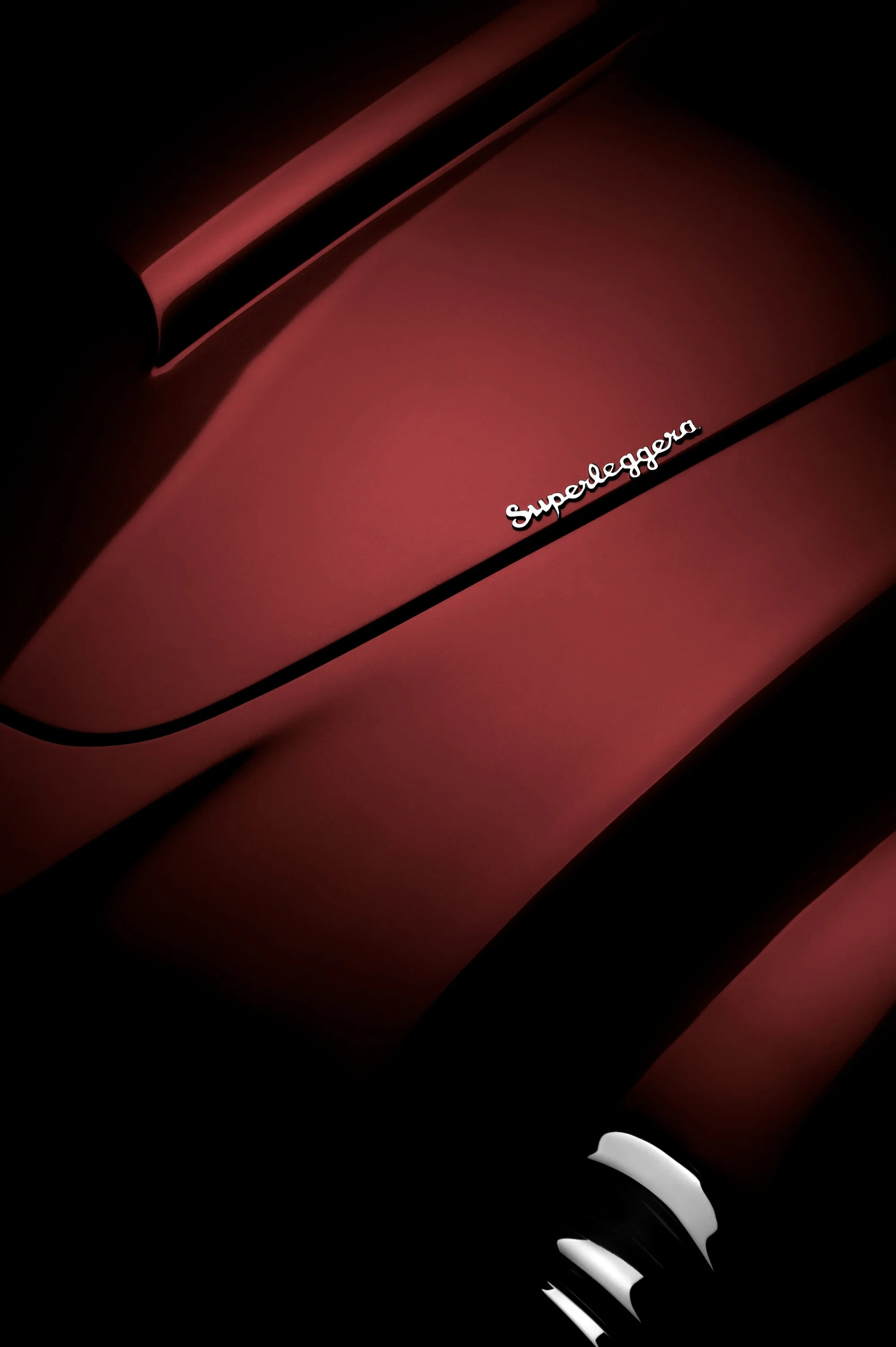
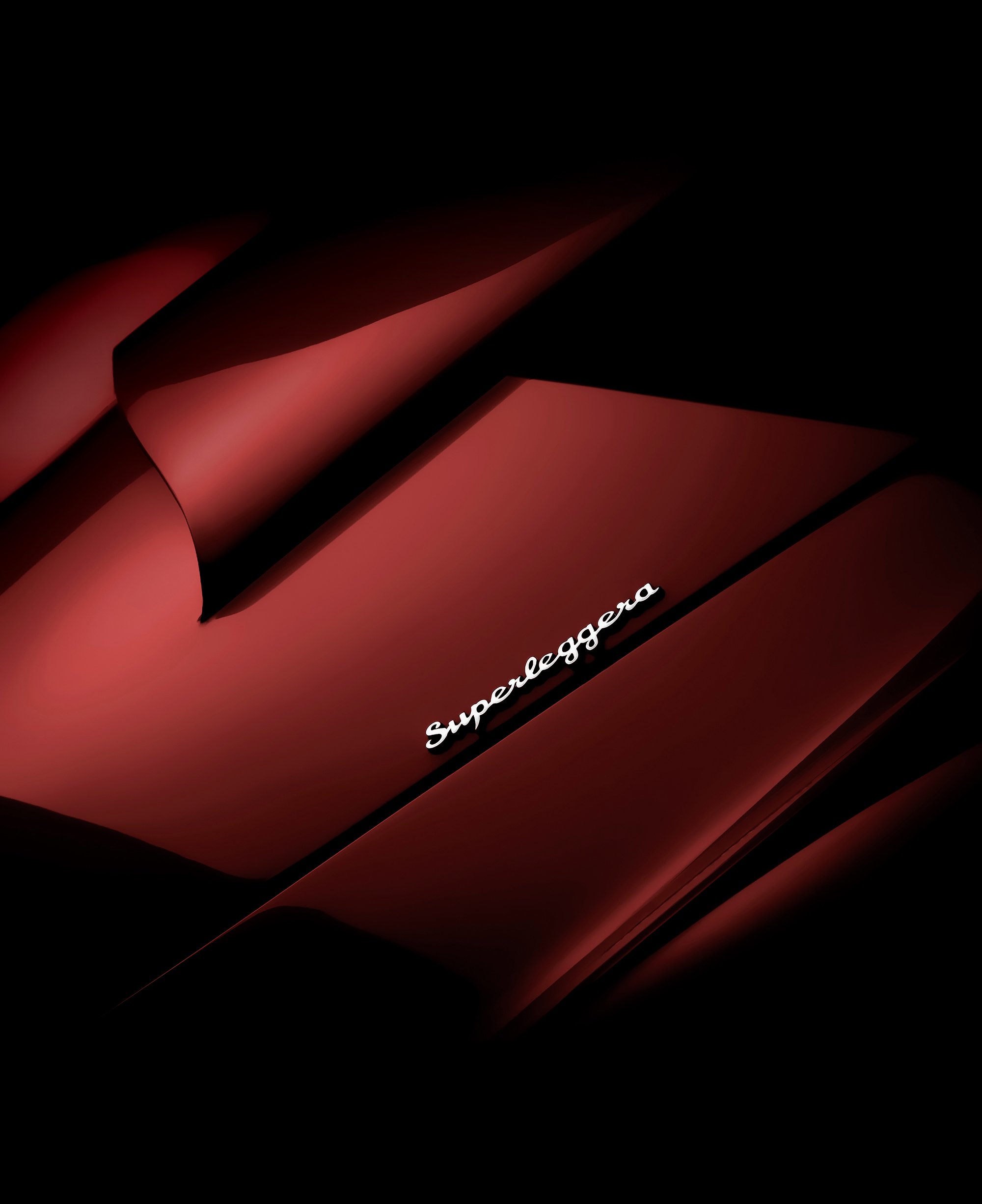
As photographers we are constantly searching for shape, light, texture and form. Great car design naturally lends itself to car photography because every curve, reflection and surface has been carefully considered by its creators. Few manufacturers understand this better than Aston Martin.
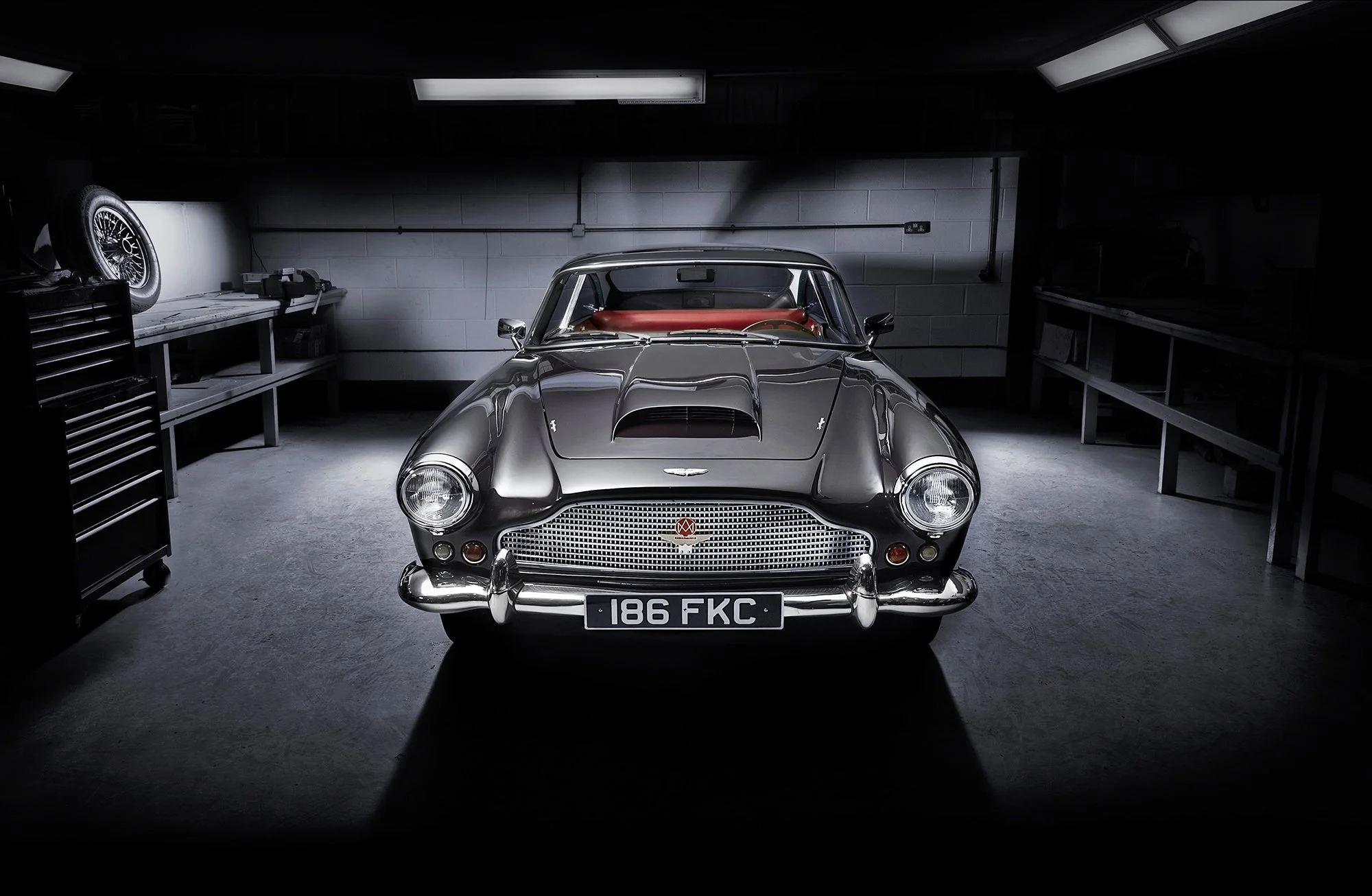
Whether it is the flowing bodywork of a classic DB series car or the dramatic presence of a modern supercar, there is an elegance to Aston Martin design that makes these vehicles endlessly fascinating to photograph. I often find myself studying an Aston Martin in much the same way I would study a piece of art. The challenge is never simply recording what the car looks like. The challenge is revealing how it feels. That emotional connection is what separates a good automotive image from a memorable one.
The Icon That Defined a Generation: The Aston Martin DB5
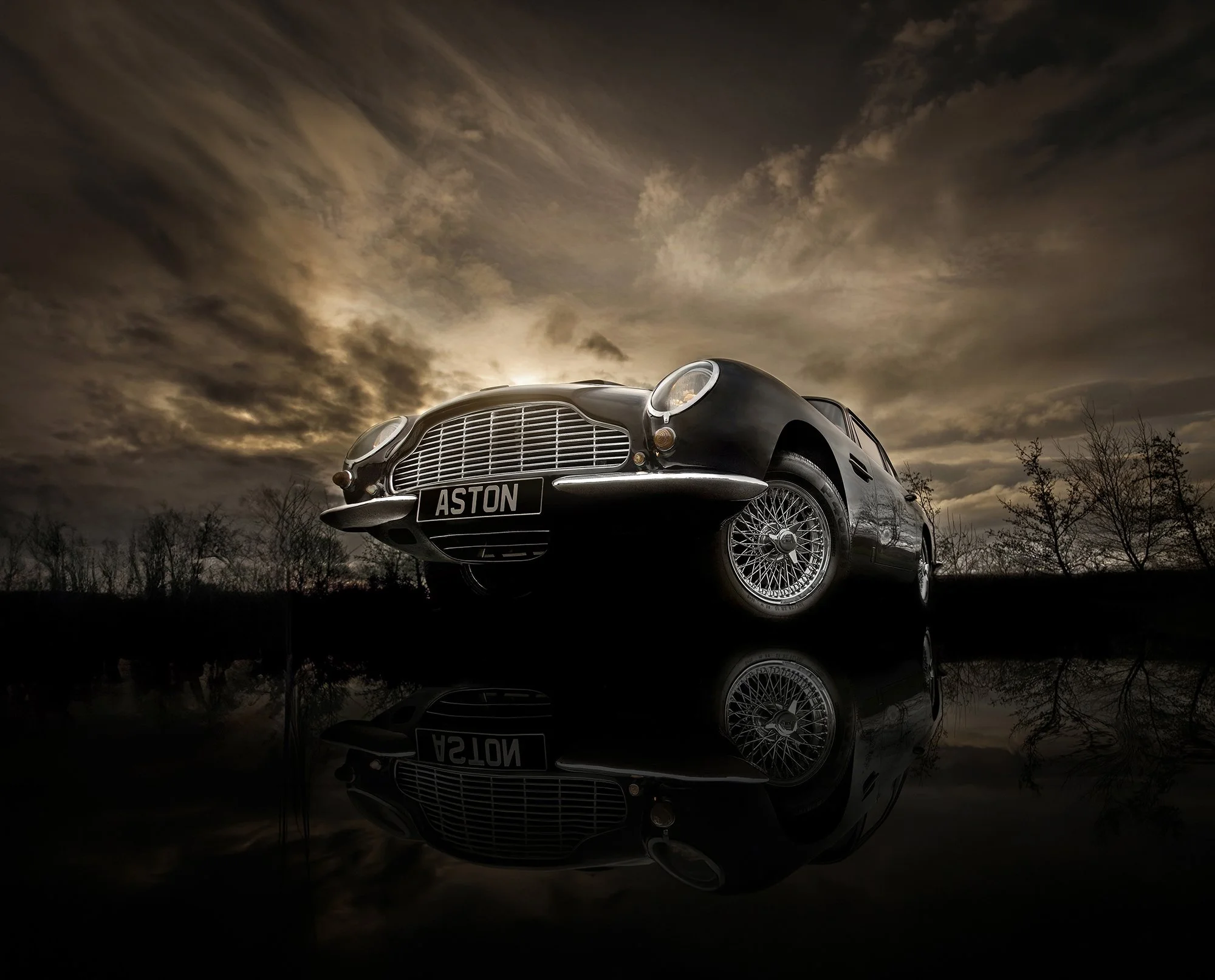
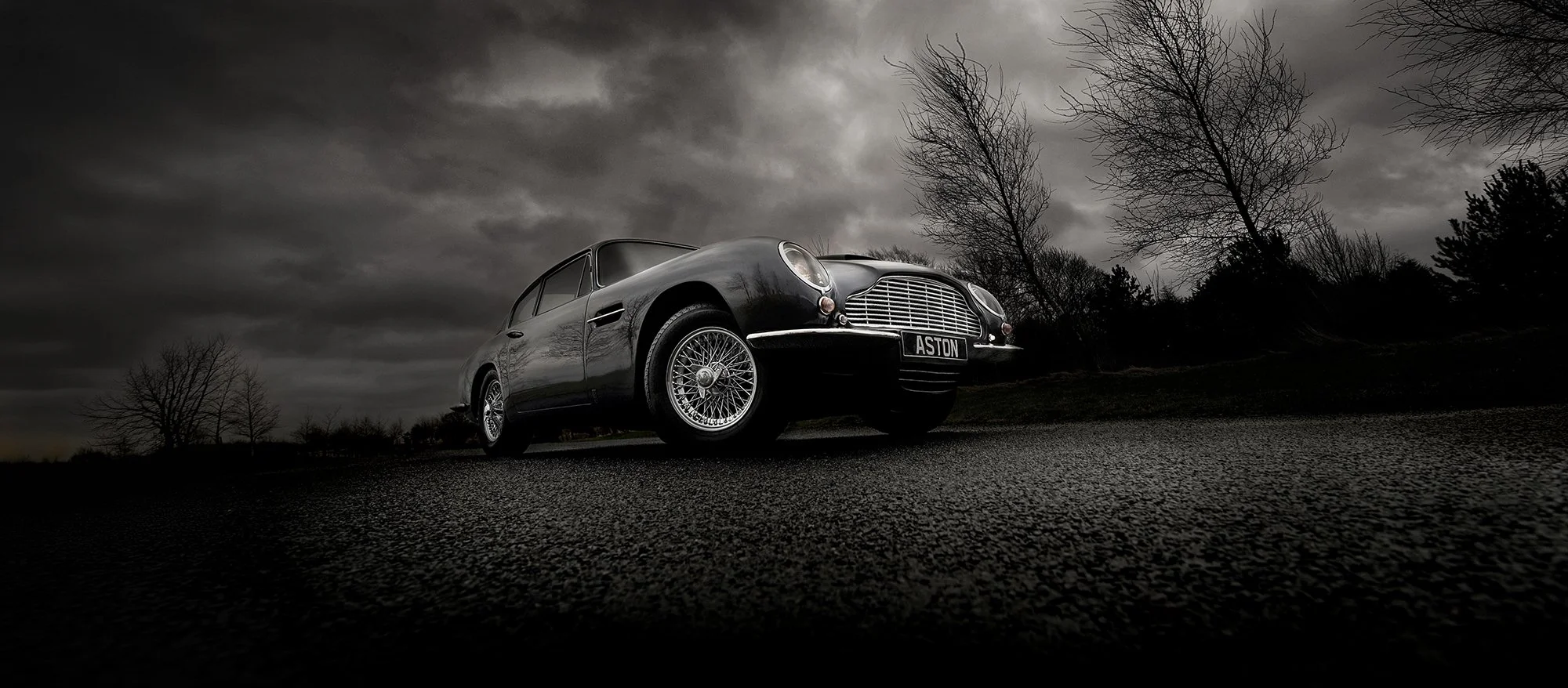
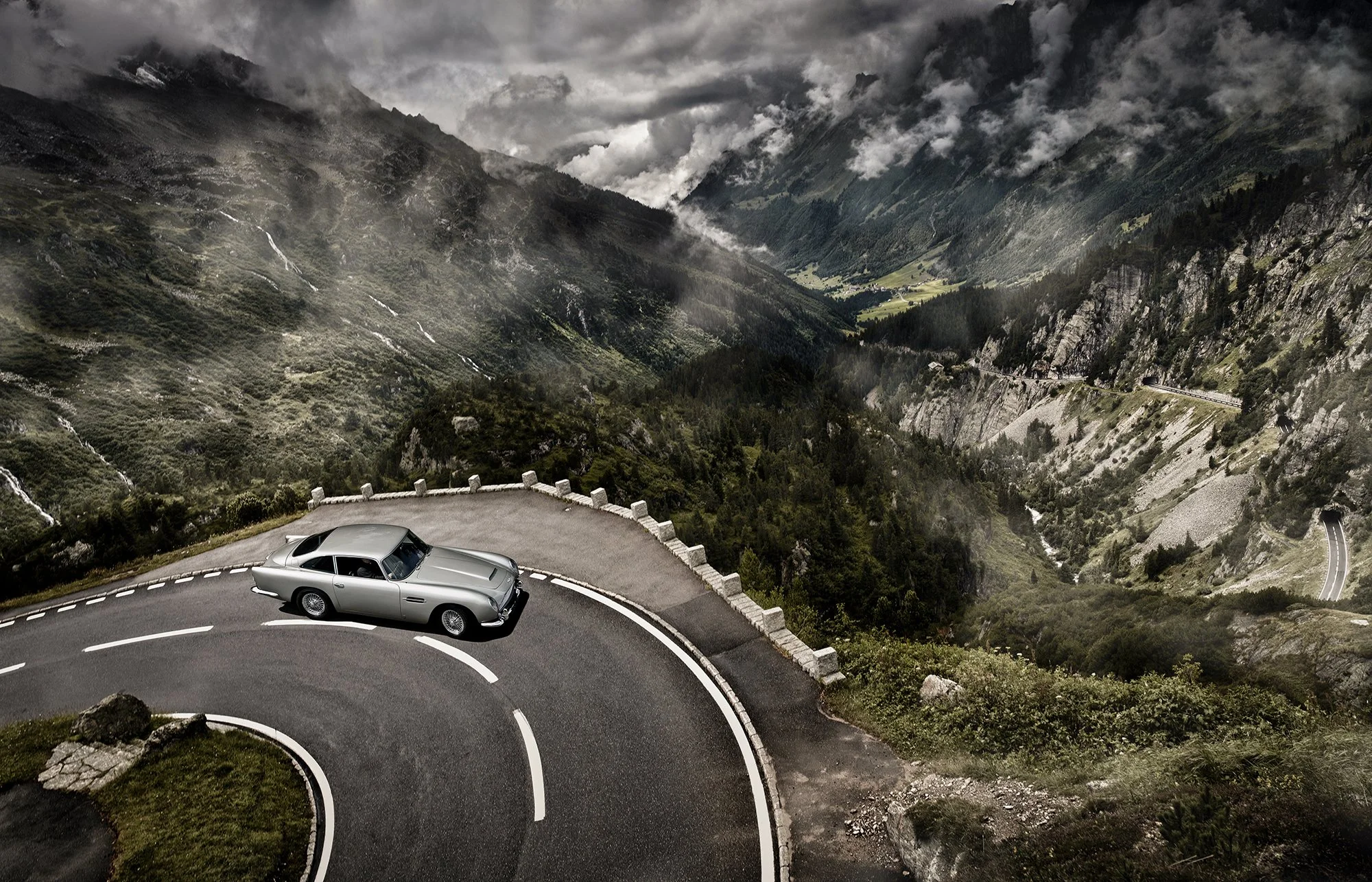
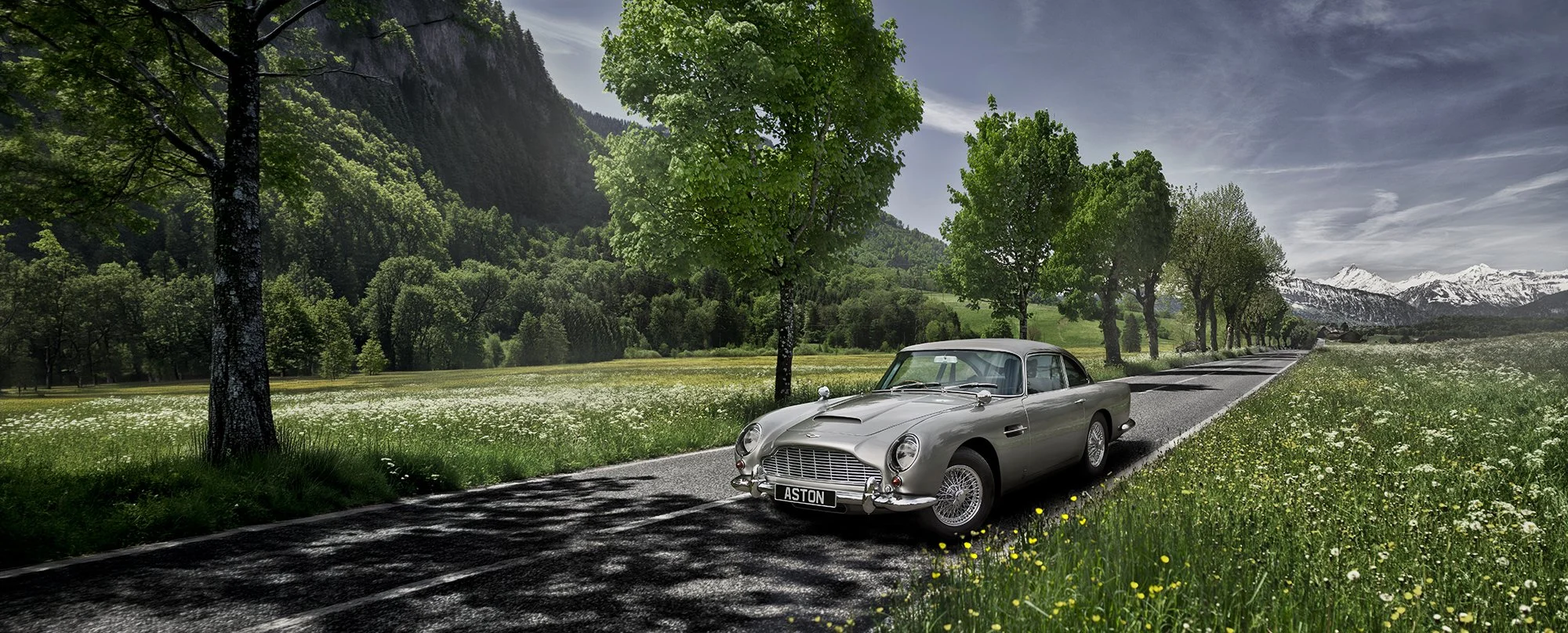
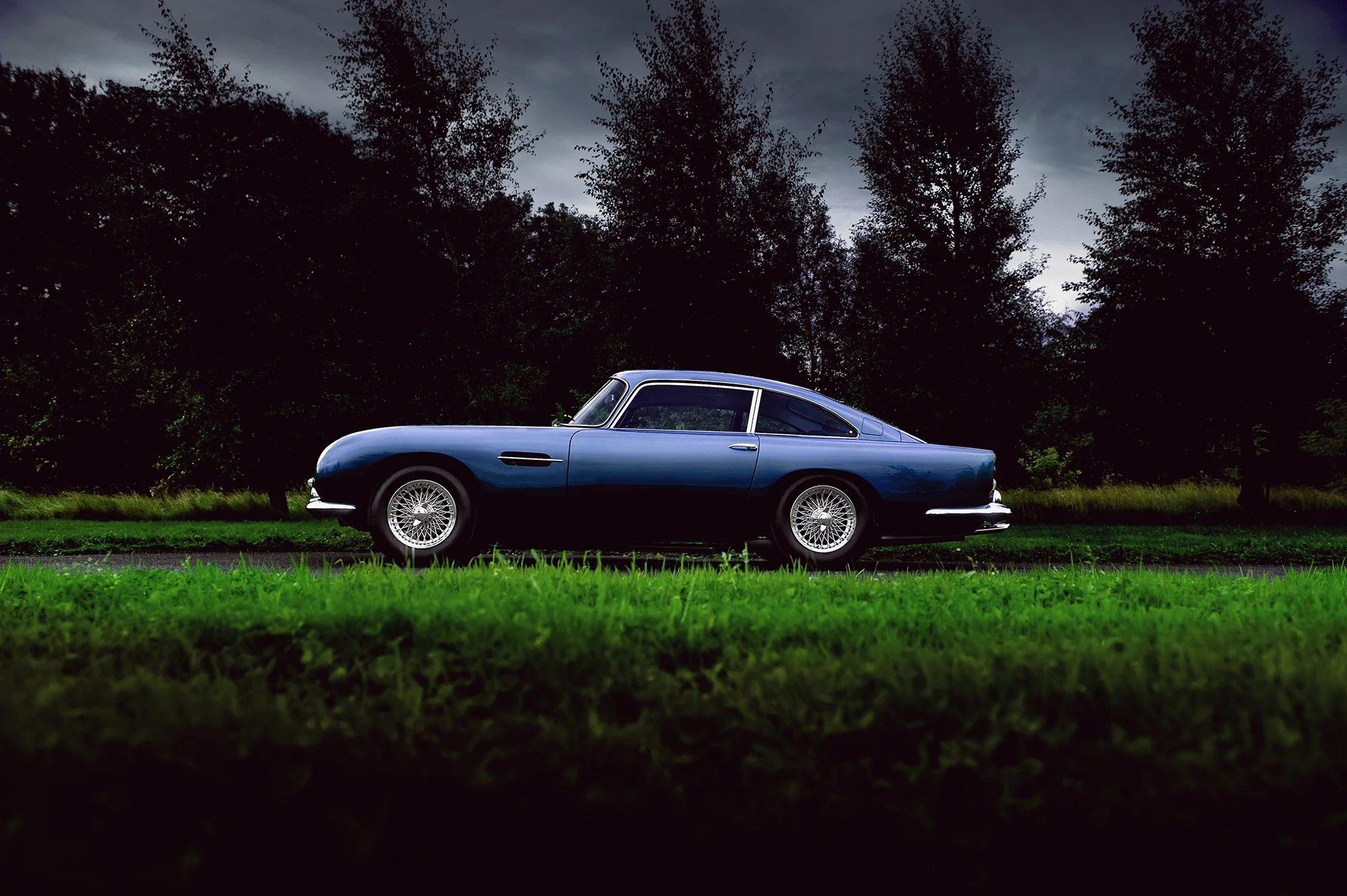
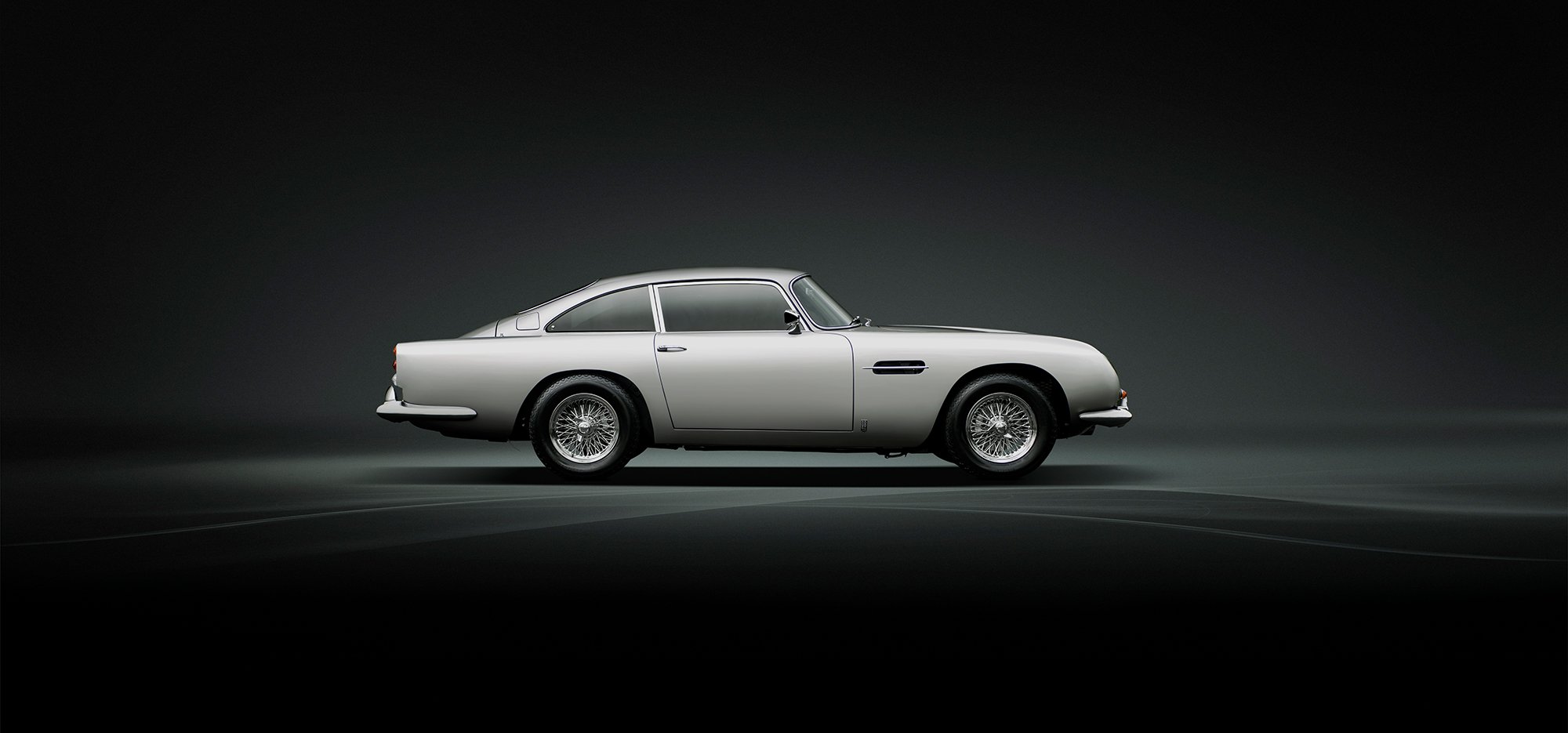
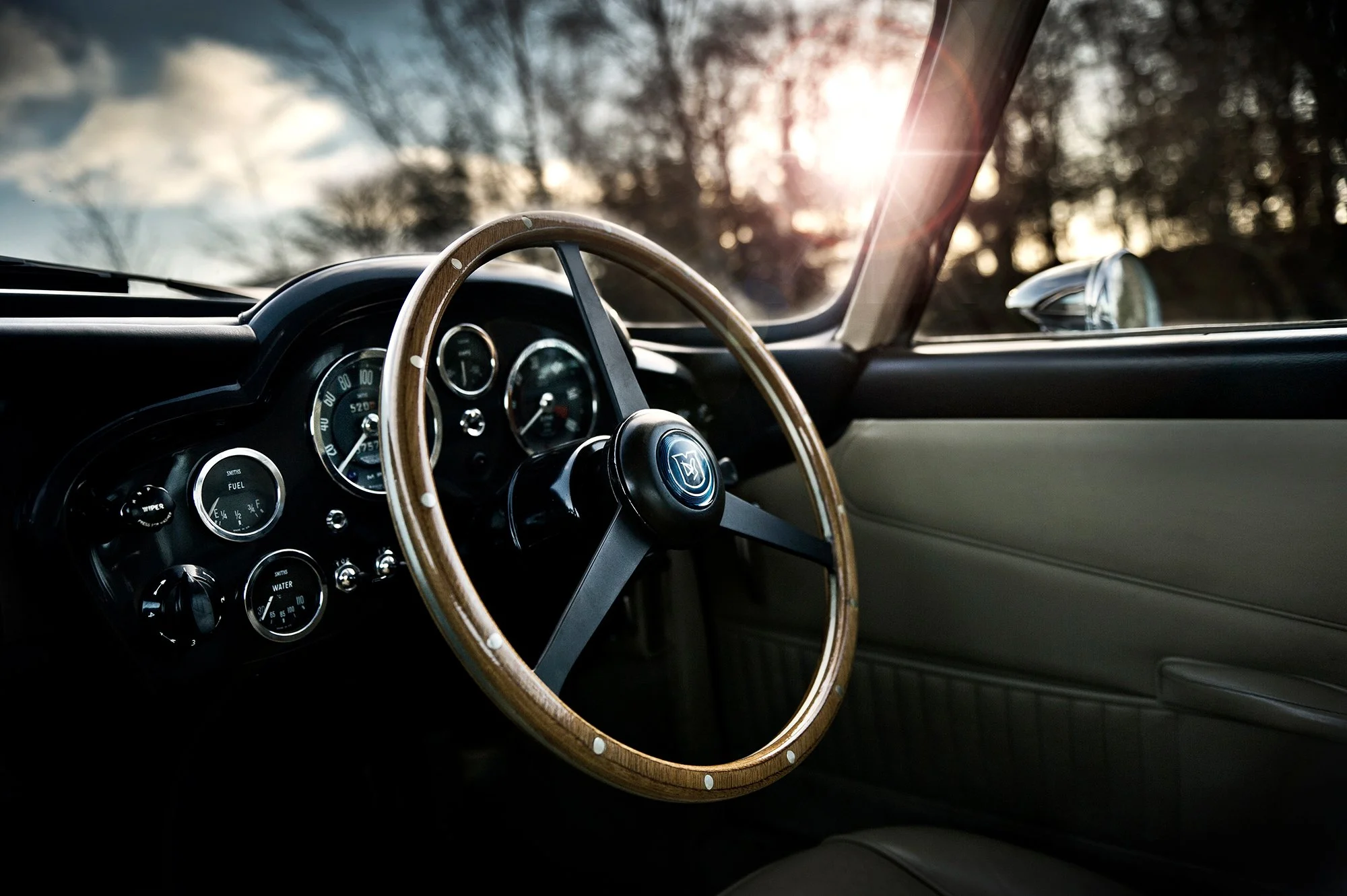
If there is one Aston Martin that transcends the automotive world, it is undoubtedly the Aston Martin DB5. Few cars in history have achieved such universal recognition. Even people with little interest in cars know exactly what a DB5 is. Its association with James Bond undoubtedly helped cement its legendary status, but the truth is that the DB5 would be regarded as a masterpiece regardless of its cinematic fame. Every angle seems perfectly resolved. The proportions are balanced, elegant and timeless. More than sixty years after its introduction, it still looks effortlessly beautiful. Photographing a DB5 is always a special experience because it carries so much cultural significance. The challenge is finding ways to present a car that has already been photographed thousands of times while still bringing something fresh and personal to the image.
Yet every time I work with one, I find new details, new perspectives and new ways of appreciating what remains one of the greatest automotive designs ever created.
The Legend of the DBR1
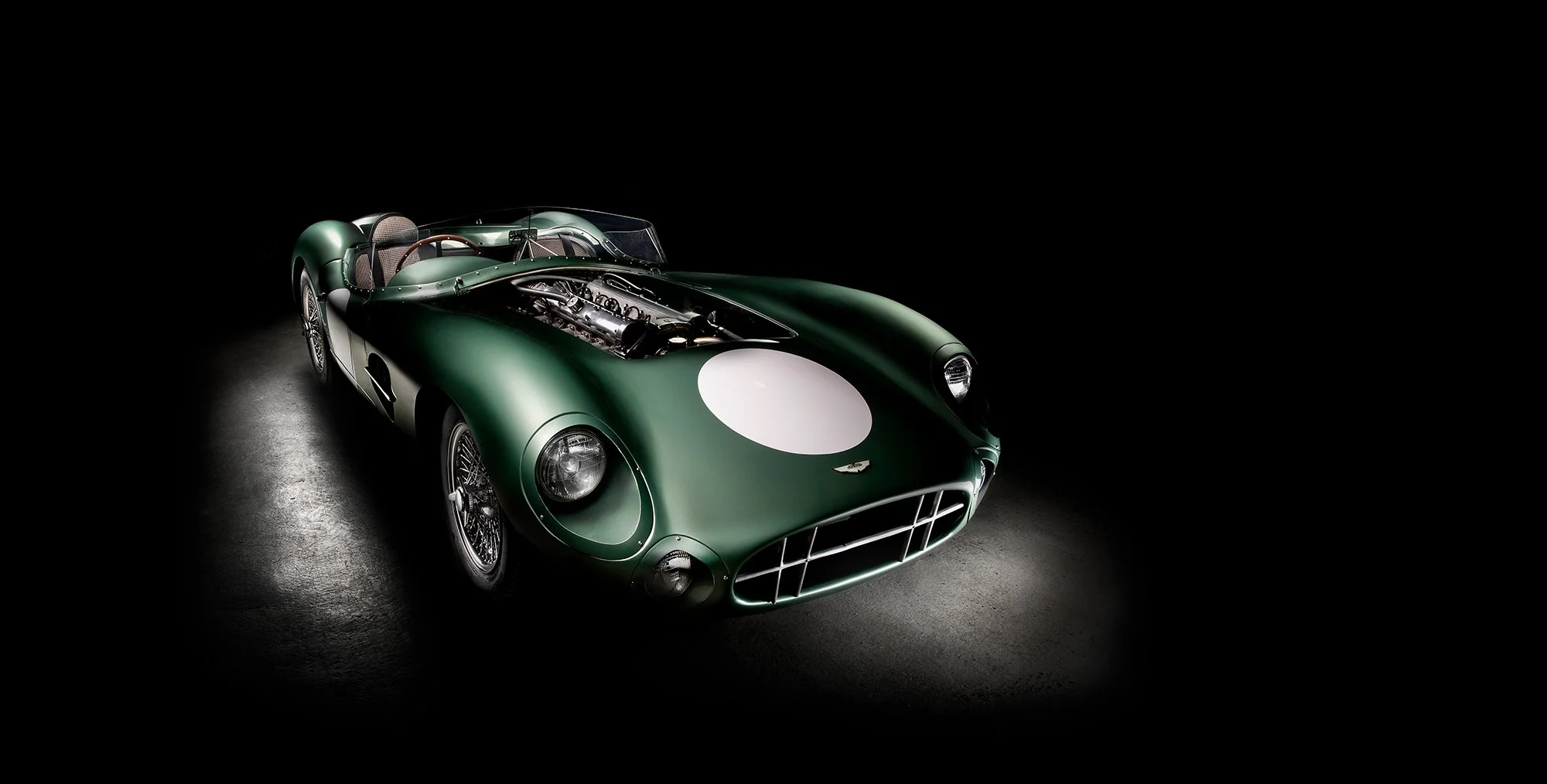
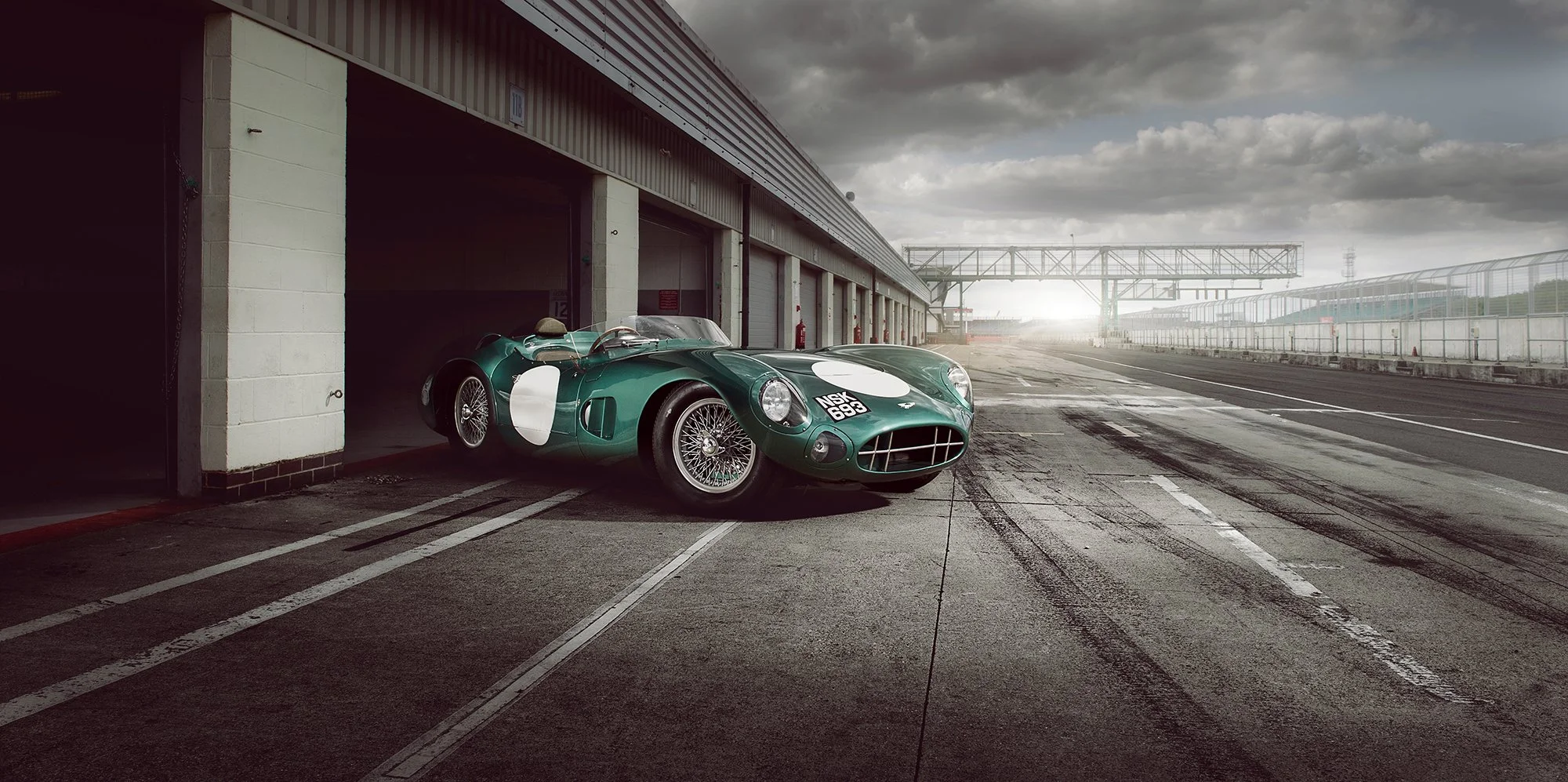
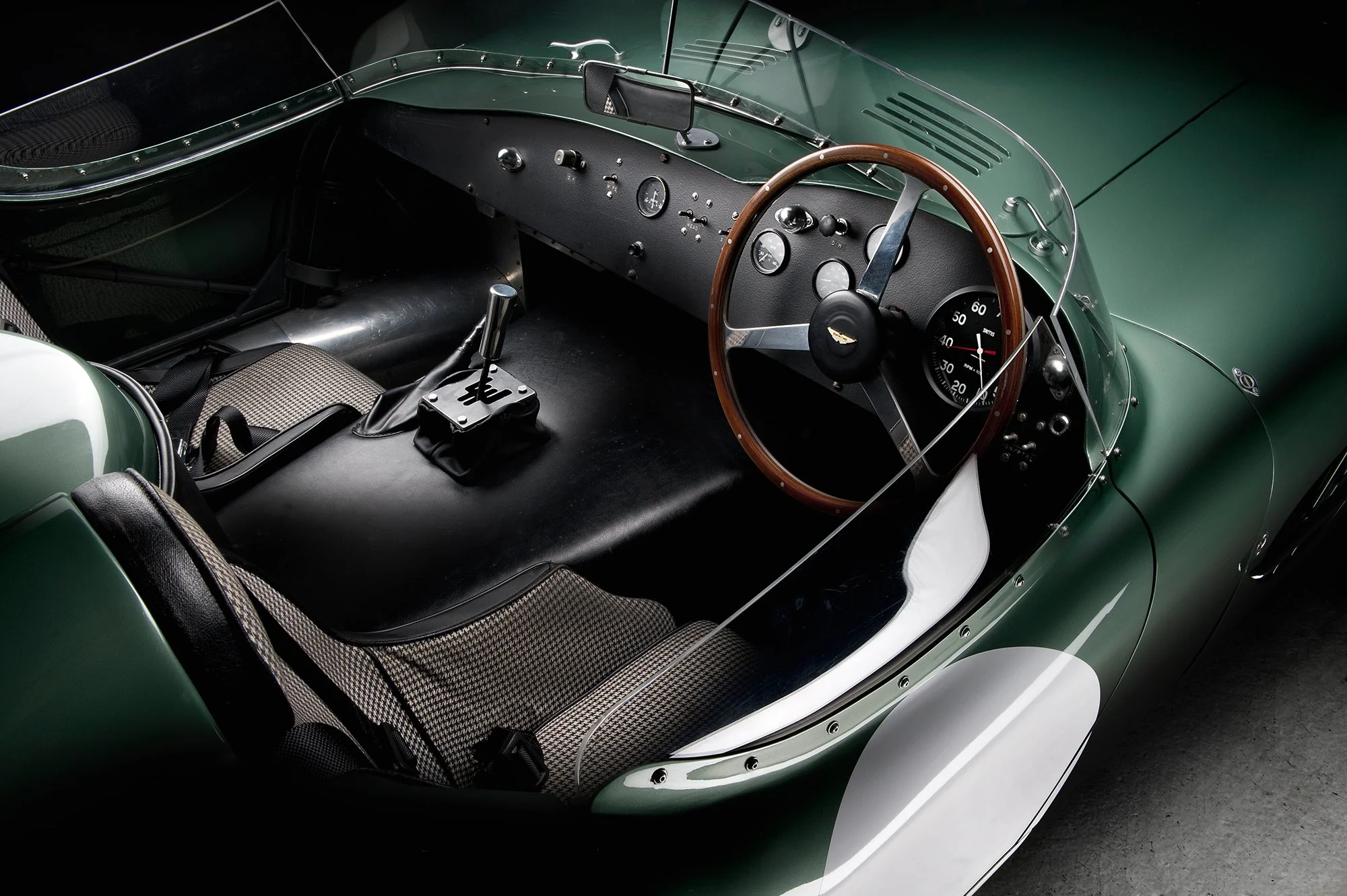
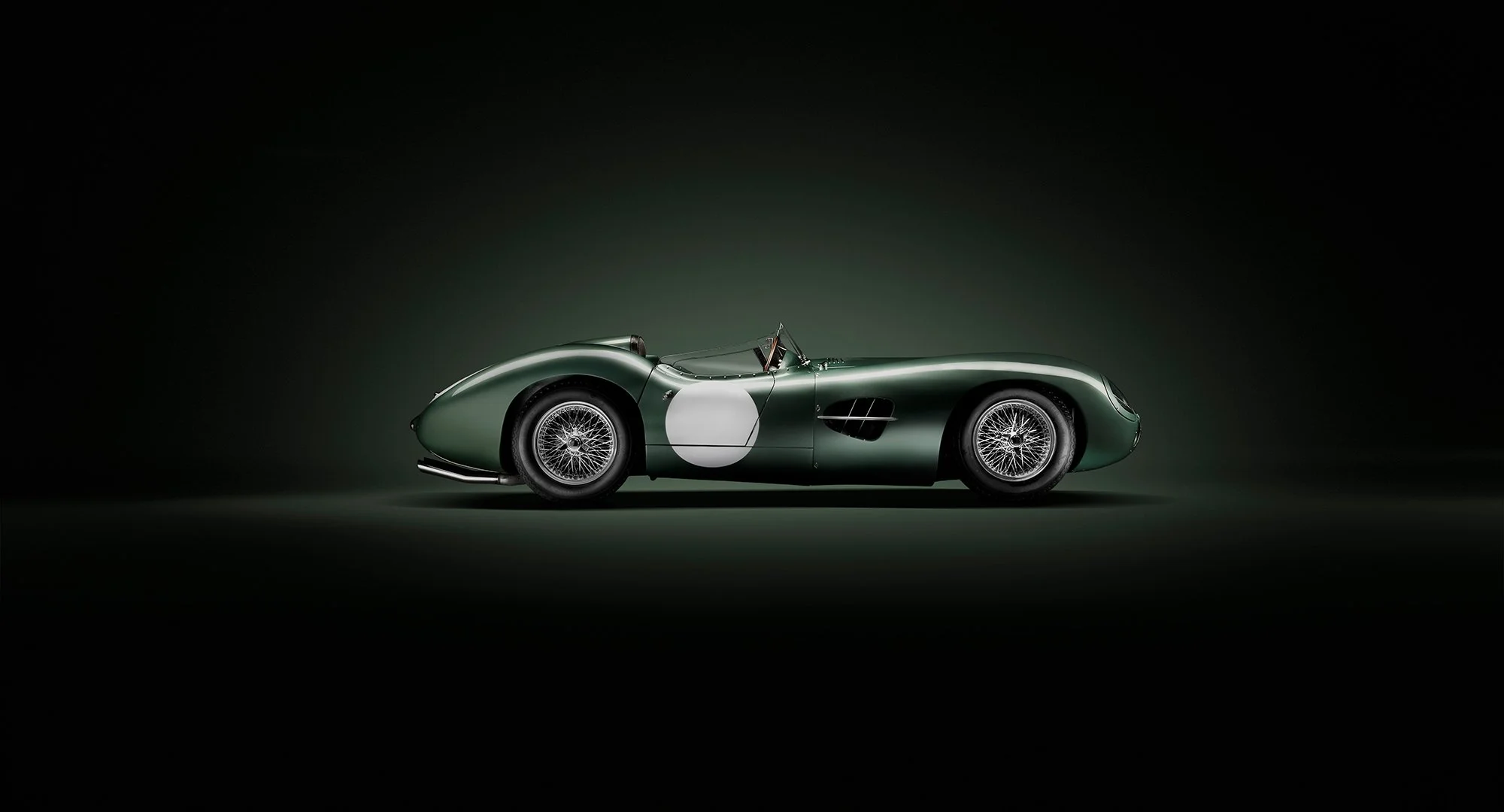
Among all the Aston Martins I have photographed, few have left a stronger impression than the legendary DBR1. The DBR1 occupies a unique place in Aston Martin history. It represents one of the company's greatest achievements in motorsport and remains one of the most important racing cars ever produced by the marque. When photographing a car like the DBR1, you become acutely aware that you are standing in the presence of history. These are not simply old racing cars. They are machines that helped shape Aston Martin's identity.
The DBR1 has a presence that is difficult to describe. Every panel, every rivet and every curve speaks of competition, speed and endurance. Even standing still, it feels alive. As photographers, we often talk about subjects having character. The DBR1 has character in abundance.
It is impossible not to feel a sense of awe when working around a machine that occupies such an important chapter in automotive history.
Aston Martin Through the Decades
One of the most fascinating aspects of photographing more than 150 Aston Martins has been witnessing the evolution of the brand through successive generations.
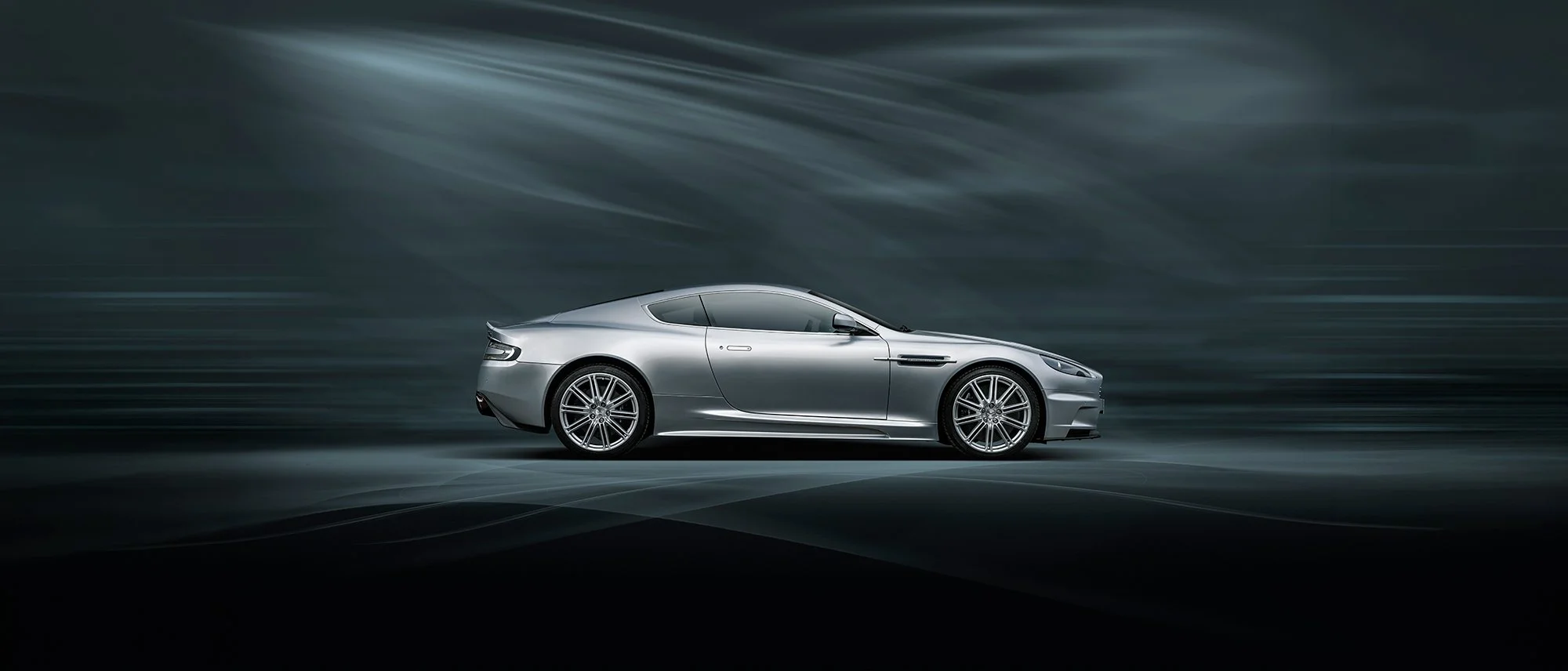
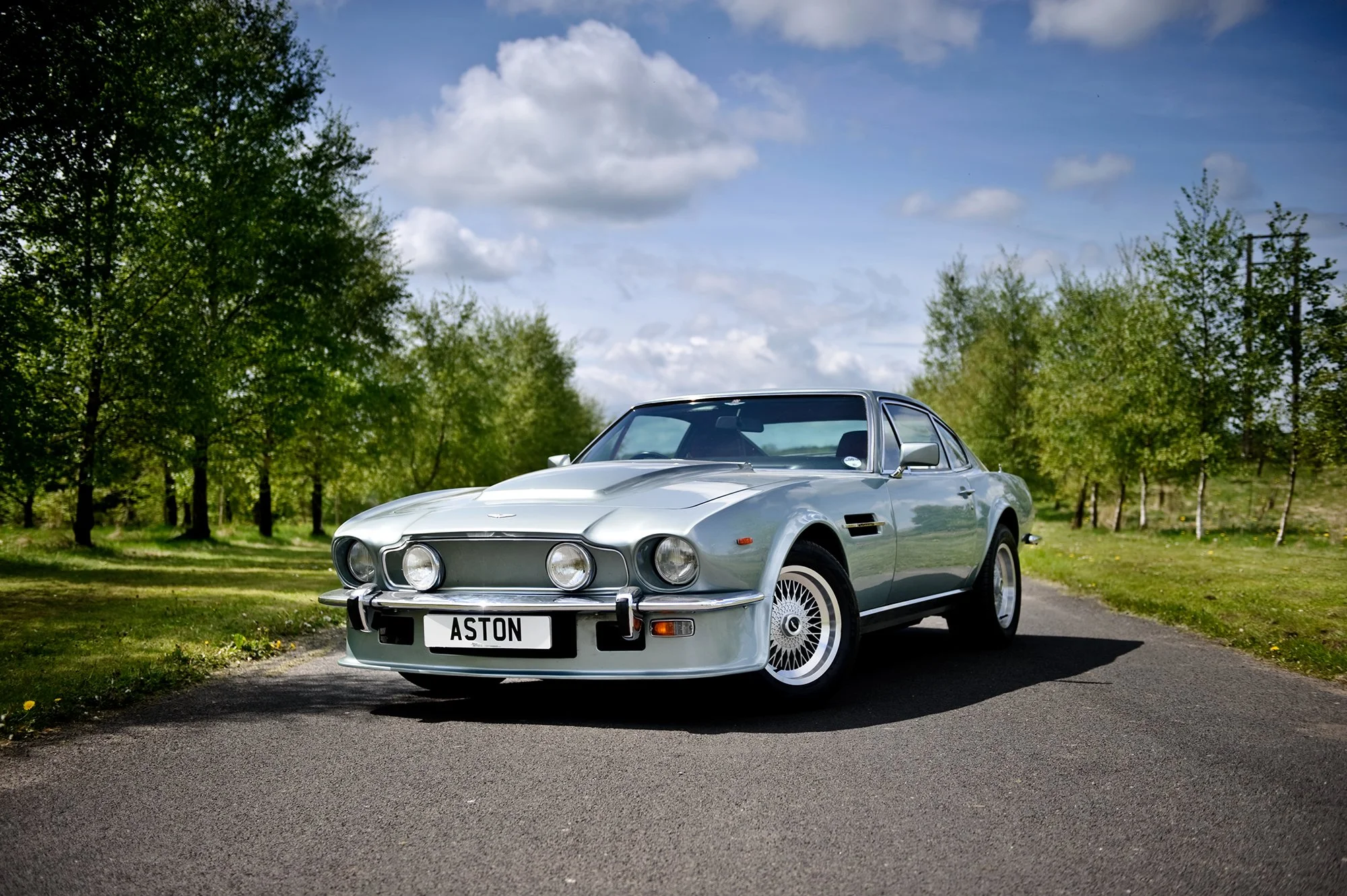
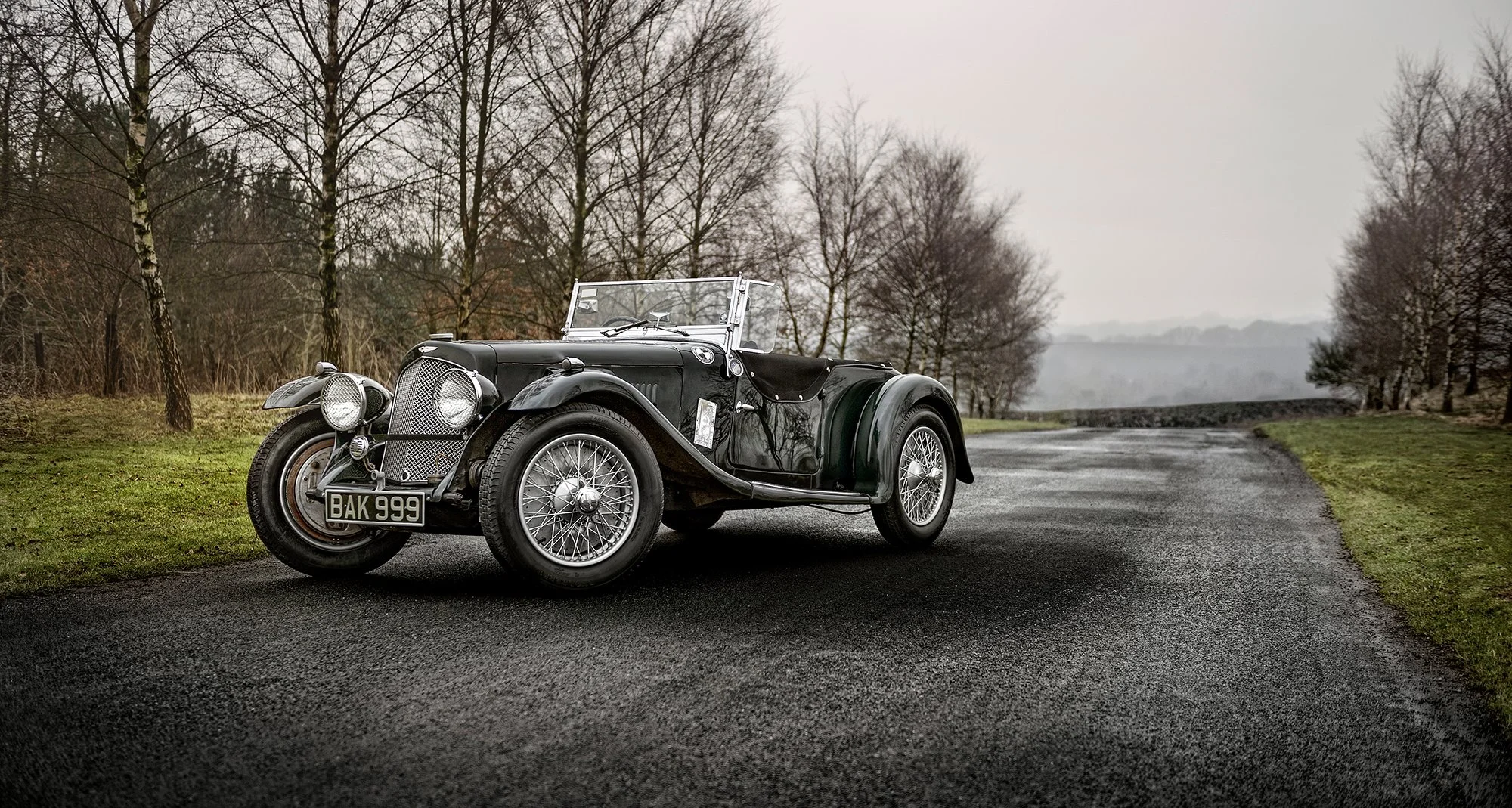
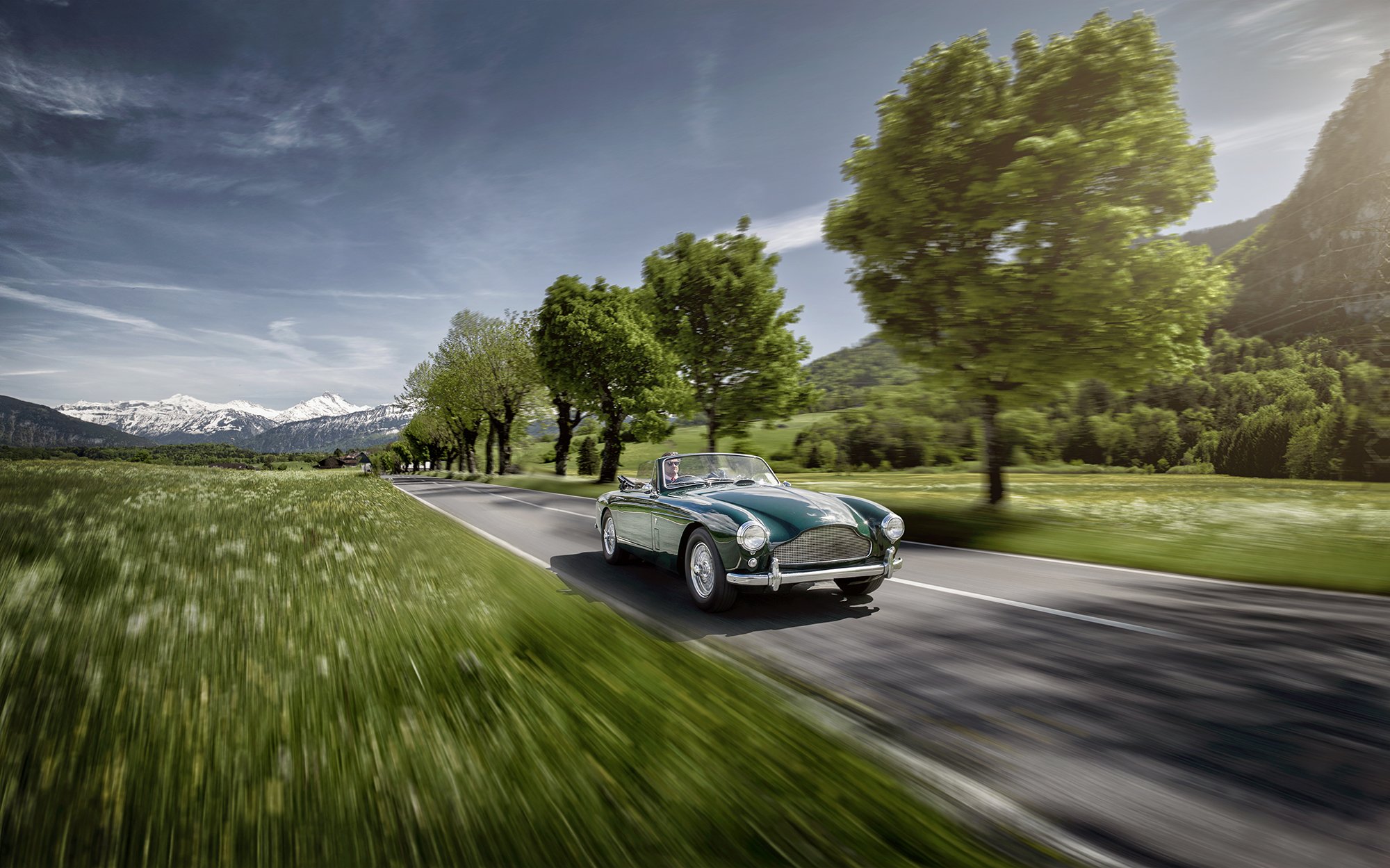
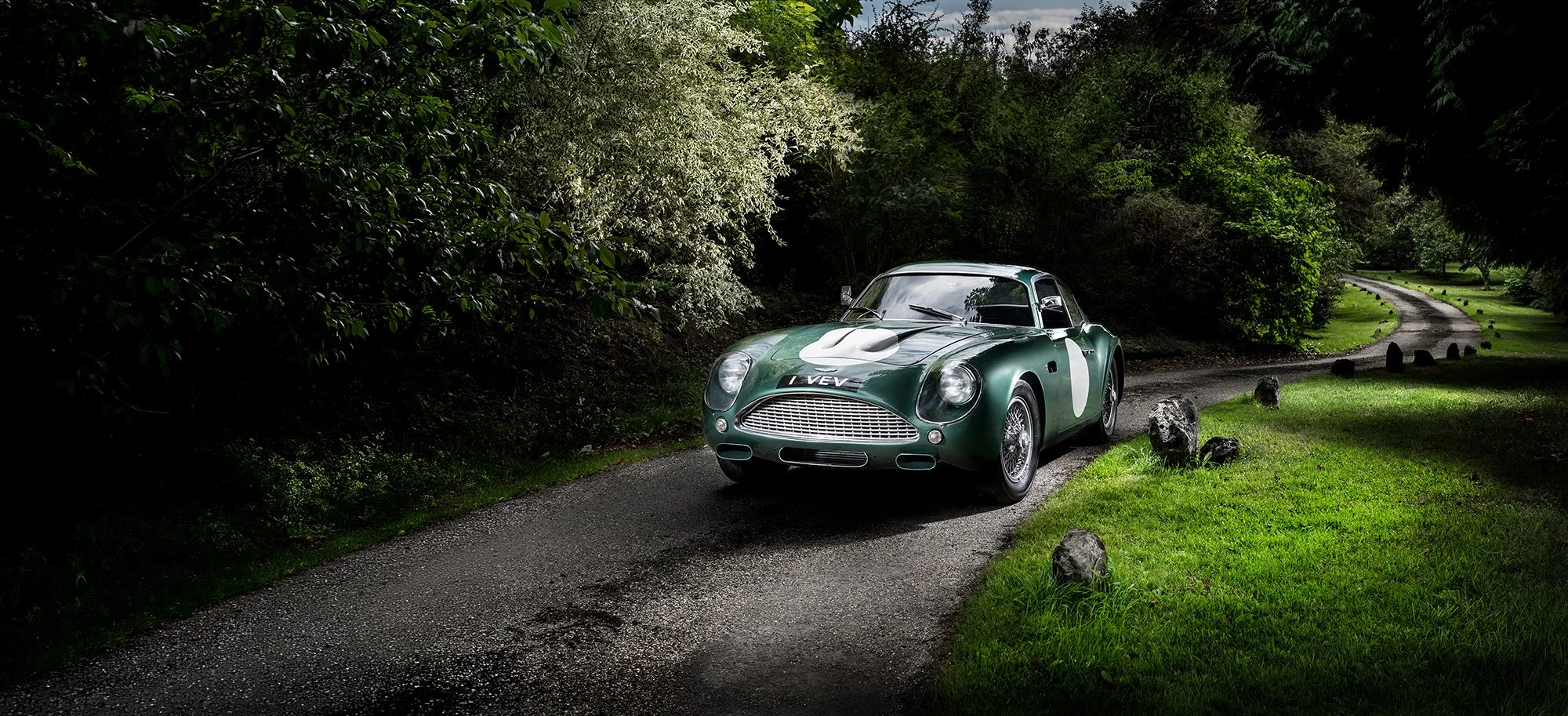
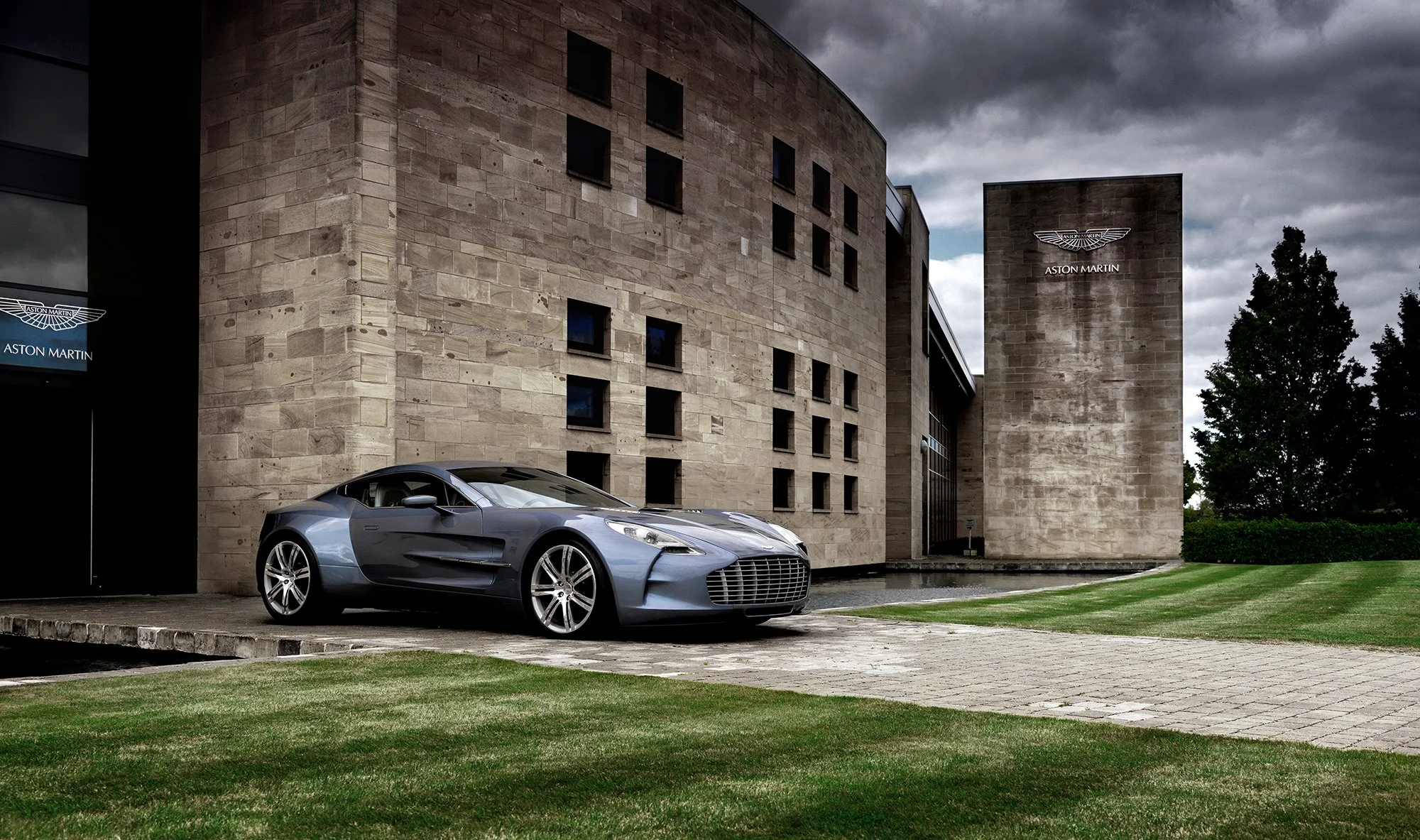
The cars may change, but the DNA remains remarkably consistent. Whether photographing a DB4, DB5, DBS, V8 Vantage, Vanquish, DB9, Rapide, One-77, Vulcan, DBS Superleggera or the latest generation of Aston Martins, there is a common thread that connects them all. Each model reflects the era in which it was created while remaining unmistakably Aston Martin.
Photographing cars from different decades side-by-side reveals just how carefully the company has balanced heritage with innovation. Design trends come and go, technologies evolve and performance reaches new heights, yet Aston Martin has retained a distinctive identity throughout. That continuity is one of the reasons the brand remains so admired today.

Driving Legends
One of the unexpected privileges that has accompanied many of these photographic projects has been the opportunity to drive a number of the cars I have photographed.
For an automotive photographer, this adds an entirely new dimension to the creative process. Driving a car provides an understanding that simply cannot be gained from looking at it.
You begin to understand the character of the steering, the sound of the engine, the sensation of acceleration and the emotional response the car creates.
These experiences inevitably influence the photography. When I have driven a car, I am often able to visualise images that better communicate its personality. A grand tourer demands a different photographic approach than a lightweight sports car. A historic racing machine conveys a different energy to a modern supercar.
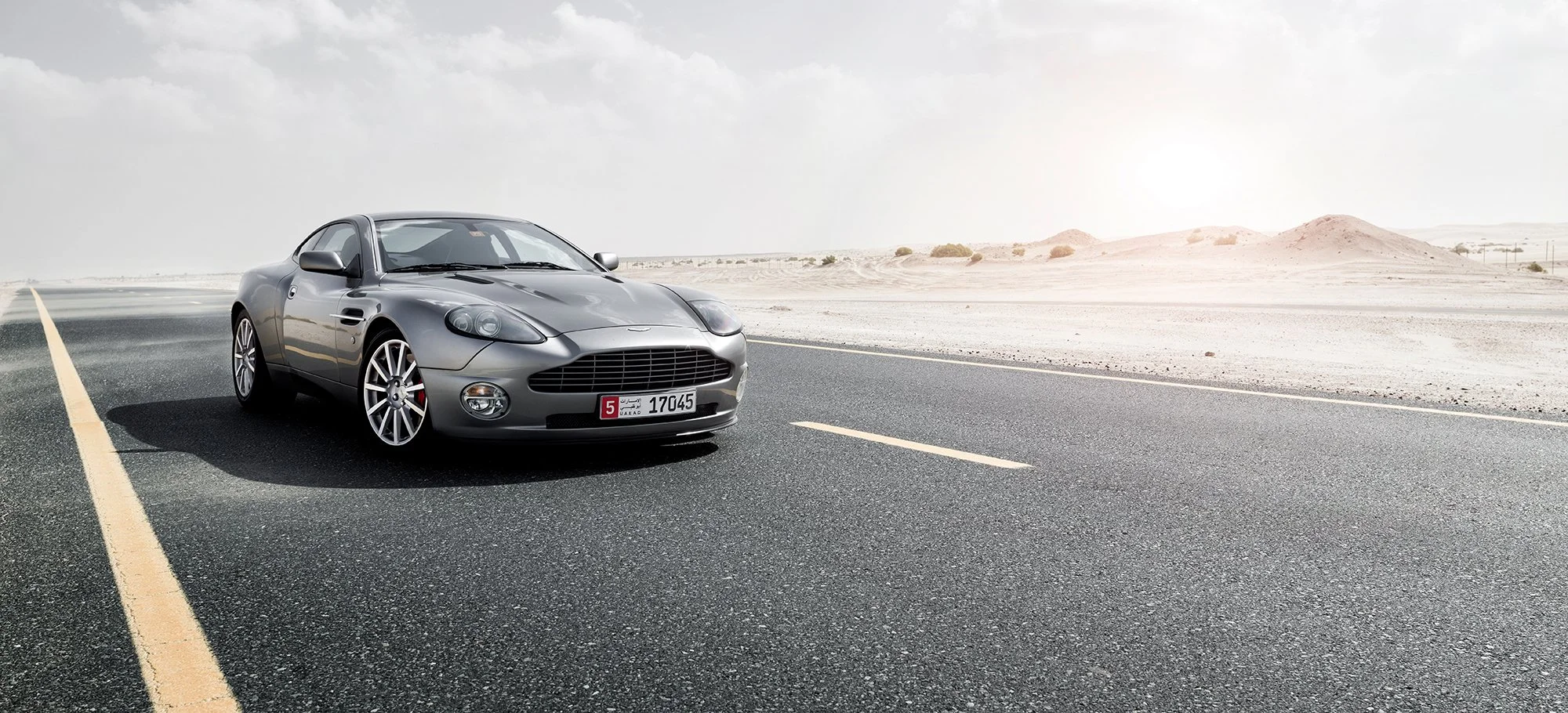
Understanding how a car feels allows me to better communicate that feeling through photography. I have often been asked which is my favourite Aston to drive and that is a very difficult question to answer, they all have things that I both love and hate. I love the simple beauty of the DB4, the power of the Zagato, but probably one of my favourites would have to be the classic Aston Martin Vanquish. Not the sexiest of all Astons and certainly not the most modern, I could not really put my finger on exactly what it is about that car, but it just feels right.
The Aston Martin 100 Year Centenary Book Project
Among the many Aston Martin commissions I have undertaken, one of the most significant was being commissioned to photograph imagery for an Aston Martin 100 year book.
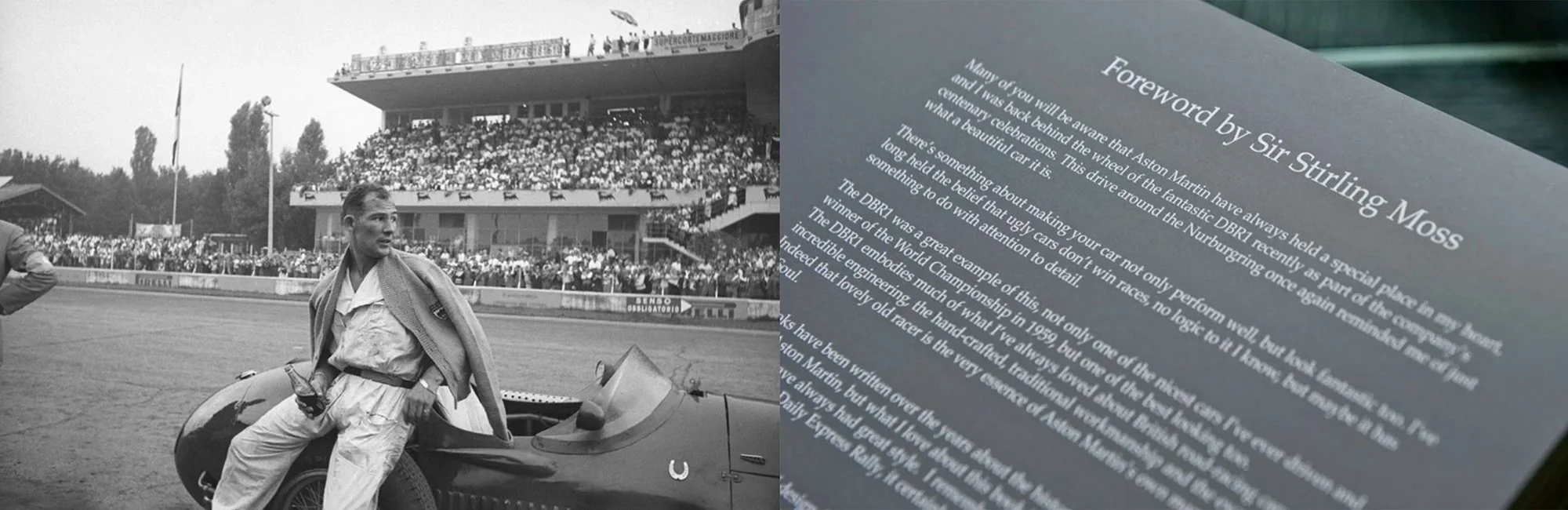
The book ‘Portfolio of Dreams’ was a celebration of Aston Martin through their 100 years and is a major publication of nearly 700 pages of stunning photography capturing each of their significant models over their first 100 years of building cars, from the very first Bamford Martin car all the way through to the infamous DB5 and onwards to the latest DBS and One77 models of recent years. Printing commenced in 2015 with a limited boxed edition being signed by myself and sent to 100 Aston Martin owners around the globe.
Projects of this nature require far more than simply producing attractive photographs. They demand consistency, attention to detail and a deep understanding of both the subject matter and the story being told. The opportunity to contribute to a publication celebrating such an iconic brand was an enormous honour. It also represented a culmination of many years spent building experience photographing Aston Martin vehicles across multiple generations.
Looking back, the project serves as a reminder of just how extensive this journey with the marque has become.
For me one of my favourite moments in the project was being told that Sir Sterling Moss had agreed to write the foreword for the book.
Why Aston Martin Continues to Inspire
After more than ten years and over 150 Aston Martins, people occasionally ask whether the excitement ever fades.
The simple answer is no. Every Aston Martin carries its own story. Some represent milestones in automotive design. Some played important roles in motorsport history. Some are treasured family heirlooms passed between generations. Others represent the fulfilment of lifelong ambitions for their owners.
As a photographer, I have the privilege of capturing these stories. The cars themselves are extraordinary, but it is the human connection behind them that often makes the experience truly memorable. Looking back over a decade of photographing Aston Martin vehicles, I feel incredibly fortunate to have documented such an important part of British automotive heritage.
From the pioneering A3 to the iconic DB5, from the legendary DBR1 to the latest generation of Aston Martin models, every car has contributed another chapter to an ongoing photographic journey. And perhaps that is why Aston Martin remains such a compelling subject.
Because these cars are more than machines. They are sculptures, icons, works of art and pieces of history.
© Copyright Declaration 2026
All images and media contained in this website are protected by International Copyright Law and by the Copyright, Designs & Patents Act 1988.
Unauthorised use is strictly prohibited under all circumstances and cases without permission.