

The Debden Eagles
Aviation Photography and the Story of the Debden Eagles
Based in Debden, Essex, the 4th Fighter Group was the highest scoring fighter group in the USAAF, destroying 1,016 enemy aircraft.
Aviation photography has always been one of the most demanding and rewarding areas of my work, largely because aircraft are not subjects that simply sit still and wait to be photographed. Unlike many forms of commercial photography, where the photographer can carefully control the environment, lighting and position of the subject, aviation photography often requires an understanding of the aircraft, the people operating it and the environment in which it works. Timing, planning, safety and flexibility all become just as important as the photography itself. Over the years I have worked with a wide variety of aviation clients, photographing everything from private and business aircraft through to military aircraft, helicopters, search and rescue operations and historic warbirds. My aviation photography has included work for organisations including BBC Productions, Airbus, TAG Aviation, Bristow Search and Rescue, HM Coastguard and Air Ambulance services, with projects taking me into environments ranging from aircraft hangars and airfields to live operational flying.
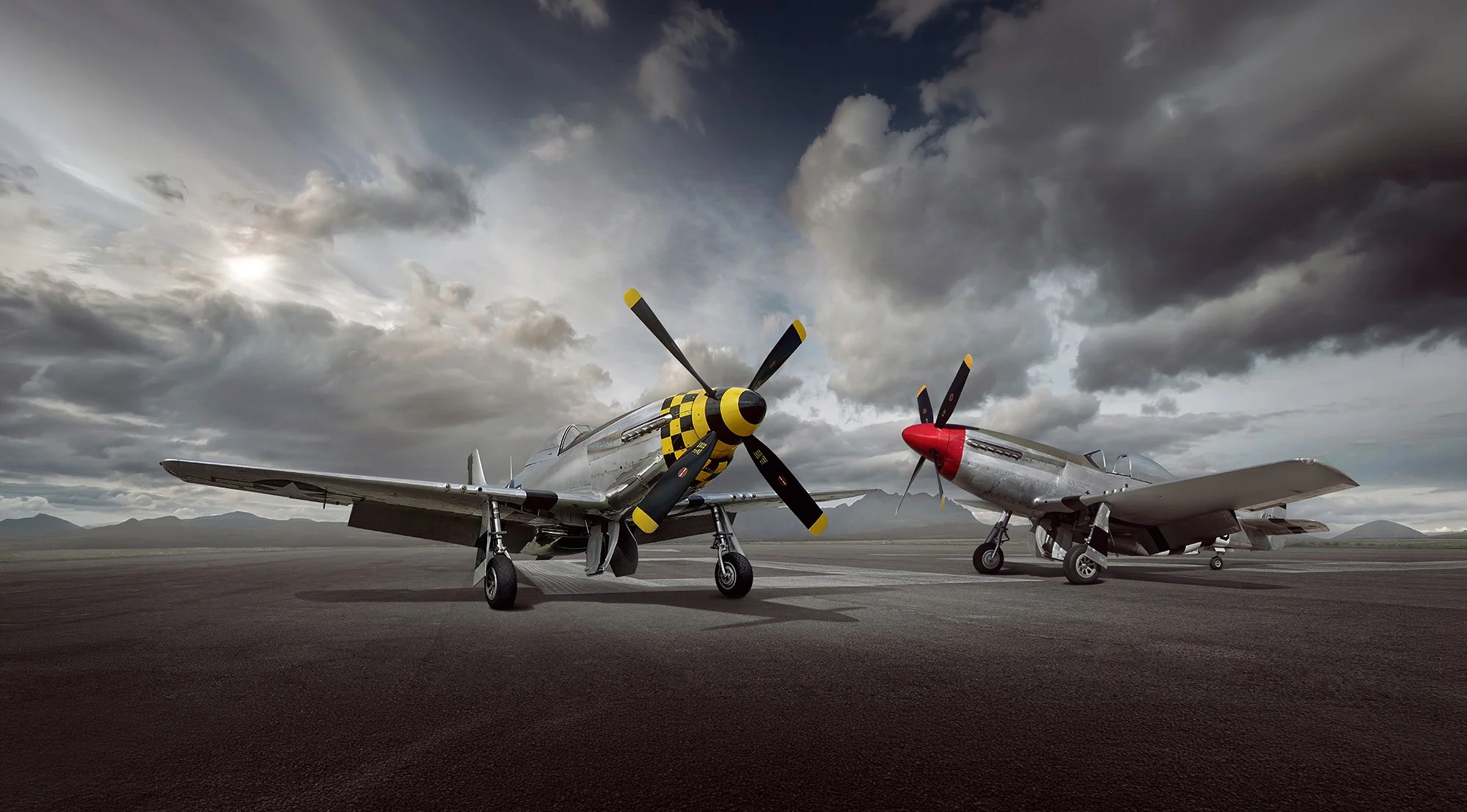
One of the things I particularly enjoy about aviation photography is that the aircraft itself is only part of the story. A technically accurate photograph can show an aircraft beautifully, but my objective is usually to go further than simply documenting what it looks like. I want the images to communicate something about the aircraft, its purpose, its history and, most importantly, the feeling of being around it.
That becomes particularly important when photographing historic aircraft. A Spitfire or Mustang is not simply an aeroplane. It is a piece of engineering history, and when one is sitting on a runway with its engine running, the experience is very different from looking at the same aircraft inside a museum. The sound, vibration, smell and sheer physical presence of the machine all contribute to the experience, and photography has the ability to capture at least some of that atmosphere.
Air-to-air photography takes that challenge considerably further. Working from another aircraft introduces a completely different set of considerations, from positioning and communication to changing light, reflections and the constantly moving relationship between the two aircraft. I have photographed aircraft from helicopters and from within other aircraft, including working from a Spitfire itself while photographing another Spitfire in formation. It is an environment where there is very little room for error, and there is certainly no opportunity to stop the aircraft and try the shot again.
My work with the aviation sector has therefore developed into something that is about much more than simply operating a camera. It involves understanding how the aircraft will move, where it needs to be, how the light will work and what the final imagery needs to achieve for the client. That combination of technical planning and creative photography is particularly important when working with historic aircraft, because every shoot is also an opportunity to help preserve and communicate part of aviation history.
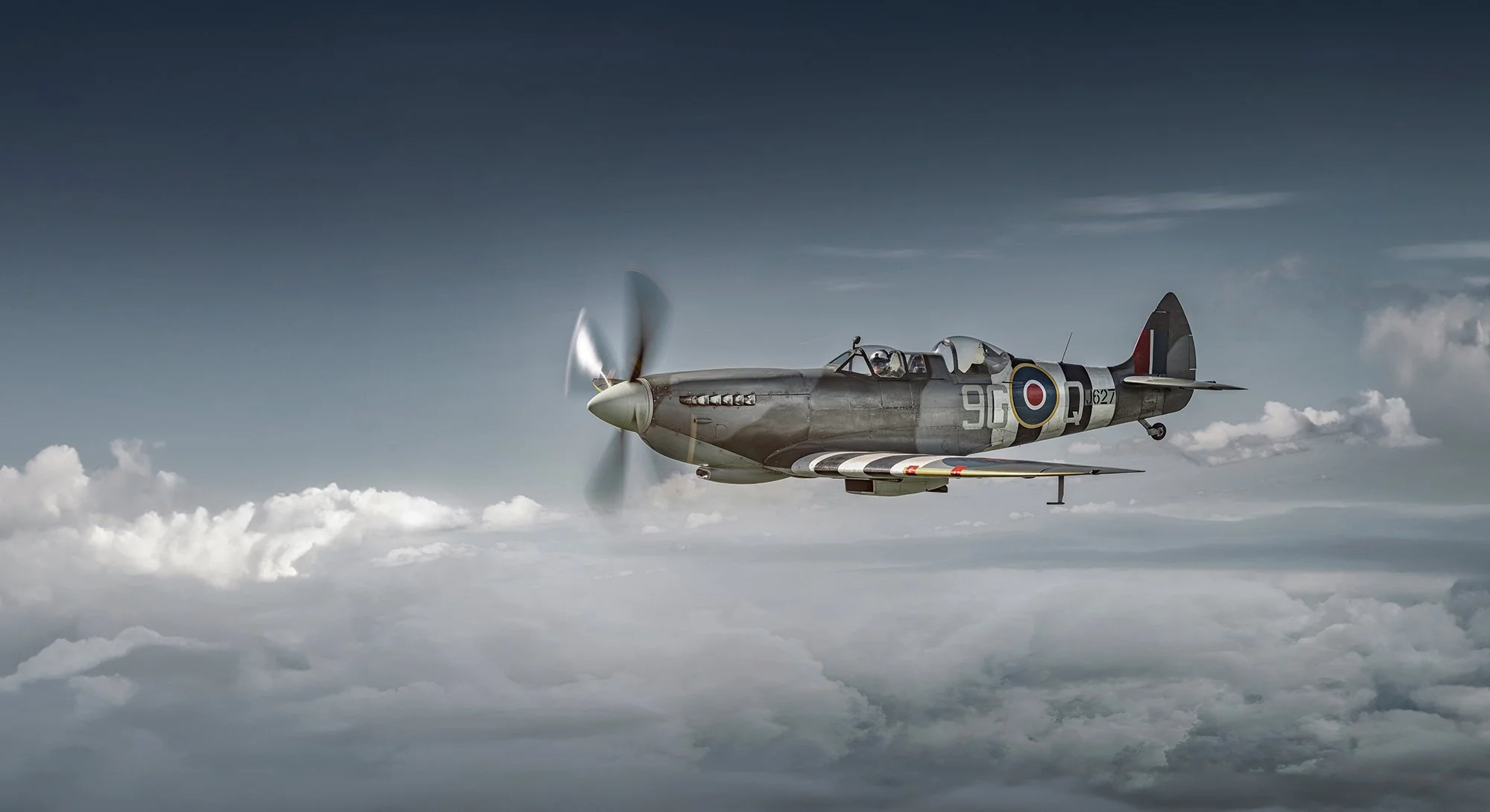
Working With Biggin Hill Heritage Hanger
My relationship with the team at the Biggin Hill Heritage Hanger developed through my earlier work with BBC Studios on the television series Warbird Workshop. The project involved creating digital photography around a number of legendary historic aircraft, beginning with the Spitfire MJ772 at Biggin Hill before extending to aircraft at locations across the UK. The photography was subsequently used within the television series, international marketing and other promotional material.
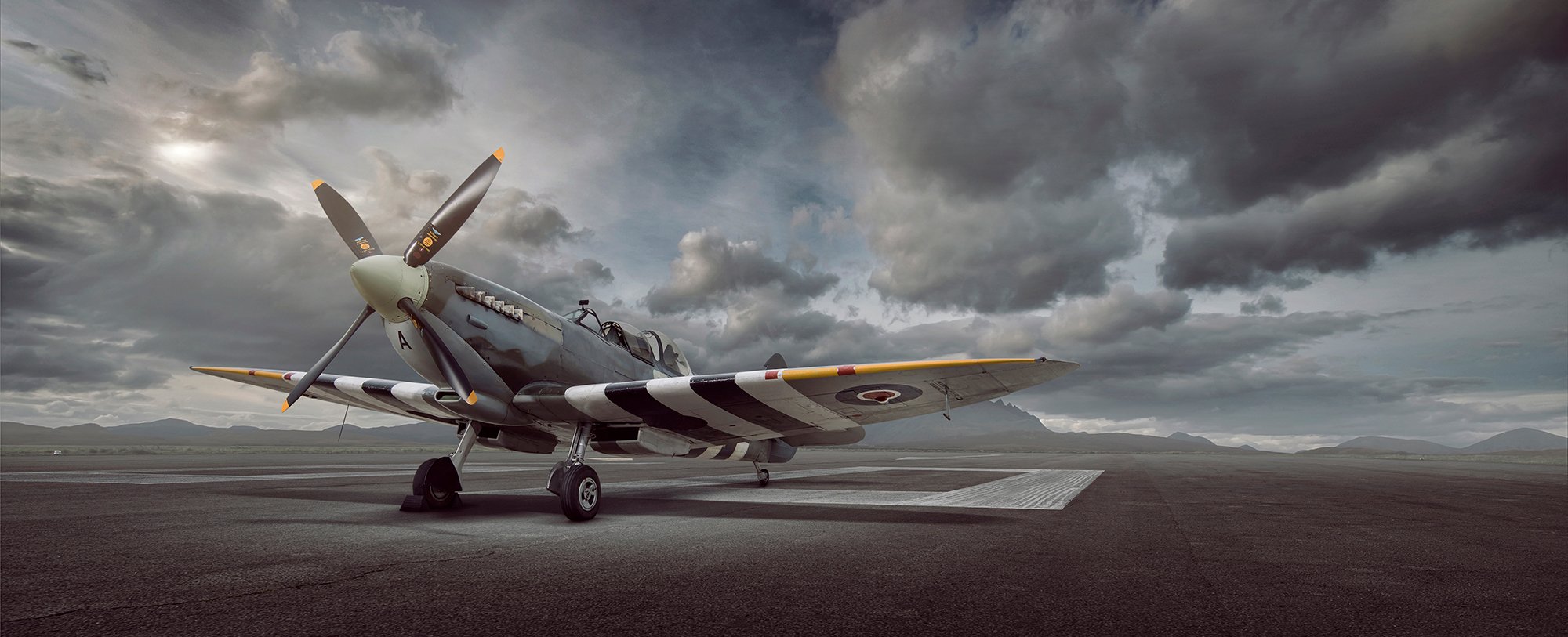
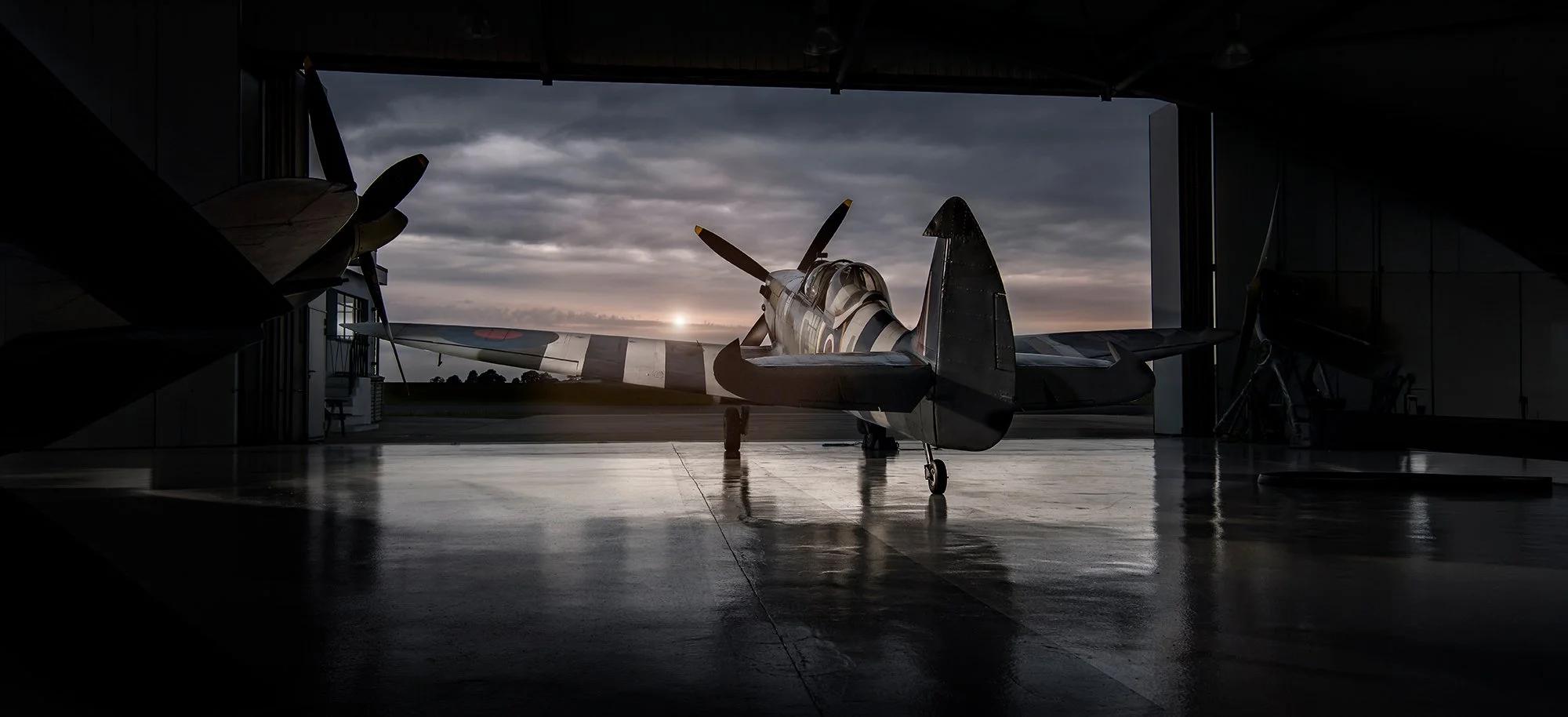
Following that work, the Heritage Hanger contacted me directly as they embarked on a major project to create a new company website and develop a completely updated photographic library covering their activities. This included their Spitfire flight experiences, aircraft restoration, tours and the wider operation surrounding these remarkable historic machines.
It has since developed into an ongoing relationship, with my work for the team encompassing both ground-based photography and air-to-air imagery. The Spitfires naturally form a major part of that work, and photographing them is always a privilege, but one of the particularly memorable aircraft I have had the opportunity to photograph through the relationship is the North American P-51D Mustang carrying the markings of Colonel Donald Blakeslee.
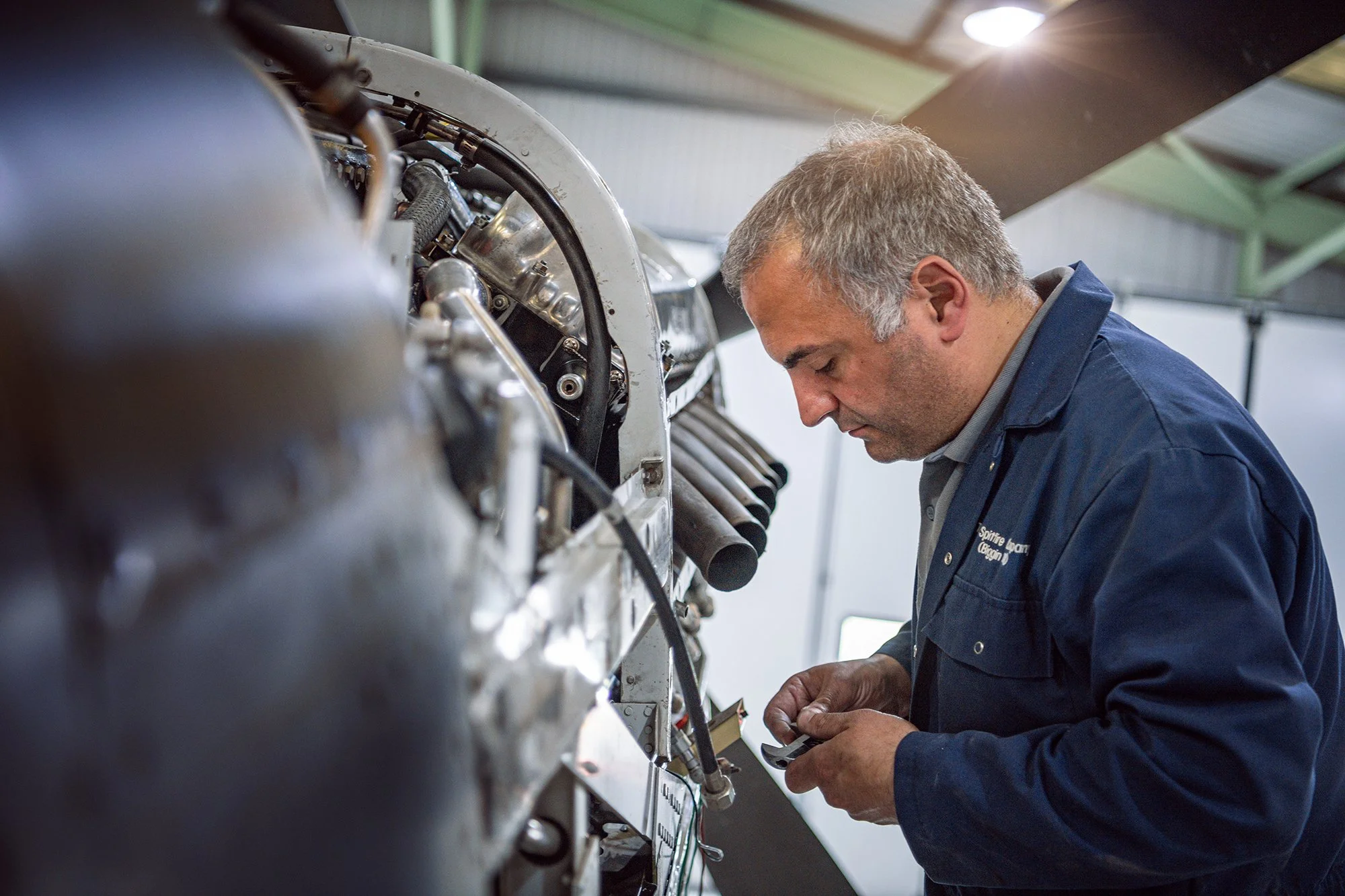
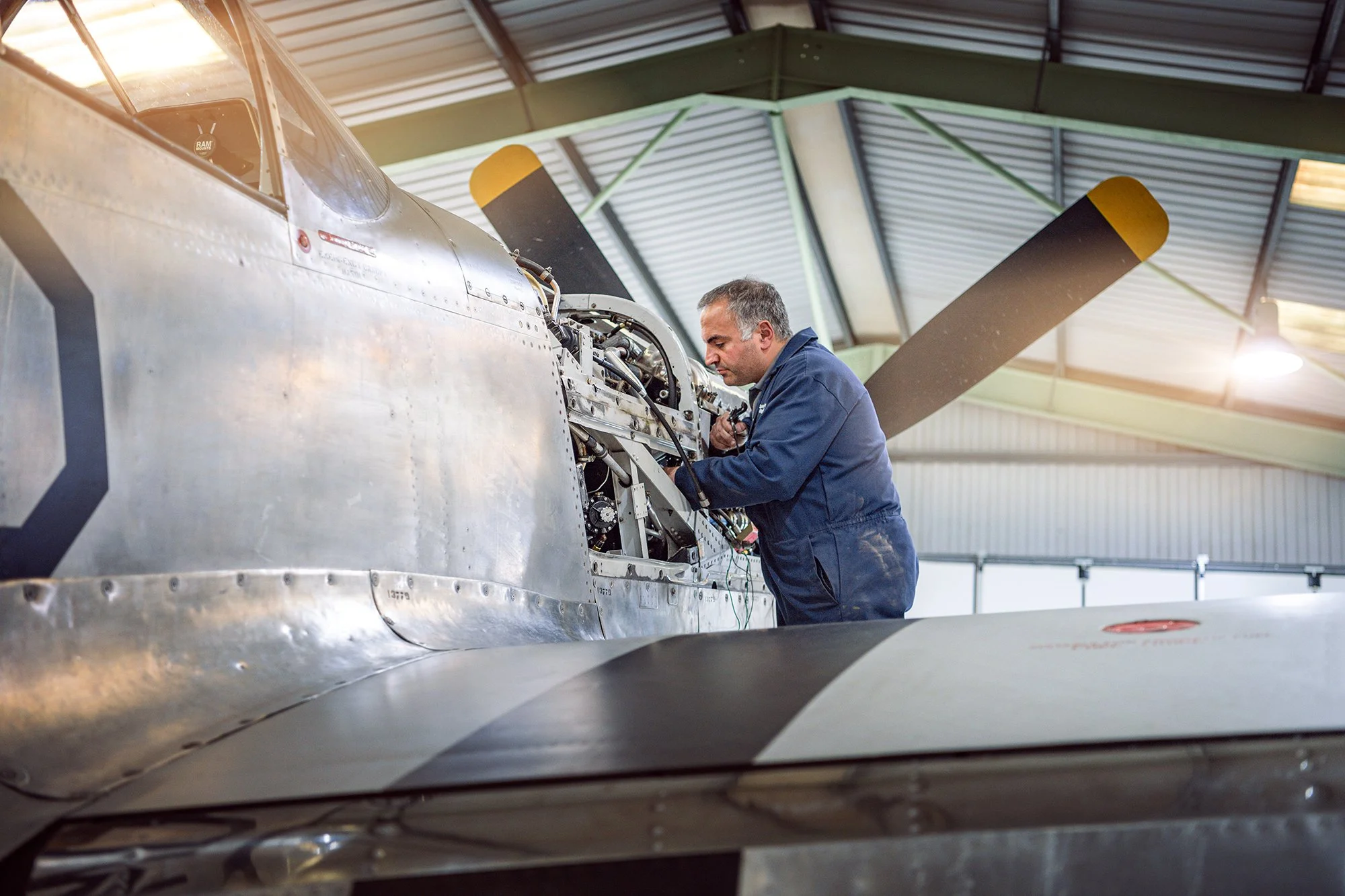
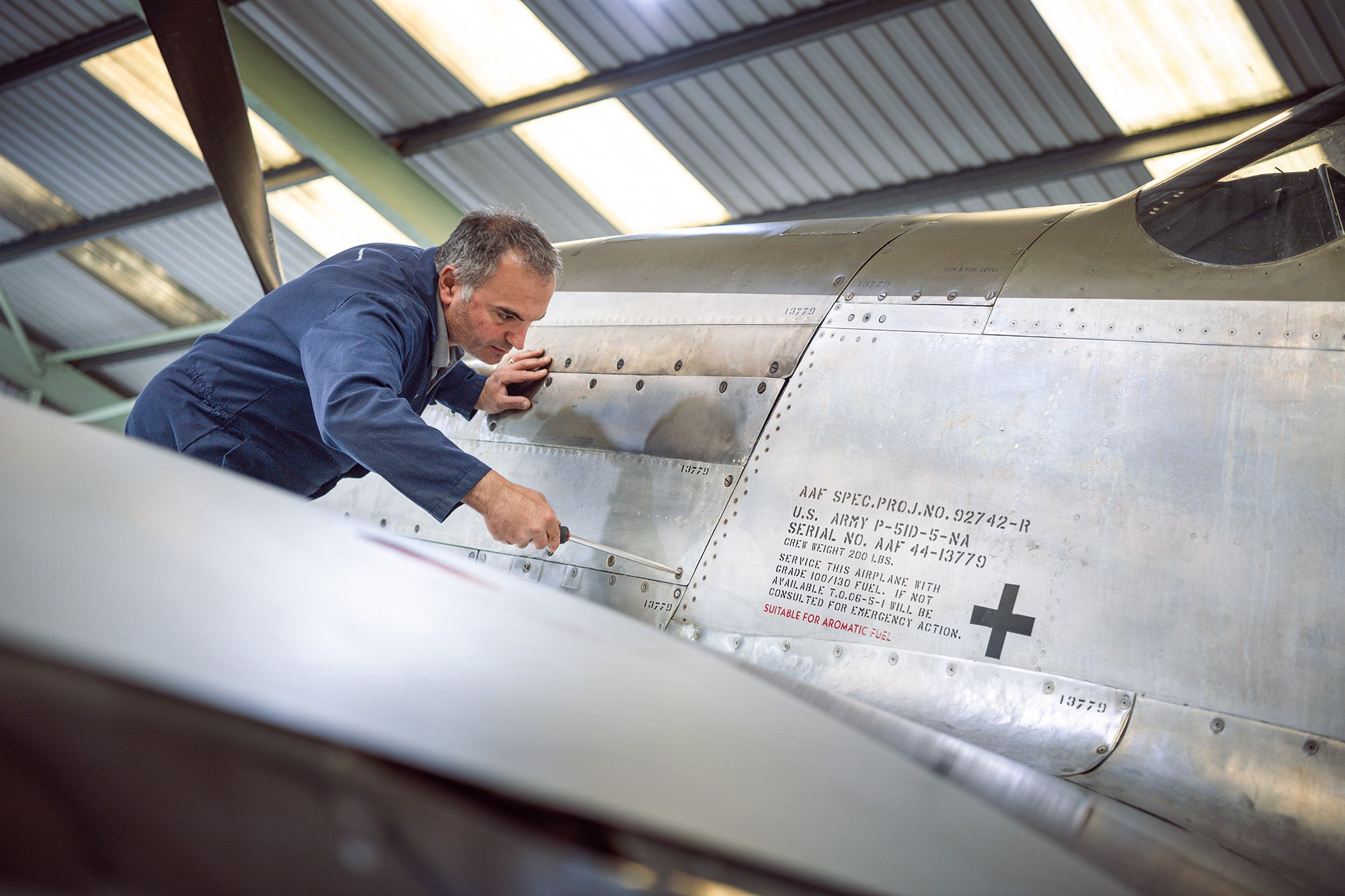
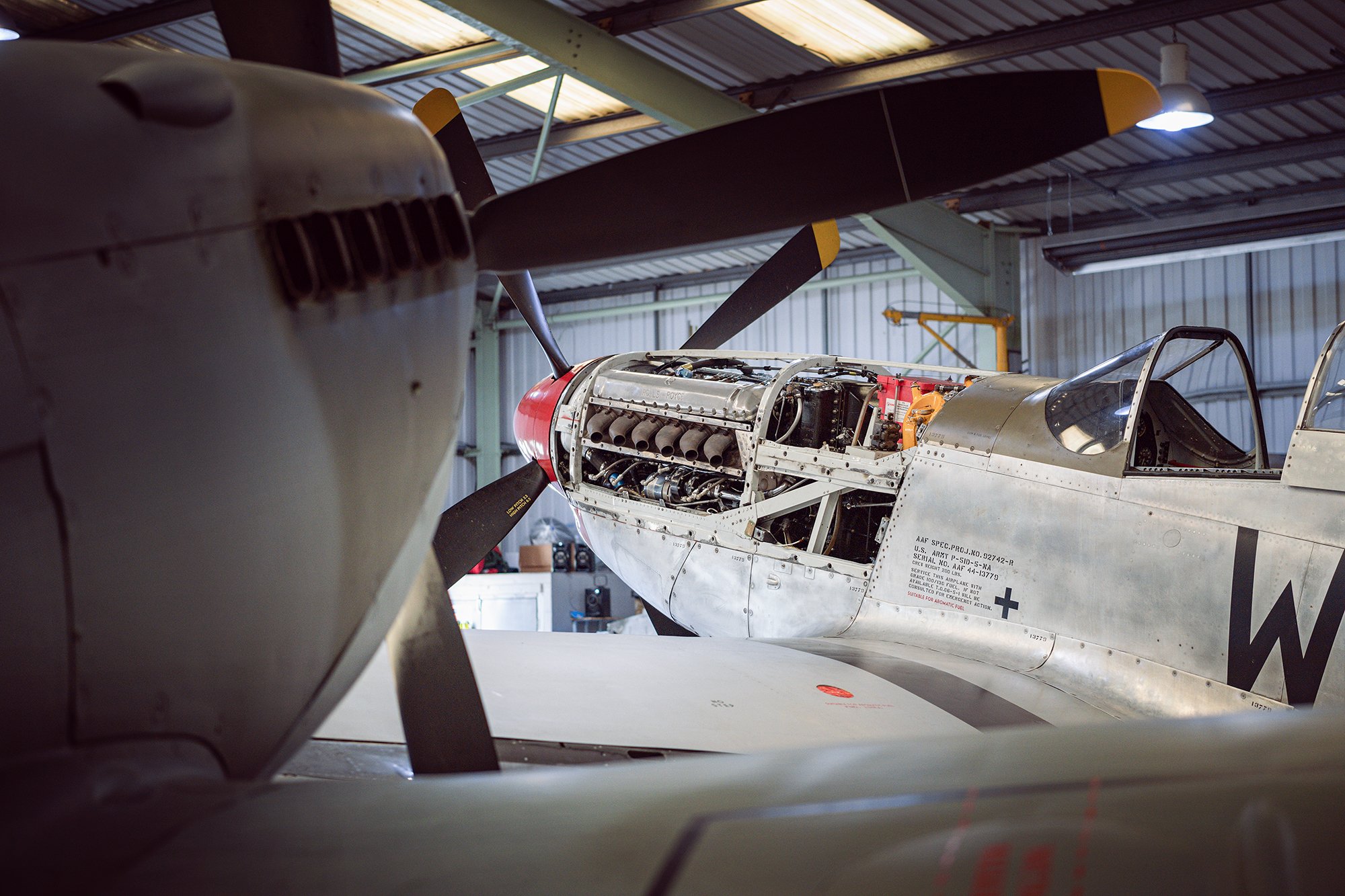
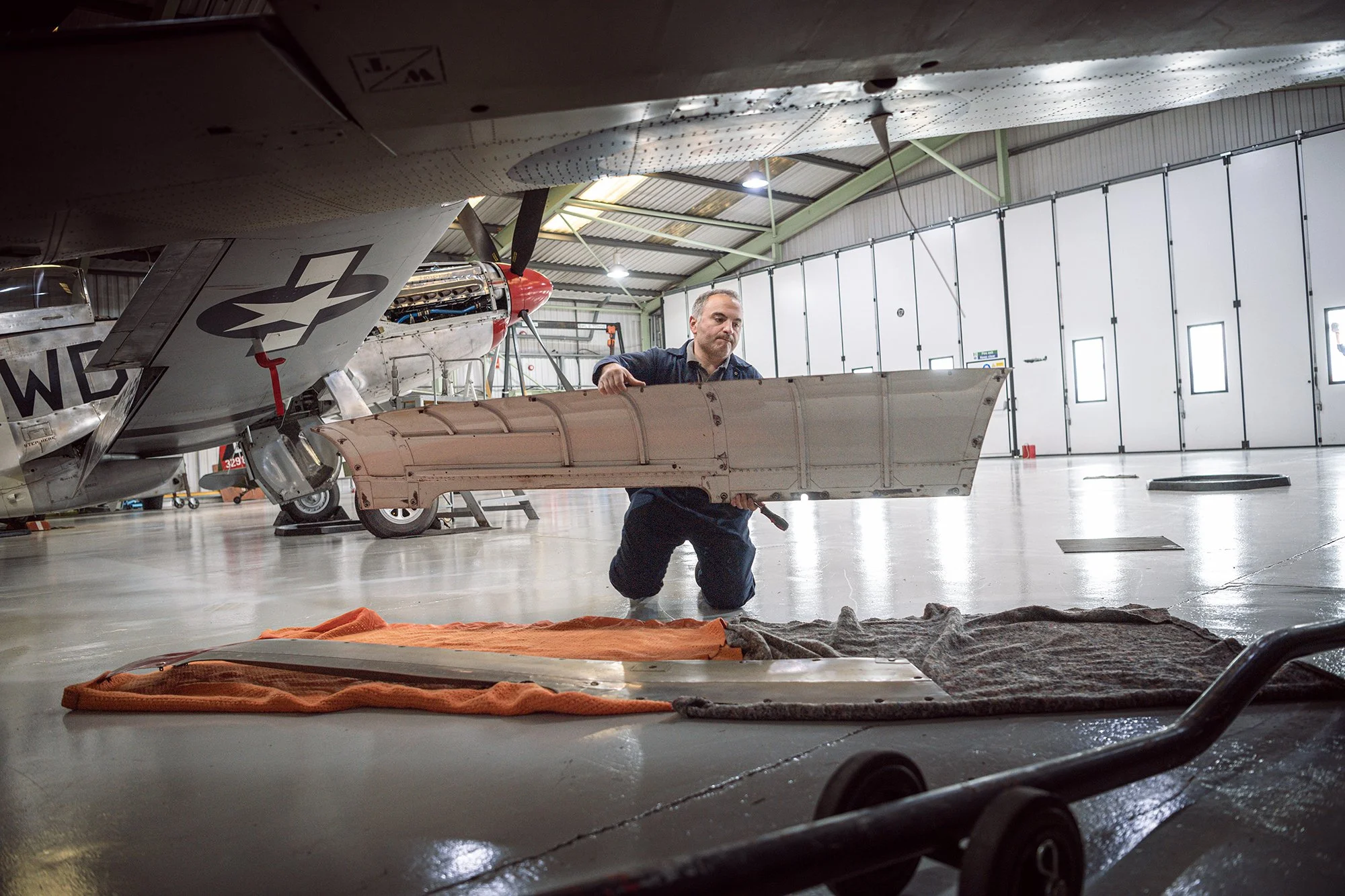
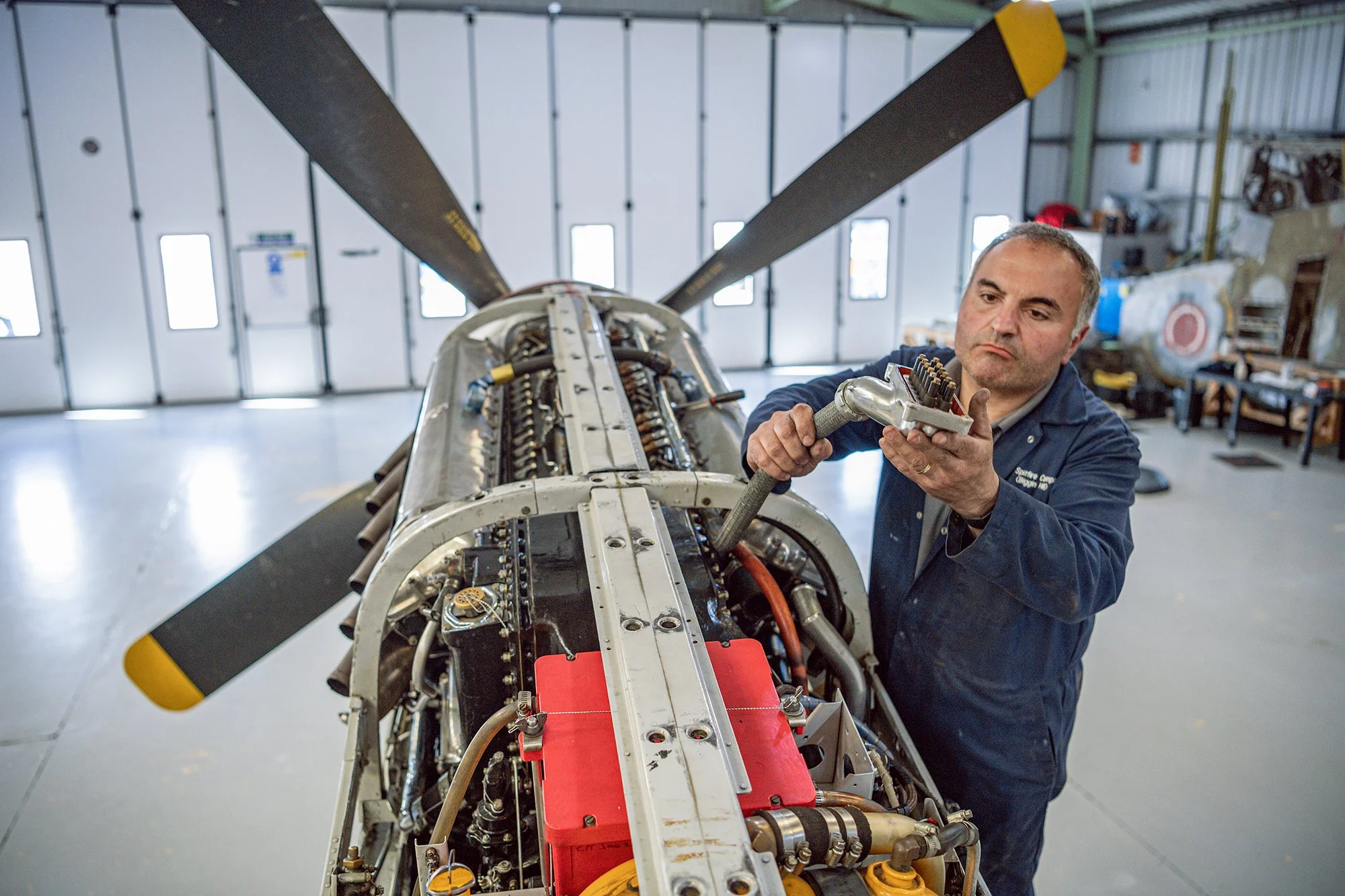
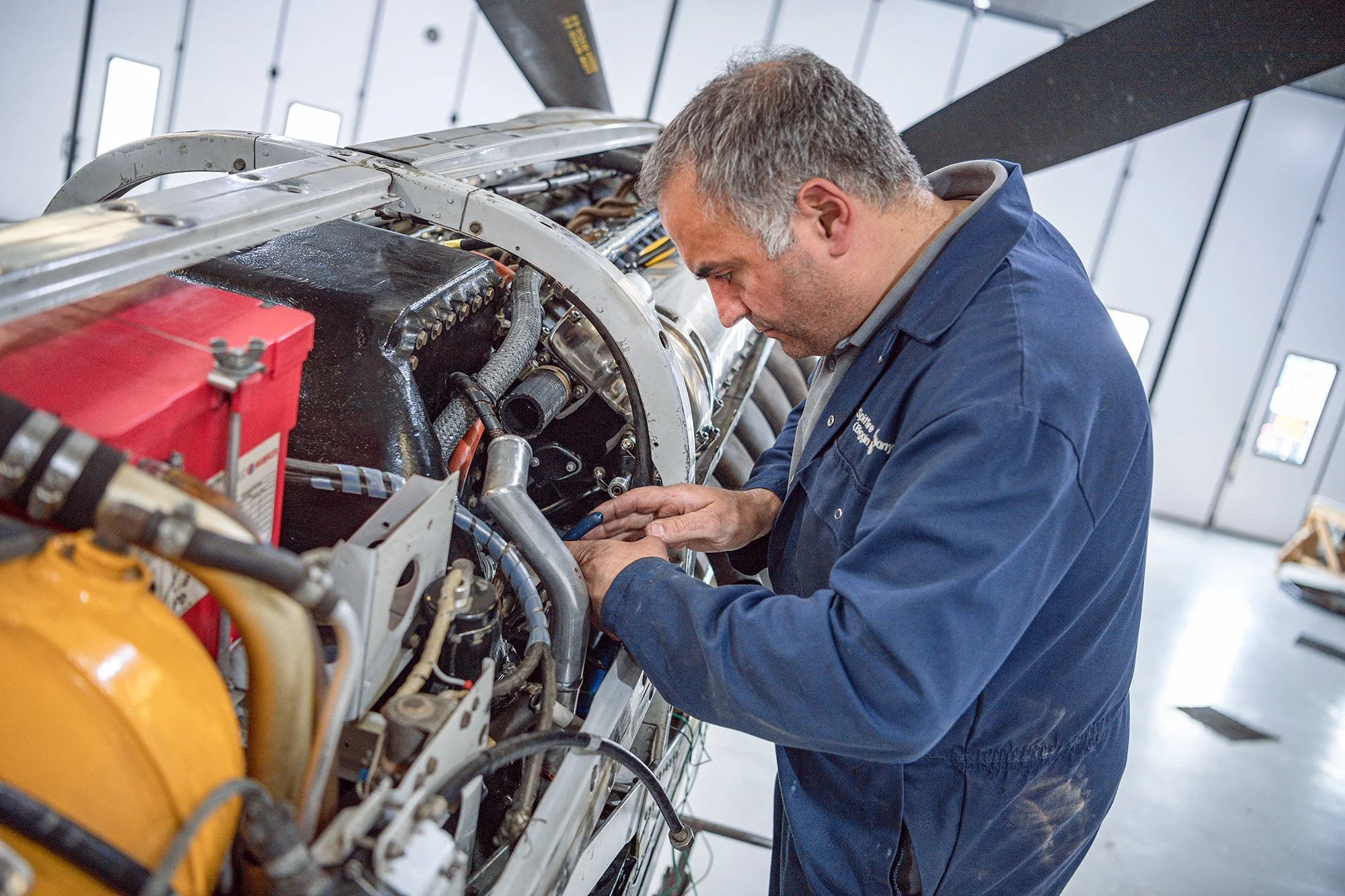
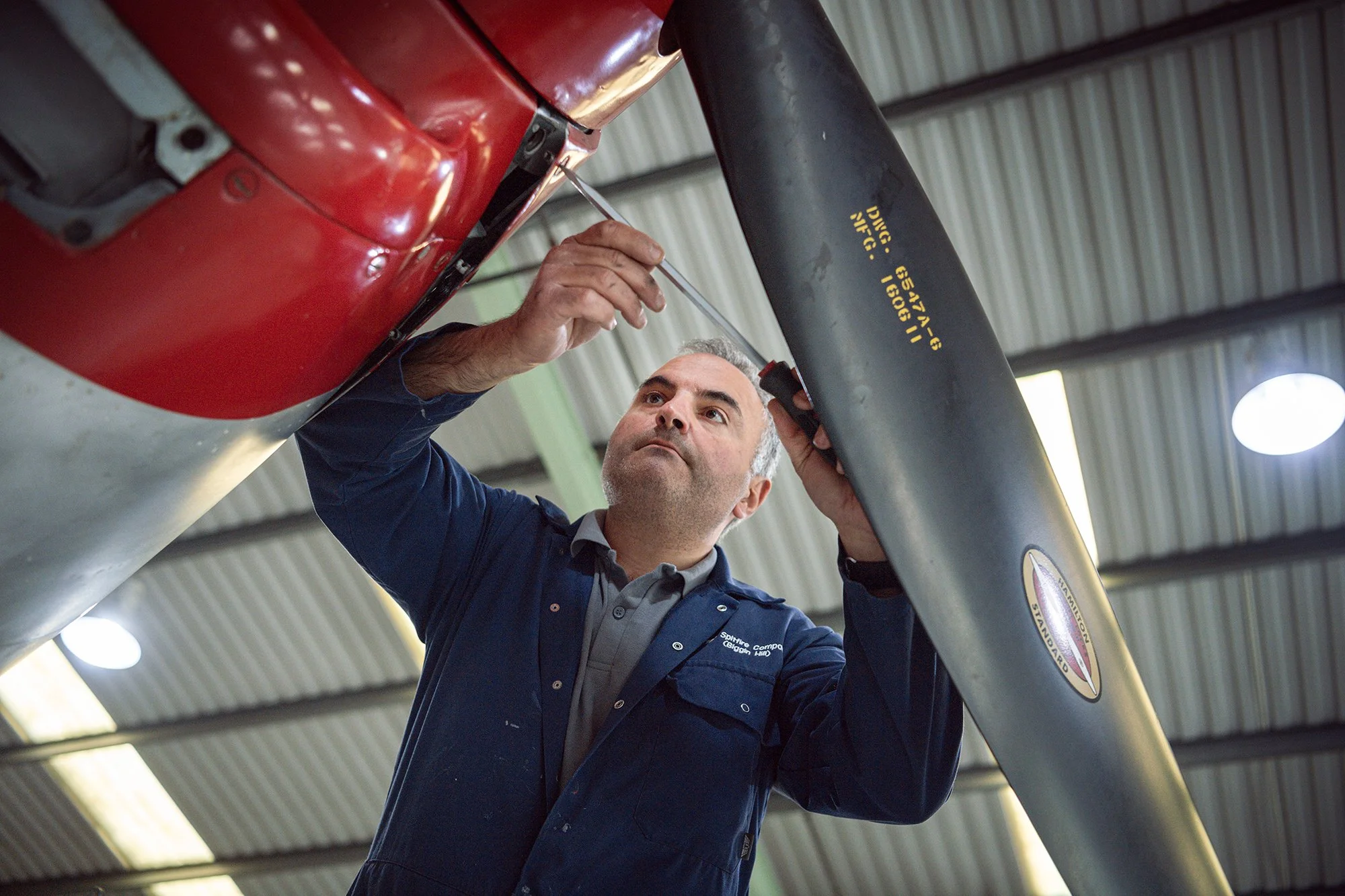
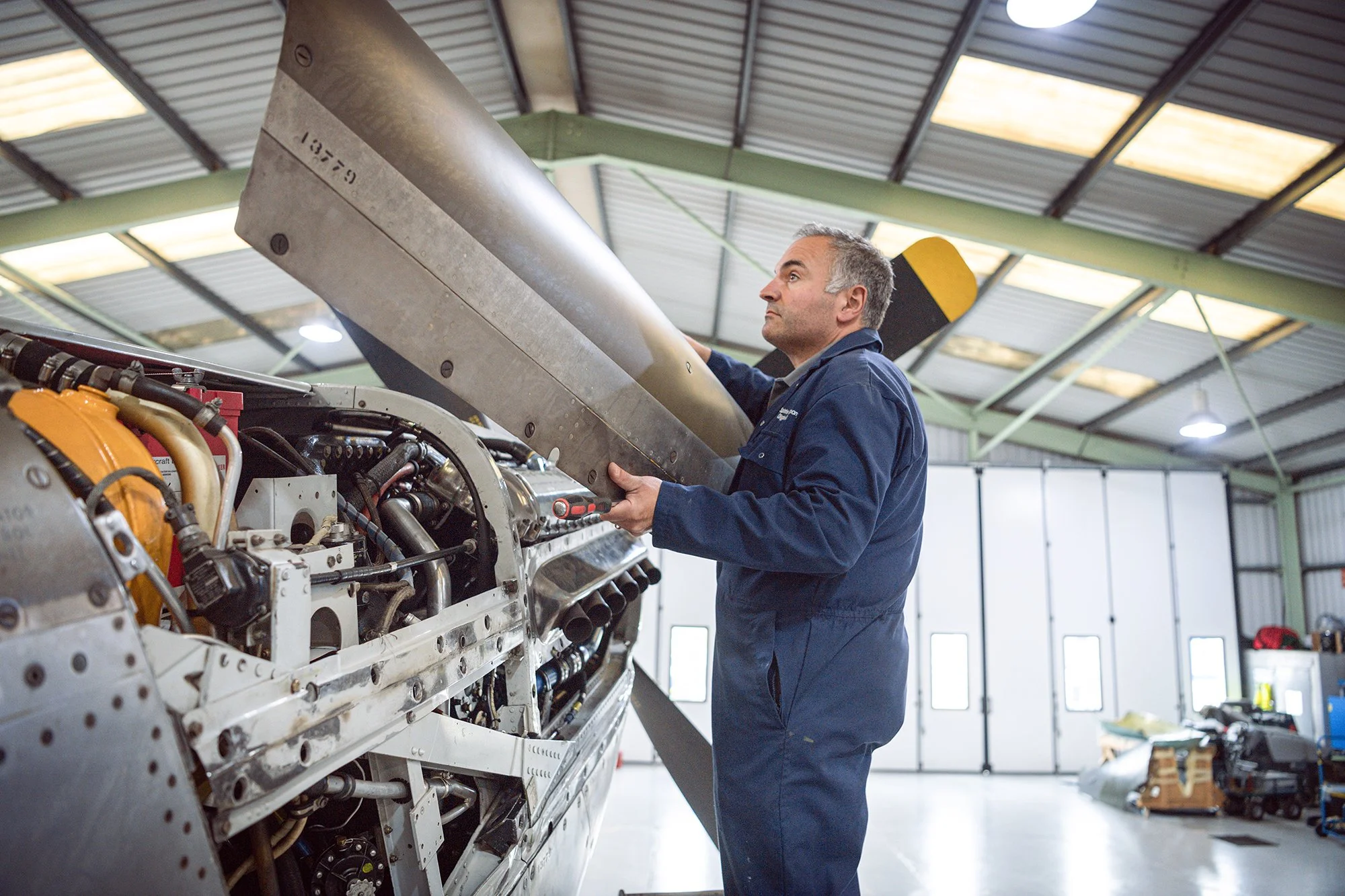
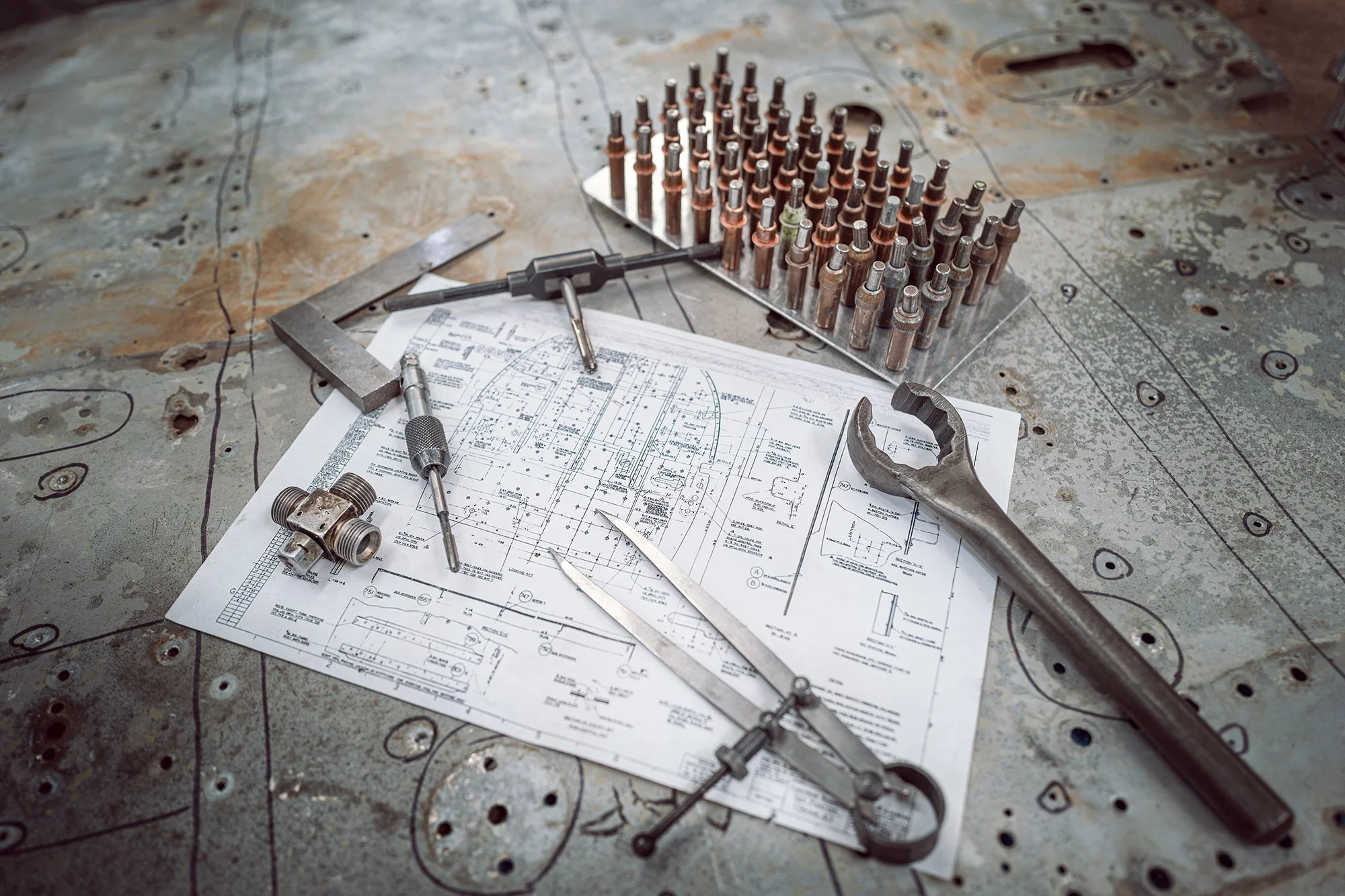
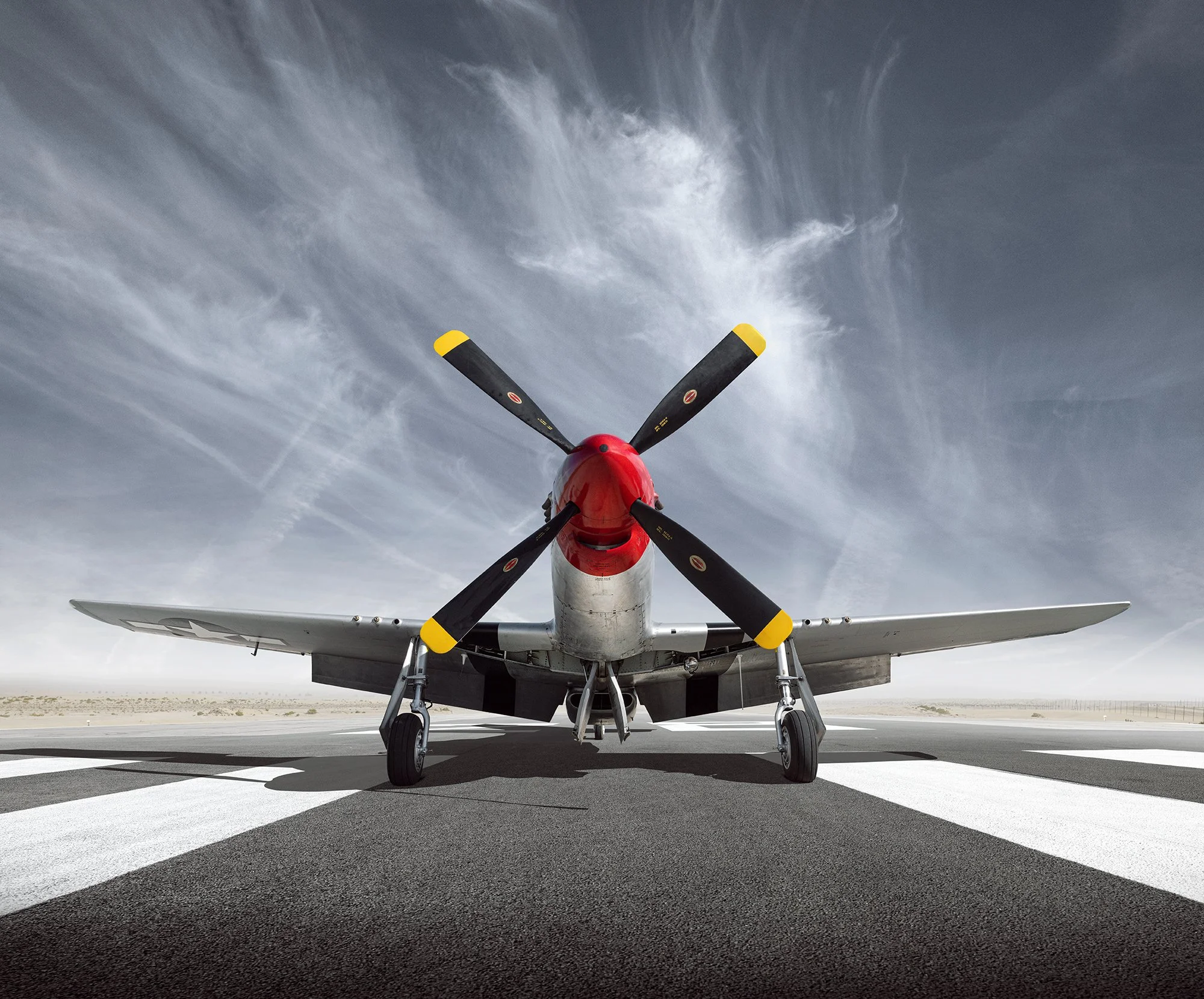
There is something very different about photographing a Mustang. The Spitfire has an unmistakable elegance, with its elliptical wings and beautifully proportioned fuselage, whereas the Mustang has a more purposeful, muscular appearance. It looks fast even when it is standing still, and once its engine starts, that impression becomes very real indeed.
For me, the challenge is to make the photographs communicate that sense of character. Rather than simply producing a series of technically perfect aircraft portraits, I want the images to have atmosphere and energy. That can mean working with early or late light, using the runway and surrounding landscape to establish a sense of place, or waiting for the aircraft to move so that the photograph feels less like a static record and more like a moment in the life of a living aircraft.
The Mustang photographed for the Heritage Hanger was particularly interesting because its appearance carries a direct connection to one of the most significant American fighter commanders of the Second World War. The aircraft is presented in the colours of Colonel Donald James Matthew Blakeslee and his 4th Fighter Group, the famous “Debden Eagles”, giving an already iconic aircraft an additional layer of history.
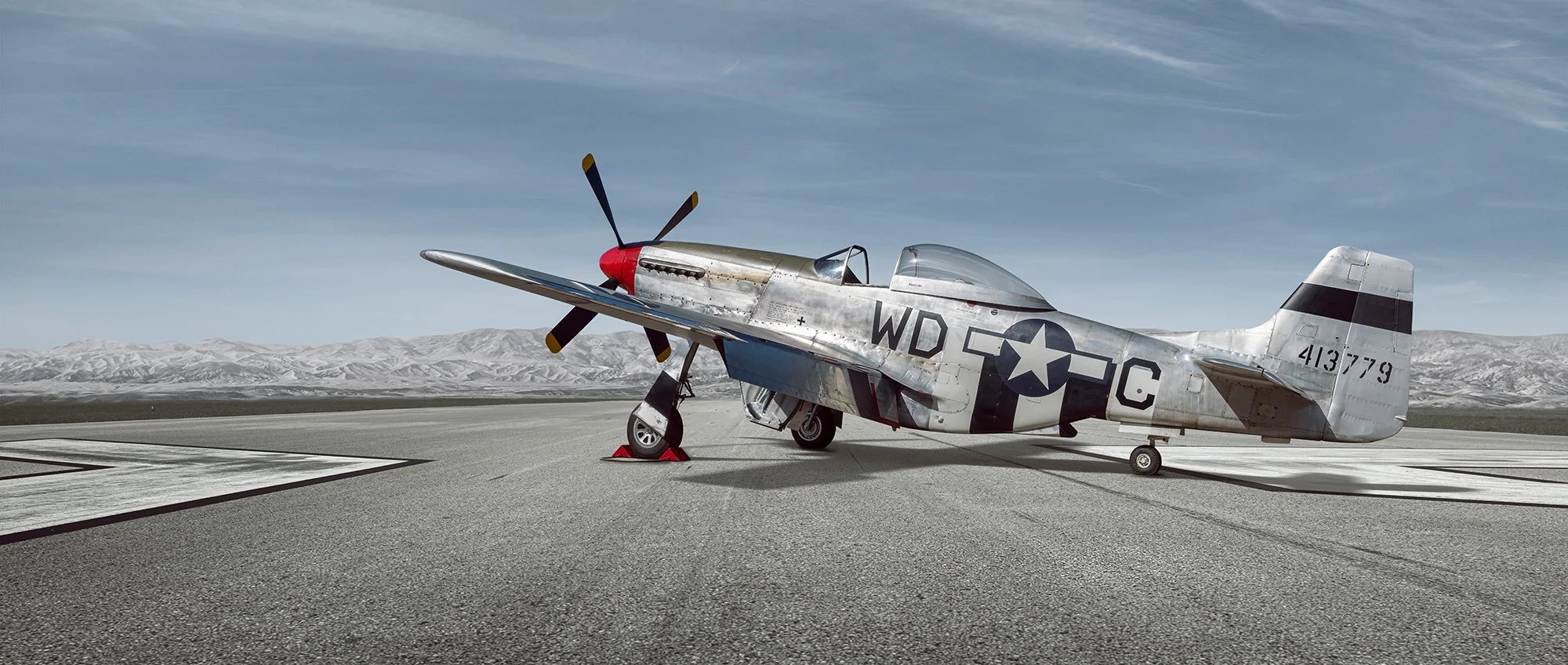
WD-C, 413779 and the Legacy of Donald Blakeslee
The Mustang photographed for the Heritage Hanger is a P-51D with a particularly interesting history. The airframe was built by North American Aviation at its Inglewood, California production facility in 1944, carrying the USAAF serial number 44-73877. It was subsequently assigned to the USAAF and later served with the Royal Canadian Air Force before eventually entering civilian ownership and undergoing restoration.
Today the aircraft is perhaps best known for the identity it carries rather than simply the serial number with which it left the North American production line. It wears the WD-C markings associated with Colonel Donald Blakeslee, commanding officer of the 4th Fighter Group. Blakeslee was an extraordinary character and one of the most highly regarded American fighter leaders of the Second World War. He became associated with the 4th Fighter Group, which operated from RAF Debden in Essex, and was instrumental in developing the unit into one of the leading American fighter formations operating in Europe.
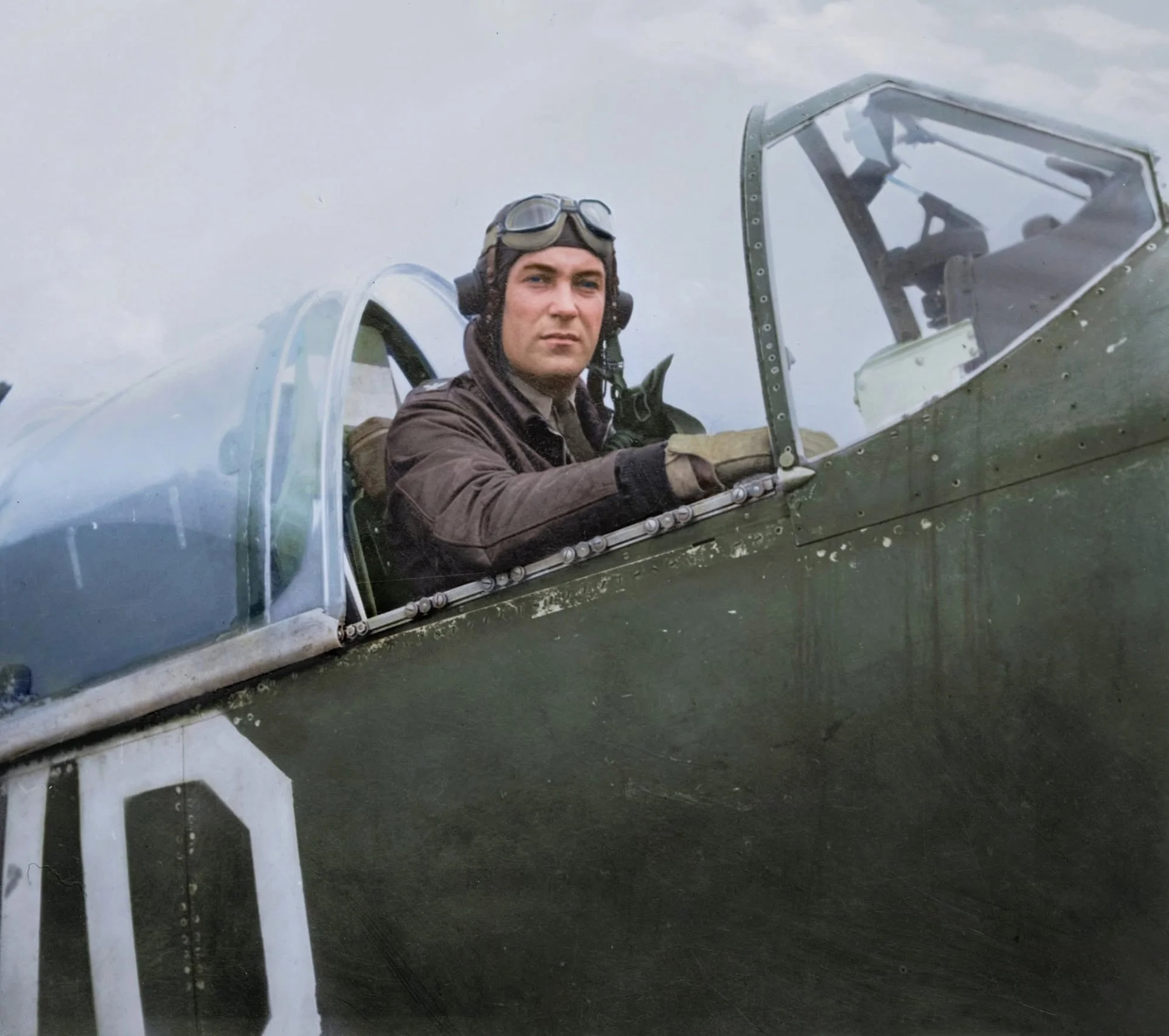
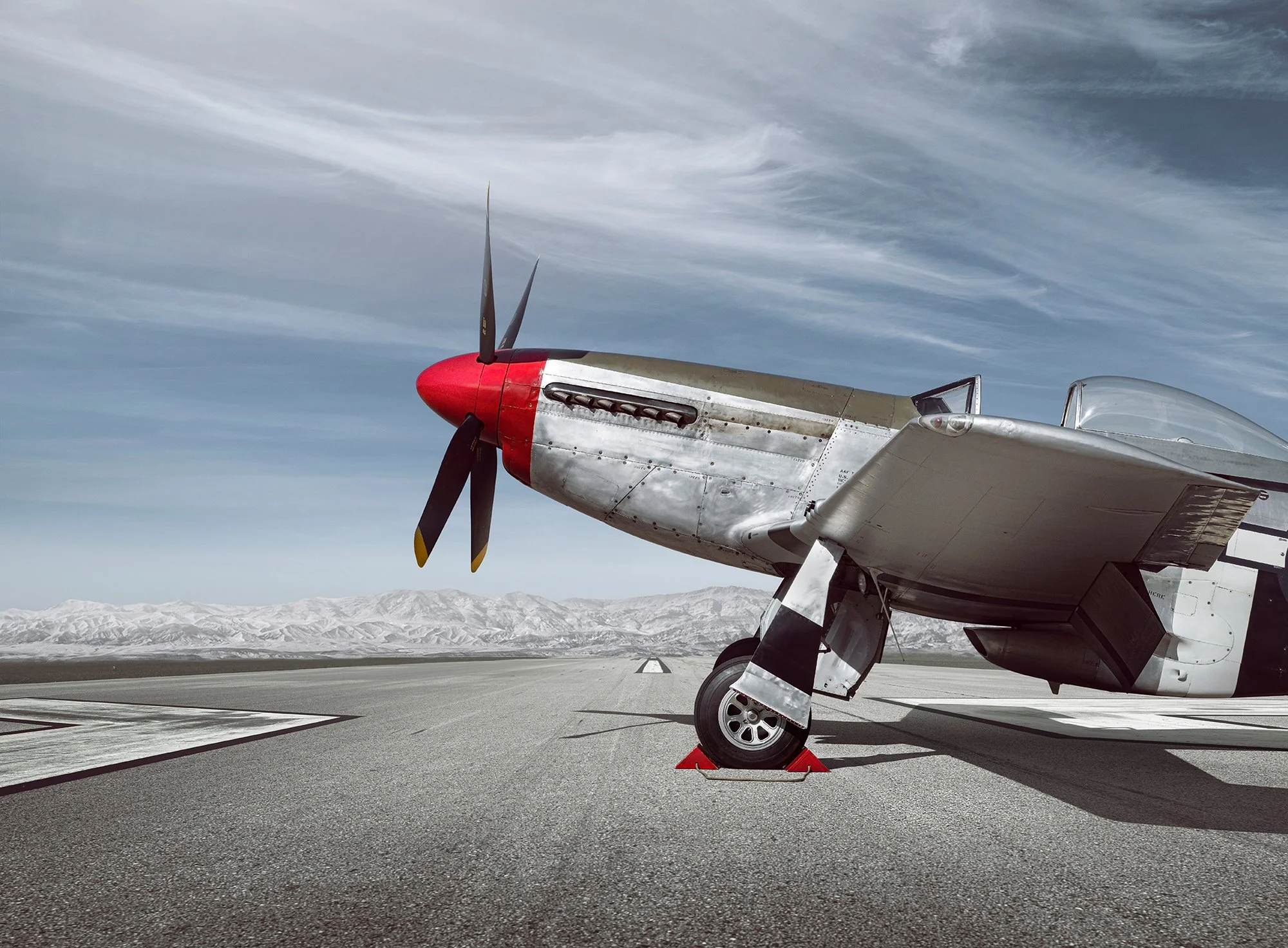
His wartime record was remarkable. He flew more than 500 combat missions and accumulated around 1,000 flying hours during the war, with 15.5 aerial victories officially credited to him alongside ground victories. His reputation as a fighter leader extended beyond the American forces, with RAF fighter ace James “Johnnie” Johnson describing him as one of the best leaders to fight over Germany. What makes the Blakeslee connection particularly interesting is that his aircraft were not covered in the elaborate nose art and victory markings that have become familiar on many surviving American warbirds. Blakeslee was known for keeping his aircraft relatively understated, which makes the WD-C identity carried by the restored Mustang particularly striking.
It is important to understand that the surviving aircraft itself is not literally the Mustang that Blakeslee flew during the Second World War. The real aircraft associated with his WD-C identity was a different airframe, while the surviving Mustang has been restored and painted to represent his personal aircraft. The aircraft I photographed was built as 44-73877, while the WD-C identity and associated 413779 markings recreate the appearance and story of Blakeslee's Mustang.
That distinction does not diminish the importance of the aircraft. In many respects, it adds another fascinating layer to its story because the Mustang becomes a physical link between the aircraft that survived and the people and machines that helped shape the history of the Second World War.
When you stand next to it, those details become very tangible. The rivets, aluminium skin, cockpit, control surfaces and enormous Merlin engine are all physical reminders that this was not designed as a museum exhibit. It was designed as a fighting machine, and everything about its form reflects that original purpose.
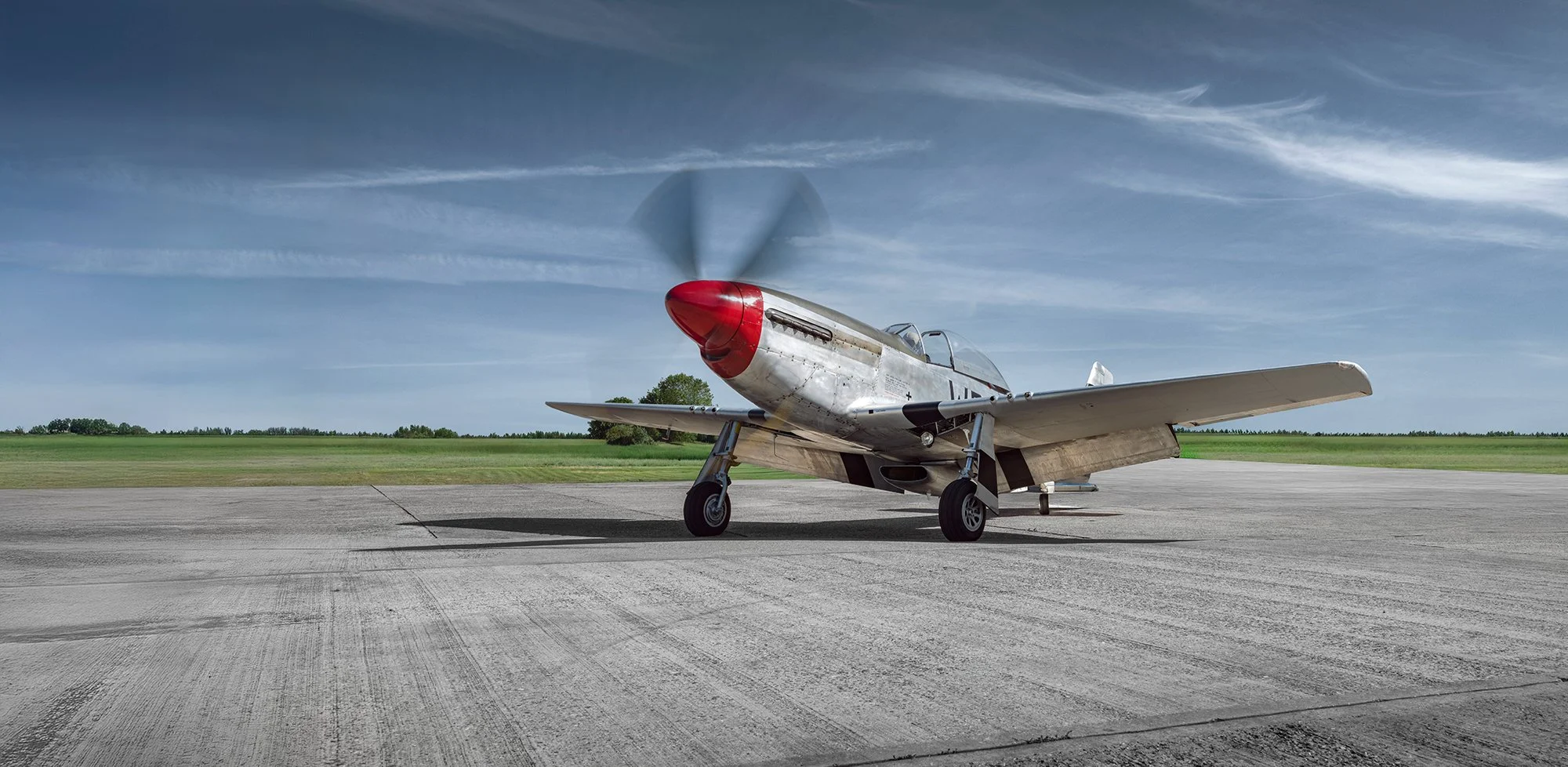
The P-51 Mustang and Why It Became Legendary
The story of the P-51 Mustang is one of the most fascinating in aviation history because the aircraft was effectively born from an urgent British requirement rather than from an American plan to create one of the world's greatest fighter aircraft. In 1940, Britain urgently needed more modern fighters and approached North American Aviation about producing Curtiss P-40s for the RAF. Rather than simply manufacture somebody else's aircraft, North American proposed designing an entirely new fighter. The British agreed, provided that the prototype could be produced with extraordinary speed, and the result was the NA-73X, which first flew on 26 October 1940.
The early Mustang was already an impressive aircraft, but it had a significant weakness. Its Allison V-1710 engine provided excellent performance at lower altitude but lost effectiveness as the aircraft climbed. The breakthrough came when British engineers and Rolls-Royce explored fitting the Rolls-Royce Merlin engine to the Mustang. The combination transformed the aircraft, giving it the high-altitude performance and speed that would ultimately make it one of the defining fighters of the European air war.
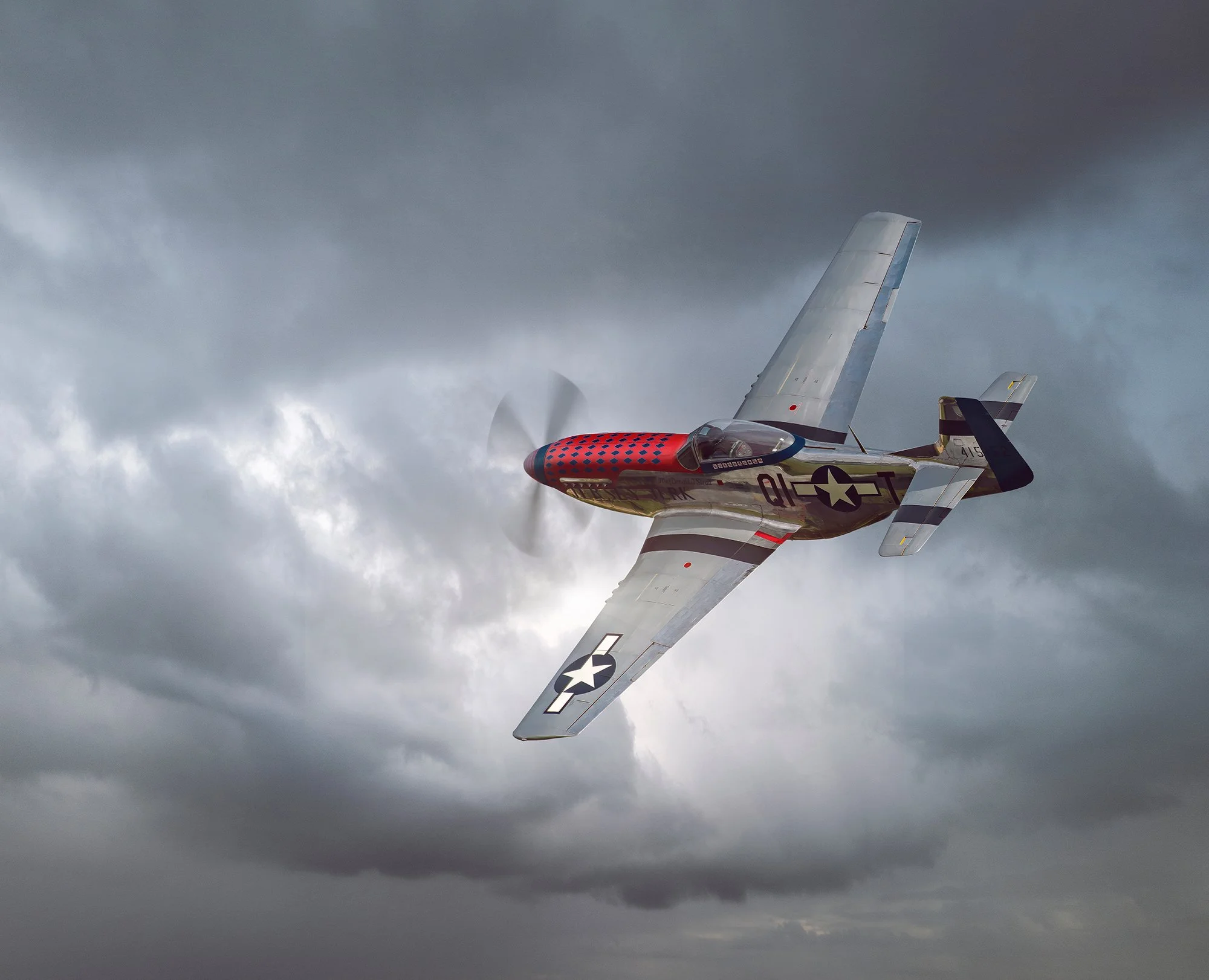
The Mustang's greatest advantage was its range. It could accompany American heavy bombers deep into Germany and back, providing fighter protection over distances that had previously been extremely difficult to cover. This fundamentally changed the strategic possibilities of the Allied bomber offensive and allowed Mustang units to engage German fighters much closer to their own bases. The 4th Fighter Group itself took Mustangs to Berlin in March 1944, demonstrating just how far the aircraft could operate.
The P-51D represented one of the most recognisable and successful versions of the Mustang, combining the refined airframe with the Merlin-derived powerplant and the distinctive bubble canopy that provided pilots with considerably improved visibility. With a maximum speed of around 430 mph in the surviving WD-C aircraft's specification, it remains an extraordinary machine even by modern standards.
There is also something particularly appropriate about photographing a Mustang at Biggin Hill. The airfield itself is steeped in the history of the Battle of Britain and the wider air war over Europe, while the aircraft represents the point where American engineering and British aviation technology came together to create something greater than either side had originally anticipated. For me, that is what makes aviation photography so rewarding. Photographing an aircraft like WD-C is not simply about capturing polished aluminium, markings and beautiful lines. It is about trying to convey why the aircraft still matters more than eighty years after it first entered production.
Standing beside a P-51 Mustang with the Merlin engine running, looking at the same wings and cockpit that have become symbols of one of the most important periods in aviation history, it is difficult not to think about the people who once relied upon machines like this for their survival. The photography becomes a way of connecting that history with the present, allowing an aircraft that was designed for war to continue telling its story in a very different world.
That, ultimately, is one of the reasons I enjoy working with historic aircraft so much. These machines are survivors. They carry the marks of engineering, history and human endeavour, and my role as a photographer is to make sure that when people look at the images, they see more than simply an aeroplane. I want them to feel some of the history that surrounds it.